
Industrial alloy steel seamless pipes are high-quality pipe materials that combine high strength, high temperature resistance, and corrosion resistance, and are widely used in various industrial fields such as energy, chemical industry, machinery manufacturing, metallurgy, and power.
Compared to ordinary carbon steel pipes, their outstanding advantage lies in maintaining stable mechanical properties even under extreme pressure and temperature environments.
This article will analyze its applications in different industries in depth and help you select the appropriate alloy steel seamless pipes based on your specific working conditions.
I. Why are alloy steel seamless pipes needed in the industrial sector?
In modern industrial systems, pipelines are responsible for transporting high-temperature steam, corrosive gases, liquefied metals, and high-pressure media.
These environments pose three major challenges to pipe materials:
- High-temperature environment: Boilers, heat exchangers, and other equipment often operate at 400–600℃, causing ordinary carbon steel to soften and creep.
- High-pressure environment: Pressures exceeding 10MPa require pipe materials with high yield strength.
- Corrosive media: Acids, alkalis, sulfides, chloride ions, etc., can lead to pipe wall corrosion and failure.
Alloy steel seamless pipes contain alloying elements such as Cr, Mo, Ni, Mn, and V. These elements significantly improve temperature resistance, corrosion resistance, and tensile strength, adapting to complex operating conditions and making them a core pipe material in many industrial systems.
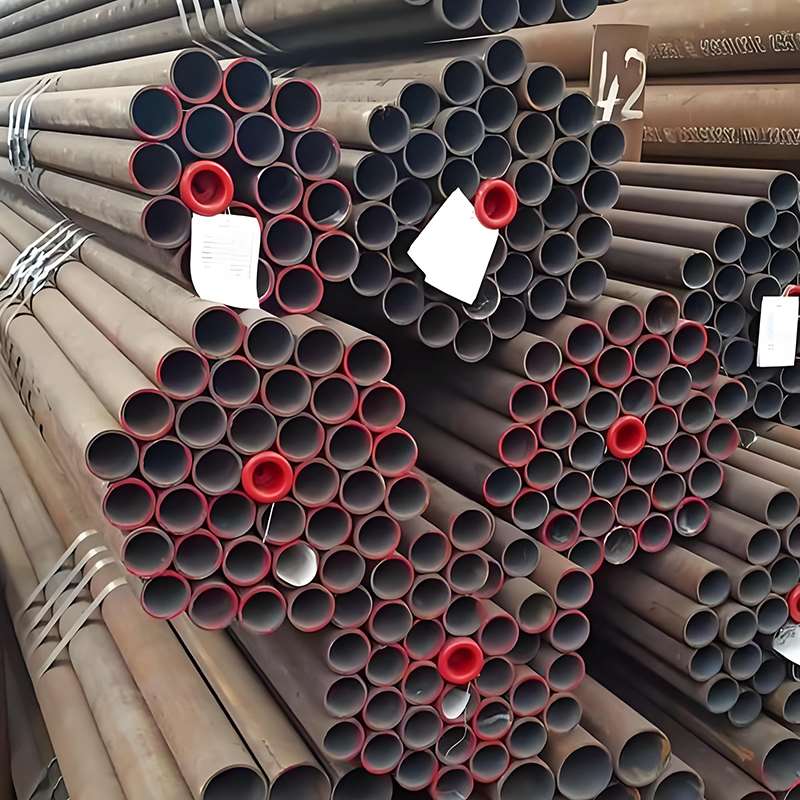
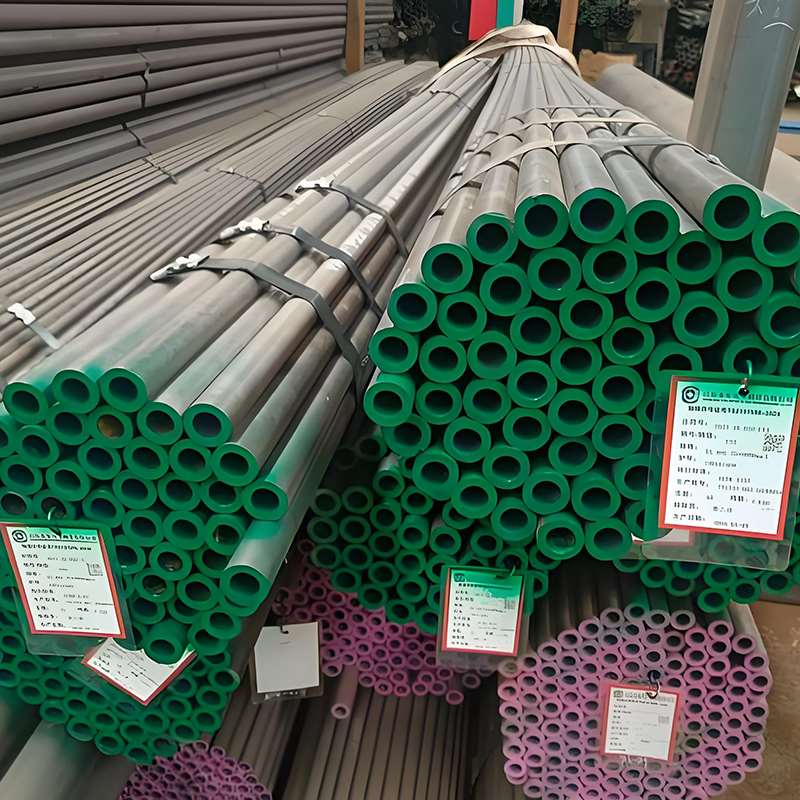
II. Main Application Areas of Seamless Alloy Steel Pipes for Industrial Use
(1) Power and Energy Industry
In thermal power plants and nuclear power systems, seamless alloy steel pipes are used for:
High-pressure boiler tubes, reheater tubes, superheater tubes
Heat exchangers and steam transmission pipelines
These systems typically operate at temperatures of 540–620°C. Pipes made of materials such as ASTM A335 P11 / P22 / P91 can maintain structural stability under long-term high temperature and pressure.
Why are they suitable:
Excellent creep resistance
Not easily oxidized, high fatigue strength
Long service life, reducing downtime maintenance costs
(2) Petrochemical Industry
In petroleum refining, natural gas transportation, and chemical equipment manufacturing, seamless alloy steel pipes are commonly used for:
Hydrocracking reactors
Petrochemical high-pressure pipelines
Corrosion-resistant fluid transportation systems
Common standards are ASTM A335 P5 / P9 / P91 and EN 10216-2 13CrMo4-5. Why it’s suitable: Resistant to corrosion from hydrogen sulfide, chlorides, and acidic media; able to withstand high-pressure, high-temperature reaction environments; ensures media purity and prevents leakage.
(3) Mechanical Manufacturing and Engineering Equipment
In machining, hydraulic systems, and mining equipment, alloy steel seamless pipes are used for:
Hydraulic cylinder barrels
Drive shafts and support pipes
High-pressure oil circuit systems
Typical materials: AISI 4130, 4140, 42CrMo.
These materials have good toughness, strong weldability, and are easy to machine. Why it’s suitable: High strength load-bearing capacity, impact resistance; smooth inner wall, excellent hydraulic sealing performance; good processing performance, suitable for customized parts.
(4) Metallurgical and Heat Treatment Industry
In steel, smelting, and heat treatment equipment, alloy steel seamless pipes are commonly used to manufacture:
High-temperature furnace tubes
Hot air ducts
Furnace roller support pipes
Recommended materials: Cr-Mo series (such as 12Cr1MoV, 15CrMoG)
Why it’s suitable:
High-temperature oxidation resistance
Excellent thermal fatigue resistance
Able to withstand repeated hot and cold cycles
(5) Shipbuilding and Marine Engineering
Pipelines used in offshore platforms and oil and gas drilling equipment must be resistant to seawater corrosion.
Commonly selected materials: ASTM A335 P9, A213 T11, A213 T22.
Why it’s suitable:
Resistant to seawater corrosion
Resistant to stress corrosion cracking
Suitable for long-term high humidity and salt spray environments
III. Selection Reference for Different Working Conditions
| Industry Sector | Recommended Material | Operating Temperature (°C) | Operating Pressure (MPa) | Features |
|---|---|---|---|---|
| Thermal Power | A335 P11 / P22 | 540–620 | 8–16 | High temperature and high pressure, creep-resistant |
| Petrochemical | A335 P5 / P9 | 400–550 | 6–12 | Corrosion and oxidation resistant |
| Fertilizer & Gas | A213 T11 / T22 | 450–550 | 4–8 | High-temperature gas transportation |
| Mechanical Manufacturing | 42CrMo / 20Cr | Ambient–400 | ≤5 | High strength, good machinability |
| Offshore Platforms | P9 / T22 / 15CrMoG | Ambient–500 | 6–10 | Salt spray resistant, strong corrosion resistance |
IV. How to Select Seamless Alloy Steel Pipes Based on Industry Needs?
When selecting seamless alloy steel pipes for industrial use, a comprehensive judgment should be made based on the working environment, pressure rating, and media characteristics:
(1) Determine the temperature and pressure range
If the temperature > 500°C, Cr-Mo alloy steel pipes (such as P22, P91) should be preferred;
If the pressure > 10MPa, the wall thickness should be increased or a material with high yield strength (such as 42CrMo) should be selected.
(2) Consider the corrosiveness of the media
For acidic or alkaline media: select materials with high Cr and Mo content; For chlorine-rich or sulfur-containing environments: consider Ni-based alloy pipes (such as Incoloy series).
(3) Based on processing or welding requirements
If machining or welding is required later, select materials with high toughness and good weldability (such as ASTM A335 P11).
(4) Reference International Standards
ASTM A335: High-Temperature Alloy Steel Tube Standard
ASTM A213: Seamless Steel Tubes for Boilers and Heat Exchangers
EN 10216-2: European Standard for Alloy Steel for Pressure Tubing
V. Selection Comparison
| Item | Design Temperature | Design Pressure | Recommended Pipe Material | Reason |
|---|---|---|---|---|
| Power Plant Reheat Steam Pipe | 600 °C | 14 MPa | ASTM A335 P22 | High temperature and oxidation resistant |
| Chemical Hydrogenation Reactor Pipe | 500 °C | 10 MPa | ASTM A335 P9 | Strong sulfur corrosion resistance |
| Hydraulic Machinery Support Pipe | Ambient | 5 MPa | 42CrMo | High strength and wear resistant |
| Offshore Drilling Equipment Pipe | 400 °C | 8 MPa | 15CrMoG | Salt spray and stress corrosion resistant |
VI. Choosing the Right Piping for Your Industry
High-Temperature, High-Pressure Environments → Choose Cr-Mo alloy steel seamless pipes (e.g., P22, P91)
Highly Corrosive Media → Choose corrosion-resistant alloy steel pipes containing Ni and Mo
Machinery Manufacturing → Choose machinable, high-strength 42CrMo pipes
Practical Advice:
Before selecting pipes, be sure to confirm the system’s operating temperature, pressure, and media properties.
If unsure, request a Material Testing Center (MTC) report and pressure calculation recommendations from the supplier to ensure both safety and cost-effectiveness.