
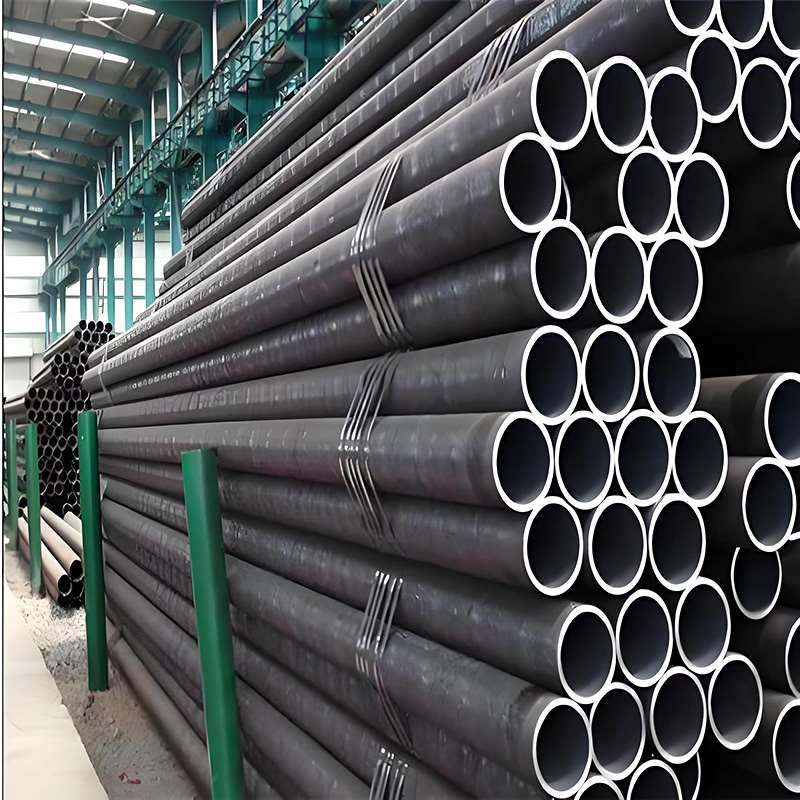
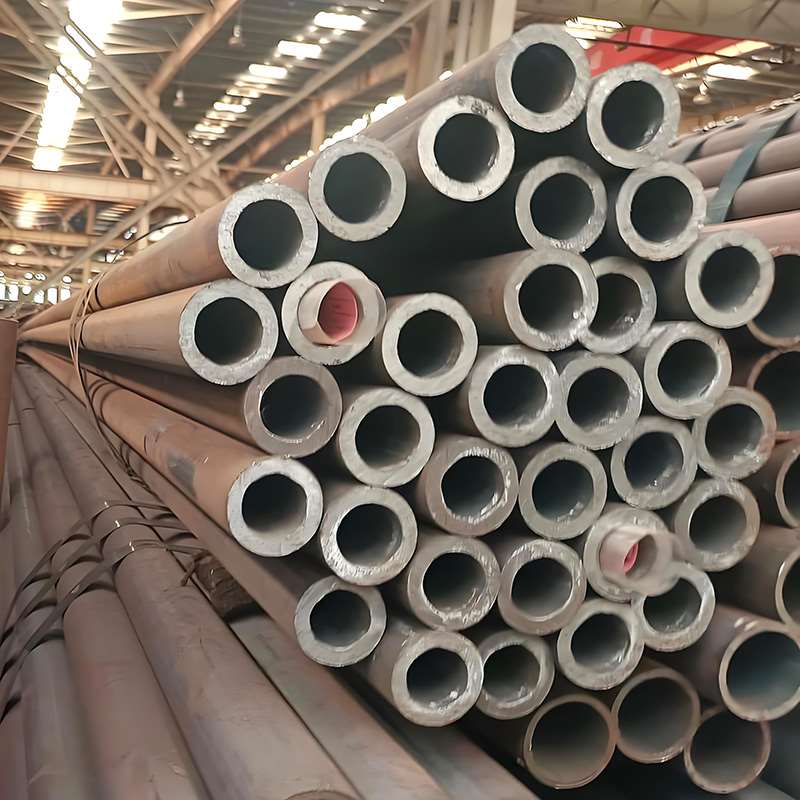
Seamless carbon steel pipes for boilers are indispensable key tubing materials in boiler systems, heat exchangers, and high-temperature pressure pipelines. Due to their high strength, high-temperature resistance, excellent pressure resistance, and superior workability, they have become a critical choice for industrial boilers, power plants, petrochemical plants, and the papermaking industry.
I. Application Fields of Seamless Carbon Steel Pipes for Boilers
Seamless carbon steel pipes for boilers are extensively used in piping systems subjected to high-temperature, high-pressure steam or hot water. Primary application areas include:
(1) Industrial Boilers
Commonly employed in pressure-bearing piping for steam boilers, hot water boilers, and coal-fired boilers.
Serves as heat exchange tubes within boiler walls and circulating water pipelines, ensuring heat transfer efficiency and pressure safety.
(2) Power Plant Boilers
Essential piping material for thermal power plants and nuclear power station boilers.
Applied in high-temperature, high-pressure systems such as main steam pipes, reheat pipes, and feedwater pipes to withstand high-temperature steam circulation.
(3) Petrochemical and Chemical Industries
Suitable for high-temperature steam pipelines, heat exchangers, and high-pressure reactor connections.
Ensures long-term stable operation under high-temperature and corrosive conditions.
(4) Paper, Food, and Light Industries
Used in hot water boilers and steam pipelines to guarantee stable steam supply during production.
Requires high standards for surface quality and mechanical properties to ensure equipment efficiency and safety.
II. Performance Analysis of Seamless Carbon Steel Pipes for Boilers
(1) High-Temperature Pressure Resistance
Carbon steel materials can withstand steam or hot water temperatures ranging from 300–450°C.
Under high-pressure systems, the pipes exhibit high yield strength, ensuring controllable steam or hot water pressure.
Common grades: ASTM A106 Gr.B/C, GB5310 P235GH/P265GH, Q235, Q345.
Particularly suitable for high-temperature piping systems in industrial and power station boilers.
(2) Stable Mechanical Properties
Yield strength: Q235 ≥ 235 MPa; Q345 ≥ 345 MPa
Tensile strength: 370–630 MPa
Elongation: ≥ 22%
High strength ensures pipes remain deformation- and crack-free under prolonged high-temperature, high-pressure operation.
(3) Processing and Manufacturing Performance
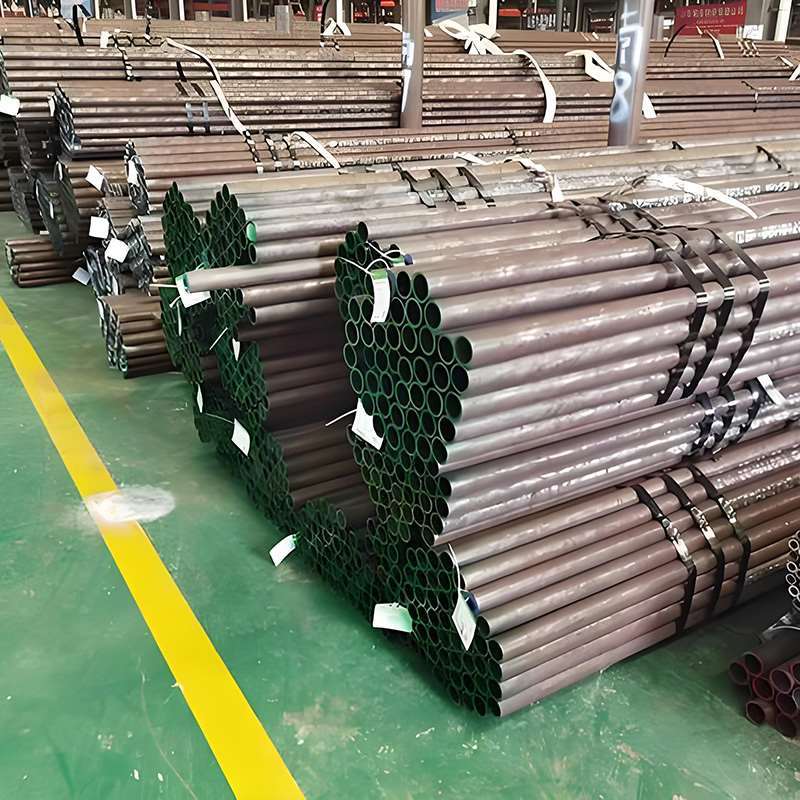
Cold drawing or hot rolling processes guarantee high dimensional accuracy with strict tolerance control.
Suitable for bending, welding, and machining, facilitating boiler system installation and maintenance.
Smooth surfaces reduce secondary processing costs while facilitating coating and corrosion protection.
(4) Corrosion Resistance and Protection
Carbon steel has limited inherent oxidation resistance and is prone to oxidation during prolonged exposure to steam or high-temperature water.
Corrosion protection options include: internal epoxy coating, FBE powder coating, or epoxy resin coating.
For special operating conditions, alloy steel or corrosion-resistant lined pipes may be selected to extend service life.
III. Key Considerations for Selecting Seamless Carbon Steel Pipes for Boilers
(1) Material Selection
Low-temperature, low-pressure boilers → Q235 or ASTM A106 Gr.B
Medium-high pressure or high-temperature boilers → Q345 or ASTM A106 Gr.C
High-temperature power plant boilers → GB5310 P265GH, ensuring temperature and pressure resistance
(2) Pipe Diameter and Wall Thickness
Calculate wall thickness based on boiler design pressure and steam flow rate, ensuring a safety factor ≥ 1.5
Pipe diameter must match the boiler circulation system to avoid excessive pressure drop affecting thermal efficiency
(3) Manufacturing Process
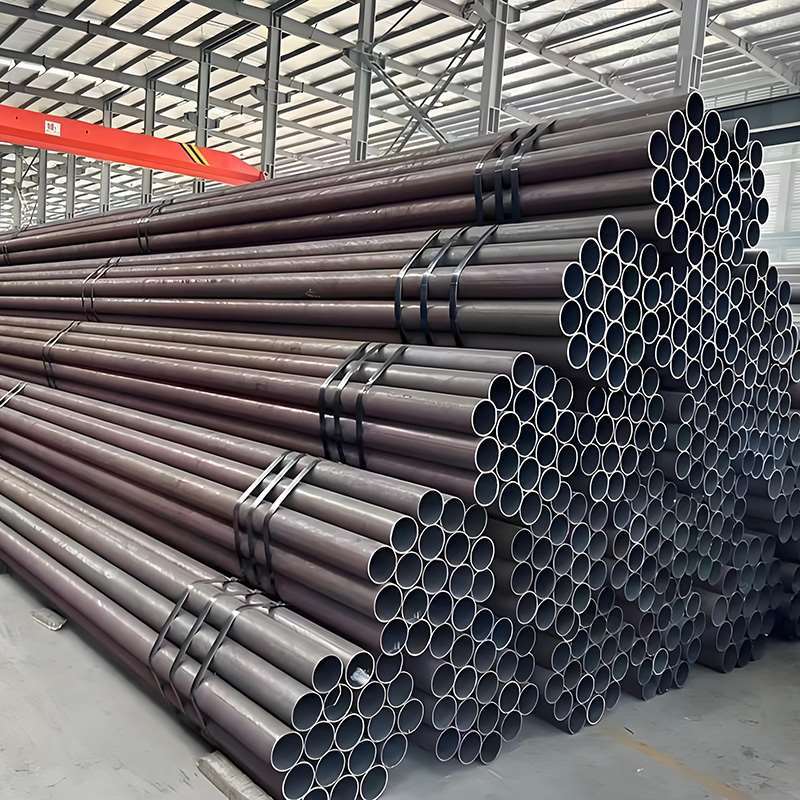
Hot-rolled seamless pipes → Large-diameter, high-pressure systems
Cold-drawn seamless tubes → Small-diameter precision piping with high dimensional accuracy
(4) Quality Inspection
Mechanical property testing: tensile, impact, bending, etc.
Chemical composition analysis to ensure material compliance with GB/T or ASTM standards
(5) Corrosion Protection & Surface Treatment
For poor water quality or high-temperature steam pipelines, recommend internal epoxy lining or external anti-corrosion coating
High-temperature/high-pressure pipelines may opt for heat-resistant coatings to extend service life
IV. Engineering Application References
Industrial boiler steam pipes → Pressure ≤ 2.5 MPa, Temperature ≤ 300°C
Power station boiler reheat pipes → Pressure 3–5 MPa, Temperature 350–400°C
Petrochemical high-temperature steam pipelines → Pressure ≤ 4.5 MPa, Temperature 400°C
Paper and light industry hot water pipelines → Pressure ≤ 2 MPa, Temperature ≤ 250℃
Seamless carbon steel pipes for boilers serve as core tubing for boilers and high-temperature pressure systems. Their high-temperature pressure resistance, excellent mechanical properties, superior workability, and suitability for anti-corrosion treatment enable widespread application in industrial boilers, power station boilers, petrochemical, and papermaking industries.