
In the industrial sector, carbon steel pipe is a widely used basic steel pipe material. It can be found in various applications, including energy, construction, mechanical manufacturing, and pipeline engineering.
For many procurement and engineering personnel, understanding “what carbon steel pipe is and where it is suitable for use” is the first step in the selection process.
I. What are Carbon Steel Pipes?
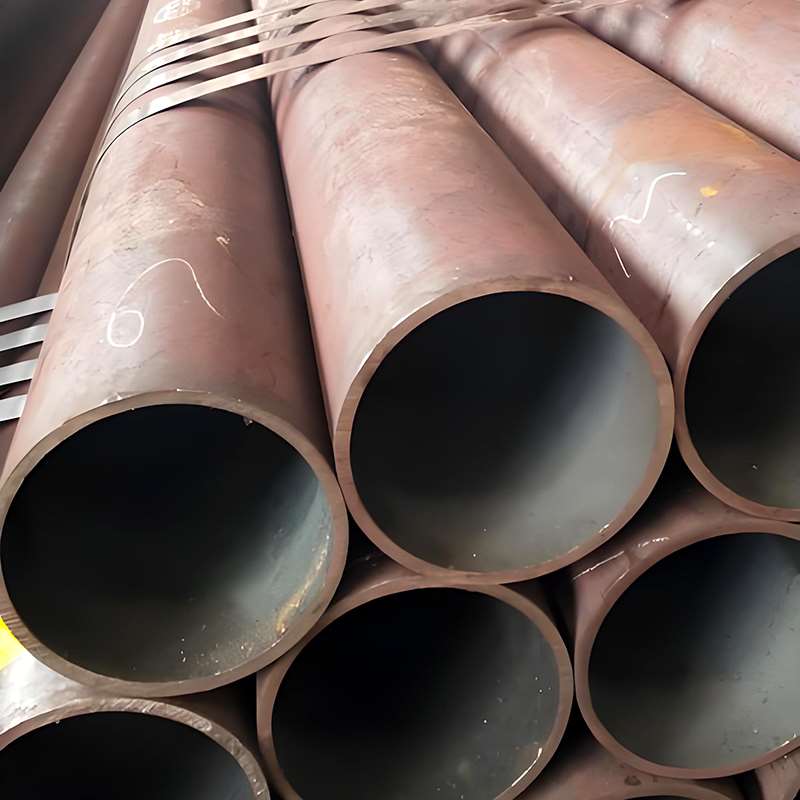
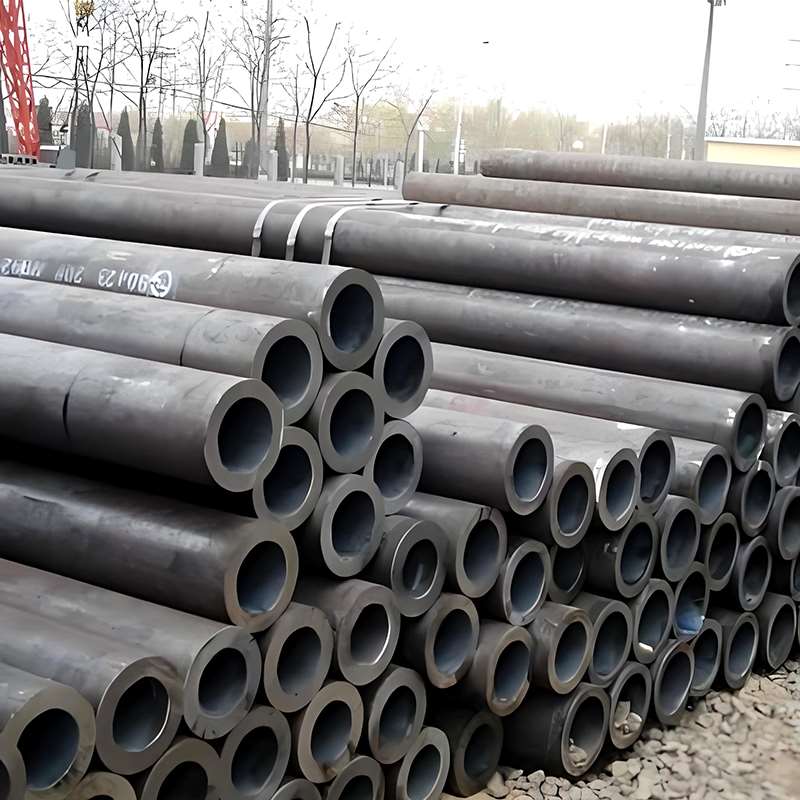
Carbon steel pipes, as the name suggests, are steel pipes made primarily from carbon steel. Their main alloying element is carbon, and they may also contain small amounts of manganese, silicon, sulfur, and phosphorus, but do not intentionally include corrosion-resistant alloying elements such as chromium and nickel.
Due to their relatively simple composition, carbon steel pipes offer a very balanced overall performance in terms of strength, toughness, processing performance, and cost.
From a manufacturing process perspective, carbon steel pipes can be either seamless or welded; from a usage perspective, they can be used for structural support or for conveying fluids; and from a standards perspective, they are covered by multiple international systems such as ASTM, API, EN, and GB.
II. Main Characteristics of Carbon Steel Pipes
1. Reliable Strength, Suitable for Industrial Environments
Carbon steel pipes possess good yield strength and tensile strength.
They can withstand a certain amount of internal pressure.
They can also handle external loads and structural stresses.
Their performance is stable and reliable in most industrial applications.
2. Good Machinability, More Flexible Construction
Carbon steel pipes are easy to cut.
They are easy to weld and form.
They are suitable for on-site installation and secondary processing.
In engineering projects, they can effectively improve construction efficiency and reduce operational difficulties.
3. High Cost-Effectiveness, Controllable Application Costs
Compared with stainless steel or alloy steel pipes, carbon steel pipes have lower material costs.
The processing technology is mature, and manufacturing costs are controllable.
While meeting the usage requirements, the overall economic efficiency is more advantageous.
Therefore, they are widely used in various industrial and engineering projects.
III. Comparison Table of Carbon Steel Pipe Types
| Carbon Steel Pipe Type | Main Manufacturing Process | Common Applications | Key Features |
|---|---|---|---|
| ERW Carbon Steel Pipe | Electric Resistance Welding (ERW) | Medium- and low-pressure fluid transportation, structural uses, general industrial piping | High dimensional accuracy, smooth appearance, uniform wall thickness, suitable for mass production and standardized applications |
| SSAW Carbon Steel Pipe | Spiral Submerged Arc Welding (SSAW) | Large-diameter transmission pipelines, water pipelines, drainage projects, some low- to medium-pressure transportation | Wide range of specifications, suitable for large-diameter pipes, often used in long-distance pipeline projects |
| LSAW Carbon Steel Pipe | Longitudinal Submerged Arc Welding (LSAW) | High-pressure oil and gas pipelines, petroleum and natural gas industries | High strength, capable of withstanding high pressure, suitable for long-distance pipelines |
| Seamless Carbon Steel Pipe | Hot rolling or cold drawing seamless forming | High-pressure boiler tubes, oil and gas well pipes, mechanical structural components | No weld seam inside or outside, strong pressure resistance, high-temperature resistant, suitable for high-demand applications |
| Galvanized Carbon Steel Pipe | Electroplating or hot-dip galvanizing | Water supply pipes, HVAC pipes, construction piping | Good corrosion resistance, rust-resistant, suitable for indoor or mild corrosive environments |
IV. How to Choose Carbon Steel Pipes Correctly?
1. Determine the Medium and Pressure
First, it’s crucial to understand what medium the pipeline will be transporting.
Water, steam, oil, natural gas, or chemical liquids all have different requirements for pressure resistance and corrosion resistance of the pipe material.
Secondly, you need to know the working pressure.
For medium and low pressure applications, ERW or SSAW carbon steel pipes can be selected, while high-pressure scenarios require considering LSAW or seamless carbon steel pipes.
2. Consider the Working Temperature
The working temperature of the pipeline determines the steel grade selection.
High-temperature environments require high-temperature resistant carbon steel pipes, such as high-temperature boiler tubes or alloy steel pipes.
At normal temperatures, medium and low carbon steel pipes are sufficient.
3. Determine Pipe Diameter and Wall Thickness
Pipe diameter affects conveying capacity and pressure resistance.
Wall thickness relates to the pipe’s strength and lifespan.
Typically, standard pipe diameters and wall thicknesses meet most industrial and construction needs, but non-standard sizes can be customized for special working conditions.
4. Select the Appropriate Manufacturing Process
Carbon steel pipes manufactured using different processes are suitable for different applications:
ERW carbon steel pipes: High dimensional accuracy, suitable for medium and low-pressure conveying and structural applications;
SSAW carbon steel pipes: Suitable for large-diameter pipelines and long-distance transportation;
Seamless carbon steel pipes: Strong pressure resistance, suitable for high-pressure and high-temperature conditions.
5. Refer to Applicable Standards and Certifications
Choosing products that comply with international or national standards such as ASTM, API, EN, and GB ensures quality and reliability.
Simultaneously, consider third-party testing and certification to reduce project risks.
6. Consider Economic Efficiency and Construction Convenience
In addition to performance, material cost, processing difficulty, transportation, and ease of installation are also key factors in selection.
Cost-effective carbon steel pipes can save project costs while meeting working conditions.