
I. Standard Overview
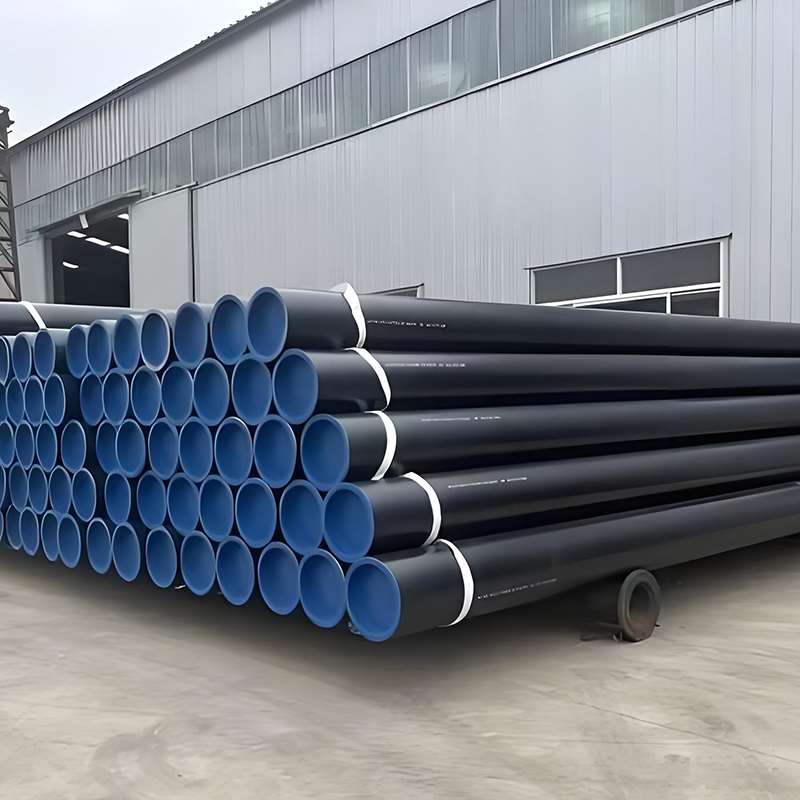
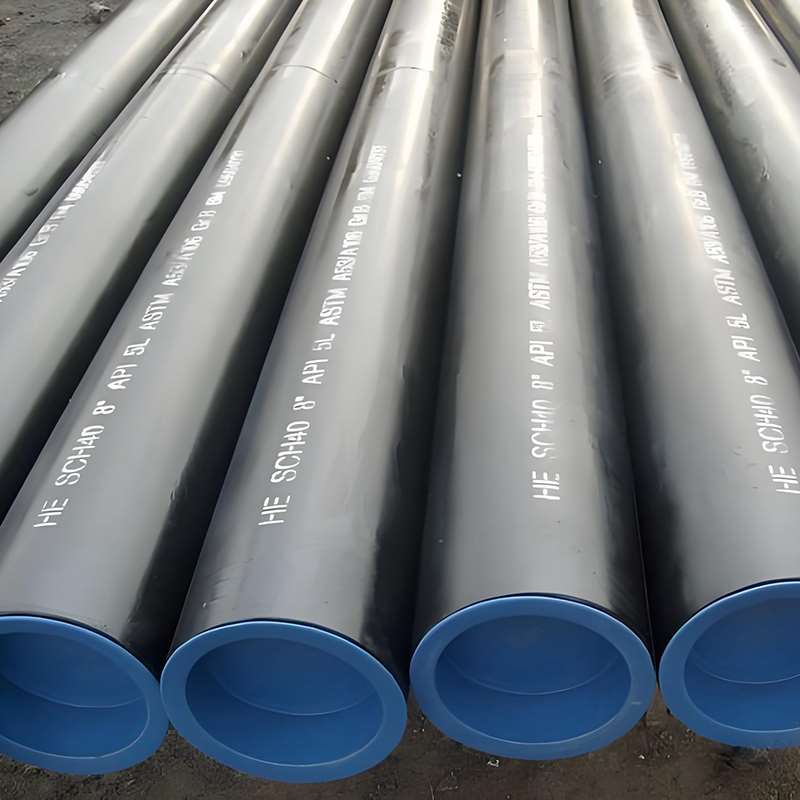
ASTM A53 is a steel pipe standard developed by the American Society for Standardization (ASTM), primarily used for the manufacture and inspection of steel pipes. This standard clearly specifies the material, manufacturing process, dimensions, tolerances, and inspection methods for steel pipes, ensuring the quality and reliability of steel pipes when used for fluid transport or as structural materials.
ASTM A53 Pipe Types and Grade Classifications:
| Type | Manufacturing Process | Grade | Main Applications |
|---|---|---|---|
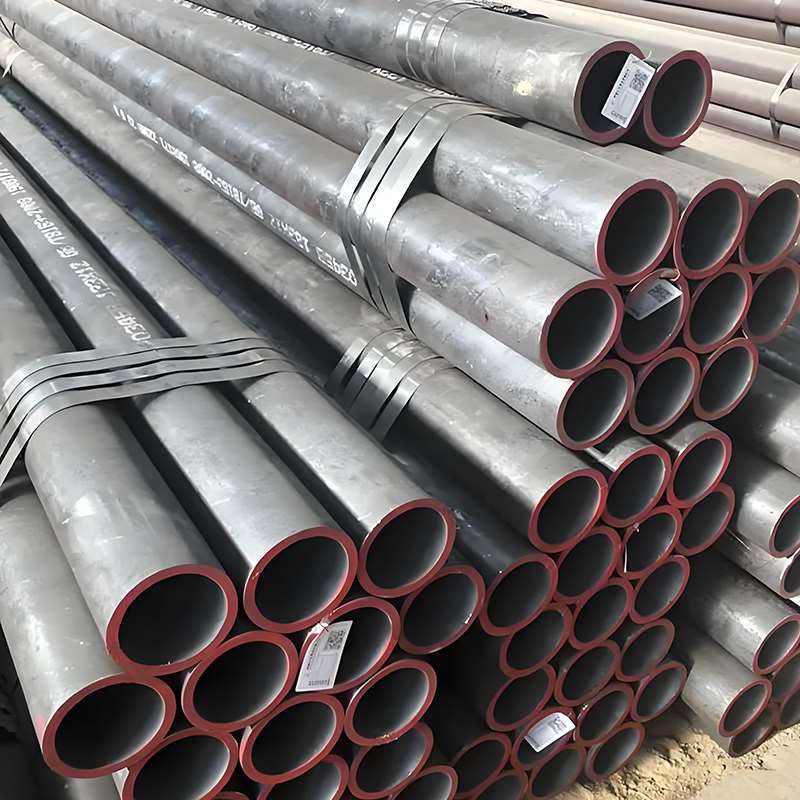
| Seamless Steel Pipe | Hot Rolling or Extrusion | Grade A / B / C | High-pressure fluid transport, structural support |
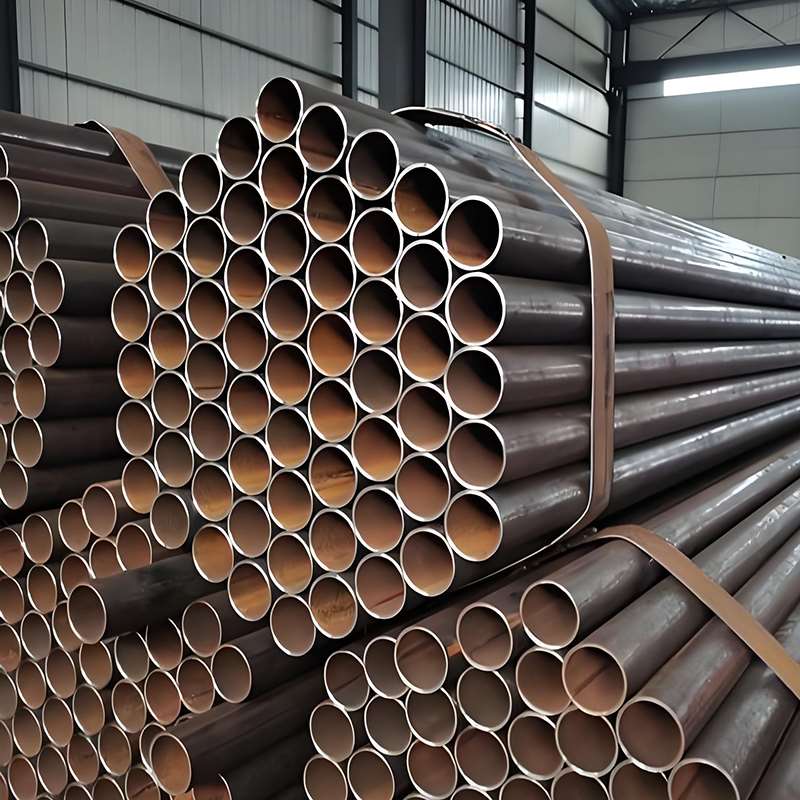
| Welded Steel Pipe | Resistance Welding, Submerged Arc Welding (SAW) | Grade A / B / C | Medium- to low-pressure fluid transport, general structural use |
II. Chemical Composition and Mechanical Properties
i. Chemical Composition (ASTM A53 Seamless Steel Pipe & Welded Steel Pipe)
| Pipe Type | Grade | C (%) | Mn (%) | P (%) | S (%) | Si (%) |
|---|---|---|---|---|---|---|
| Seamless Steel Pipe | Grade A | ≤0.25 | 0.27–0.90 | ≤0.035 | ≤0.035 | 0.10–0.35 |
| Seamless Steel Pipe | Grade B | ≤0.30 | 0.27–1.20 | ≤0.035 | ≤0.035 | 0.10–0.40 |
| Seamless Steel Pipe | Grade C | ≤0.30 | 0.27–1.20 | ≤0.035 | ≤0.035 | 0.10–0.40 |
| Welded Steel Pipe | Grade A | ≤0.25 | 0.27–0.90 | ≤0.035 | ≤0.035 | 0.10–0.35 |
| Welded Steel Pipe | Grade B | ≤0.30 | 0.27–1.20 | ≤0.035 | ≤0.035 | 0.10–0.40 |
| Welded Steel Pipe | Grade C | ≤0.30 | 0.27–1.20 | ≤0.035 | ≤0.035 | 0.10–0.40 |
ii. Mechanical properties (ASTM A53 seamless steel pipe & welded steel pipe)
| Pipe Type | Grade | Yield Strength (MPa) | Tensile Strength (MPa) | Elongation (%) | Main Applications |
|---|---|---|---|---|---|
| Seamless Steel Pipe | Grade A | ≥205 | 270–410 | ≥25 | Low-pressure fluid transport, structural use |
| Seamless Steel Pipe | Grade B | ≥240 | 415–540 | ≥23 | Medium-pressure fluid transport, structural use |
| Seamless Steel Pipe | Grade C | ≥270 | 460–600 | ≥20 | High-pressure fluid transport, special structures |
| Welded Steel Pipe | Grade A | ≥205 | 270–410 | ≥25 | Low-pressure fluid transport, structural use |
| Welded Steel Pipe | Grade B | ≥240 | 415–540 | ≥23 | Medium-pressure fluid transport, structural use |
| Welded Steel Pipe | Grade C | ≥270 | 460–600 | ≥20 | High-pressure fluid transport, special structures |
III. ASTM A53 Seamless/Welded Steel Pipe Specification Table (NPS 1/2″ – 2″, SCH 10–160)
| NPS (inch) | Outer Diameter OD (mm) | Wall Thickness Range WT (mm) | Schedule | Theoretical Weight Range (kg/m) | Pipe Type |
|---|---|---|---|---|---|
| 1/2″ | 21.3 | 2.77 – 9.19 | SCH 10–160 | 1.68 – 5.33 | Seamless / Welded |
| 3/4″ | 26.7 | 2.87 – 7.62 | SCH 10–160 | 2.11 – 5.70 | Seamless / Welded |
| 1″ | 33.4 | 3.38 – 8.56 | SCH 10–160 | 3.17 – 7.94 | Seamless / Welded |
| 1 1/2″ | 48.3 | 3.68 – 14.27 | SCH 10–160 | 5.88 – 20.3 | Seamless / Welded |
| 2″ | 60.3 | 3.91 – 14.27 | SCH 10–160 | 7.57 – 25.9 | Seamless / Welded |
| 2 1/2″ | 73.0 | 3.91 – 14.27 | SCH 10–160 | 9.02 – 30.9 | Seamless / Welded |
| 3″ | 88.9 | 3.91 – 14.27 | SCH 10–160 | 11.1 – 37.9 | Seamless / Welded |
| 4″ | 114.3 | 4.19 – 18.26 | SCH 10–160 | 16.9 – 60.5 | Seamless / Welded |
| 6″ | 168.3 | 4.78 – 22.23 | SCH 10–160 | 27.0 – 105.0 | Seamless / Welded |
| 8″ | 219.1 | 4.78 – 27.13 | SCH 10–160 | 42.3 – 168.0 | Seamless / Welded |
| 10″ | 273.0 | 5.54 – 31.75 | SCH 10–160 | 64.1 – 263.0 | Seamless / Welded |
| 12″ | 323.9 | 5.54 – 34.93 | SCH 10–160 | 84.5 – 341.0 | Seamless / Welded |
| 14″ | 355.6 | 6.02 – 39.91 | SCH 10–160 | 109.0 – 430.0 | Seamless / Welded |
| 16″ | 406.4 | 6.02 – 44.45 | SCH 10–160 | 135.0 – 550.0 | Seamless / Welded |
| 18″ | 457.0 | 6.02 – 50.80 | SCH 10–160 | 168.0 – 690.0 | Seamless / Welded |
| 20″ | 508.0 | 6.35 – 54.00 | SCH 10–160 | 202.0 – 800.0 | Seamless / Welded |
| 24″ | 609.6 | 6.35 – 61.00 | SCH 10–160 | 270.0 – 1,210.0 | Seamless / Welded |
IV. Production Processes
i. Seamless Steel Pipe Production Process (Hot Rolling/Cold Drawing)
Steel Billet → Heating → Piercing → Rolling → Annealing → Cold Drawing/Straightening → Heat Treatment → Inspection → Finished Pipe
ii. Welded Steel Pipe Production Process (ERW, LSAW/SSAW)
ERW: Steel Strip/Plate → Forming → Welding → Expansion → Straightening → Heat Treatment → Inspection → Finished Pipe
LSAW/SSAW Steel Pipes: Steel Plate → Bending into Pipe → Longitudinal Welding/Spiral Welding → Expansion/Straightening → Heat Treatment → Inspection → Finished Pipe
iii. Main Process Differences and Impacts
| Item | Seamless Steel Pipe | Welded Steel Pipe | Impact / Notes |
|---|---|---|---|
| Raw Material | Steel billet | Steel plate / strip | Seamless pipes have slightly higher material cost |
| Manufacturing Process | Hot rolling / Cold drawing | ERW / LSAW / SSAW | Seamless pipes have higher pressure capacity; welded pipes are lower cost and more efficient to produce |
| Diameter | Small to large | Small diameter ERW; medium to large diameter LSAW/SSAW | Large-diameter welded pipes can reduce cost |
| Weld Seam | None | Present | High-pressure or corrosive applications require inspection |
| Precision | High dimensional accuracy | Slightly lower | Seamless pipes recommended for precision applications |
| Price | High | Low to medium | Select based on cost considerations |
V. ASTM A53 Seamless/Welded Steel Pipe: Main Applications and Selection Guide
| Pipe Type | Typical Application | Selection Advice / Notes |
|---|---|---|
| Seamless Steel Pipe | High-pressure steam and liquid pipelines | High pressure capacity, suitable for high-pressure, large temperature variation, or safety-critical pipelines; commonly used for small- and medium-diameter pipes. |
| Seamless Steel Pipe | Oil, natural gas, and chemical process piping | Preferred for chemical or corrosive fluids; uniform wall thickness and no weld seam enhance pressure and corrosion resistance. |
| Seamless Steel Pipe | Mechanical structural piping | Used in mechanical supports, pipe racks, and structural load-bearing applications; capable of handling tensile stress, suitable for high structural strength requirements. |
| Welded Steel Pipe (ERW) | Medium- to low-pressure fluid transport | Low cost and high production efficiency; suitable for water, air, low-pressure steam, and oil; commonly used for small- and medium-diameter pipes. |
| Welded Steel Pipe (LSAW/SSAW) | Large-diameter oil and gas pipelines | Commonly used for long-distance, large-diameter pipelines; lower cost than seamless pipes of the same diameter; weld quality inspection required. |
| Welded Steel Pipe | Structural applications | Used in bridges, building structures, and frame support pipes; suitable when pressure requirements are low. |
VI. Commonly Used Anti-corrosion Coatings for Seamless/Welded Steel Pipes (ASTM A53)
| Corrosion Protection Type | Key Features | Typical Application | Recommended Thickness |
|---|---|---|---|
| Hot-Dip Galvanizing | Uniform zinc layer, corrosion-resistant, easy to apply | Overhead outdoor pipes, water pipes, low-pressure pipelines | 65–85 μm |
| Epoxy Resin Coating | Good adhesion, corrosion-resistant, wear-resistant | Buried pipes, oil and gas pipelines | 150–300 μm |
| Epoxy Powder Coating | Environmentally friendly, solvent-free, stable corrosion protection | Chemical pipelines, urban water supply | 150–300 μm |
| Asphalt Coating | Low cost, moderate corrosion protection | Temporary or low-cost water pipes | 1–2 mm |
| Polyethylene Coating (3PE / 2PE) | Corrosion-resistant, mechanically durable, suitable for complex soils | Long-distance pipelines, offshore pipelines | 2–3 mm |
| Epoxy Powder / Polyethylene Composite Coating (FBE + PE, 3PE) | Corrosion-resistant and mechanically durable | Long-distance oil and gas pipelines | 2–3 mm |
Corrosion Protection Selection Reference:
Outdoor or Low-Pressure Water Pipes → Hot-dip galvanizing or asphalt coating are options, economical and practical.
Buried Pipelines, Long-Distance Pipelines → Epoxy resin coating (FBE) or 3PE composite coating are recommended, offering good corrosion resistance.
Chemical or Marine Environments → 3PE or epoxy powder coating, resistant to acids, alkalis, and mechanical damage.
Economy First → Asphalt or single-layer epoxy are options for low-corrosion environments.
VII. ASTM A53 Seamless/Welded Steel Pipe Quick Selection and Testing Parameter Table
| Inspection Category | Inspection Item | Acceptable Parameter Range | Method / Standard |
|---|---|---|---|
| Chemical Composition | Carbon (C) | 0.25–0.30% (Grade A/B/C) | Spectroscopy / Chemical Analysis |
| Manganese (Mn) | 1.20–1.50% | Spectroscopy / Chemical Analysis | |
| Phosphorus (P) | ≤ 0.06% | Spectroscopy / Chemical Analysis | |
| Sulfur (S) | ≤ 0.05% | Spectroscopy / Chemical Analysis | |
| Silicon (Si) | 0.10–0.30% | Spectroscopy / Chemical Analysis | |
| Mechanical Properties | Yield Strength | 205–240 MPa | Tensile Test |
| Tensile Strength | 350–620 MPa | Tensile Test | |
| Elongation (%) | 25–30% | Tensile Test | |
| Dimensional & Visual | Outer Diameter (OD) / Wall Thickness (WT) | Meets nominal size ± standard tolerance | Vernier Caliper / Steel Ruler |
| Length | According to order ± tolerance | Steel Ruler / Tape Measure | |
| End Treatment | Plain End / Beveled End | Visual / Standard Inspection | |
| Surface Defects | No cracks, pits, welding defects, or visible scratches | Visual / Standard Inspection | |
| Non-Destructive Testing | Weld and Pipe Body | No cracks, laminations, or porosity | UT / MT / PT |
| Pressure Test | Hydrostatic / Pneumatic Test | Pass sample according to design pressure rating | Hydrostatic Test / Pneumatic Test |
VIII. Selection Criteria and Procurement Recommendations
i. Selection Logic for Seamless vs. Welded Steel Pipes
Seamless steel pipes: High pressure resistance, no weld seams, suitable for high-pressure, high-temperature, or safety-critical applications, such as high-pressure steam pipes, chemical process pipes, and small-diameter high-pressure water pipes.
Welded steel pipes: Low cost, high production efficiency, suitable for medium-low pressure, low-temperature, large-diameter, or structural applications, such as urban water supply, low-pressure air pipes, large-diameter long-distance pipelines, and building structural pipes.
ii. Grade Selection Criteria
Select Grade A/B/C based on operating pressure, temperature, fluid type, and application.
Grade A: Suitable for low-pressure, structural, or general fluid transport applications.
Grade B: Medium-pressure piping and general pressure-bearing applications.
Grade C: High-pressure applications or special applications, capable of withstanding higher strength requirements.
iii. Pipe Diameter, Wall Thickness, and Anti-corrosion Coating Selection Reference
Pipe Diameter and Wall Thickness: Select the SCH series and wall thickness based on the design pressure, pipeline length, and transported medium.
Anti-corrosion Coating:
Outdoor, Low-Pressure Water Pipes → Hot-dip galvanizing or asphalt coating, economical and practical.
Buried Pipelines, Long-Distance Pipelines → Epoxy resin (FBE) or 3PE composite coating, good corrosion resistance.
Chemical or Offshore Pipelines → 3PE or epoxy powder coating, balancing corrosion resistance and mechanical damage resistance.
iv. Procurement Considerations
Certification: Select suppliers with ASTM A53 standard certification or third-party testing reports.
Quality Control: Verify chemical composition, mechanical properties, dimensional tolerances, end treatment, and anti-corrosion coating thickness.
Inspection Records: Ensure the original manufacturer’s warranty certificate (Mill Test Certificate, MTC) and test reports are included.
Samples and Sampling Inspection: For large-volume purchases, sampling inspection can be conducted to confirm weld quality, surface quality, and coating thickness.
IX. Differences between commonly used steel pipe standards: ASTM A53, API 5L, and EN 10219
| Item | ASTM A53 | API 5L | EN 10219 |
|---|---|---|---|
| Standard Type | Steel pipe standard (Seamless & Welded Carbon Steel Pipes) | Steel pipes for oil and gas pipelines (Seamless & Welded) | Cold-formed welded structural steel tubes |
| Applicable Pipe | Seamless & Welded Pipes | Seamless & Welded Pipes | Welded rectangular/square pipes, round pipes |
| Main Applications | Low- to medium-pressure fluid transport, structural pipes | Oil, gas, and long-distance pipelines | Structural support, construction, and mechanical frameworks |
| Material Grades | Grade A / B / C | X42, X46, X52, X56, X60, X65, X70 | S235, S275, S355 (structural steel grades) |
| Nominal Diameter Range | 1/2″ – 24″ (NPS) | 1/8″ – 48″ | 10 mm – 660 mm (OD) |
| Wall Thickness Range | SCH 10 – SCH 160 | PSL1/PSL2, various LSAW/SSAW thicknesses | 1.0 mm – 16 mm (typical) |
| Pressure Rating | Low to medium pressure | Low to high pressure for long-distance pipelines | Load-bearing for structures; not rated for fluid pressure |
| Manufacturing Process | Hot rolling / extrusion (Seamless), ERW / SAW (Welded) | Seamless: hot rolling / extrusion; Welded: LSAW / SSAW / ERW | Cold-formed welding (CFS) |
| Chemical Composition | C, Mn, P, S, Si | C, Mn, P, S, Si, optional Cr, Mo, Ni | C, Mn, P, S, Si, optional Nb, Ti, V |
| Mechanical Properties | Yield strength 205–270 MPa; tensile strength 270–600 MPa | Yield strength 290–490 MPa; tensile strength 414–621 MPa | Yield strength 235–355 MPa; tensile strength 360–510 MPa |
| Standard Organization | ASTM International | American Petroleum Institute (API) | European Committee for Standardization (CEN) |
X. Selection FAQ
1: How to choose between ASTM A53 seamless or welded pipe?
Answer:
- Seamless pipe: High pressure resistance, no weld seams, suitable for high-pressure, high-temperature, or safety-critical pipelines, such as high-pressure steam pipelines, chemical pipelines, or small-diameter high-pressure water pipes.
- Welded pipe: Low cost, high production efficiency, suitable for medium-low pressure, low-temperature, or large-diameter pipelines, such as municipal water supply, air pipelines, or structural support pipelines.
- Selection Recommendation: Determine the pipe type based on working pressure, media type, pipe diameter, and safety requirements.
2. How to choose the grade (Grade A/B/C) for ASTM A53 pipes?
Answer:
- Grade A: Suitable for low-pressure piping and general structural applications.
- Grade B: Suitable for medium-pressure piping and general pressure-bearing piping.
- Grade C: Suitable for high-pressure or special applications where high strength is required.
- Selection principle: Choose the appropriate grade based on pressure rating, temperature, media type, and pipe safety.
3. How to determine pipe diameter and wall thickness?
Answer:
- Refer to the pipeline design pressure, pipeline length, and transported medium to select the appropriate SCH series wall thickness.
- Common NPS range: 1/2″ – 24″, wall thickness SCH 10 – SCH 160.
- For high-pressure or long-distance pipelines, pipes with larger wall thicknesses or higher strength grades can be selected.
4. How to consider corrosion protection requirements when selecting pipes according to ASTM A53?
Answer:
- Outdoor or low-pressure water pipes: Hot-dip galvanizing or asphalt coating are economical and practical options.
- Buried or long-distance pipelines: Epoxy resin (FBE) or 3PE composite coatings are recommended for good corrosion resistance.
- Chemical or marine environments: 3PE or epoxy powder coatings are preferred, balancing resistance to chemical corrosion and mechanical damage.
- Selection principle: Choose the corrosion protection solution based on environmental conditions, pressure, and the corrosiveness of the medium.
5. How do ASTM A53 pipes meet specific pressure and temperature requirements?
Answer:
- High pressure requirements: Choose seamless pipe + Grade C or pipe with a larger wall thickness.
- Medium to low pressure: Welded pipe + Grade A/B is sufficient.
- High temperature or steam pipelines: Seamless pipes are more stable and have more reliable pressure resistance.
- Tip: When selecting pipes, safety margins should be calculated based on the design pressure, temperature, and fluid characteristics.
6. How to select ASTM A53 pipe materials for large-diameter long-distance pipelines?
Answer:
- For large-diameter long-distance oil and gas pipelines, welded pipe (LSAW/SSAW) is more economical, has higher production efficiency, and is easier to transport and install.
- For small-diameter high-pressure pipelines, seamless pipe is recommended due to its high pressure resistance and good safety.
- At the same time, the quality of the pipeline anti-corrosion coating (3PE/FBE) and weld seams must be considered to ensure long-term reliable operation.