
1. Different Manufacturing Processes
Seamless carbon steel pipes, as the name suggests, are pipes formed directly without welds. Common processes include hot rolling, hot drawing, and cold drawing. During manufacturing, the steel billet is heated, pierced, drawn, or rolled into a pipe, so seamless carbon steel pipes have no welds on either the inner or outer wall.
Welded carbon steel pipes, on the other hand, are made by rolling steel plates or strips into a tubular shape and then welding them together. Based on the welding method, they can be divided into:
ERW (High-Frequency Resistance Welding) carbon steel pipes: Used for small to medium diameters, medium to low-pressure fluid transportation, and structural applications, with high dimensional accuracy.
LSAW (Longitudinal Submerged Arc Welding) steel pipe: Used for large diameters or long-distance pipelines, with high strength and suitable for medium to high-pressure conditions.
The differences in manufacturing processes directly affect the pipe’s pressure bearing capacity, applicable range, and price.
2. Pressure Resistance and Operating Conditions
Seamless carbon steel pipes, due to the absence of welds and their more uniform overall structure, have strong pressure resistance and are suitable for transporting high-pressure, high-temperature fluids.
Examples include: industrial boiler pipes, steam pipes, oil and gas well pipelines, and high-pressure industrial pipelines.
Welded carbon steel pipes are suitable for medium and low-pressure applications. Although modern welding processes such as ERW and LSAW can ensure high strength, the weld seam can still be a weak point in the pipeline. Therefore, in high-pressure and high-temperature environments, seamless pipes are generally preferred.
3. Size Range and Diameter
Seamless carbon steel pipes are typically suitable for small to medium diameter pipelines, generally with an outer diameter ranging from 10mm to approximately 610mm, and a wide range of wall thicknesses. They are suitable for industrial applications, mechanical structures, boilers, and high-temperature and high-pressure fluid transportation.
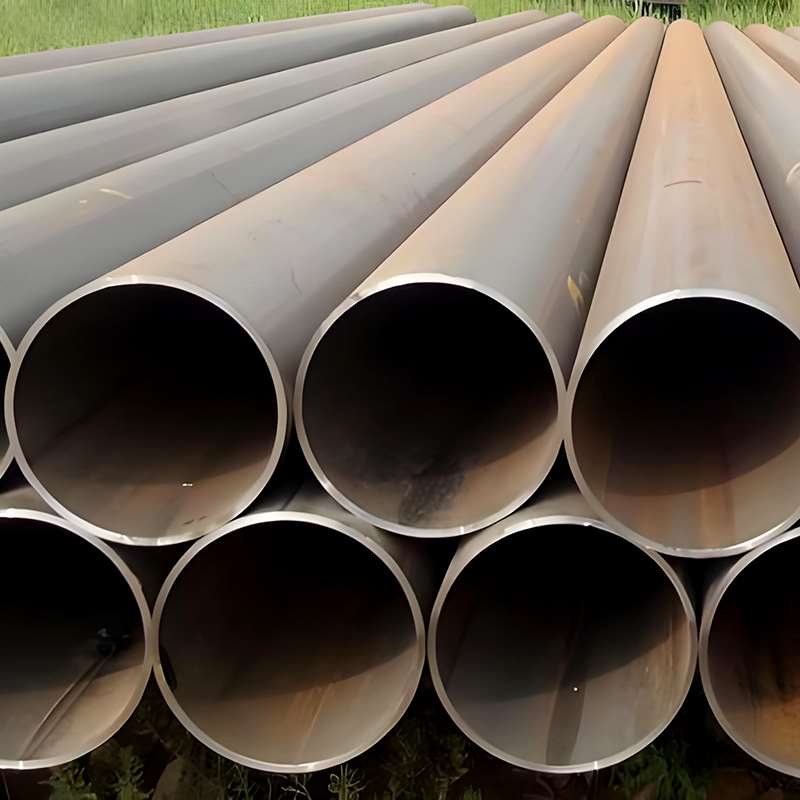
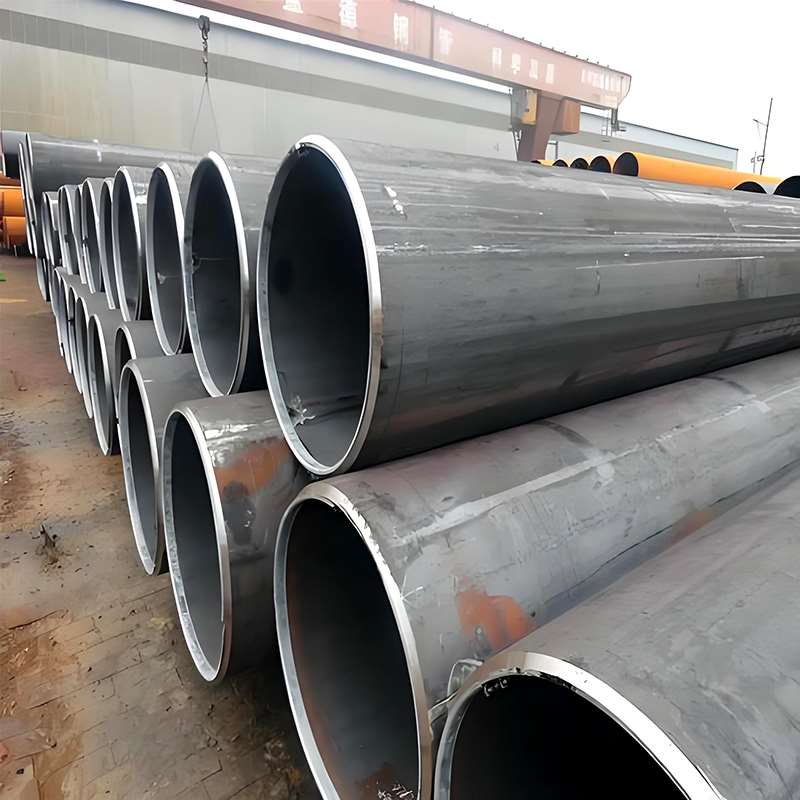
Welded carbon steel pipes have a wider range of applications, especially SSAW spiral welded pipes, which can be manufactured in large diameters (such as over 1420mm), suitable for urban water supply, drainage, and long-distance oil and gas pipelines. ERW carbon steel pipes are widely used in small and medium-diameter, mass-produced pipeline systems.
4. Price and Cost-Effectiveness
The manufacturing process of seamless carbon steel pipes is complex and costly, therefore their unit price is higher than that of welded pipes of the same specifications.
Welded carbon steel pipes have high production efficiency and good material utilization, resulting in a relatively lower price. They are suitable for medium and low-pressure engineering projects or large-diameter pipeline systems, offering better cost-effectiveness.
5. Ease of Installation and Processing
Welded carbon steel pipes have uniform wall thickness and standardized dimensions, making them easy to cut and weld, suitable for on-site installation and secondary processing.
Seamless carbon steel pipes have high strength, but are slightly more difficult to process, requiring specialized equipment for cutting and welding. Therefore, the cost and construction time may be slightly higher during construction.
6. Application Examples Comparison
Seamless carbon steel pipes: Boiler tubes, high-pressure oil transmission pipes, steam pipes, high-temperature fluid pipelines.
ERW carbon steel pipes: Medium and low-pressure water pipes, HVAC pipes, industrial structural pipes.
SSAW carbon steel pipes: Urban water supply pipelines, large-diameter drainage pipes, oil and gas long-distance transmission pipelines.
7. Seamless Carbon Steel Pipe vs. Welded Carbon Steel Pipe: Selection Guide
| Type | Manufacturing Process | Pressure / Working Conditions | Common Diameter | Main Applications | Key Features | Price / Cost-Performance |
|---|---|---|---|---|---|---|
| Seamless Carbon Steel Pipe | Hot rolling / Hot drawing / Cold drawing | High pressure, high temperature | 10mm – 610mm | Boiler tubes, steam pipes, oil & gas well pipes, high-pressure industrial pipelines | No weld seam inside or outside, strong pressure resistance, high-temperature resistant, long service life | High, performance-priority |
| ERW Carbon Steel Pipe | Electric Resistance Welding (ERW) | Medium to low pressure | 21.3mm – 610mm | Industrial piping, HVAC pipes, structural supports | High dimensional accuracy, smooth appearance, easy installation, suitable for bulk construction | Medium, cost-effective |
| SSAW Carbon Steel Pipe | Spiral Submerged Arc Welding (SSAW) | Medium to low/medium pressure, large-diameter, long-distance pipelines | 273mm – 1422mm | City water supply, drainage pipelines, large oil pipelines | Wide range of specifications, suitable for long-distance pipelines | Medium, suitable for large diameter |
| LSAW Carbon Steel Pipe | Longitudinal Submerged Arc Welding (LSAW) | High pressure, long-distance pipelines | 114.3mm – 1422mm | Oil and gas long-distance pipelines | Strong pressure capacity, suitable for high-pressure pipelines | High, suitable for critical conditions |
| Galvanized Carbon Steel Pipe | Electroplating / Hot-dip galvanizing | Medium to low pressure, corrosion-resistant | 21.3mm – 610mm | Water supply, HVAC systems, construction piping | Corrosion and rust-resistant, suitable for mild corrosive environments | Medium, suitable for indoor or mild corrosion |
| Structural Carbon Steel Pipe (EN 10219 / EN 10210) | Welded / Seamless | Low to medium pressure | 21.3mm – 610mm | Buildings, bridge supports, industrial structural components | High dimensional accuracy, strong and durable, suitable for structural applications | Medium, suitable for structural use |