
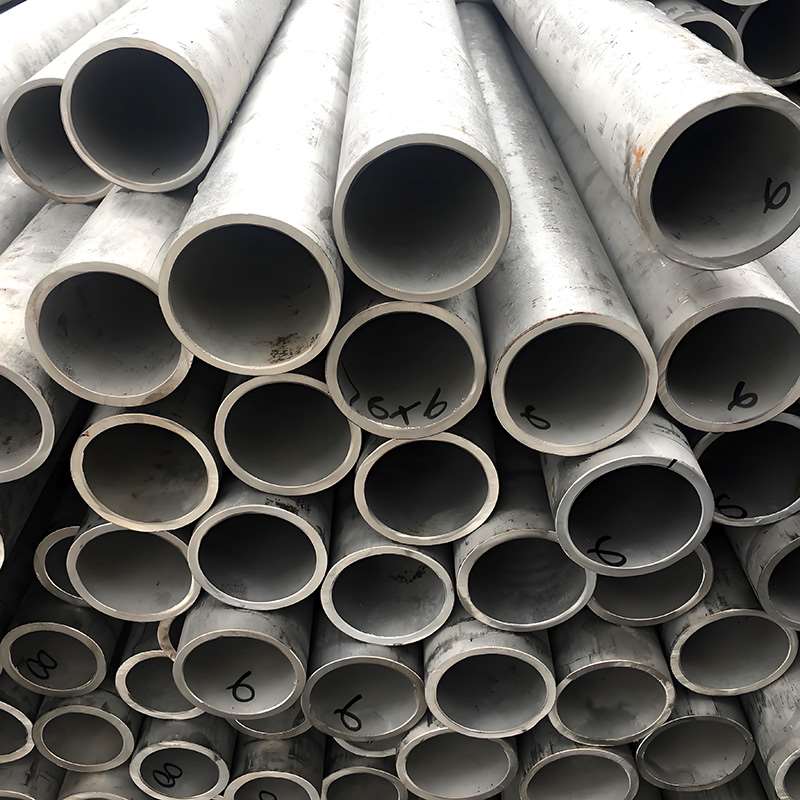
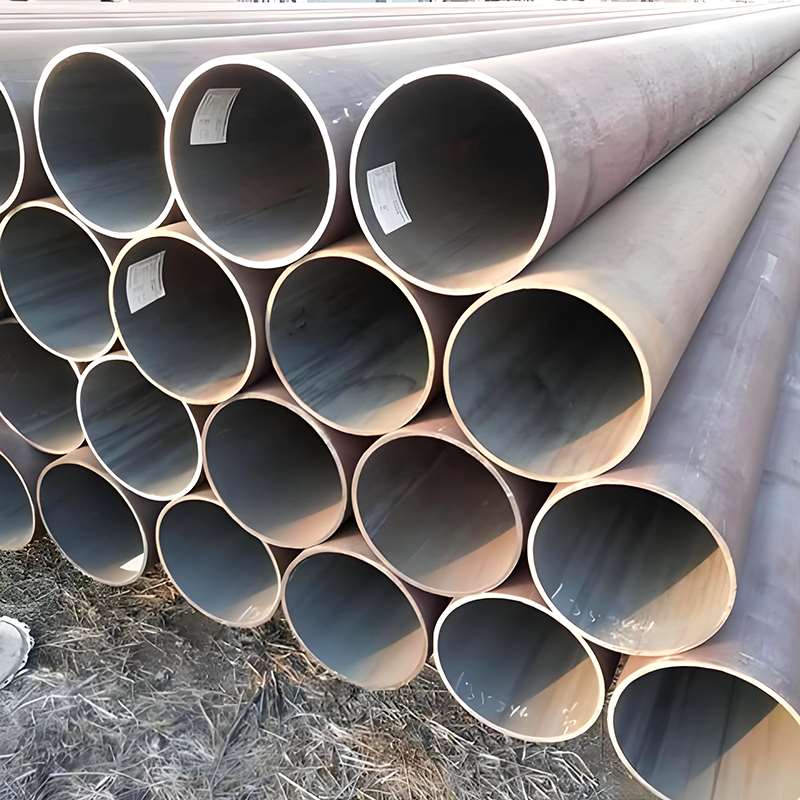
Thick-walled seamless carbon steel pipes are widely used in high-pressure fluid transportation, boiler equipment, oil and gas pipelines, and mechanical structures due to their high strength and excellent pressure-bearing performance.
This article will help engineers select the appropriate pipe specifications from a pressure analysis perspective.
I. Definition and Characteristics of Thick-Walled Seamless Carbon Steel Pipes
Thick-walled seamless carbon steel pipes refer to seamless steel pipes with a wall thickness to outer diameter ratio (S/D) greater than 0.05.
Their main characteristics include:
High resistance to internal pressure
Not easily deformed
Suitable for high-temperature and high-pressure environments
Suitable for deep machining
These pipes are commonly used to transport high-pressure steam, petroleum, chemical media, etc., and have extremely high safety requirements.
II. Main Factors Affecting Pressure Bearing Capacity
The pressure bearing capacity of thick-walled seamless carbon steel pipes is determined by a variety of factors, mainly including:
| Influencing Factor | Description |
|---|---|
| Wall Thickness (t) | Greater wall thickness increases pressure capacity |
| Outer Diameter (D) | Larger outer diameter increases stress per unit area |
| Material Strength (σ) | Higher yield strength allows higher allowable pressure |
| Operating Temperature (T) | Material strength decreases as temperature rises |
| Manufacturing Standard | Different standards (e.g., ASTM, GB, API) have different pressure calculation formulas |
III. Commonly Used Pressure Formulas for Thick-Walled Seamless Carbon Steel Pipes
According to ASME B31.3, the design pressure formula for thick-walled pipes is as follows:

Where:
P: Design pressure (MPa)
t: Wall thickness (mm)
D: Outer diameter (mm)
S: Allowable stress (MPa)
y: Welding coefficient (1 for seamless pipes)
IV. Pressure bearing capacity of thick-walled seamless carbon steel pipes of different specifications
| Outer Diameter (mm) | Wall Thickness (mm) | Material | Design Temperature (°C) | Allowable Stress (MPa) | Theoretical Max Working Pressure (MPa) |
|---|---|---|---|---|---|
| 60.3 | 10 | ASTM A106 Gr.B | 100 | 137 | 4.8 |
| 88.9 | 12 | ASTM A106 Gr.C | 150 | 152 | 5.1 |
| 114.3 | 14 | ASTM A53 Gr.B | 200 | 125 | 4.2 |
| 168.3 | 20 | ASTM A335 P11 | 450 | 100 | 3.8 |
| 219.1 | 30 | 20# Carbon Steel | 300 | 120 | 4.3 |
Conclusion and Analysis:
Increasing the wall thickness from 10mm to 30mm increases the pressure-bearing capacity by approximately 60%.
In high-temperature environments (>300°C), the allowable stress decreases significantly; therefore, the wall thickness should be appropriately increased or alloy steel pipes should be selected.
V. Engineering Selection Recommendations
When selecting thick-walled seamless carbon steel pipes for engineering projects, the following recommendations can be considered:
| Application Scenario | Recommended Wall Thickness Range | Recommended Standard | Remarks |
|---|---|---|---|
| High-Pressure Steam Pipeline | 14–25 mm | ASTM A106 / A335 | High temperature and pressure requirements |
| Oil & Gas Transportation | 12–30 mm | API 5L / GB 9711 | Corrosion protection required |
| Chemical Fluid Piping | 10–20 mm | ASTM A53 / GB 8163 | Pay attention to medium corrosiveness |
| Mechanical Structural Pipe | ≥16 mm | GB/T 8162 | Mainly withstand external forces or impact |
VI. Pressure Classification Reference for Thick-Walled Seamless Carbon Steel Pipes
| Pressure Class | Working Pressure Range (MPa) | Typical Applications |
|---|---|---|
| Medium Pressure | 1.6 – 3.2 | Conventional liquid transport |
| High Pressure | 3.2 – 6.4 | Boilers, heat exchange systems |
| Ultra-High Pressure | ≥6.4 | Chemical, nuclear power, oil & gas drilling systems |
For example: If the engineering system is designed for a pressure of 5 MPa, it is recommended to select ASTM A106 Gr.C thick-walled seamless carbon steel pipes with an outer diameter ≤114mm and a wall thickness ≥12mm.
VII. Safety and Inspection of Thick-Walled Pipes
To ensure long-term stable operation, it is recommended to:
Perform regular hydrostatic tests: generally at 1.5 times the working pressure.
Ultrasonic testing: to check for defects such as delamination and porosity.
High-temperature performance verification: to ensure that the material does not creep or become unstable at high temperatures.
Internal and external corrosion protection: especially for pipelines transporting acidic media or in marine environments.
VIII. How to Select Suitable Thick-Walled Seamless Carbon Steel Pipes
When selecting thick-walled seamless carbon steel pipes, key considerations include:
- Operating pressure and temperature range
- Material grade and manufacturing standard
- Media used (steam, gas, oil, etc.)
- Budget and long-term maintenance costs
Recommendation:
For systems with pressures exceeding 5 MPa or temperatures exceeding 400°C, ASTM A335 alloy thick-walled seamless carbon steel pipes are preferred.
For general industrial transport, ASTM A106 Gr.B or GB/T 8162 thick-walled pipes are sufficient.