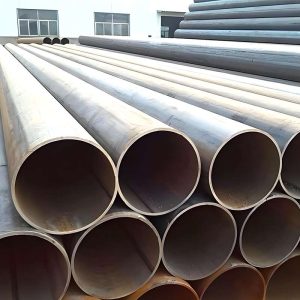
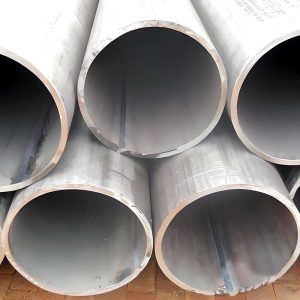
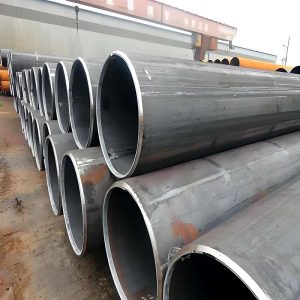
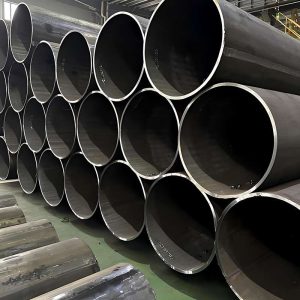
I. Overview of Welded Stainless Steel Pipes
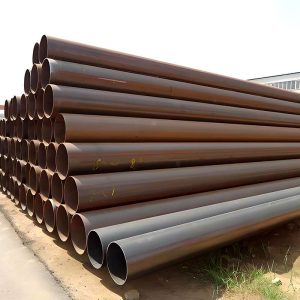
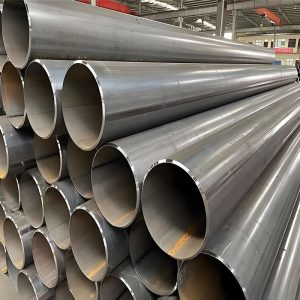
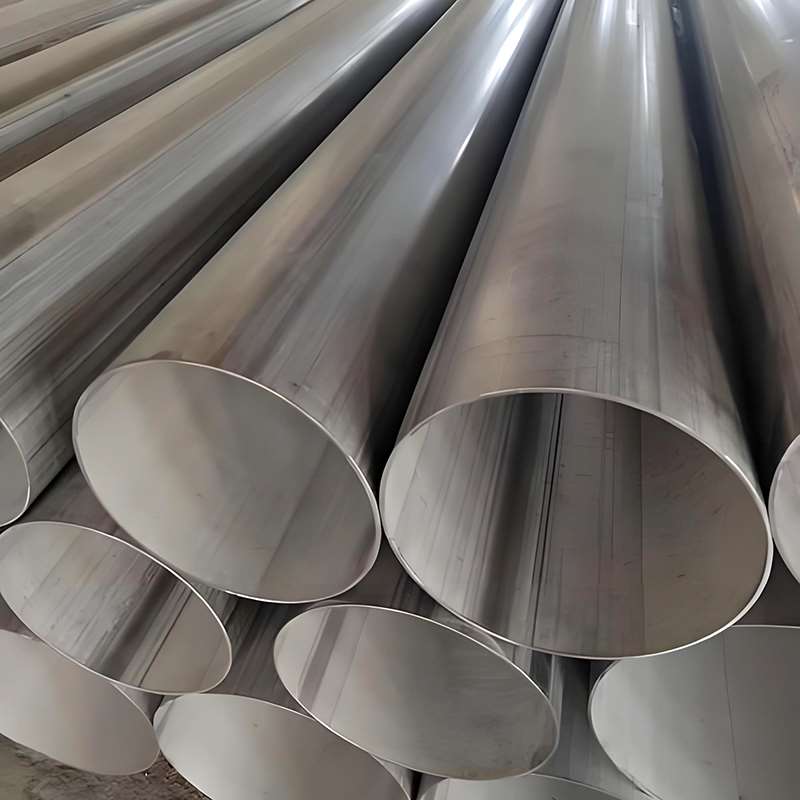
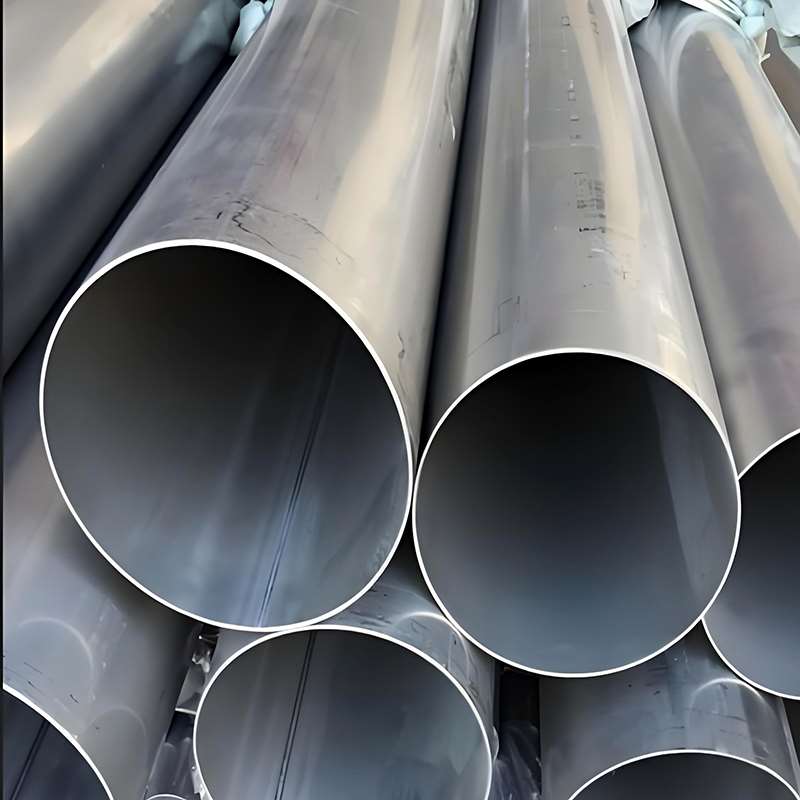
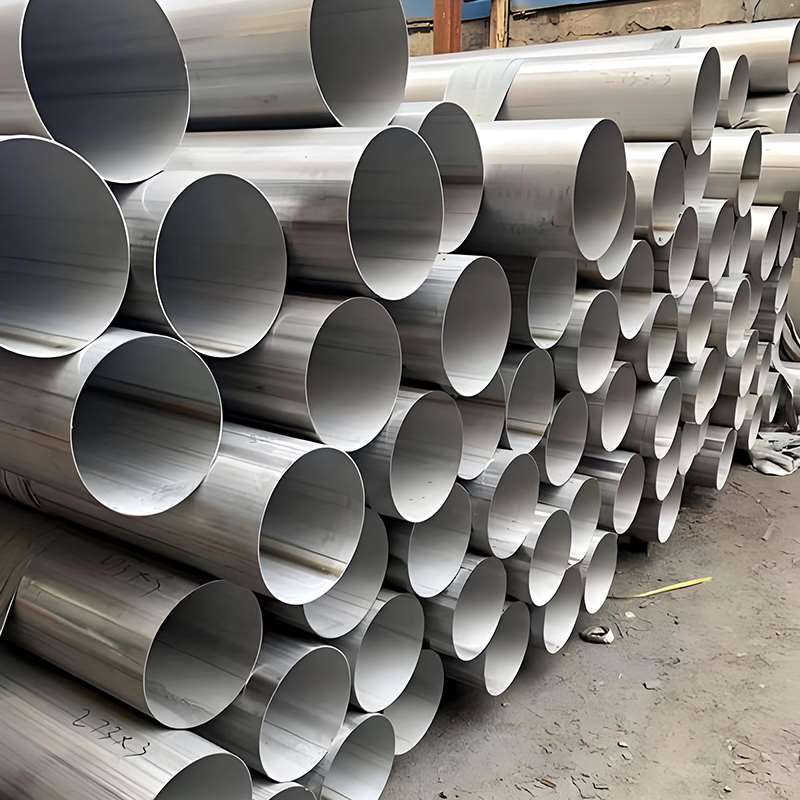
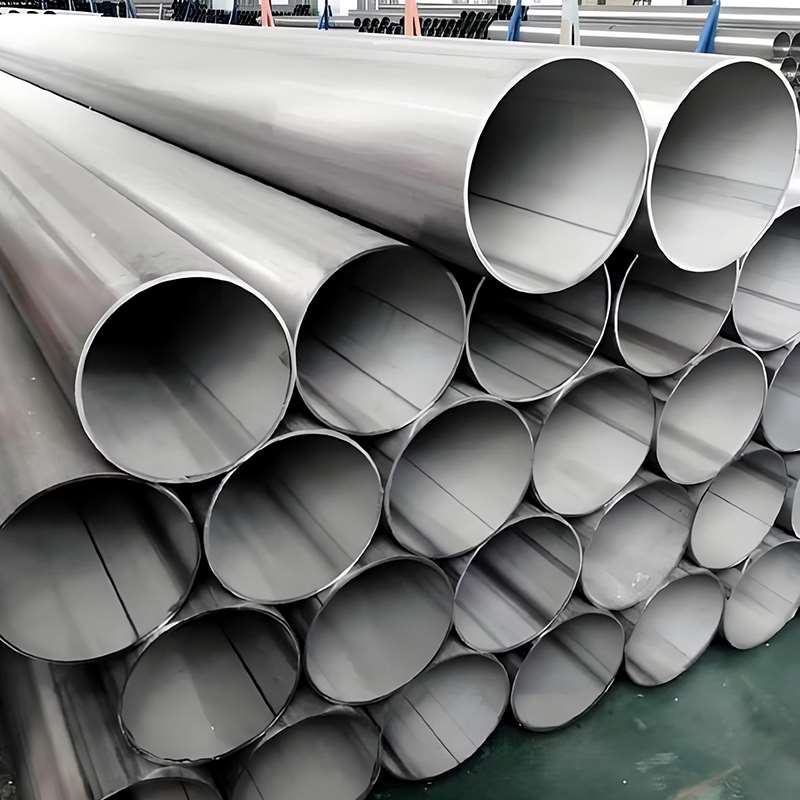
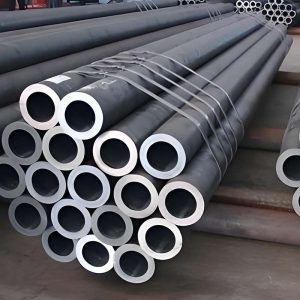
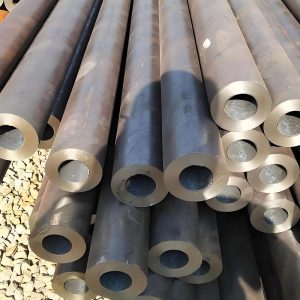
Welded stainless steel pipes are manufactured from stainless steel coils or strips that are rolled and welded into tubes. Compared to seamless pipes, welded pipes have lower costs and higher production efficiency, making them suitable for medium- and low-pressure, corrosion-resistant industrial pipelines and engineering projects.
Main Features:
- High-quality welding forms the pipe body, resulting in a smooth surface and high dimensional accuracy.
- Excellent corrosion resistance, suitable for acids, alkalis, salt water, and general chemical media.
- Can be processed into various lengths, wall thicknesses, and diameters to meet different engineering requirements.
- Diverse surface treatments are available, including polishing, brushing, and pickling passivation, suitable for industrial, sanitary, or decorative applications.
Typical Applications:
- Chemical and petrochemical pipeline systems
- Power plant boilers and heat exchangers
- Food, pharmaceutical, and beverage conveying pipelines
- Architectural decoration and mechanical structural supports
II. Welding Types for Stainless Steel Pipes
1. Straight Seam Welded Pipe (ERW / TIG / MIG)
Process Description: Stainless steel strips are rolled into a circular shape and welded along the longitudinal direction to form a pipe.
Features:
- High precision, uniform weld seam
- Suitable for small and medium-diameter pipes (generally ≤ 508 mm)
- Low cost, high production efficiency
Common Applications: Chemical pipelines, food and pharmaceutical pipelines, decorative pipelines
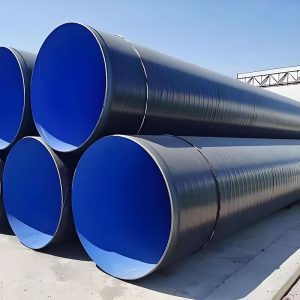
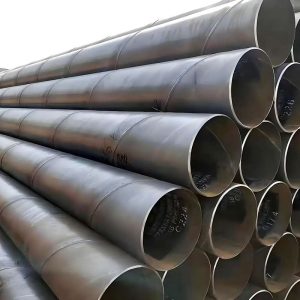
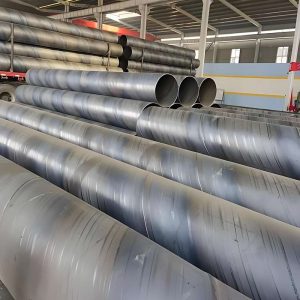
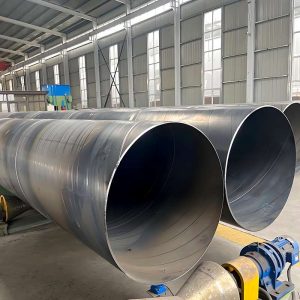
2. Spiral Welded Pipe (SSAW / HSAW)
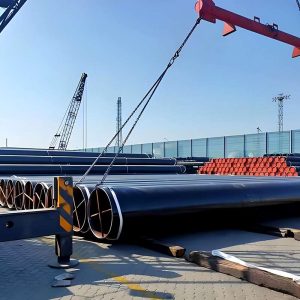
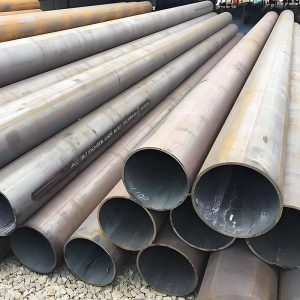
Process Description: Steel plates are rolled into a spiral shape, and the pipe body is formed through welding.
Features:
- Suitable for large-diameter and thick-walled pipes
- Weld seam runs along the spiral direction, providing good pressure resistance
- Flexible dimensions, length and diameter can be customized according to requirements
Common Applications: Large industrial pipelines, water pipelines, oil pipelines
3. Classification of Welding Methods
| Welding Method | Characteristics | Applications |
|---|---|---|
| TIG (Tungsten Inert Gas Welding) | Smooth weld seam and high weld quality; suitable for thin-walled pipes | Chemical processing, food & pharmaceutical industries, decorative tubing |
| MIG (Metal Inert Gas Welding) | High welding speed; suitable for medium to thick-walled pipes | General industrial piping, mechanical and structural applications |
| ERW (Electric Resistance Welding) | High-efficiency welding; suitable for small to medium diameter pipes | Medium- and low-pressure industrial and chemical pipelines |
| HSAW / SSAW (Helical Submerged Arc Welding / Spiral Submerged Arc Welding) | Suitable for large-diameter and thick-walled pipes with high pressure-bearing capacity | Water transmission, oil & gas pipelines, and large-scale industrial piping |
4. Welded Pipe Selection Recommendations
- Small to medium diameter, high precision requirements → Straight seam welding (ERW / TIG / MIG)
- Large diameter, thick wall, high pressure resistance → Spiral welding (SSAW / HSAW)
- High corrosion resistance requirements, sanitary pipelines → TIG welding or low-carbon steel grades (304L / 316L)
- Economical medium and low-pressure pipelines → ERW resistance welding
III. Chemical Composition and Mechanical Properties of Welded Stainless Steel Pipes
i. Chemical Composition Table (%)
| Steel Grade | C | Si | Mn | P | S | Cr | Ni | Mo |
| 304 | ≤0.08 | ≤1.0 | ≤2.0 | ≤0.045 | ≤0.03 | 18.0–20.0 | 8.0–10.5 | — |
| 304L | ≤0.03 | ≤1.0 | ≤2.0 | ≤0.045 | ≤0.03 | 18.0–20.0 | 8.0–12.0 | — |
| 316 | ≤0.08 | ≤1.0 | ≤2.0 | ≤0.045 | ≤0.03 | 16.0–18.0 | 10.0–14.0 | 2.0–3.0 |
| 316L | ≤0.03 | ≤1.0 | ≤2.0 | ≤0.045 | ≤0.03 | 16.0–18.0 | 10.0–14.0 | 2.0–3.0 |
| 321 | ≤0.08 | ≤1.0 | ≤2.0 | ≤0.045 | ≤0.03 | 17.0–19.0 | 9.0–12.0 | — |
| 310S | ≤0.08 | ≤1.5 | ≤2.0 | ≤0.045 | ≤0.03 | 24.0–26.0 | 19.0–22.0 | — |
| 2205 | ≤0.03 | ≤1.0 | ≤2.0 | ≤0.03 | ≤0.02 | 21.0–23.0 | 4.5–6.5 | 2.5–3.5 |
ii. Mechanical Properties Table
| Grade | Tensile Strength (MPa) | Yield Strength (MPa) | Elongation (%) | Hardness (HB) |
|---|---|---|---|---|
| 304 | 520–720 | ≥205 | ≥40 | 140–200 |
| 304L | 485–620 | ≥170 | ≥40 | 140–200 |
| 316 | 520–720 | ≥205 | ≥40 | 140–200 |
| 316L | 485–620 | ≥170 | ≥40 | 140–200 |
| 321 | 520–720 | ≥205 | ≥40 | 140–200 |
| 310S | 515–700 | ≥205 | ≥35 | 140–200 |
| 2205 (Duplex Stainless Steel) | 620–850 | 450–600 | ≥25 | 190–230 |
IV. Common Application Areas of Welded Stainless Steel Pipes
- Chemical and Petrochemical Industry
Transport of acids, alkalis, salts, and other corrosive chemical media
Storage tanks, reactors, and piping systems
High requirements for corrosion resistance and welding quality - Power and Boiler Industry
Steam pipelines and heat exchanger tubes in power plants
Boiler feedwater and steam transport pipes
Requires high temperature and pressure resistance and anti-scaling properties - Food, Beverage, and Pharmaceutical Industry
Pipes for transporting milk, beverages, beer, and liquid foods
Pipes for pharmaceutical liquids and pure water
Requires sanitary grade, corrosion resistance, and easy cleaning - Construction and Decoration
Curtain walls, handrails, railings, and decorative pipes
Durable and aesthetically pleasing stainless steel decoration
Surface can be polished or brushed - Mechanical Manufacturing and Structural Tubing
Machine frames, support structures, and pipe supports
Lightweight, high strength, and corrosion resistant
Common steel grades: 304, 316, 2205 - Marine and Seawater Environments
Seawater transport, dock pipelines, and ship pipelines
Requires resistance to chloride corrosion; 316 or duplex stainless steel (2205) is recommended