Products

Related News

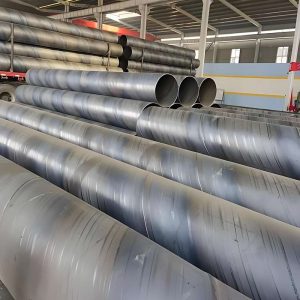
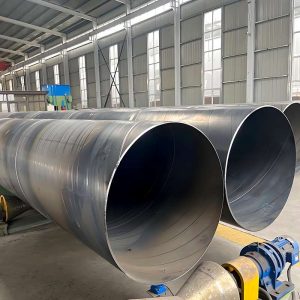
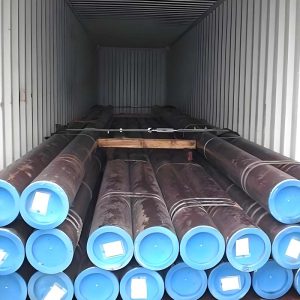
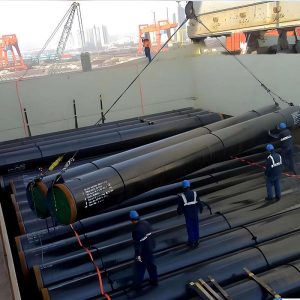
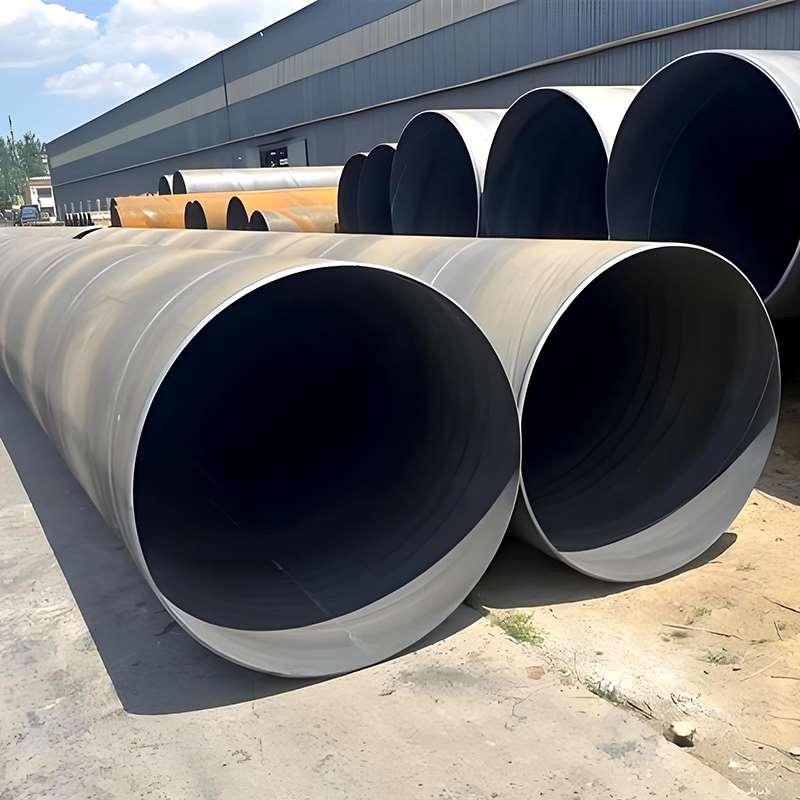
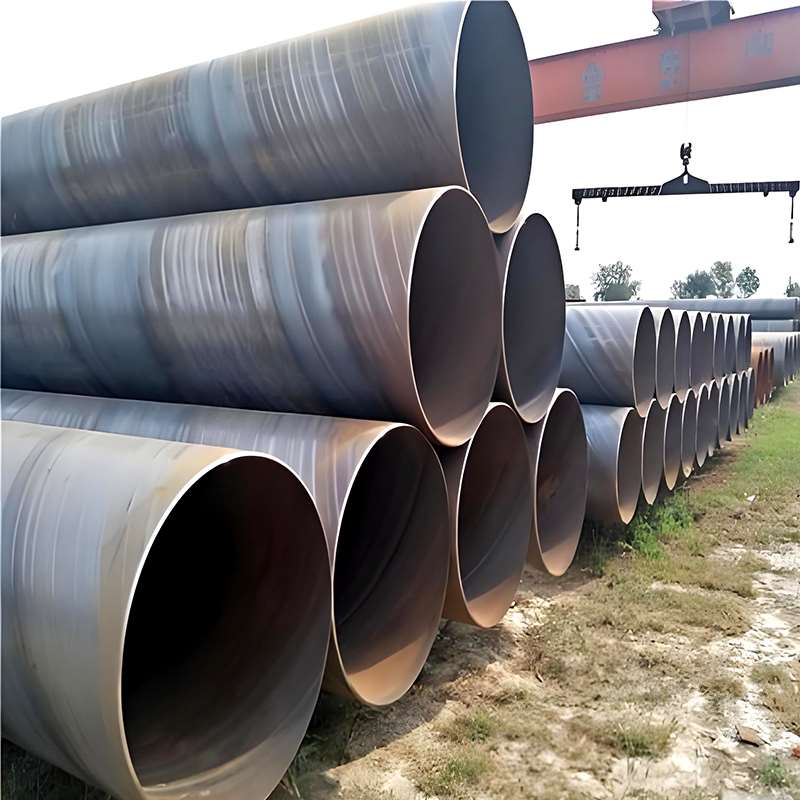
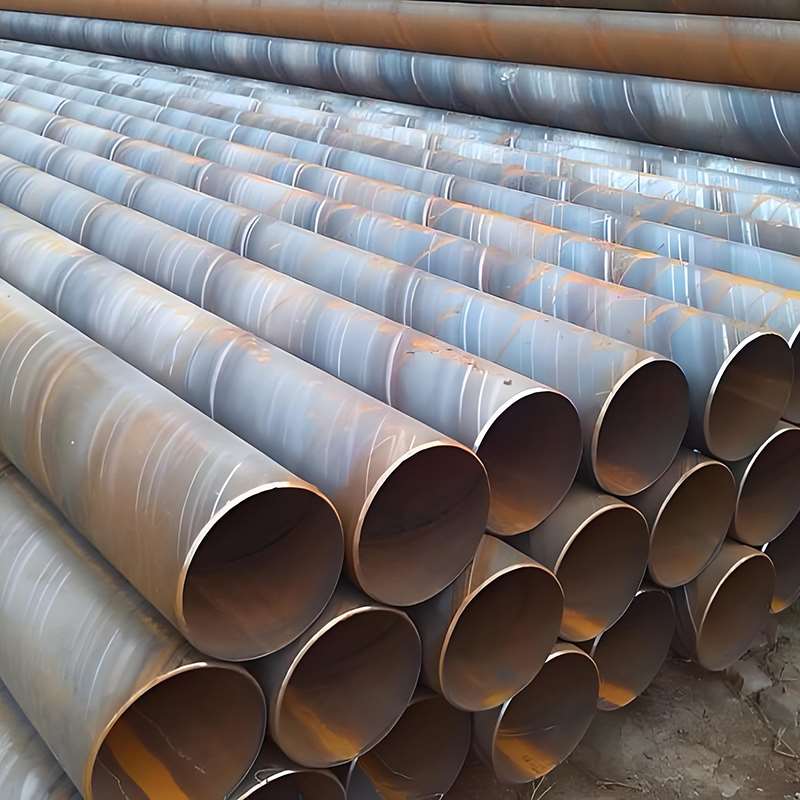
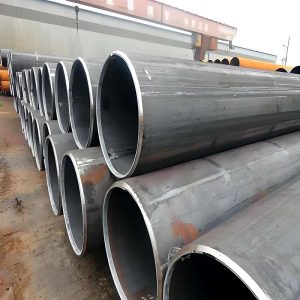
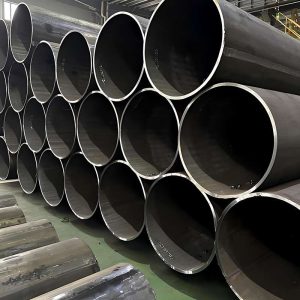
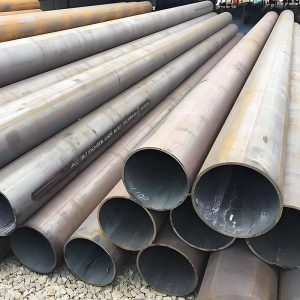
SSAW Carbon Steel Pipe

OD Range :

Φ219 mm – Φ3620 mm

WT Range :

6.0 mm – 25.0 mm

Length :

6 m / 9 m / 12 m

Tolerance :

Outer diameter: ±1.0% or ±0.5 mm / Wall thickness: ±10% / Ovality: ≤ 1.0% of the outer diameter / Straightness: ≤ 0.2% of the length

Material :

Q235B、Q355B、API 5L Gr.B、X42、X52、X60

Standard :

API 5L、ASTM A252、ASTM A139、EN 10219、EN 10208、GB/T 9711

Surface :

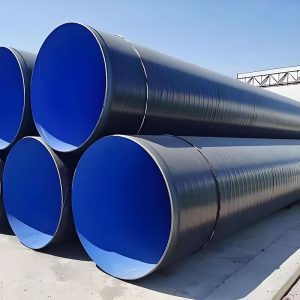
Black pipe / Anti-rust oil / Painting / FBE / 3LPE / 3PP

Application :

Water pipelines, oil and gas transportation, piling projects, structural tubing, municipal engineering, marine engineering projects

I. What are SSAW Carbon Steel Pipes?

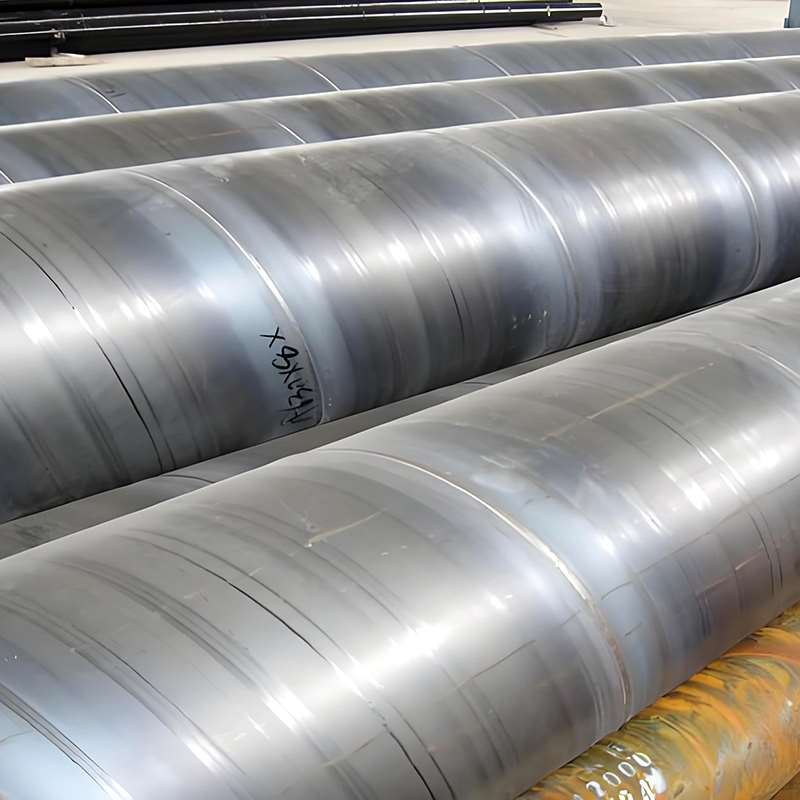
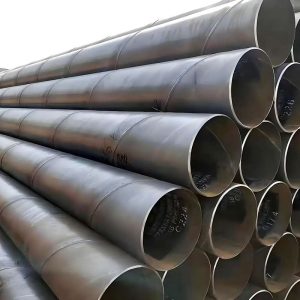
SSAW carbon steel pipes are welded steel pipes manufactured from hot-rolled steel coils using a spiral forming and double-sided submerged arc welding (SAW) process.
The weld seam is distributed in a continuous spiral pattern, resulting in a relatively uniform stress distribution when the pipe is under pressure, making it particularly suitable for manufacturing large-diameter steel pipes.

Key Features:

  • Can produce ultra-large diameter steel pipes
  • High raw material utilization rate
  • Relatively low unit cost
  • Suitable for long-distance, low-to-medium pressure transportation systems

II. SSAW Carbon Steel Pipes: Suitable Applications

i. Water Supply and Drainage Engineering

(1) Applicable Scenarios:

  • Raw water transmission pipelines
  • Urban water supply and drainage networks
  • Industrial circulating water systems
  • Agricultural irrigation pipelines

(2) Why are they suitable?

  • Can be manufactured in extra-large diameters, reducing the number of welds.
  • Operating pressure is typically low to medium pressure.
  • Significantly lower cost than seamless pipes and LSAW pipes.
  • Long service life when combined with internal and external anti-corrosion coatings (such as FBE, 3LPE).

(3) Practical Suggestions:

For buried water transmission projects, priority should be given to confirming the anti-corrosion system and water pressure test records.

ii. Municipal Infrastructure Projects

(1) Applicable Scenarios

  • Urban underground utility tunnels
  • Rainwater and sewage drainage systems
  • Municipal renovation projects

(2) Why is it suitable?

  • Short delivery time, suitable for projects with tight deadlines
  • Flexible pipe diameter specifications and strong customization capabilities
  • Easy for on-site welding and installation

(3) Points to note:

Municipal engineering projects usually have high requirements for appearance and dimensional consistency; attention should be paid to controlling ovality and straightness.

iii. Steel Pipe Piles and Pile Foundation Engineering (Structural Applications)

(1) Applicable Scenarios

  • Building foundation piles
  • Bridge and dock pile foundations
  • Temporary or permanent support structures

(2) Why is it suitable?

  • Large diameter and thick wall specifications are easily achievable
  • Excellent bending resistance
  • Significantly lower cost than seamless structural pipes

(3) Key Points:

  • Focus on the minimum measured wall thickness
  • 100% ultrasonic testing (UT) of welds is recommended
  • Hydrostatic testing is usually not required, but dimensions and weld quality are very important

iv. Structural and Engineering Applications

(1) Applicable Scenarios

  • Steel structure supports
  • Bridge auxiliary structures
  • Large-diameter structural pipes for industrial equipment

(2) Why is it suitable?

  • Low internal pressure requirements
  • Greater focus on structural strength and rigidity
  • SSAW pipes offer excellent cost-effectiveness for large-sized structural components

v. In which scenarios is it not recommended to prioritize the use of SSAW carbon steel pipes?

  • High-pressure natural gas transmission pipelines
  • Extreme low or high temperature conditions
  • Highly corrosive media where reliable corrosion protection is not possible
  • Designs that are extremely sensitive to weld direction

III. Six Key Points to Consider When Purchasing SSAW Carbon Steel Pipes

  1. Does the standard meet the intended application?
    Water supply/municipal: EN 10219, GB/T 9711
    Oil and gas related: API 5L (confirm PSL level)
  2. Weld inspection ratio
    100% weld UT is a basic requirement
    Whether RT is required depends on the project specifications
  3. Wall thickness tolerance control
    Usually ±10% is required
    For piling projects, pay attention to the minimum measured wall thickness
  4. Is the anti-corrosion plan clearly defined?
    Buried projects: 3LPE / FBE
    Temporary or indoor use: Painting or rust-proof oil
  5. Pipe end processing requirements
    Plain end or beveled end
    Whether machined beveling is required
  6. Are all factory documents complete?
    Material certificate (MTC)
    Non-destructive testing report
    Hydrostatic test record

IV. Common Problems and Misconceptions about SSAW Carbon Steel Pipes

Misconception 1: SSAW pipes cannot be used in pressure systems.
In reality, with reasonable design pressure and proper testing, SSAW pipes can be perfectly used in medium and low-pressure conveying systems.

Misconception 2: Spiral welds are always inferior to straight welds.
Weld quality depends on the welding process and inspection level, not the shape of the weld itself.

Misconception 3: Focusing only on price, ignoring standards.
Low prices but non-compliant with standards often lead to higher risks in the long run.
Related Products

SSAW Carbon Steel Pipe Specifications and Dimensions Table

Nominal Diameter DN Outer Diameter OD Common Wall Thickness Range Common Length
DN200 219 6.0 – 10.0 6 / 9 / 12
DN250 273 6.0 – 10.0 6 / 9 / 12
DN300 325 6.0 – 12.0 6 / 9 / 12
DN350 377 6.0 – 12.0 6 / 9 / 12
DN400 426 6.0 – 14.0 6 / 9 / 12
DN450 478 6.0 – 14.0 6 / 9 / 12
DN500 529 6.0 – 16.0 6 / 9 / 12
DN600 630 7.0 – 18.0 6 / 9 / 12
DN700 720 7.0 – 18.0 9 / 12
DN800 820 8.0 – 20.0 9 / 12
DN900 920 8.0 – 22.0 9 / 12
DN1000 1020 8.0 – 24.0 9 / 12
DN1100 1120 9.0 – 25.0 9 / 12
DN1200 1220 9.0 – 25.0 9 / 12
DN1400 1420 10.0 – 26.0 9 / 12
DN1600 1620 10.0 – 26.0 9 / 12
DN1800 1820 10.0 – 28.0 9 / 12
DN2000 2020 10.0 – 30.0 9 / 12
DN2200 2220 12.0 – 32.0 9 / 12
DN2400 2420 12.0 – 32.0 9 / 12
DN2600 2620 12.0 – 34.0 9 / 12
DN2800 2820 14.0 – 36.0 9 / 12
DN3000 3020 14.0 – 40.0 9 / 12
DN3200 3220 16.0 – 40.0 9 / 12
DN3500 3520 16.0 – 40.0 9 / 12

Specifications:

Outer Diameter Range: Φ219 – Φ3520 mm
Wall Thickness Range: 6.0 – 40.0 mm
Standard Lengths: 6 m / 9 m / 12 m
Custom lengths available (typically ≤ 18 m)
Wall Thickness Tolerance: ±10%
Outer Diameter Tolerance: ±1.0% or ±0.5 mm (whichever is greater)
Welding Method: Double-sided spiral submerged arc welding (SAW)


Common Standards Table for SSAW Carbon Steel Pipes

Standard Type Standard No. Application Scope / Description
Domestic Standards (China) GB/T 9711.1-2017 Steel pipes for pipeline transportation (oil, gas, water, and general fluids)
GB/T 6728-2002 Structural steel pipes (piling, bridges, building structures)
GB/T 3091-2015 Longitudinal welded steel pipes for water transmission and general structural use (also applicable to spiral welded pipes)
International Standards / Oil & Gas Pipelines API 5L Steel pipes for oil and natural gas pipelines (PSL1 / PSL2 grades)
International Standards / ASTM Series ASTM A252 Steel pipe piles (structural applications)
ASTM A139 Welded steel pipes for refinery service, water transmission, and general structural use
International Standards / EN Series EN 10219 Cold formed welded hollow section steel pipes (structural applications)
EN 10208 Steel pipes for pressure fluid transportation (oil and gas pipelines)
Corrosion Protection Standards ISO 21809 External coatings for buried pipelines (FBE / 3LPE / 3PP)


SSAW Carbon Steel Pipe Production Process Flow:

Steel plate inspection → Steel plate pretreatment → Forming → Tack welding → Internal welding → External welding → Non-destructive testing → Expanding → Heat treatment (as required) → Hydrostatic testing → Dimensional and appearance inspection → Anti-corrosion treatment → Marking and dispatch

Detailed Process Description

1. Steel Plate Inspection
The hot-rolled steel coils are tested for chemical composition and mechanical properties to ensure that the raw materials meet the standards.
2. Steel Plate Pre-treatment
The steel plates are straightened, milled at the edges, and descaled to remove oxide scale and burrs, preparing them for welding.
3. Forming (Spiral Rolling)
The steel plates are rolled into pipe blanks using a spiral rolling machine, forming a spiral bevel groove, preparing the shape for welding.
4. Tack Welding
The pipe blanks are tack welded to ensure uniform weld gap and prevent welding misalignment.
5. Internal Welding (Submerged Arc Welding)
Multi-wire submerged arc automatic welding is used to weld the inside of the pipe, ensuring a dense weld without pores or slag inclusions.
6. External Welding (Submerged Arc Welding)
Submerged arc welding is performed on the outside of the pipe to form a complete spiral weld, improving the pressure bearing capacity of the pipe.
7. Non-destructive Testing
Ultrasonic testing (UT) is performed on the internal and external welds, and radiographic testing (RT) is performed if necessary, to ensure weld quality.
8. Expanding
Mechanical expansion is used to correct roundness and straightness, and simultaneously relieve some welding stress.
9. Heat Treatment (as needed)
Normalizing or stress relief treatment is performed to improve the mechanical properties and weld stability of the steel pipe, commonly used for thick-walled or high-strength steel.
10. Hydrostatic Testing
Each pipe is tested with hydrostatic pressure to verify its pressure resistance, ensuring no leakage or plastic deformation.
11. Dimensional and Appearance Inspection
The outer diameter, wall thickness, ovality, straightness, and weld reinforcement height are checked to ensure compliance with standards.
12. Anti-corrosion Treatment (as needed)
The pipe body is treated with black pipe coating, rust-proof oil, paint, FBE, 3LPE, or 3PP to enhance corrosion resistance.
13. Marking and Shipment
Material, specifications, heat number, and other information are marked, and a material test certificate (MTC) and inspection report are provided before packaging and shipment.


SSAW Carbon Steel Pipe Inspection Standards Table

Inspection Stage Inspection Item Test Method Standard Requirement / Remarks
Raw Material Inspection Chemical composition Spectrometric analysis Compliant with GB/T 9711, API 5L, EN 10208, and related standards
Mechanical properties Tensile test, impact test Yield strength, tensile strength, and elongation meet requirements
Plate surface quality Visual inspection Free from cracks, laps, inclusions, and obvious defects
Pre-forming Plate dimensions Dimensional measurement Thickness, width, and tolerances comply with standards
Welding Tack weld inspection Visual inspection No mismatch or misalignment
Inner weld seam Ultrasonic Testing (UT) 100% inspection; no porosity or lack of fusion inside the weld
Outer weld seam Ultrasonic Testing (UT) 100% inspection; continuous and uniform weld quality
Weld seam radiographic testing Radiographic Testing (RT, as required) Defect acceptance level complies with standard requirements
Post-forming Expanding quality Dimensional re-inspection Roundness and straightness meet standards
Heat Treatment Stress relieving / normalizing Record review and sampling inspection Applicable to thick-wall or high-strength pipes
Finished Product Testing Hydrostatic test Hydrostatic pressure test No leakage or plastic deformation; test pressure ≥ design pressure
Visual inspection Visual check Pipe surface free from cracks, dents, and weld spatter
Dimensional inspection Caliper / tape measurement Outside diameter, wall thickness, and length within tolerance
Ovality Dimensional calculation ≤ 1% of outside diameter
Weld reinforcement Gauge measurement Complies with weld profile requirements
Pipe end bevel Angle measurement Compliant with ASME B16.25
Coating Inspection Thickness and adhesion Thickness gauge, holiday test Uniform FBE / 3LPE / 3PP coating, free from pinholes
Final Inspection Marking and documentation Review Complete MTC, NDT reports, and hydrostatic test records


SSAW Carbon Steel Pipe Common Problems and Solutions (FAQ)

Q1: SSAW carbon steel pipes are prone to bending or deformation during construction. How can this be avoided?

A1: SSAW carbon steel pipes, due to their large diameter and thick walls, are prone to bending due to their own weight during transportation and lifting.
Suggestions:
Use special supports during transportation to prevent the pipe body from being subjected to prolonged stress while suspended.
Ensure even force distribution during lifting, using soft slings or clamps.
If necessary, perform slight straightening on-site, but avoid excessive force or bending.

Q2: How to prevent leaks or porosity in welds during pipe welding?

A2: Weld quality is crucial for the reliability of SSAW pipes.
Solutions:
Ensure that the welding bevel is processed smoothly and the weld gap is consistent.
Use automatic submerged arc welding equipment to improve weld uniformity.
Perform 100% ultrasonic testing (UT) after welding, and radiographic testing (RT) if necessary.
During on-site welding, strictly control the welding current and speed to prevent porosity formation.

Q3: SSAW carbon steel pipes are prone to corrosion, especially buried pipes. How can this be prevented?

A3: Corrosion is likely to occur in buried or humid environments.
Suggestions:
Select a suitable anti-corrosion coating (such as FBE, 3LPE, 3PP) based on the engineering environment.
Perform thickness and adhesion testing after the anti-corrosion coating is applied.
During buried construction, keep the pipe surface clean and avoid sharp objects scratching the anti-corrosion layer.
Long-term maintenance: Regularly inspect the anti-corrosion status of the pipe surface.

Q4: SSAW carbon steel pipes, especially large-diameter pipes, are difficult to transport. How can safety be ensured?

A4: Large-diameter pipes are heavy, and improper transportation can easily lead to deformation or damage:
Use flatbed trucks or specialized transport racks, and add padding between pipes.
Avoid stacking pipes during transportation to prevent direct collisions.
For long-distance transportation, ensure the pipes are securely fixed, and prepare unloading equipment at the unloading site.

Q5: Improper pipe end beveling can affect welding quality. How can this be resolved?

A5: Pipe end beveling is crucial for ensuring welding integrity:
Use a professional beveling machine or processing equipment, ensuring the bevel angle meets the standard (usually 37.5° ± 2°).
Clean the bevel end thoroughly, removing scale and burrs.
Before welding, confirm that the pipe end fit-up gap is uniform.

Q6: How to ensure the long-term stable use of large-diameter SSAW pipelines after installation?

A6: Maintenance after pipeline installation is equally important:
Conduct hydrostatic or pneumatic testing according to design requirements to check weld integrity.
Apply a protective anti-corrosion coating to buried pipelines to prevent mechanical damage.
Regularly inspect the pipeline markings, bevels, and anti-corrosion coating condition.
For long-term operating water or oil and gas pipelines, it is recommended to perform non-destructive testing (UT/pressure testing) every 5–10 years.