Products

Related News

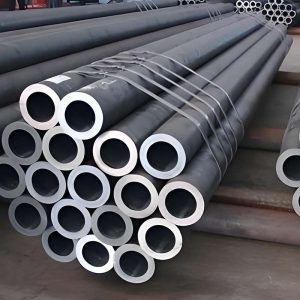
Seamless Carbon Steel Pipe

OD Range :

6 mm – 610 mm (customizable)

WT Range :

1 mm – 50 mm (customizable according to standards and requirements)

Length :

6 m – 12 m (can be cut to specified lengths or customized to customer requirements)

Tolerance :

Outer diameter ±1%, Wall thickness ±10%, Length ±0.5% (per ASTM standard)

Material :

ASTM A106 Grade B, ASTM A53 Grade B, API 5L B, Q235, Q345, and other carbon steel materials

Standard :

ASTM A106, ASTM A53, API 5L, EN 10255, and other international standards

Surface :

Black Painted, Rust-proof Oil Coating, Hot-dip Galvanized, Pickled

Application :

High-temperature steam pipelines, boiler piping systems, petroleum, chemical, construction, mechanical equipment, and pressure pipeline systems

I. Introduction to Seamless Carbon Steel Pipes

Seamless carbon steel pipes are tubes manufactured without welded seams, formed entirely by extrusion or piercing of steel billets. Unlike welded pipes, they are produced through hot-working processes that ensure uniform wall thickness, high strength, and excellent pressure-bearing capacity. These pipes find extensive applications in industrial and municipal sectors, particularly for high-pressure, thick-walled, and critical transportation pipelines.

i. Key Features

High Strength and Pressure Resistance: Seamless construction ensures stable performance under high-pressure conditions.
Uniform Wall Thickness: Guarantees safe and reliable fluid transportation while minimizing weak points.
Exceptional Durability: Suitable for long-term operation and harsh environments.
Excellent Workability: Supports secondary processing such as bending, cutting, and welding.

ii. Common Applications

Oil and natural gas transmission pipelines
Chemical, boiler, and steam piping systems
High-pressure hydraulic and liquid transfer lines
Building structural and mechanical equipment piping

II. Common Parameters for Seamless Carbon Steel Pipes

Parameter NameValue / RangeDescription
MaterialCarbon SteelCommonly Q195, Q215, Q235, ASTM A106 Gr.B, etc.
Outer Diameter (OD)6 mm – 660 mmCan be customized for larger diameters upon request
Wall Thickness (WT)2 mm – 60 mmSelected according to design pressure; thick-wall pipes suitable for high pressure
Tolerance±0.5% – ±1%Allowable deviation for outer diameter and wall thickness
Length6 m – 12 mCut-to-length available; special lengths can be customized
TypeSeamlessSuitable for high-pressure and thick-wall applications
StandardASTM A106, ASTM A53, API 5L, EN 10216-1Common international standards
Surface FinishBlack oxide, hot-dip galvanized, epoxy coating, plastic liningSelected based on application; optional anti-corrosion treatment
End TreatmentPlain, beveled, threadedEasy installation; compatible with flanges or welding
Density7.85 g/cm³Theoretical density, used for weight calculation
Theoretical WeightCalculated based on OD and WTUseful for construction, design, and logistics calculations
Maximum Working Pressure≤10 MPa (Low Pressure) / ≤25 MPa (Medium Pressure)Determined by wall thickness and material grade
Operating Temperature-20°C – 450°CFor high or low temperatures, select corresponding material grade

III. Core Process Types for Seamless Carbon Steel Pipes

(1) Hot-Rolled Piercing Method
Process Principle: A heated steel billet is formed into a hollow tube blank via a piercing machine or rollers, then hot-rolled to adjust outer diameter and wall thickness.
Characteristics:

  • Excellent wall thickness uniformity
  • High pressure-bearing capacity
  • Suitable for small to medium-large diameter pipes
    Common Applications: Oil, gas, boiler piping

(2) Hot Extrusion Method
Process Principle: A heated billet is extruded through a die under high pressure to form a tube blank, followed by hot rolling to achieve final sizing.
Characteristics:

  • High wall thickness precision
  • Smooth inner surface
  • Suitable for thick-walled large-diameter pipes
    Common Applications: High-pressure transmission pipelines, boilers, chemical process piping

(3) Cold Drawing/Cold Rolling Method for Seamless Steel Tubes
Process Principle: Further stretching or rolling of hot-rolled tube blanks via cold drawing or cold rolling to achieve higher dimensional accuracy and smoother surfaces.
Characteristics:

  • High dimensional accuracy, smooth appearance
  • Good wall thickness uniformity
  • Slightly higher strength than hot-rolled tubes
    Common Applications: Mechanical structures, hydraulic pipes, precision industrial piping

(4) Special Process for High-Pressure Boiler Tubes
For boilers and high-pressure steam pipelines, heat treatment (normalizing, annealing, quenching and tempering) is required to enhance high-temperature and pressure resistance.
Characteristics:

  • Excellent high-temperature strength
  • Capable of withstanding high-pressure steam or liquids
    Common Applications: Boilers, high-pressure steam pipelines

Summary:
Hot-Rolled Piercing Method: Suitable for general-purpose, industrial, and transport pipelines; lower cost.
Hot extrusion method: Suitable for thick-walled, large-diameter pipes with high precision and quality.
Cold drawing/cold rolling method: Suitable for high-precision, small-diameter mechanical pipes.
High-pressure boiler tube process: Suitable for high-temperature, high-pressure operating conditions.

IV. Practical Standards Comparison Table for Seamless Carbon Steel Pipes

Standard NameApplicable MediumAllowable Pressure / Temperature RangeManufacturing ProcessTypical ApplicationsInspection Methods / Certification
ASTM A106 Gr.B / CWater, steam, oil, gas≤25 MPa / -29°C to 450°CHot-rolled seamlessHigh-temperature & high-pressure fluid transportation, boiler tubesDimensional inspection, NDT, MTC
ASTM A53 Gr.BWater, gas, steam≤10 MPa / -20°C to 350°CHot-rolled seamless / ERW weldedMunicipal water supply, low-pressure gas lines, structural pipingDimensional check, wall thickness inspection, MTC
API 5L PSL1 / PSL2Oil, natural gas, oil & gas transmission≤25 MPa / -30°C to 50°CHot-rolled seamless / weldedOil pipelines, natural gas pipelinesRadiographic testing, ultrasonic testing, MTC
EN 10216-1Water, gas, steam, chemical liquids≤20 MPa / -20°C to 400°CHot-rolled seamlessIndustrial pipelines, general pressure fluid transportationDimensional measurement, ultrasonic testing
DIN 2448 / DIN 1629Water, gas, oil≤16 MPa / -20°C to 350°CHot-rolled seamlessIndustrial pipelines, mechanical structuresDimensional measurement, visual inspection
GB/T 8162Water, low-pressure oil & gas≤10 MPa / -20°C to 300°CHot-rolled seamlessMunicipal water supply/drainage, low-pressure gas pipelinesDimensional check, wall thickness inspection
GB/T 8163Water, oil, gas≤10 MPa / -20°C to 350°CHot-rolled seamless / weldedMunicipal piping, industrial fluid transportationDimensional inspection, ultrasonic testing
GB/T 5310High-pressure boiler steam≤25 MPa / 450°C to 500°CHot-rolled seamlessHigh-pressure boiler piping, heat exchangersDimensional inspection, NDT, heat treatment records

V. Selection Table for Seamless Carbon Steel Pipes for Industrial Fluid Conveyance

Fluid Type / ApplicationCommon StandardsPipe Size Range OD (inch / mm)Wall Thickness Range WT (mm)Allowable Working Pressure (MPa)Features / Typical Use
Water, SteamASTM A106 Gr.B / GB/T 81621/2″ – 24″ (21.3 – 609.6)2 – 60≤25Suitable for high-temperature steam and water transportation; strong pressure resistance
Oil TransportationASTM A106 Gr.B / API 5L PSL11/2″ – 24″ (21.3 – 609.6)3 – 50≤25Used for crude oil and refined oil pipelines
Natural Gas / Fuel GasASTM A53 Gr.B / API 5L PSL11/2″ – 20″ (21.3 – 508)2 – 40≤20Medium- and low-pressure gas transmission; safe and reliable
Chemical LiquidsEN 10216-1 / GB/T 816315 – 600 mm2 – 50≤20Chemical plant process piping; optional internal lining or coating for corrosion resistance
High-Temperature & High-Pressure FluidsASTM A106 Gr.C / GB/T 53101/2″ – 24″ (21.3 – 609.6)3 – 60≤25For boilers, high-temperature hot water, and steam pipelines
Precision FluidsASTM A519 / Cold-drawn Seamless1/4″ – 4″ (6 – 114.3)1 – 20≤10Mechanical hydraulics, pharmaceutical, and food industry fluid transmission

VI. Seamless Carbon Steel Pipe Standards and Chemical Composition Comparison Table

StandardSteel GradeC (%)Mn (%)P (%)S (%)Si (%)
ASTM A106Gr.B0.28 max0.29–0.600.035 max0.035 max0.10–0.35
ASTM A106Gr.C0.30–0.350.29–0.600.035 max0.035 max0.10–0.35
ASTM A53Gr.B0.30 max0.29–1.060.035 max0.035 max0.10–0.30
API 5LPSL1 Gr.B0.28 max0.30–1.060.035 max0.035 max0.10–0.30
API 5LPSL2 X42-X520.26–0.280.50–1.200.025–0.0300.025–0.0300.10–0.35
GB/T 8162Q2350.22 max0.30–0.650.035 max0.035 max0.10–0.35
GB/T 8163Q235 / Q3450.22–0.300.30–0.700.035 max0.035 max0.10–0.35
EN 10216-1P235TR1 / P265TR10.17–0.220.30–0.650.025 max0.025 max0.10–0.30

VII. Mechanical Properties Comparison Table for Seamless Carbon Steel Pipes for Industrial Fluid Conveyance

StandardSteel GradeYield Strength σy (MPa)Tensile Strength σb (MPa)Elongation δ5 (%)Impact Toughness KV (J)
ASTM A106Gr.B205 min330–48030 min
ASTM A106Gr.C230 min415–55025 min
ASTM A53Gr.B205 min340–47025 min
API 5LPSL1 Gr.B245 min415–53025 min
API 5LPSL2 X42290 min415–53523 min27 min (–20°C)
API 5LPSL2 X52355 min450–58521 min27 min (–20°C)
GB/T 8162Q235235 min370–50026 min
GB/T 8163Q235235 min370–50026 min
GB/T 8163Q345345 min470–63021 min
EN 10216-1P235TR1235 min360–51025 min
EN 10216-1P265TR1265 min410–56023 min

Related Products

1. Pipe Size Chart (OD, Wall Thickness, Weight) — Common Sizes

Outside Diameter (OD) mm Outside Diameter (OD) inch Wall Thickness (mm) Wall Thickness (inch) Weight (kg/m)
21.3 mm 1/2″ 2.77 0.109″ 2.08
26.7 mm 3/4″ 2.87 0.113″ 2.51
33.4 mm 1″ 3.38 0.133″ 3.38
42.2 mm 1-1/4″ 3.56 0.140″ 4.63
48.3 mm 1-1/2″ 3.68 0.145″ 5.44
60.3 mm 2″ 3.91 0.154″ 7.77
73.0 mm 2-1/2″ 5.16 0.203″ 12.7
88.9 mm 3″ 5.49 0.216″ 17.3
114.3 mm 4″ 6.02 0.237″ 24.3
141.3 mm 5″ 6.55 0.258″ 34.5
168.3 mm 6″ 7.11 0.280″ 45.4
219.1 mm 8″ 8.18 0.322″ 73.3
273.1 mm 10″ 9.27 0.365″ 106.0
323.9 mm 12″ 9.53 0.375″ 129.0
355.6 mm 14″ 9.53–12.70 0.375–0.500″ 140–185
406.4 mm 16″ 9.53–12.70 0.375–0.500″ 165–225
457.0 mm 18″ 12.70 0.500″ 255
508.0 mm 20″ 12.70 0.500″ 285
610.0 mm 24″ 12.70–20.00 0.500–0.787″ 350–520

2. Thickness Range (All Standard Specs)

  • Schedule 10 / 20 / 40 / 80 / 160 / XXS

  • Thickness range: 2 mm – 50 mm

3. Outside Diameter Range

  • 10.3 mm – 1016 mm

  • (½” – 40″)

4. Length (Standard)

  • 5.8 m / 6 m / 11.8 m / 12 m

  • Random Length (RL)

  • Double Random Length (DRL)

  • Fixed length available

5. Common Material Grades

适用:ASTM A106 / ASTM A53 / API 5L / ASTM A333 等

  • ASTM A106 Gr.A / Gr.B / Gr.C

  • ASTM A53 Gr.A / Gr.B

  • API 5L Gr.B / X42 / X52 / X60 / X65


Common Standards for Seamless Carbon Steel Pipes

i. American Standards (ASTM / ASME)

Standard Description Application / Scope
ASTM A106 Carbon steel seamless pipe for high-temperature service Conveying steam, water, gas, and high-temperature fluids
ASTM A53 Ordinary carbon steel pipe, including seamless and welded pipes Water supply, gas transportation, structural piping
ASTM A333 Carbon and low-alloy steel seamless pipe for low-temperature service Conveying low-temperature liquids and gases
ASME SA106 / SA53 Equivalent to ASTM standards Boiler, pressure vessel, and piping design

ii. API Standards

Standard Description Application / Scope
API 5L Seamless and welded pipes for oil and gas pipelines Conveying oil, natural gas, and oil & gas pipeline transportation

iii. European Standards (EN / DIN)

Standard Description Application / Scope
EN 10216-1 Seamless carbon steel tubes General applications, pressure pipelines, and industrial piping
DIN 2448 / DIN 1629 Seamless steel pipes Water supply, boiler service, and industrial applications

iv. Chinese Standards (GB/YB)

Standard Description Application / Scope
GB/T 8162 Seamless steel pipes for fluid transportation Low-pressure transmission of water, oil, gas, and other fluids
GB/T 8163 Seamless and welded steel pipes for fluid transportation Municipal water supply and low-pressure gas pipelines
GB/T 5310 Seamless steel tubes for high-pressure boiler service High-pressure piping for steam boilers and hot-water boilers


Step Process Description
1 Raw Material Inspection Inspect round billet/ingot quality.
2 Heating Heat billets in a rotary furnace.
3 Piercing Use a piercing mill to create a hollow shell.
4 Elongation Elongate and thicken/resize the hollow tube.
5 Hot Rolling Roll to required diameter and wall thickness.
6 Sizing / Reducing Final dimension sizing for accuracy.
7 Cooling Air cooling or controlled cooling.
8 Straightening Make pipe straight and uniform.
9 Cutting Cut to required lengths (6m/12m).
10 Heat Treatment (If required) Normalize or anneal for improved properties.
11 NDT Testing UT/ET/Hydrostatic testing for defects.
12 Surface Cleaning Remove oxide scale by shot blasting.
13 Marking & Coating Apply markings, varnish, black painting or anti-rust oil.
14 Final Inspection & Packing Inspect, bundle, and prepare for shipment.

Seamless Carbon Steel Pipe Inspection Checklist

1. Appearance and Dimensions Inspection

Inspection Item Inspection Content Acceptance Criteria (Value) Tools / Methods
Appearance Quality No cracks, folds, laps, dents, scabs, or hard spots on the surface Not allowed Visual inspection, flashlight, magnifier
Outside Diameter (OD) Nominal size deviation (per standard) ±1% or ±0.5 mm (whichever is greater) Vernier caliper, OD gauge
Wall Thickness (WT) Nominal wall thickness deviation -12.5% to +12.5% Ultrasonic thickness gauge, micrometer
Ovality Max OD difference / Min OD difference ≤ 0.5% OD gauge
Straightness Bending per meter ≤ 1.5 mm/m Steel ruler, level
Length Fixed length or double random length ±10 mm Steel tape

2. Chemical Composition (ASTM A106 Grade B as an example)

Element Standard Requirement (wt%)
C (Carbon) ≤ 0.30
Mn (Manganese) 0.29 – 1.06
P (Phosphorus) ≤ 0.035
S (Sulfur) ≤ 0.035
Si (Silicon) ≥ 0.10
Cr (Chromium) ≤ 0.40
Cu (Copper) ≤ 0.40
Mo (Molybdenum) ≤ 0.15
Ni (Nickel) ≤ 0.40

3. Mechanical Properties

Item Requirement Acceptance Value
Yield Strength 240 MPa Not less than 240 MPa
Tensile Strength 415 MPa Not less than 415 MPa
Elongation 30% (standard specimen) Not less than 30%
Hardness (optional) HBW ≤ 187 Not more than 187 HBW

4. Flattening Test

Item Requirement
No cracks on the specimen surface after flattening to the specified distance Pass
Flattening ratio Calculated by OD/WT ratio according to the standard table (generally can be flattened up to 60% of the pipe diameter)

5. Flare Test (Optional)

Item Requirement
Flare angle 37° or 60° No cracks at the pipe end
Final flare diameter Expanded to 1.15D–1.2D according to the standard diameter

6. Eddy Current, Ultrasonic Testing (NDT) Non-Destructive Testing

Inspection Item Acceptance Criteria
UT (Ultrasonic Testing) Defect echoes ≥ 5% of wall thickness are not allowed
ET (Eddy Current Testing) Continuous or persistent signal defects are not allowed
RT (Radiographic Testing, optional) Cracks, slag inclusions, or lack-of-penetration defects are not allowed

7. Hydrostatic Test

Item Acceptance Criteria
Test Pressure ≥ 60 MPa (6000 psi) or according to the formula P = 2St/D
Holding Time ≥ 5 seconds
Leak Detection No leakage, wet spots, or rupture allowed


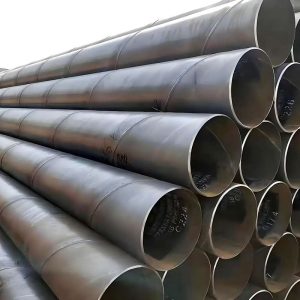
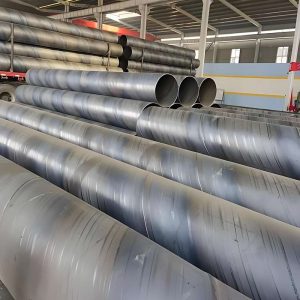
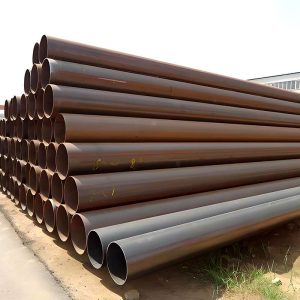
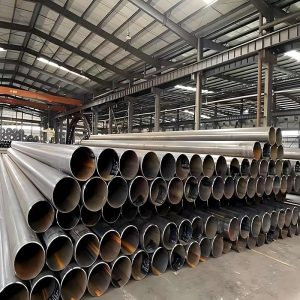
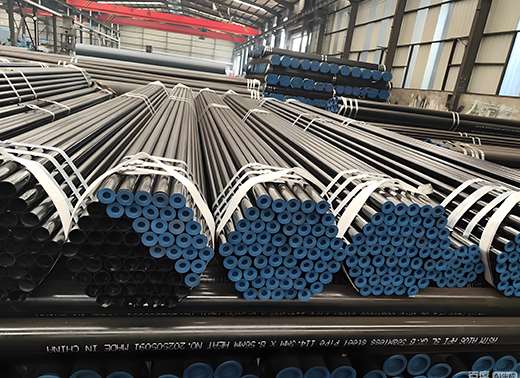
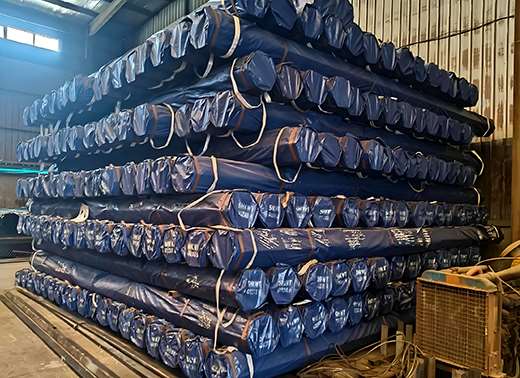
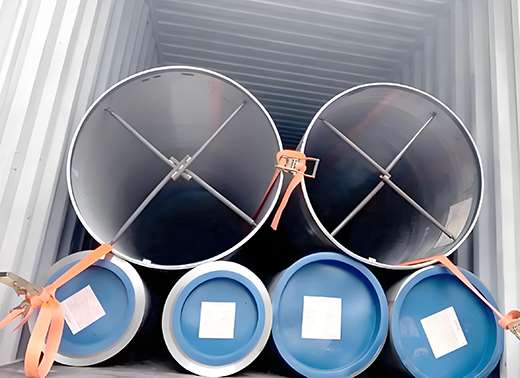
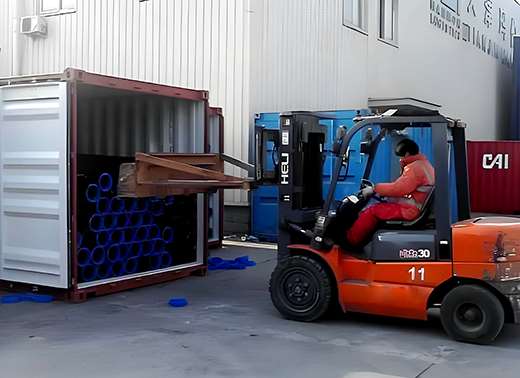
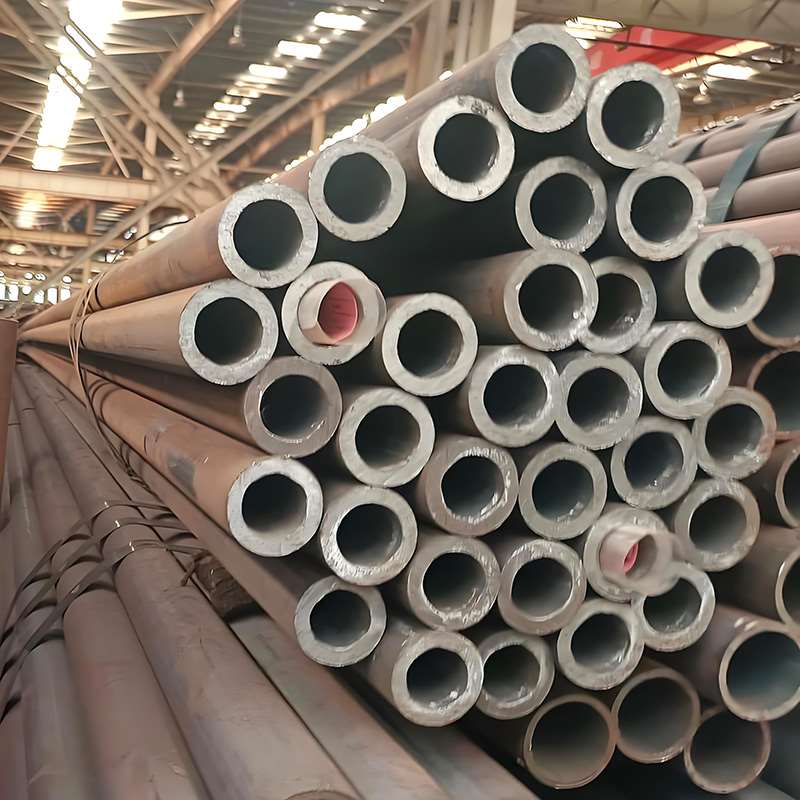
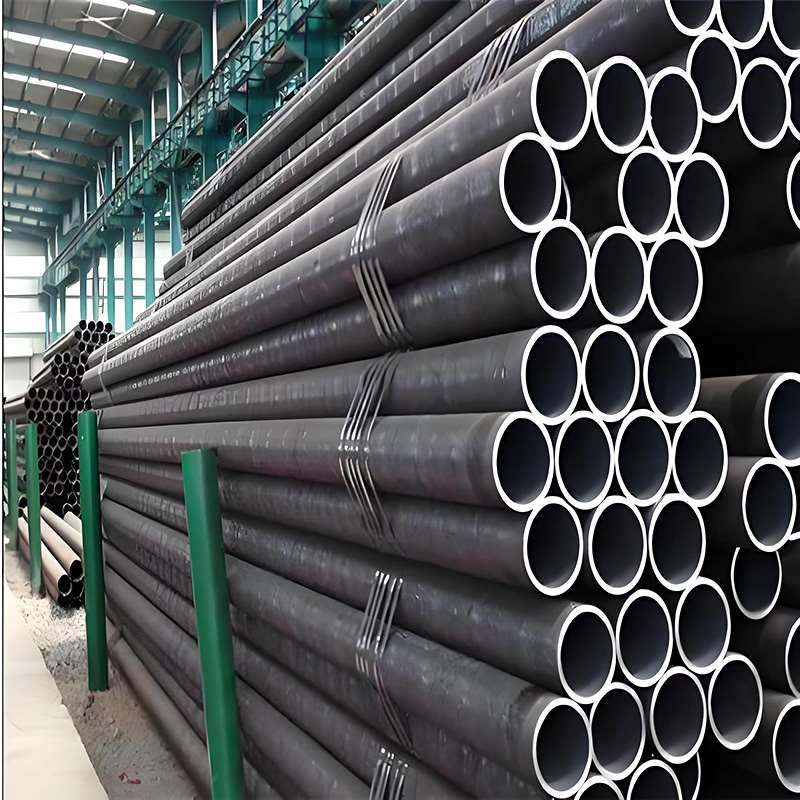
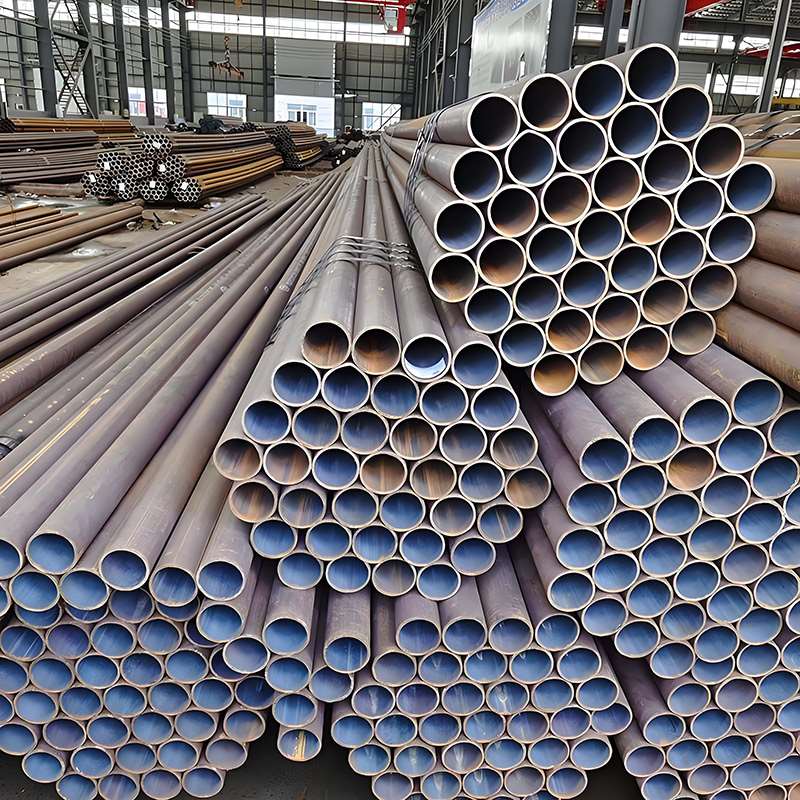
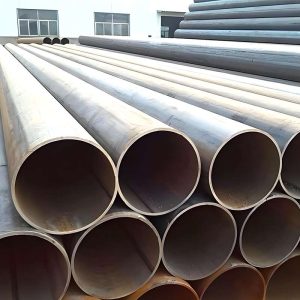
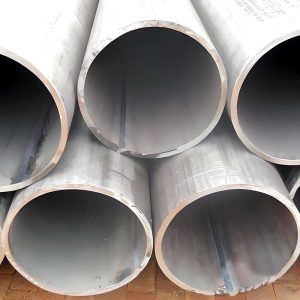
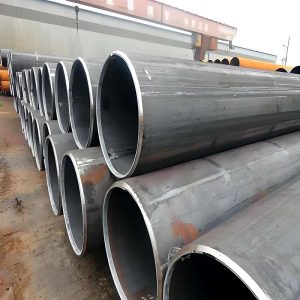
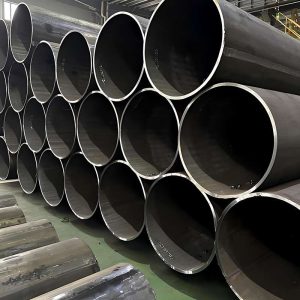
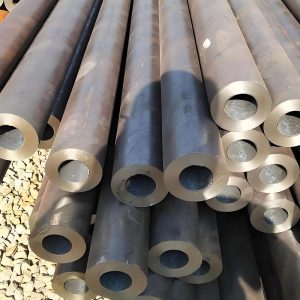
Seamless Carbon Steel Pipe Finished Products Seamless Carbon Steel Pipe Packaging and Shipping

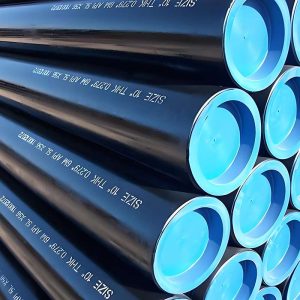
Loading of seamless carbon steel pipes Seamless Carbon Steel Pipe Packing

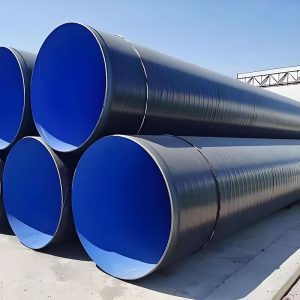
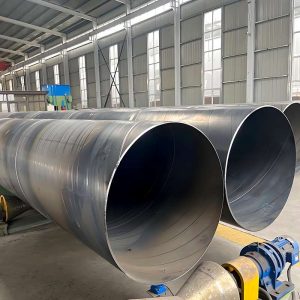
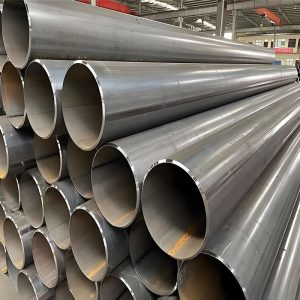
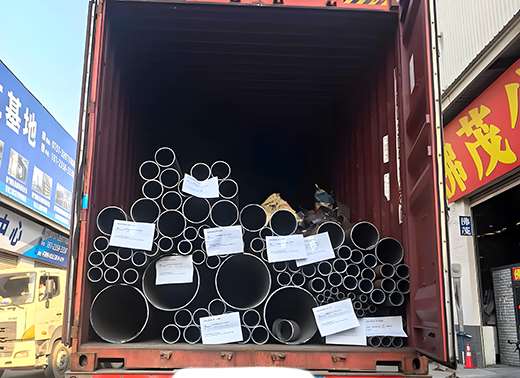
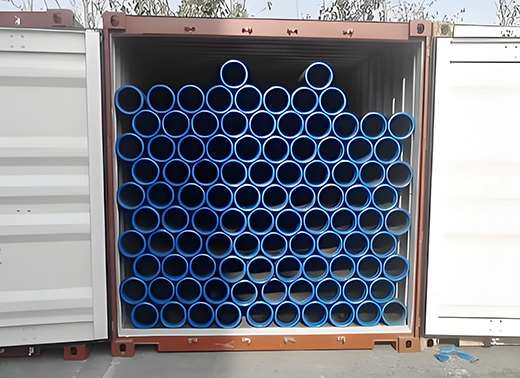
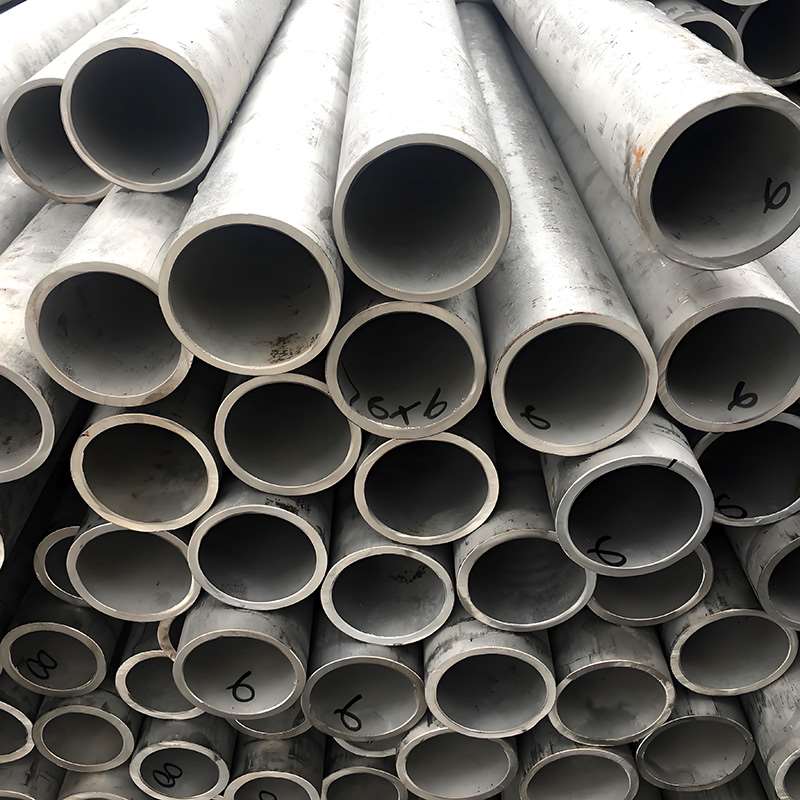
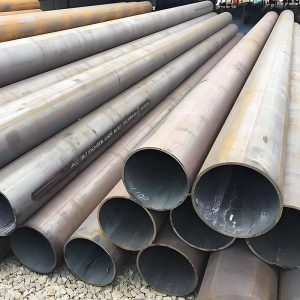
Large-diameter seamless carbon steel pipe Shipment of Anti-Corrosion Seamless Carbon Steel Pipes

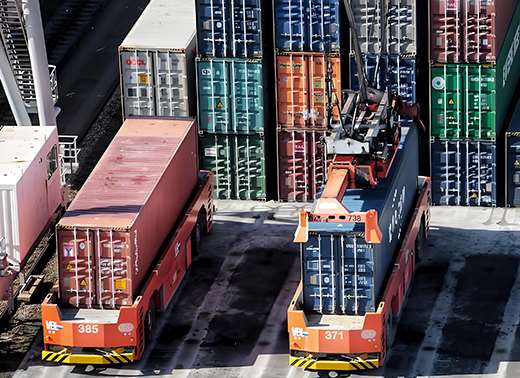
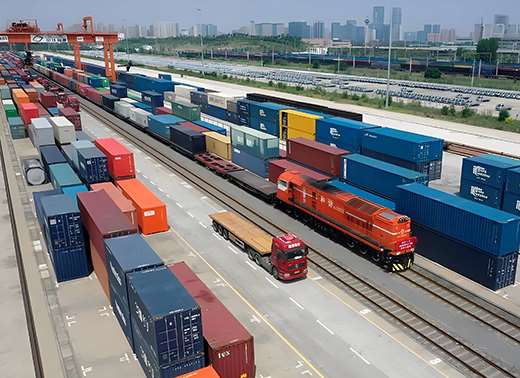
Seamless Carbon Steel Pipe Sea Freight Seamless Carbon Steel Pipe Sea Freight

Frequently Asked Questions About Seamless Carbon Steel Pipes for Industrial Fluid Conveyance

i. Why are seamless carbon steel pipes more suitable than welded pipes for industrial fluid transportation?

Answer:
Seamless carbon steel pipes lack welded joints, offering superior structural integrity, higher pressure resistance, and enhanced leak prevention.
Their uniform wall thickness minimizes weak points, making them ideal for high-pressure, long-distance pipelines.
For transporting high-temperature steam, petroleum products, natural gas, and similar fluids, they deliver greater safety and reliability than welded pipes.
Seamless pipes are the preferred choice, particularly in medium-to-high-pressure systems, extended pipelines, and critical industrial projects.

ii. What are the common issues encountered with seamless carbon steel pipes during use?

Answer:
Corrosion: Long-term conveyance of water or chemical liquids can lead to rusting if the pipes lack internal/external anti-corrosion coatings or cathodic protection.
Scaling/Blockage: High impurity levels in water or chemical liquids may cause deposits to form inside pipes, restricting flow.
Leakage Points: Despite high strength, improper installation at welded joints or flange connections may cause water/gas leaks.
Bending/Deformation: Improper transportation or installation can cause pipe bending, reducing fluid conveyance efficiency.

iii. How to select the appropriate standard and grade?

Answer:
Select standards based on fluid type, temperature, pressure, and environmental conditions.
High-temperature, high-pressure steam or hot water → ASTM A106 Gr.B/C, GB/T 5310
Municipal water supply, low-pressure gas → ASTM A53 Gr.B, GB/T 8162
Oil and gas transmission → API 5L PSL1/PSL2
Chemical industry liquids → EN 10216-1 or GB/T 8163
When selecting standards, consider allowable working pressure, temperature range, chemical composition, and mechanical properties.

iv. What precautions should be taken during transportation and installation of seamless carbon steel pipes?

Answer:
During transportation: Avoid collisions or drops between pipes. Secure them using wooden crates or slings.
Storage: Protect against moisture, rain, and prolonged sun exposure. Prevent water accumulation inside or outside the pipes.
Installation: Ensure supports are secure. Maintain horizontal support spacing according to design specifications. Use proper techniques for bends or connections to avoid damaging the pipe walls.
Flanges and joints: Ensure tight alignment to guarantee sealing and prevent leaks.

v. How can service life be extended?

Answer:
Anti-corrosion treatment: Apply coatings, hot-dip galvanizing, or epoxy coatings to internal and external surfaces to extend service life.
Optimize design pressure and flow velocity: Avoid excessive pressure or high flow rates that cause wear.
Conduct regular inspections: Check for pipe corrosion, bending, deposits, and leak points.
Select appropriate material grades: Use high-strength grades like Gr.C or X52 for high-pressure or high-temperature fluids.

vi. How to verify the reliability of pipe quality?

Answer:
Mill Test Certificate: Require suppliers to provide a Mill Test Certificate (MTC) containing information on chemical composition, mechanical properties, dimensional inspection, etc.
Non-Destructive Testing: Opt for ultrasonic or radiographic inspection to ensure no internal defects in the pipes.
Dimensional Tolerance Check: Verify that outer diameter, wall thickness, length, and straightness meet standards.
Brand and Supplier Credentials: Select manufacturers with quality assurance and export experience to mitigate risks.