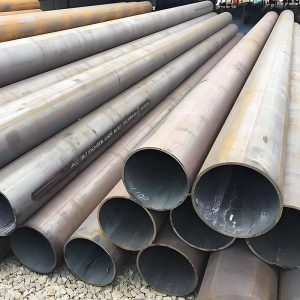
I. Overview of Seamless Alloy Steel Pipes
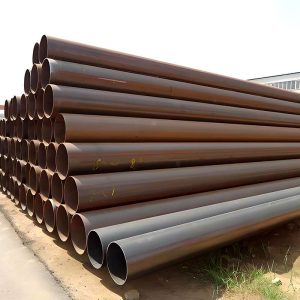
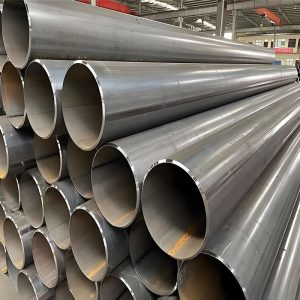
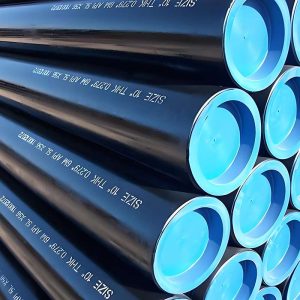
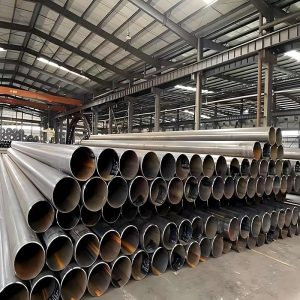
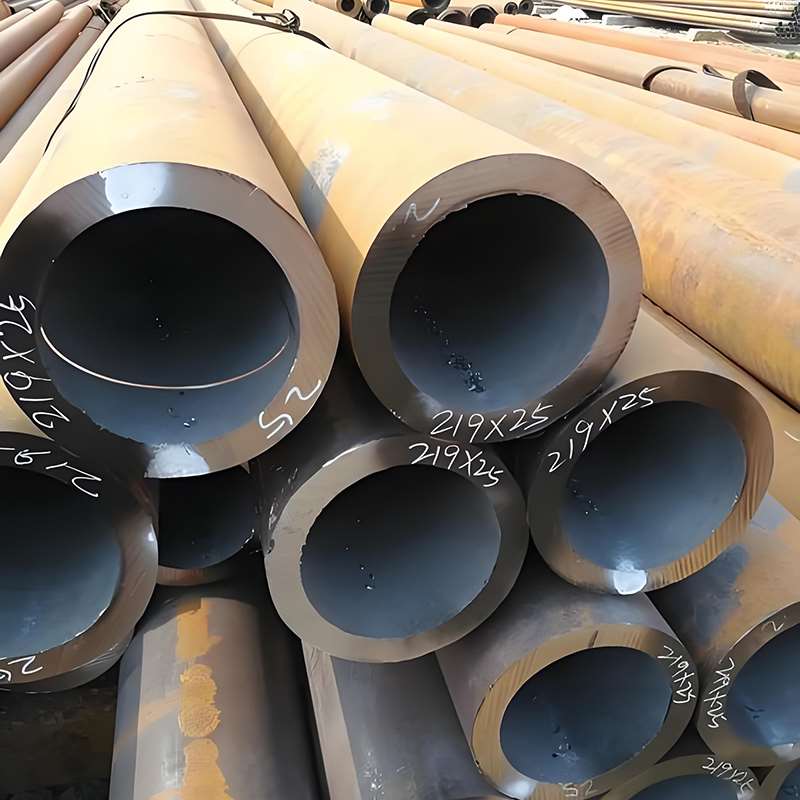
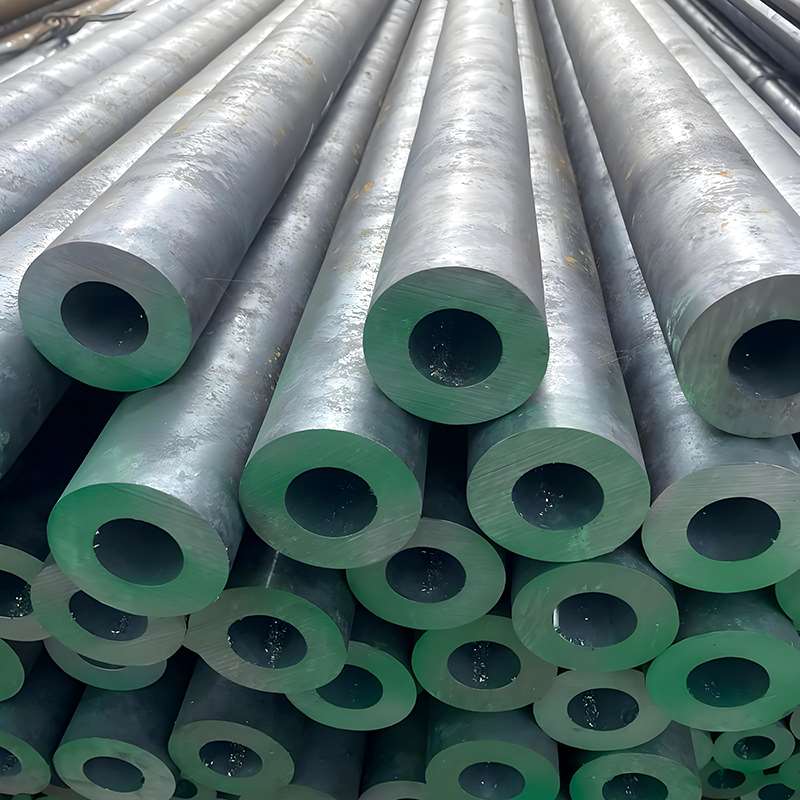
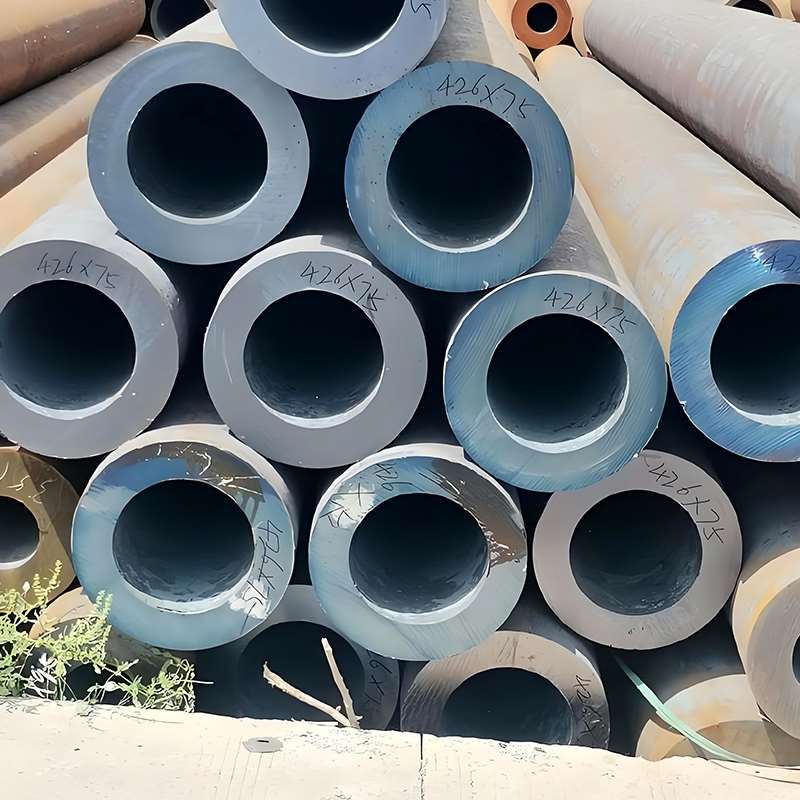
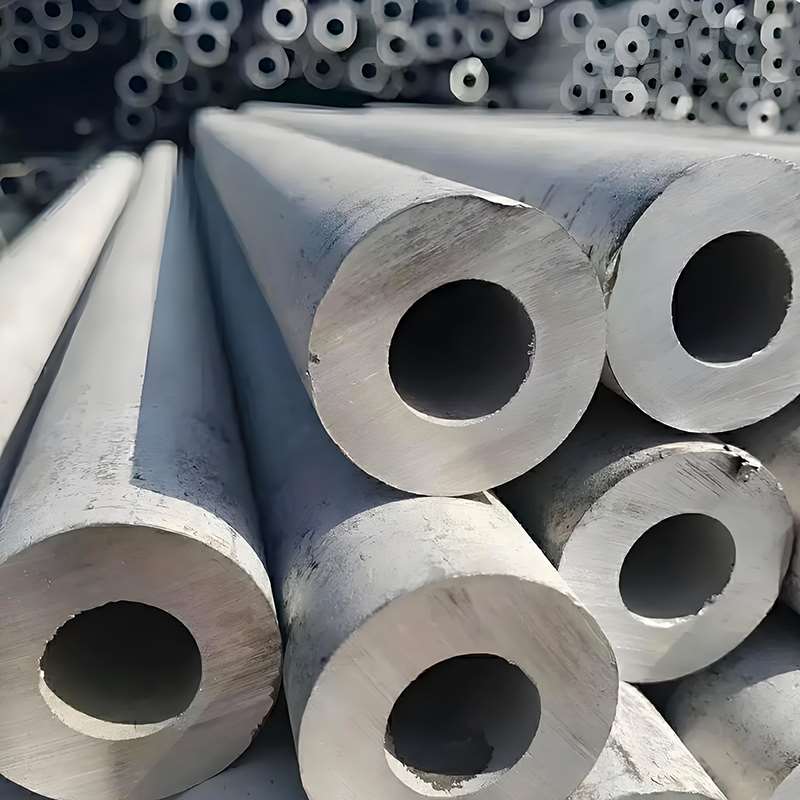
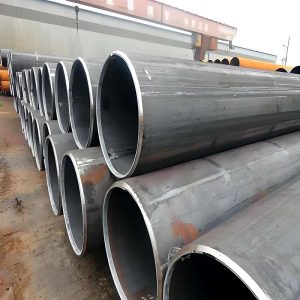
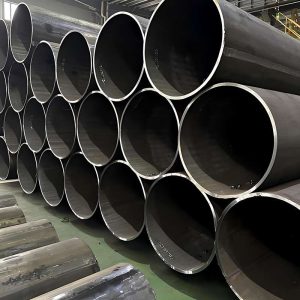
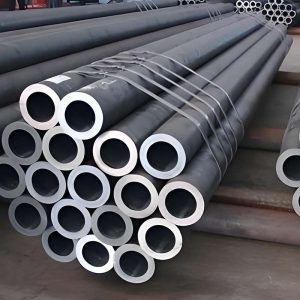
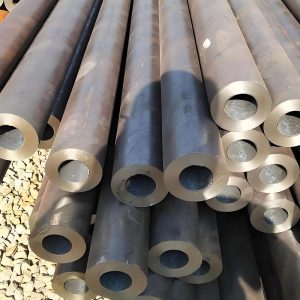
Seamless alloy steel pipes are a type of pipe formed directly through hot rolling or cold drawing processes, without welding. They are continuous metal tubes with high strength and excellent pressure resistance.
They are widely used in high-temperature and high-pressure boilers, heat exchangers, chemical pipelines, power pipelines, and petrochemical pipelines.
Main Features:
- High strength, high temperature and high pressure resistance: The pipe material is uniform and dense, without weld weaknesses, suitable for critical operating conditions.
- Strong creep resistance: Maintains pipe stability even under prolonged high temperature and pressure.
- Good corrosion resistance: Different alloy compositions can be selected to meet the requirements of corrosive media.
- Flexible processing: Available in various wall thicknesses, diameters, and lengths to meet different engineering needs.
- Diverse surface treatments: Pickling, polishing, black pipe, or anti-rust oil treatment, suitable for different industry standards.
Typical Applications:
- Boiler pipes: High-temperature steam pipes, reheater pipes, superheater pipes
- Heat exchanger tubes: Heat exchange systems in power plants, chemical, and petrochemical industries
- High-pressure pipeline systems: Oil, natural gas, and chemical transportation pipelines
- Mechanical structures and pressure-bearing components: High-strength mechanical pipes and industrial supports
II. Commonly Used Steel Grades and Applicable Working Conditions for Seamless Alloy Steel Pipes
| Steel Grade | Chemical Composition Characteristics | Typical Applications | Applicable Temperature / Pressure Range |
|---|---|---|---|
| P5 | Low-alloy steel with small amounts of Cr and Mo, suitable for medium-low temperatures | Medium-temperature, medium-pressure boiler pipes, steam pipes | ≤ 450℃, medium-low pressure |
| P9 | Contains 0.5% Cr and 0.5% Mo | Hot water pipes, medium-temperature steam pipes | ≤ 550℃, medium pressure |
| P11 | Contains 1% Cr and 0.5% Mo | Power plant boiler pipes, heat exchangers | ≤ 550–580℃, medium pressure |
| P12 | Contains 1% Cr and 0.6% Mo | Medium-to-high temperature steam pipes, heat exchangers | ≤ 580℃, medium-high pressure |
| P22 | Contains 2.25% Cr and 1% Mo | High-temperature, high-pressure boiler pipes, reheater pipes | ≤ 600℃, high pressure |
| P91 | Contains 9% Cr, 1% Mo, 0.2% V/Nb | Ultra-high temperature, high-pressure boiler pipes, power plant reheater pipes | ≤ 650–700℃, high-pressure critical pipelines |
| P92 | Contains 9% Cr, 1% Mo, 0.25% V/Nb | High-temperature, high-pressure steam pipes, heat exchanger pipes | ≤ 650–700℃, high-pressure critical pipelines |
Recommended Steel Grades:
Medium-low temperature, medium-pressure pipelines → P5, P9, P11
High-temperature, high-pressure boiler tubes → P12, P22
Ultra-high temperature, high-pressure critical pipelines → P91, P92
III. Chemical Composition and Mechanical Properties of Seamless Alloy Steel Pipes
i. Chemical Composition Table (%)
| Steel Grade | C | Si | Mn | P | S | Cr | Mo | V | Nb |
| P5 | 0.05–0.15 | 0.10–0.50 | 0.30–0.60 | ≤0.025 | ≤0.025 | 0.50–1.00 | 0.50–0.60 | — | — |
| P9 | 0.05–0.15 | 0.10–0.50 | 0.30–0.60 | ≤0.025 | ≤0.025 | 0.90–1.10 | 0.50 | — | — |
| P11 | 0.05–0.15 | 0.10–0.50 | 0.30–0.60 | ≤0.025 | ≤0.025 | 0.90–1.10 | 0.45–0.55 | — | — |
| P12 | 0.05–0.15 | 0.10–0.50 | 0.30–0.60 | ≤0.025 | ≤0.025 | 1.00–1.25 | 0.55–0.65 | — | — |
| P22 | 0.05–0.15 | 0.10–0.50 | 0.30–0.60 | ≤0.025 | ≤0.025 | 2.00–2.50 | 0.85–1.05 | — | — |
| P91 | 0.08–0.12 | 0.20–0.50 | 0.40–0.80 | ≤0.020 | ≤0.020 | 8.50–9.50 | 0.85–1.05 | 0.18–0.25 | 0.06–0.12 |
| P92 | 0.08–0.12 | 0.20–0.50 | 0.40–0.80 | ≤0.020 | ≤0.020 | 8.50–9.50 | 0.85–1.10 | 0.20–0.30 | 0.05–0.12 |
ii. Mechanical Properties Table
| Steel Grade | Tensile Strength Rm (MPa) | Yield Strength ReH (MPa) | Elongation A (%) | Impact Toughness KV (J) | Hardness HB |
|---|---|---|---|---|---|
| P5 | 410–550 | ≥240 | ≥20 | ≥27 | 120–150 |
| P9 | 410–550 | ≥240 | ≥20 | ≥27 | 120–150 |
| P11 | 410–540 | ≥240 | ≥20 | ≥27 | 140–170 |
| P12 | 410–540 | ≥240 | ≥20 | ≥27 | 140–170 |
| P22 | 490–630 | ≥310 | ≥20 | ≥34 | 160–190 |
| P91 | 620–780 | ≥510 | ≥20 | ≥47 | 200–240 |
| P92 | 620–780 | ≥520 | ≥20 | ≥47 | 200–240 |
IV. Applications of Seamless Alloy Steel Pipes
- High-Temperature and High-Pressure Boiler Piping
Reheater tubes, superheater tubes, main steam pipes
Used in power plants, thermal power plants, and high-temperature steam systems - Heat Exchanger Piping
Heat exchangers, condensers, and heaters in the petrochemical, chemical, and power industries
Heat exchange tubes under high temperature, high pressure, and corrosive media - Oil and Gas Pipelines
High-temperature and high-pressure transmission pipelines
Pipelines in oil fields, natural gas facilities, and refineries - Chemical Industry Piping
Pipes for conveying corrosive media (acids, alkalis, salts, etc.)
High-temperature and high-pressure process pipelines - Boiler and Steam Transmission Systems
Industrial steam pipelines, high-temperature water pipelines
High-temperature hot water/steam pipes in food processing, pharmaceutical, and paper industries - Mechanical Structures and Pressure-Bearing Components
High-strength mechanical tubes, pressure-bearing components
Industrial equipment supports and high-pressure pipeline supports - Critical Pipelines in the Power Industry
High-temperature and high-pressure critical pipelines in thermal and nuclear power plants
Main steam pipes and reheater tubes that withstand steam pressure and temperature for extended periods
V. How long can seamless alloy steel pipes be used under high temperature, high pressure, or corrosive conditions?
- Material Selection Determines Durability
Different steel grades (such as P22, P91, P92) have different creep resistance capabilities under high temperature and high pressure environments.
The higher the content of alloying elements (Cr, Mo, V, Nb), the stronger the high-temperature resistance and the longer the service life. - Wall Thickness Design Affects Service Life
The thicker the pipe wall, the higher the pressure bearing capacity, the greater the corrosion allowance, and the longer the service life.
During engineering selection, the optimal wall thickness needs to be calculated based on working pressure, temperature, and the corrosiveness of the medium. - Surface Treatment and Corrosion Protection
Pickling, polishing, or passivation treatment can remove scale and improve corrosion resistance.
Surface treatment is especially important for steel pipes in chemical, seawater, or high-humidity environments, and can significantly extend their service life. - Long-Term Cost of Ownership
High steel grade + appropriate wall thickness + excellent surface treatment = longer service life, reducing maintenance and replacement frequency.
Although the initial cost is slightly higher, the long-term cost-effectiveness is better.