Products

Related News

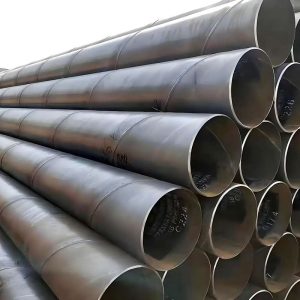
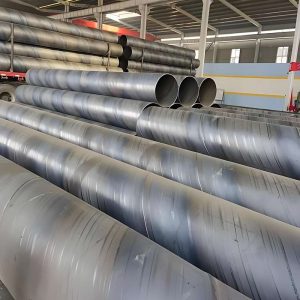
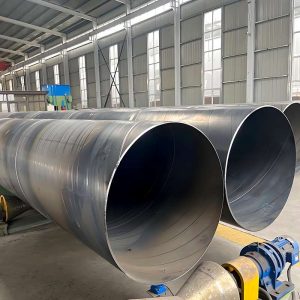
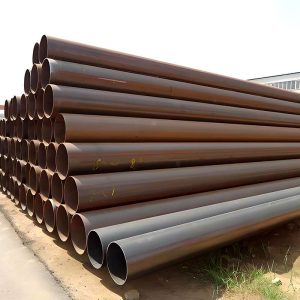
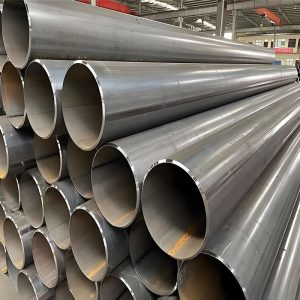
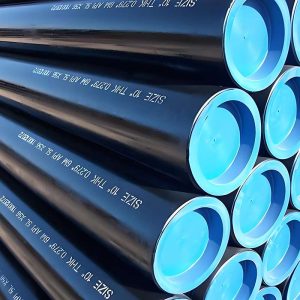
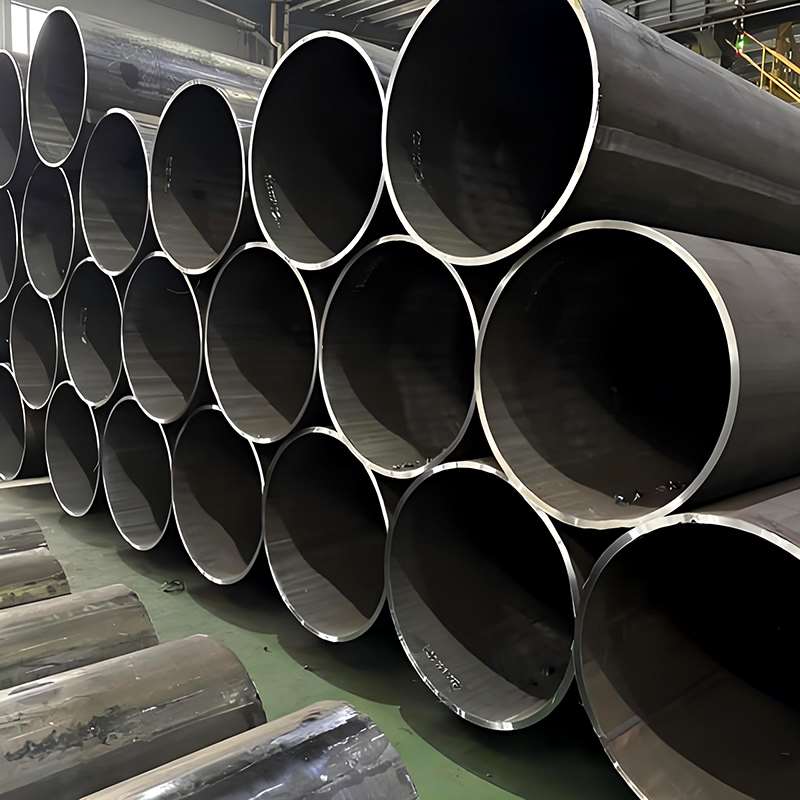
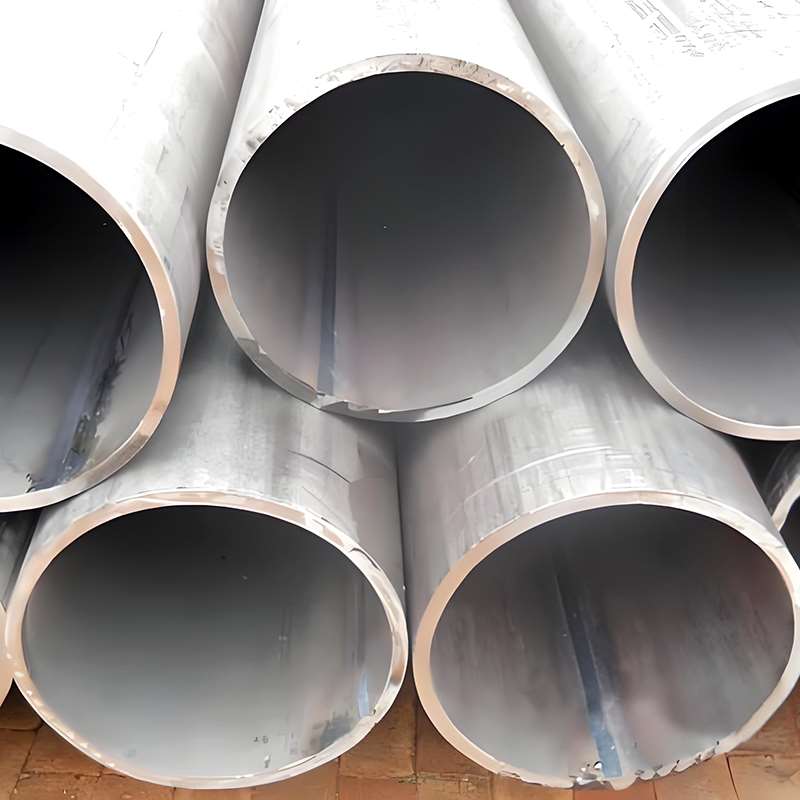
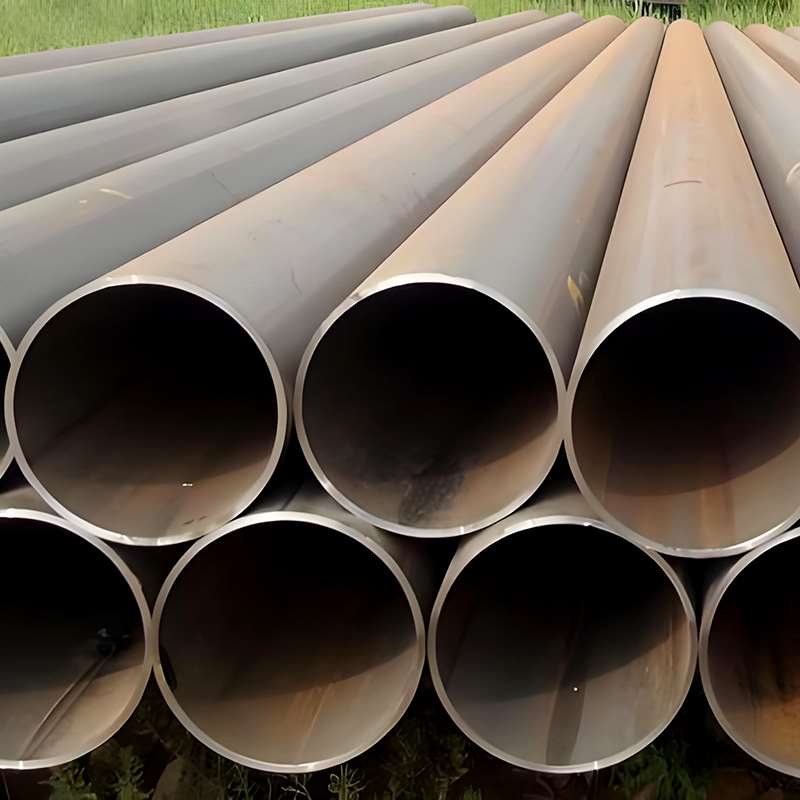
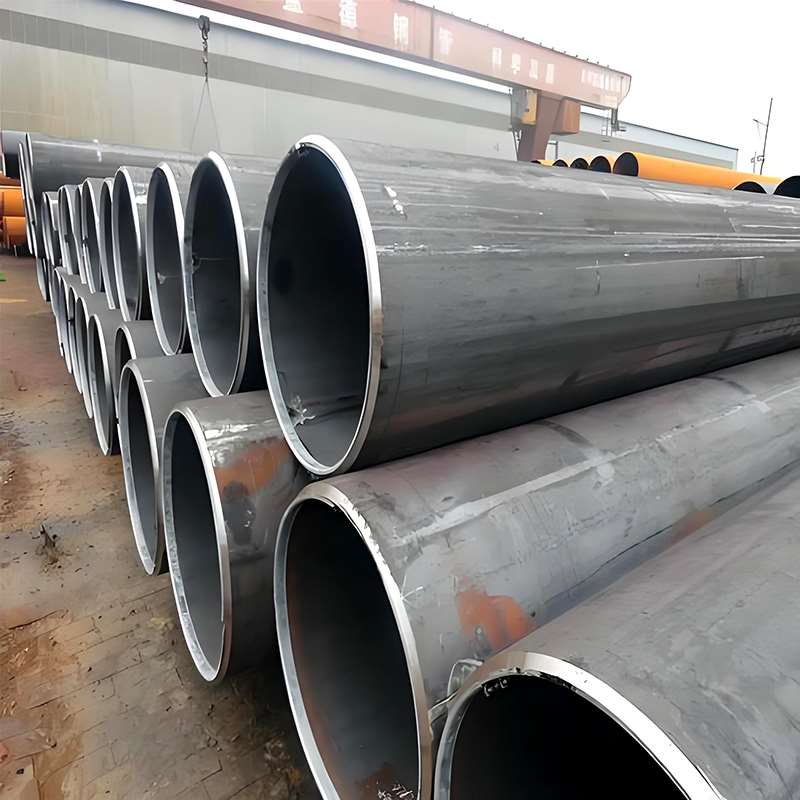
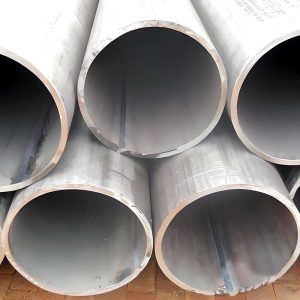
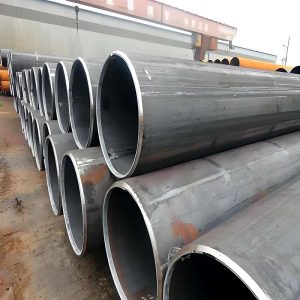
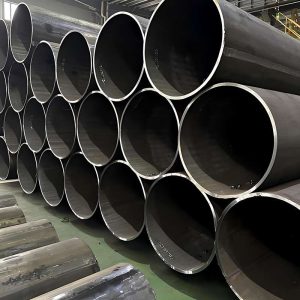
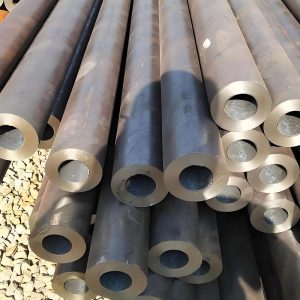
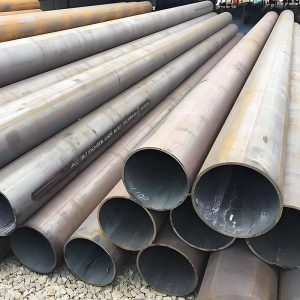
LSAW Carbon Steel Structural Pipe

OD Range :

406 mm – 1422 mm (16″ – 56″)

WT Range :

8.0 mm – 60 mm

Length :

6m – 12.5m

Tolerance :

Outer diameter: ±0.5%; Wall thickness: ±5%; Straightness: ≤ 1 mm/m; Roundness: ≤ 1% of the outer diameter

Material :

API: Gr.B, X42 – X80 / ASTM: Grade 1/2/3 / EN: S235, S355J2H, S420, S460 / GB: Q235B, Q355B/C/D/E

Standard :

API 5L (PSL1, PSL2), ASTM A671, ASTM A672, ASTM A252, EN 10219, EN 10210, GB/T 3091

Surface :

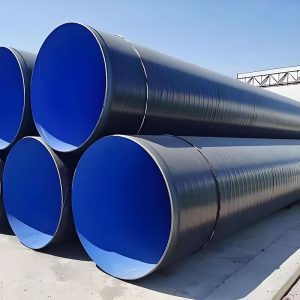
Bare pipe, black anti-rust paint, clear varnish, hot-dip galvanizing, 3LPE/3LPP coating, epoxy resin (FBE) coating

Application :

Jacket structures, pipe piles, steel columns for high-rise buildings, trusses for large venues, high-pressure oil and gas pipelines, and pressure steel pipes for hydroelectric power stations.

I. Overview of LSAW Carbon Steel Structural Pipes

LSAW carbon steel structural pipes are steel pipe products manufactured using the longitudinal submerged arc welding process. They are made from carbon steel or low-alloy structural steel plates through processes such as forming, internal and external submerged arc welding, expanding, and multiple inspections.
These steel pipes have stable weld quality, high dimensional accuracy, and possess good load-bearing capacity and structural stability, making them widely used in various load-bearing engineering structures.

II. Comparison of Differences between LSAW / ERW / SSAW Structural Pipes

i. Core Process and Structural Differences

Comparison ItemLSAW Structural PipeERW Structural PipeSSAW Structural Pipe
Welding MethodLongitudinal Submerged Arc Welding (Inner + Outer Weld)High-Frequency Resistance WeldingSpiral Submerged Arc Welding
Weld Seam TypeStraightStraightSpiral
Weld Seam LengthShortestShortestLongest
Weld Stress DistributionUniformRelatively UniformNon-uniform
Forming MethodUOE / JCOEContinuous Roll FormingSpiral Rolling

ii. Comparison of dimensions and wall thickness capabilities

ItemLSAWERWSSAW
Outside Diameter RangeLarge (219–1420+ mm)Small to Medium (≤660 mm)Medium to Large (219–3000 mm)
Wall Thickness CapabilityThick (10–50 mm)Thin to Medium (1.5–12 mm)Medium (6–25 mm)
Suitability for Extra-Thick WallsOptimalNot SuitableLimited
Roundness & Dimensional AccuracyHighHighModerate

iii. Load-bearing capacity and structural safety

Comparison PointLSAWERWSSAW
Single-Pipe Load-Bearing CapacityHighestMediumMedium to Low
Suitability for Main Load-Bearing StructuresVery SuitableNot RecommendedConditionally Usable
Fatigue and Dynamic Load PerformanceExcellentAveragePoor
Weld Inspection ControllabilityBest (100% UT feasible)GoodMore Difficult

iv. Difficulty in quality control and testing

ItemLSAWERWSSAW
Weld Inspection DifficultyLowLowHigh
Feasibility of 100% UTHighHighLow
Weld Repair RiskLowMediumHigh
Quality StabilityHighMediumHighly Variable

v. Typical application scenarios

Engineering / ApplicationRecommended Pipe TypeReason
Bridge Main Beams / ColumnsLSAWHigh load-bearing capacity and high safety level
Pile Foundations / Pipe PilesLSAWReliable welds and uniform stress distribution
Building Steel StructuresERW / LSAWERW suitable for medium to small loads
Industrial Equipment SupportsLSAWDesigned for long-term heavy loads
Pipe Racks / Structural SupportsERW / LSAWDepends on load requirements
Temporary or Non-Critical StructuresSSAWLower cost but higher risk

III. LSAW Carbon Steel Structural Pipe Selection Guide

i. Selection Principles

  1. Load-Bearing Capacity Determines Pipe Type
  • High load-bearing, primary structural elements → LSAW thick-walled pipes
  • Secondary load-bearing or auxiliary structures → ERW pipes
  • Non-load-bearing or temporary structures → SSAW pipes
  1. Wall Thickness and Outer Diameter Selection
  • Bridges, pile foundations, and other critical structures: Wall thickness ≥16 mm, outer diameter ≥219 mm
  • Medium load-bearing industrial structures: Wall thickness 10–30 mm
  • Non-critical structures: Wall thickness 6–12 mm, ERW or SSAW pipes are optional
  1. Weld and Inspection Requirements
  • High load-bearing structures: 100% UT + RT as needed
  • Secondary load-bearing structures: Random inspection or visual inspection
  • Ultra-thick-walled pipes (≥40 mm): Heat treatment + full inspection recommended
  1. Environmental and Corrosion Protection Requirements
  • Outdoor/seaside/humid environments → Anti-corrosion coating or hot-dip galvanizing
  • High or low temperature environments → Material grade and heat treatment must be matched
  1. Standard Compliance
  • Domestic projects: GB/T 1591 / GB/T 9711
  • Export or international projects: ASTM / API / EN

ii. Quick Selection Reference Table

Load / Risk LevelRecommended Pipe TypeOD / Wall ThicknessWeld InspectionReason
High Load / Bridges, Pile Foundations, ColumnsLSAW Thick-Wall Pipe≥219 mm / 16–50 mm100% UTHigh load capacity, uniform welds, safe and reliable
Medium-High Load / Industrial Building Main BeamsLSAW / ERW168–508 mm / 10–30 mmLSAW 100% UT, ERW spot checkLSAW preferred for load-bearing structures
Secondary Load / Building Secondary Beams, Pipe RacksERW Pipe60–323 mm / 4–12 mmSpot check UTLow cost, easy construction
Non-Load-Bearing / Temporary Supports, CanopiesSSAW Pipe219–3000 mm / 6–25 mmVisual InspectionNon-critical structures, cost-priority
Extra-Thick Wall / High-Fatigue StructuresLSAW + Heat Treatment≥40 mm100% UT + RTEliminates residual stress, improves fatigue resistance

IV. List of Real Engineering Risks Caused by Incorrect Material Selection

  1. Incorrect selection of ERW or SSAW for main load-bearing structures
  • Risk: Weld fatigue cracking, insufficient load-bearing capacity
  • Consequences: Rework, project delays, and even safety accidents
  • Prevention: Main load-bearing components must use LSAW thick-walled pipes, with 100% UT inspection.
  1. Considering only nominal wall thickness, neglecting negative tolerance
  • Risk: Insufficient effective cross-section, reduced strength
  • Consequences: Failure to pass acceptance testing, inability to assign responsibility later
  • Prevention: Clearly define allowable wall thickness tolerances and require 100% ultrasonic thickness measurement.
  1. Insufficient weld inspection ratio
  • Risk: Undetected internal defects, localized stress concentration
  • Consequences: Cracks during operation, structural failure
  • Prevention: High-load-bearing structures must undergo 100% UT inspection, and RT inspection when necessary.
  1. Using SSAW for load-bearing structures
  • Risk: Helical welds, uneven stress distribution
  • Consequences: Early failure under dynamic or alternating loads
  • Prevention: SSAW should only be used for non-critical structures.
  1. Failure to differentiate between structural and conveying pipe standards
  • Risk: Insufficient mechanical properties and dimensional tolerances
  • Consequences: Appears compliant on the surface, but lacks sufficient structural load-bearing capacity
  • Prevention: Strictly adhere to structural pipe standards (GB/T, ASTM, API, EN)
  1. Failure to heat treat extra-thick-walled pipes
  • Risk: High residual stress in welds, poor fatigue resistance
  • Consequences: Microcracks develop during long-term use, shortening lifespan
  • Prevention: Heat treatment is recommended for wall thicknesses ≥40 mm
  1. Neglecting environmental corrosion factors
  • Risk: Pipe body corrosion reduces wall thickness
  • Consequences: Reduced load-bearing capacity, shortened lifespan
  • Prevention: Anti-corrosion treatment is mandatory for outdoor or corrosive environments
  1. Failure to specify testing requirements in procurement documents
  • Risk: No complete test report, unclear responsibility
  • Consequences: Problems must be borne at one’s own risk
  • Prevention: Require EN 10204 3.1 / 3.2 testing documents and a complete report
Related Products

LSAW Carbon Steel Structural Pipe Specifications and Dimensions Table

Outside Diameter (Inch / mm) Wall Thickness (mm) Theoretical Weight (kg/m) Length (m) Tolerance (mm)
8″ / 219 8, 10, 12, 14, 16, 18, 20 41.5–102.5 6–12 ±5
10″ / 273 8, 10, 12, 14, 16, 18, 20, 22 52.0–128.0 6–12 ±5
12″ / 323.9 10, 12, 14, 16, 18, 20, 22, 25 72.0–155.0 6–12 ±5
14″ / 355.6 10, 12, 14, 16, 18, 20, 22, 25, 28 84.0–178.0 6–12 ±5
16″ / 406 12, 14, 16, 18, 20, 22, 25, 28, 30 110.0–215.0 6–12 ±5
18″ / 457 12, 14, 16, 18, 20, 22, 25, 28, 30 125.0–245.0 6–12 ±5
20″ / 508 12, 14, 16, 18, 20, 22, 25, 28, 30, 32 140.0–280.0 6–12 ±5
24″ / 610 16, 18, 20, 22, 25, 28, 30, 32, 35 185.0–370.0 6–12 ±5
30″ / 762 18, 20, 22, 25, 28, 30, 32, 35, 38 250.0–480.0 6–12 ±5
36″ / 914 20, 22, 25, 28, 30, 32, 35, 38, 40 320.0–620.0 6–12 ±5
40″ / 1016 22, 25, 28, 30, 32, 35, 38, 40 400.0–700.0 6–12 ±5
48″ / 1219 25, 28, 30, 32, 35, 38, 40 500.0–880.0 6–12 ±5


LSAW carbon steel structural pipe standards

Standard System Standard No. Type Scope / Description
Chinese Standard (GB) GB/T 9711-2017 Steel Pipe for Petroleum and Natural Gas Pipelines LSAW longitudinal welded pipe, suitable for transporting petroleum, natural gas, oil, and other fluids; can also be used as structural pipe
GB/T 1591-2018 High-Strength Low-Alloy Structural Steel Suitable for load-bearing structures such as buildings, bridges, and pile foundations
GB/T 8162-2018 Carbon Steel Structural Pipe Used for general building structures and mechanical structure supports
American Standard (ASTM) ASTM A252 Low- and Medium-Pressure Steel Pipe (Pile, Structural) Suitable for buildings, pile foundations, and load-bearing structures
ASTM A53 / A106 Carbon Steel Pipe For fluid transportation and structural applications
ASTM A500 Rectangular / Square Structural Steel Pipe Used in steel structures, frameworks, and pile foundations
International Standard (API / EN) API 5L Line Pipe for Petroleum and Natural Gas Mainly for oil and gas pipelines; can also be used for heavy structural supports
EN 10210 Cold-Formed or Hot-Formed Hollow Sections Building structures, long-span bridges, and industrial facility supports


LSAW Carbon Steel Structural Pipe Production Process Flow

Steel Plate Preparation → Forming → Internal and External Welding → Expanding and Straightening → Heat Treatment (Optional) → Inspection → Cutting → Surface Treatment → Finished Product Storage

Step-by-step Instructions

1. Steel Plate Preparation
Select carbon steel or low-alloy steel plates that meet the standards.
Inspect chemical composition, thickness, and mechanical properties.

2. Forming
Use UOE or JCOE forming process.
Roll the steel plate into a circular pipe blank, ensuring roundness and dimensional accuracy.

3. Internal and External Welding
Simultaneous submerged arc welding on both the inside and outside, with straight weld seams.
High-current automatic welding to ensure weld quality and strength.

4. Expanding and Straightening
Straighten the pipe using a hydraulic expanding machine.
Adjust the outer diameter and roundness, and relieve initial stress.

5. Heat Treatment (Optional)
Normalizing or stress-relieving heat treatment.
Improves fatigue resistance and reduces residual stress, suitable for ultra-thick-walled pipes or high-fatigue structures.

6. Inspection
Visual inspection, ultrasonic testing (UT), radiographic testing (RT), and hydrostatic testing.
Inspect wall thickness, weld defects, and mechanical properties to ensure compliance.

7. Cutting
Cut according to the contract length (typically 6–12 m).
Precision control ±50 mm.

8. Surface Treatment
Anti-corrosion coating, painting, or hot-dip galvanizing.
Suitable for different operating environments (indoor, outdoor, seaside, humid).

9. Finished Product Warehousing
Finished product re-inspection and labeling.
Record inspection reports and material certificates for traceability.

LSAW Carbon Steel Structural Pipe Inspection Standards

Inspection Category Inspection Item Method / Standard Purpose / Significance Acceptance Criteria
Raw Material Inspection Chemical Composition Spectrometer Analysis / GB/T 4336 / ASTM A751 Ensure mechanical properties, weldability, and corrosion resistance Element contents meet the selected steel grade
Tensile Properties GB/T 228 / ASTM A370 Ensure load-bearing capacity Yield strength, tensile strength, and elongation meet standard requirements
Impact Properties (if required) GB/T 229 / ASTM A370 Prevent brittle fracture KV ≥ standard requirement
Plate Thickness GB/T 709 Ensure cross-section load-bearing capacity Thickness deviation within allowable range
Weld Inspection Visual Inspection Visual / Measurement Detect surface defects such as cracks, undercut, lack of fusion 100% inspection; no defects allowed for high-load structures
Ultrasonic Testing (UT) GB/T 11345 / ASTM A435 Detect internal weld defects 100% inspection for high-load structures; defect rate = 0
Radiographic Testing (RT, optional) GB/T 3323 / ASTM E1030 Double verification for high-risk structures No linear or volumetric defects
Dimensional Inspection Outside Diameter / Thickness Vernier Caliper, Ultrasonic Thickness Gauge Ensure consistency with design dimensions Within allowable tolerance
Length / Straightness Measuring Tape / Laser Measurement Facilitate installation Length within allowable error; straightness meets standard
Pressure Testing Hydrostatic Test GB/T 13912 / ASTM A370 Verify pipe strength and weld reliability No leakage, no rupture
Surface Treatment Inspection Anti-Corrosion / Galvanizing Thickness Measuring Instruments Ensure corrosion resistance Coating or galvanizing thickness meets contract requirements
Final Inspection Material Certificates and Reports EN 10204 3.1 / 3.2 Ensure traceability Material and test data complete; reports fully documented


LSAW Carbon Steel Structural Pipe Common FAQs

1. What types of projects are LSAW carbon steel structural pipes suitable for?

Answer:
LSAW carbon steel structural pipes are suitable for bridge piers, pile foundations, building main beams, industrial plant supports, and high-load-bearing structures. They have straight welds and high load-bearing capacity, making them particularly suitable for structures subjected to long-term static and dynamic loads. For non-load-bearing or auxiliary support structures, ERW or SSAW pipes can be considered based on cost.

2. How to choose the appropriate wall thickness and outer diameter?

Answer:
High-load-bearing structures: Outer diameter ≥219 mm, wall thickness 16–50 mm;
Medium-load-bearing industrial structures: Outer diameter 168–508 mm, wall thickness 10–30 mm;
Auxiliary or secondary structures: Outer diameter 60–323 mm, wall thickness 4–12 mm.
The selection should consider the engineering load, span, pile length, and safety factor, while also referring to design specifications.

3. What are the requirements for weld inspection of high-load-bearing structures?

Answer:
High-load-bearing LSAW pipes must undergo 100% ultrasonic testing (UT), with radiographic testing (RT) added if necessary, to ensure that the welds are free of internal defects. Sampling inspection or visual inspection alone is not suitable for primary load-bearing structures, as this poses a safety risk.

4. Do LSAW pipes require heat treatment?

Answer:
For pipes with wall thickness ≥40 mm or high load-bearing requirements, normalizing or stress-relieving heat treatment is recommended. This can reduce residual stress in the welds and improve fatigue resistance.
For structures with ordinary thickness (≤25 mm) and moderate load-bearing requirements, heat treatment can be selected according to design and standard requirements.

5. What surface treatment options are available for the pipes?

Answer:
For indoor or non-corrosive environments → direct application of anti-rust paint is sufficient;
For outdoor, humid, or coastal environments → hot-dip galvanizing or epoxy anti-corrosion coating is recommended;
For special environments → epoxy coating + external protective cover can be selected to ensure the long-term service life of the pipes.

6. How to ensure the quality and traceability of pipes during procurement?

Answer:
Clearly specify the standard number, steel grade, wall thickness, weld inspection ratio, and length tolerance;
Require EN 10204 3.1/3.2 or GB/T material certificates, along with complete test reports;
High-load-bearing projects must include UT/RT inspection records and hydrostatic test reports;
For extra-thick-walled pipes or pipes for special purposes, it is recommended to specify heat treatment requirements in the contract.