Products

Related News

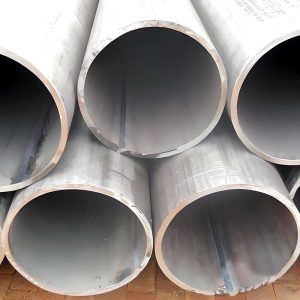
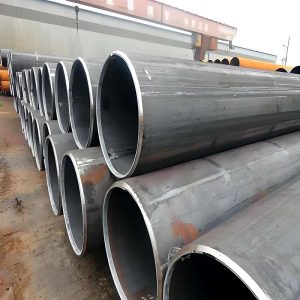
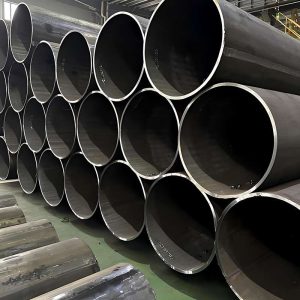
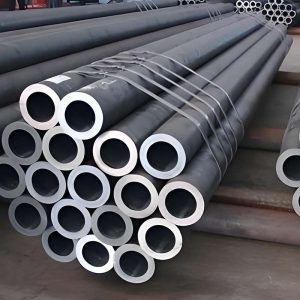
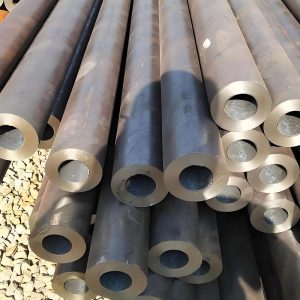
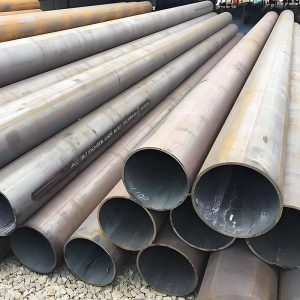
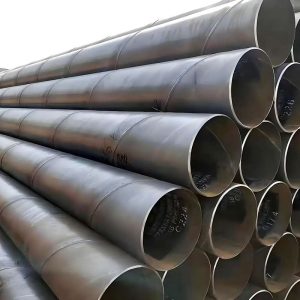
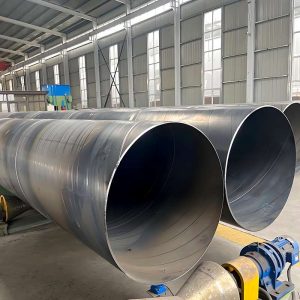
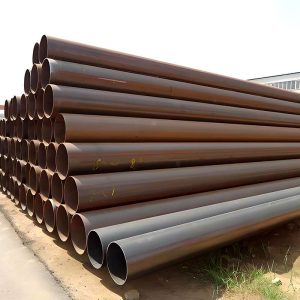
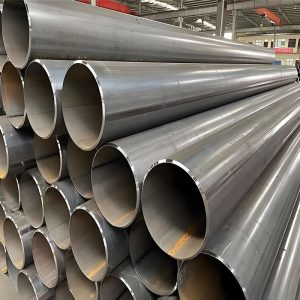
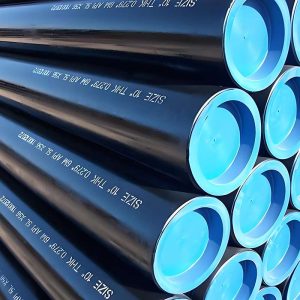
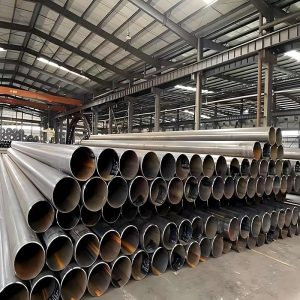
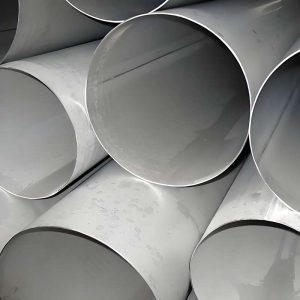
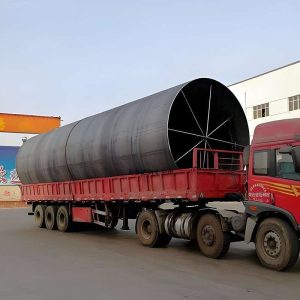
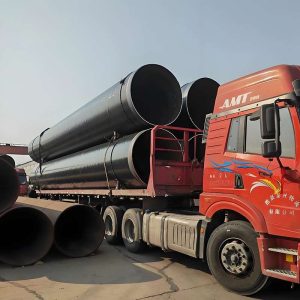
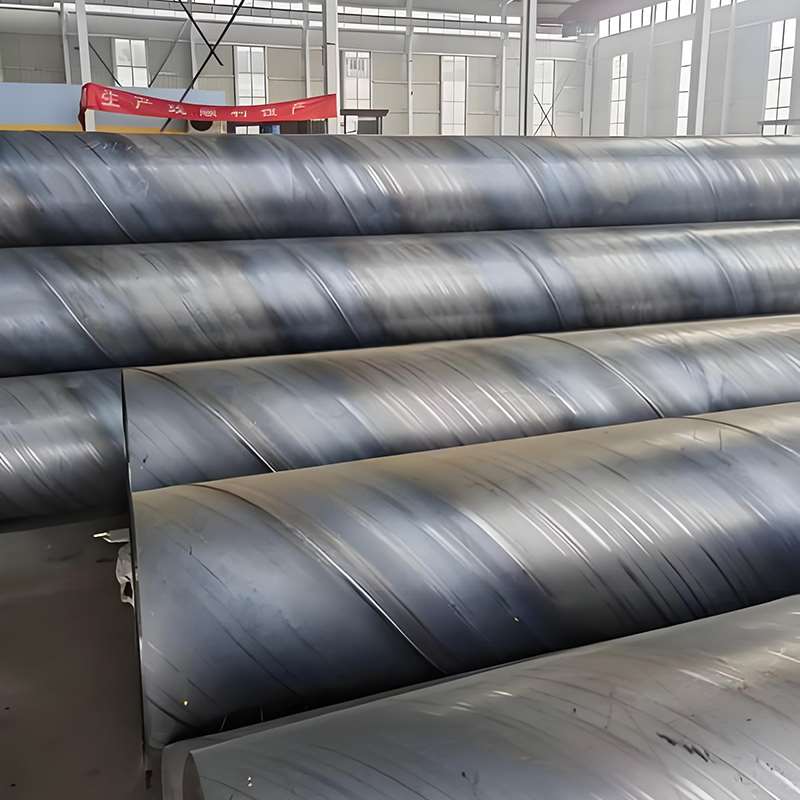
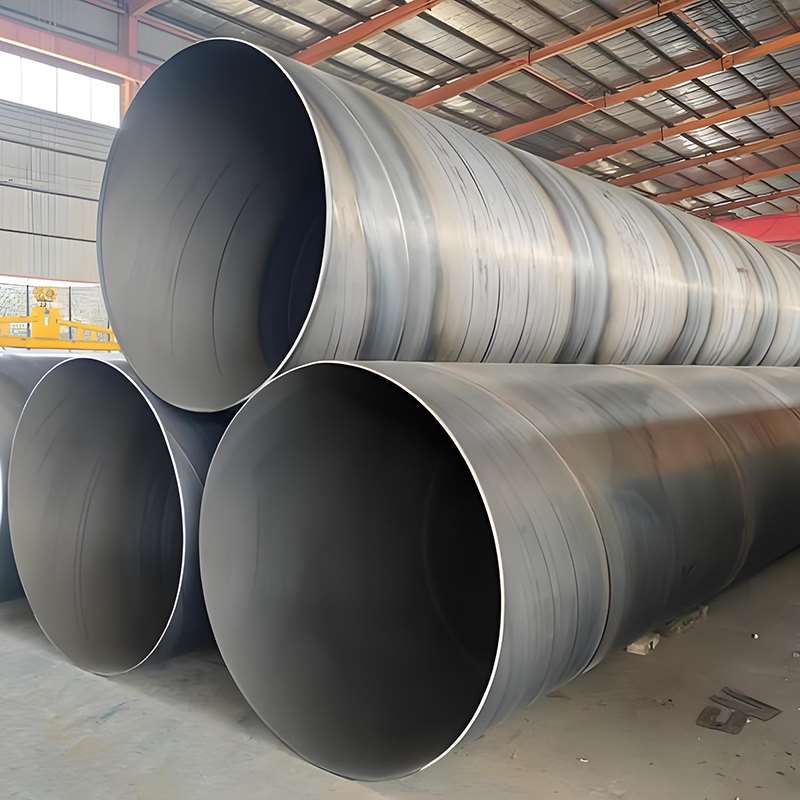
High Strength SSAW Steel Pipe

OD Range :

219 mm – 3500 mm

WT Range :

6 mm – 25 mm

Length :

6 m / 9 m / 12 m

Tolerance :

Commonly used sizes: 6 m / 9 m / 12 m, Length: ±50 mm, Outer diameter: ±1%, Wall thickness: -12.5% ​​/ +15%

Material :

X52、X60、X65、X70

Standard :

API 5L, ASTM A252, ASTM A53, GB/T 9711, EN 10219, EN 10217, ISO 3183

Surface :

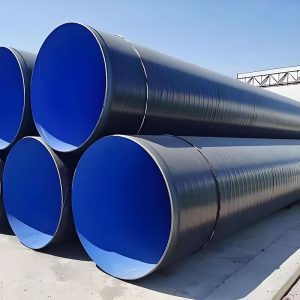
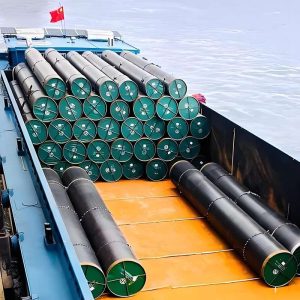
Black paint, FBE, 3PE, reinforced 3PE, customizable to project requirements.

Application :

Oil and gas long-distance pipelines, urban gas pipeline networks, large-scale water transmission projects, cross-river/cross-sea projects, piling and structural applications.

I. Overview of High-Strength Spiral Welded Steel Pipes

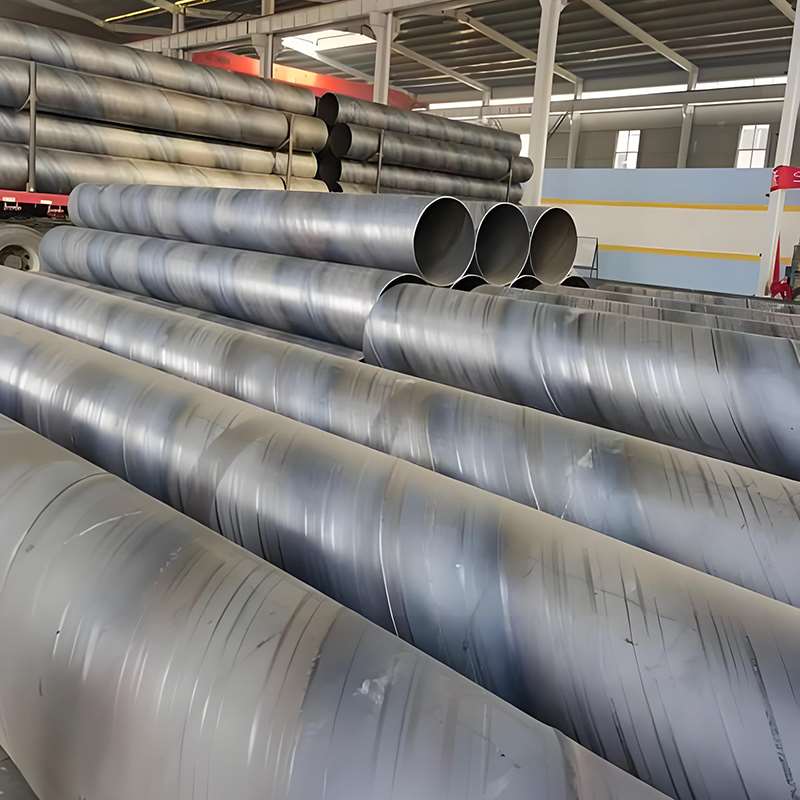
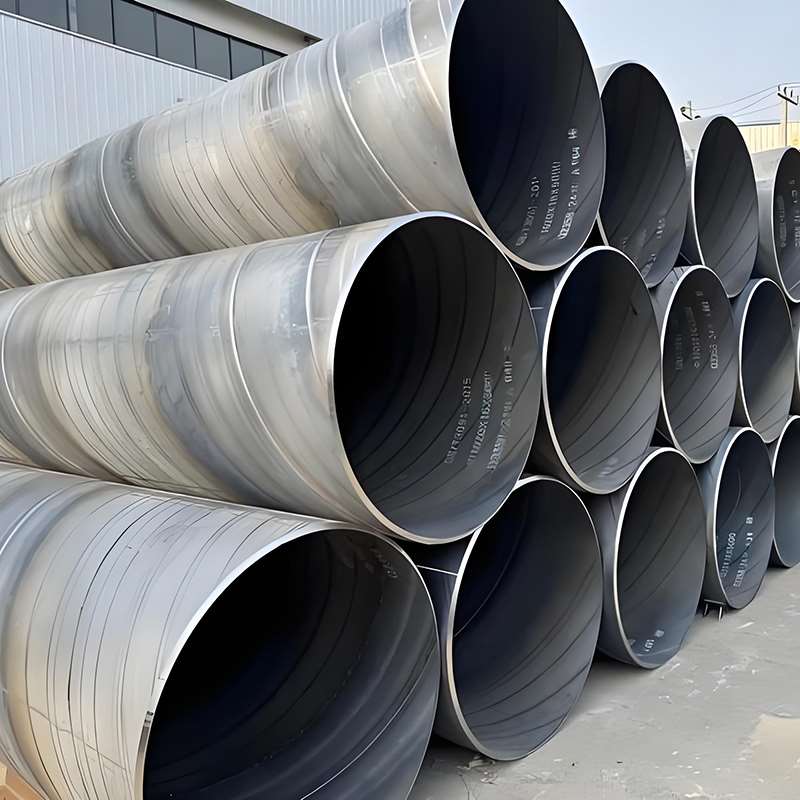
High-strength spiral submerged arc welded steel pipes utilize a spiral welding process, enabling the production of large-diameter pipes with steel grades up to X60, X65, and X70.

Suitable for long-distance transportation of oil, gas, water, and industrial pipelines, they offer advantages in high strength, pressure resistance, and economy.

II. Common steel grades for high-strength spiral welded steel pipes

Steel GradeMinimum Yield Strength (MPa)Typical Engineering ApplicationsApplicable Pressure Range
X60415Medium to high-pressure oil & gas pipelinesMedium to high pressure
X65450Long-distance oil & gas trunk pipelinesHigh pressure
X70485High-pressure long-distance pipelinesHigh pressure, critical projects

III. Chemical Composition of Spiral Welded Steel Pipe

Steel GradeC (Carbon)Mn (Manganese)P (Phosphorus)S (Sulfur)Si (Silicon)Ni (Nickel)Cr (Chromium)Mo (Molybdenum)
X60≤0.26≤1.40≤0.025≤0.015≤0.40≤0.30≤0.30≤0.15
X65≤0.26≤1.60≤0.025≤0.015≤0.50≤0.30≤0.30≤0.15
X70≤0.26≤1.60≤0.025≤0.015≤0.50≤0.30≤0.30≤0.15

IV. Mechanical Properties of High-Strength Spiral Welded Steel Pipes

Steel GradeYield Strength (MPa)Tensile Strength (MPa)Elongation (%)Impact Test (J)
X60≥415485–620≥2227 J @ -10°C
X65≥450520–650≥2027 J @ -10°C
X70≥485560–690≥1827 J @ -10°C

V. Recommendations for Selecting High-Strength Spiral Welded Steel Pipes

1. Core Principles of Selection

Key FactorDescriptionSelection Reference
Transport MediumDifferent media require different steel grades and coating typesCrude oil / Natural gas → High steel grade; Water / Industrial liquids → Medium steel grade
Pipeline PressureDesign pressure directly determines steel grade and wall thicknessMedium to low pressure → X60; Medium to high pressure → X65; High pressure → X70
Pipe Diameter & LengthAffects construction and costLarge-diameter, long-distance pipelines → SSAW preferred
PSL LevelPSL1 / PSL2 affects quality standardsHigh-pressure oil & gas long-distance → PSL2; Water / Industrial pipelines → PSL1
Anti-Corrosion RequirementEnvironmental corrosion determines coating typeBuried → 3PE; Seawater / Tidal areas → Reinforced 3PE; Indoor / Short-term → Black paint

2. Steel grade and pressure matching recommendations

Project TypeRecommended Steel GradeDesign PressureApplicable Scenario Description
Long-Distance Oil & Gas Trunk PipelineX60 / X65 / X70Medium-high to high pressureLong-distance transportation, buried installation, high strength required
City Gas Main Pipeline NetworkX42 / X52Medium to low pressureMedium pressure, relatively large diameter, safe and stable
Cross-River / Subsea Water PipelinesX65 / X70High pressureSubsea / wetland installation, requires corrosion protection and mechanical damage resistance
Industrial Water Supply / DrainageGr.B / X42Medium to low pressureTypical pipeline pressure, cost-effective option

3. Recommendations for Corrosion Protection and Construction

Environment TypeRecommended Anti-Corrosion MethodDescription
Buried Neutral Soil3PE CoatingWear-resistant and corrosion-resistant, suitable for long-distance pipelines
Seawater / Tidal AreasReinforced 3PE CoatingThickened outer layer to withstand seawater corrosion and wetland conditions
Indoor or Short-Term ProjectsBlack Paint CoatingCost-effective option, suitable for short-term use
Special MediaInternal Epoxy / Polyurethane LiningUsed when the transported medium is corrosive or requires hygiene standards

4. PSL Level Selection

PSL LevelApplicable Project TypeDescription
PSL1Water supply, industrial pipelines, city gasBasic quality requirements, lower cost
PSL2High-pressure oil & gas long-distance pipelines, cross-river / subsea projectsStricter quality and impact requirements to ensure high-pressure safety

5. Selection Process Recommendations

(1) Determine the transport medium (crude oil, natural gas, water, or industrial liquid)
(2) Calculate or confirm the design pressure and pipe diameter
(3) Select the steel grade (X60/X65/X70) based on the pressure
(4) Determine the PSL grade
(5) Select the corrosion protection type (3PE, FBE, epoxy, black paint, etc.) based on the environment
(6) Confirm the length, wall thickness, and outer diameter; custom sizes are available.
(7) Contact the manufacturer for a specific quote and customization services.

Related Products

Outside Diameter OD (in / mm) Wall Thickness WT (in / mm) Weight (lb/ft) Weight (kg/m) Steel Grade PSL Level
8.625 in / 219 mm 0.236–0.472 in / 6–12 mm 14–28 21–42 X60 / X65 PSL1 / PSL2
10.75 in / 273 mm 0.236–0.472 in / 6–12 mm 18–34 27–51 X60 / X65 PSL1 / PSL2
12.75 in / 325 mm 0.315–0.630 in / 8–16 mm 32–65 48–97 X60 / X65 PSL1 / PSL2
14.875 in / 377 mm 0.315–0.630 in / 8–16 mm 36–70 54–104 X60 / X65 PSL1 / PSL2
16.75 in / 426 mm 0.315–0.630 in / 8–16 mm 40–75 60–112 X60 / X65 PSL1 / PSL2
18.875 in / 478 mm 0.315–0.787 in / 8–20 mm 50–95 75–142 X60 / X65 / X70 PSL2
20 in / 508 mm 0.394–0.787 in / 10–20 mm 55–110 82–164 X60 / X65 / X70 PSL2
24 in / 610 mm 0.472–0.787 in / 12–20 mm 80–145 120–216 X65 / X70 PSL2
30 in / 762 mm 0.472–0.984 in / 12–25 mm 110–190 165–285 X65 / X70 PSL2
36 in / 914 mm 0.630–0.984 in / 16–25 mm 155–265 233–398 X70 PSL2
42 in / 1067 mm 0.630–0.984 in / 16–25 mm 190–310 285–465 X70 PSL2
48 in / 1219 mm 0.630–0.984 in / 16–25 mm 215–350 322–525 X70 PSL2
Country / Region Standard Name Standard Number
USA / North America API 5L API 5L / PSL1 & PSL2
Europe EN 10217-1 / EN 10217-2 EN 10217-1 (Pressure Tubes) / EN 10217-2 (High-Strength Steel Pipes)
Germany DIN 1626 / DIN 2448 DIN 1626 / DIN 2448
Japan JIS G 3454 / JIS G 3456 JIS G 3454 (Steel Pipes) / JIS G 3456 (Thick-Wall Steel Pipes)
China GB/T 9711.1 GB/T 9711.1-2017
UK / Europe BS EN 10208-2 BS EN 10208-2
India IS 3589 IS 3589
Russia / CIS GOST 20295 / GOST 10704 GOST 20295 / GOST 10704

Steel strip preparation → Forming → Spiral welding → Dimensional correction → Heat treatment (optional) → Inspection → Corrosion protection treatment → End processing → Shipment

1. Steel Strip Preparation

Select high-strength low-alloy steel strip or plate (X60/X65/X70).
Check that the material, chemical composition, and mechanical properties meet the standards (API 5L / GB/T 9711.1).
Remove rust and clean the steel strip surface to ensure welding quality.

2. Forming

Bend the steel strip into a spiral tube using a forming machine.
Precisely control the outer diameter, wall thickness, and roundness.
Form a continuous spiral angle to ensure uniform weld length.

3. Welding

Submerged arc welding (SAW) is used for both internal and external welds.
Strictly control the welding current, wire type, and weld thickness. High-strength steel grade ensures the weld’s mechanical properties match the base material. Double-sided welding can be used for high-pressure pipelines.

4. Dimensional Correction

The pipeline’s outer diameter and ovality are corrected using a sizing machine/press.
Ensure compliance with tolerance requirements through inner diameter, outer diameter, and ovality checks.

5. Heat Treatment

Heat treatment is performed according to steel grade and project requirements. Normalizing or heat treatment
Improves pipeline toughness and reduces residual stress. High-grade X65/X70 steel often uses heat treatment processes.

6. Inspection

Non-destructive testing (NDT): X-ray and ultrasonic testing of weld quality.
Dimensional inspection: Outer diameter, wall thickness, length, ovality, straightness.
Mechanical property testing: Tensile, impact, and bending tests.
Complies with API 5L / GB/T 9711.1 / EN 10217 standards.

7. Corrosion protection

External corrosion protection: 3PE (three-layer polyethylene), FBE (epoxy powder coating), black paint.
Internal corrosion protection (optional): Epoxy lining, polyurethane lining. Ensures long-term corrosion resistance of pipelines in buried, offshore, or humid environments.

8. End processing and packaging
Pipe ends are cut smoothly, chamfered, or protected.
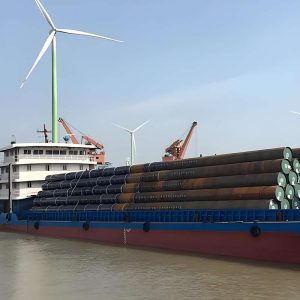
Packaging is done according to project requirements to prevent damage to the anti-corrosion layer during transportation. Bundling, labeling, and complete factory inspection reports are provided.

1. Visual inspection

Inspection Content Standard / Requirement Purpose
Surface Flatness No obvious unevenness, scratches, or zinc lumps Ensure weld quality and good coating adhesion
Weld Inspection Weld seam continuous, smooth, free of cracks and lack of fusion Prevent stress concentration and improve pipeline strength
Coating Inspection Coating complete, no peeling Prevent corrosion initiation and extend pipeline service life

2. Size Inspection

Item Inspection Content Standard / Tolerance
Outside Diameter (OD) Uniform pipe diameter and roundness ±1–2%
Wall Thickness (WT) Uniform pipe wall thickness ±1–2%
Length (L) According to standard or specified length ±50 mm
Ovality Deviation of outside diameter ≤1%
Straightness Pipe free from bending ≤0.5% of length

3. Mechanical property testing

Test Type Standard / Requirement Applicable Steel Grade
Tensile Test Tensile strength, yield strength, elongation X60 / X65 / X70
Impact Test Charpy impact toughness, low-temperature impact Mandatory for PSL2 pipes
Bend Test Pipe can be bent without cracking Ensure construction safety

4. Non-destructive testing of welds

Inspection Type Method Standard Requirement
Internal & External Weld Flaw Detection Ultrasonic Testing (UT) Welds must be free of cracks, slag inclusions, and lack of fusion
X-Ray Testing For critical welds Applicable for high-pressure oil & gas pipelines
Magnetic Particle Testing External surface defect detection Optional, supplementary method

5. Anti-corrosion coating inspection

Inspection Item Method Requirement
Coating Thickness Thickness gauge 3PE ≥ 250 μm, FBE ≥ 150 μm
Adhesion Pull-off test Meet standard requirements to prevent coating delamination
Appearance No bubbles, cracks, or peeling Ensure effective corrosion protection

6. Chemical Composition and Steel Grade Verification

Spectroscopic Analysis / Chemical Composition Testing
Confirms steel grade conformity to X60 / X65 / X70 standards
PSL1 / PSL2 have stricter control over chemical composition and microalloying elements.


1. What media are suitable for transporting high-strength spiral welded steel pipes?

Answer:
X60/X65/X70 high-strength spiral welded steel pipes are mainly used for transporting media such as crude oil, natural gas, refined oil, industrial water, and seawater.
Depending on the steel grade and wall thickness, they can meet the needs of medium-low pressure to high-pressure pipelines.

2. What are the differences between X60, X65, and X70?

Answer:
The main differences lie in steel grade strength and applicable pressure:
X60 → Medium and high pressure pipelines, suitable for general long-distance oil, gas, and water projects.
X65 → High pressure long-distance pipelines, with a higher pressure-bearing capacity than X60.
X70 → Ultra-high pressure and critical engineering projects, suitable for long-distance, high-intensity transportation.

3. What is the difference between PSL1 and PSL2?

Answer:
PSL ratings indicate the level of stringency in pipe quality control:
PSL1 → General engineering use, suitable for water or industrial pipelines
PSL2 → High-standard pipelines, suitable for high-pressure long-distance oil and gas transmission or critical projects, with stricter control over welds and chemical composition.

4. How to choose pipe specifications and length?

Answer:
When selecting specifications, consider the conveying pressure, flow rate, and installation environment:
Outer Diameter (OD): From 219 mm to 1219 mm or larger
Wall Thickness (WT): Selected according to pressure, typically 6–25 mm
Length (L): Standard 6 m / 12 m, custom lengths available

5. What are the anti-corrosion solutions for high-strength spiral welded steel pipes?

Answer:
The choice depends on environmental and engineering requirements:
Buried → 3PE (Triple-Layer Polyethylene)
Indoor/Short-Term → Black Paint
Offshore/Tidal Flats → Reinforced 3PE or FBE
Special Media → Epoxy or Polyurethane Lining

6. How to ensure pipeline quality and construction safety?

A:
High-strength spiral welded pipes undergo strict testing standards:
Visual inspection and dimensional measurement (outer diameter, wall thickness, ovality, straightness)
Mechanical property testing (tensile, impact, bending)
Non-destructive testing of welds (UT/X-ray/magnetic particle)
Anti-corrosion layer thickness and adhesion testing
Ensuring pipeline safety and reliability, meeting the requirements of long-distance transportation projects.