Products

Related News

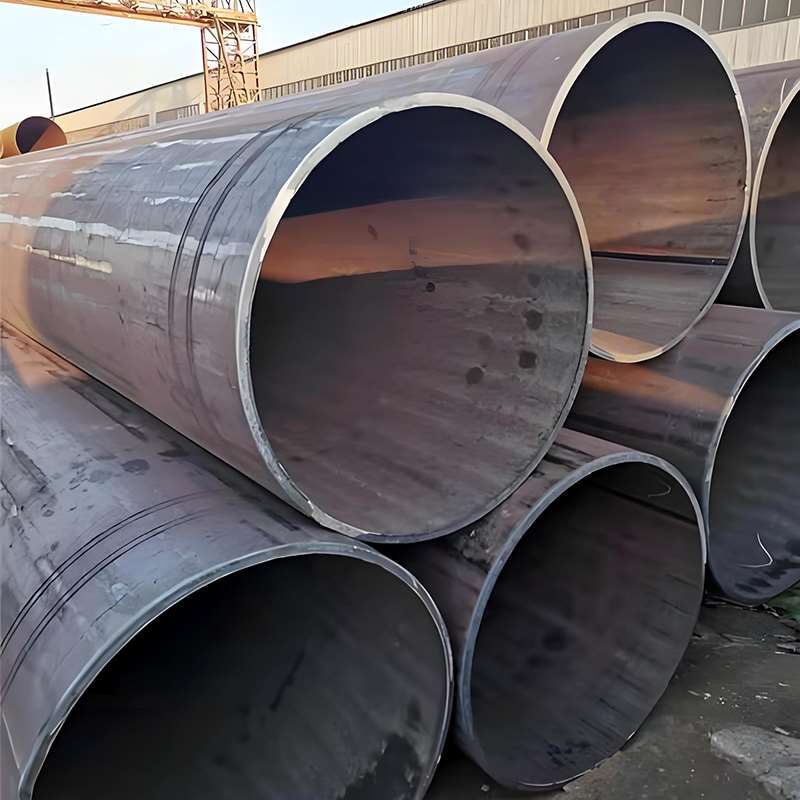
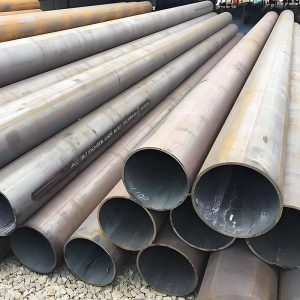
Heavy Wall LSAW Structural Pipe

OD Range :

219 – 1420 mm

WT Range :

10 – 50 mm

Length :

6 – 12 m

Tolerance :

Outer diameter ±1.0 mm, wall thickness ±0.5 mm, length ±10 mm

Material :

16Mn、Q345B、20MnSi、X52、X60、ASTM A500 Gr.B

Standard :

ASTM A106/A53/A252, API 5L, GB/T 9711, EN 10219

Surface :

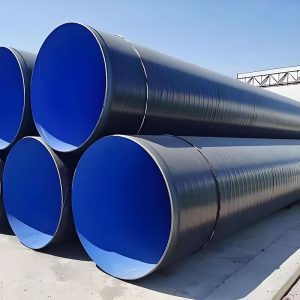
Hot-dip galvanizing, painting, anti-corrosion coating, pickling, black pipe

Application :

Bridge structures, building frames, pile foundations, heavy industrial structures, pipe supports, machinery supports

Introduction :

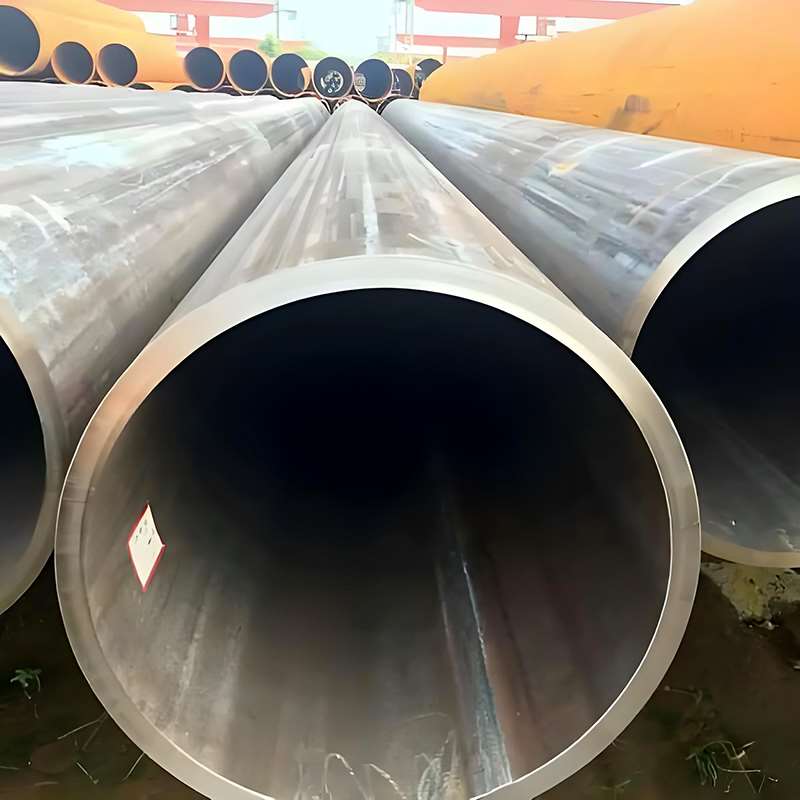
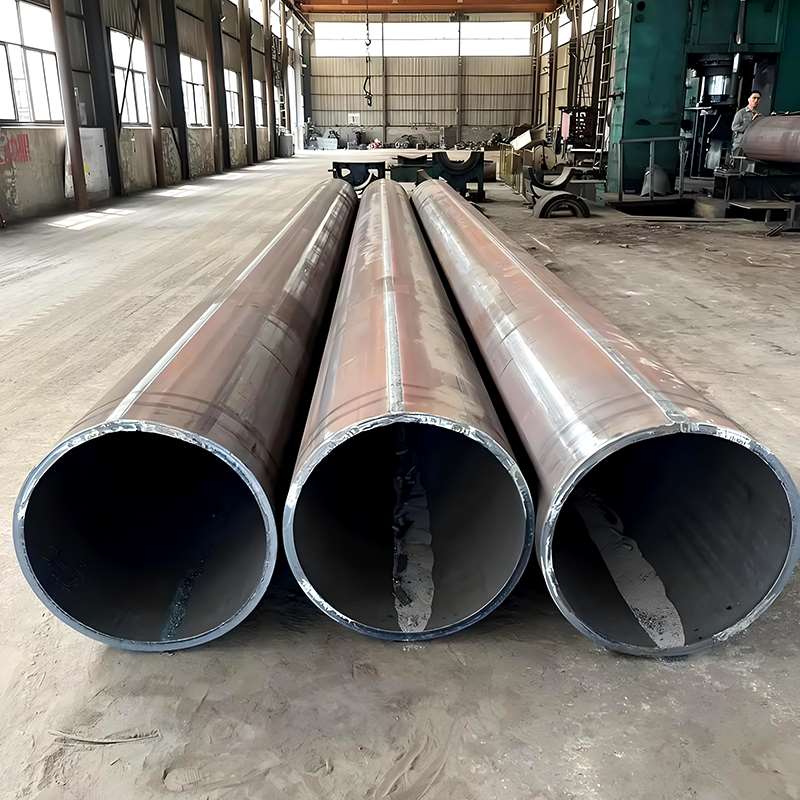
Thick-walled LSAW structural pipes are manufactured using a longitudinal submerged arc welding process, resulting in uniform welds, consistent wall thickness, and high strength.

I. Overview of Thick-Walled LSAW Structural Pipes

Thick-walled LSAW (Longitudinal Submerged Arc Welding) structural pipes are large-diameter, high-strength steel pipes manufactured using the longitudinal submerged arc welding process.
They feature uniform welds and stable wall thickness, possessing high load-bearing capacity and excellent mechanical properties. They are widely used in construction, bridges, pile foundations, heavy industrial structures, and pipeline support projects.

Product features include:

  • High strength and durability: Able to withstand heavy loads and long-term use in large structures.
  • Precise dimensions: Strict tolerances on outer diameter, wall thickness, and length for easy installation and construction.
  • Wide adaptability: Can be hot-dip galvanized, painted, corrosion-treated, or acid-pickled according to project requirements.
  • Multiple specifications available: Outer diameter 219–1420 mm, wall thickness 10–50 mm, length 6–12 m, meeting various engineering needs.

II. Applications and Selection of Thick-Walled LSAW Structural Pipes

1. Bridge Engineering Procurement

Procurement Concerns: High load-bearing capacity, weld quality, durability

Selection Recommendations:

  • Outer diameter: 273–1420 mm, wall thickness 20–50 mm
  • Material: 16Mn, Q345B, or high-strength steel
  • Surface treatment: Anti-corrosion coating or hot-dip galvanizing

2. Building Structure Procurement

Procurement Concerns: Ease of construction, machinability, moderate load-bearing capacity

Selection Recommendations:

  • Outer diameter: 168–508 mm, wall thickness 10–20 mm
  • Material: 16Mn, Q345B
  • Surface treatment: Painting or galvanizing

III. Recommendations for Standard Selection in Different Engineering Scenarios

Engineering ApplicationRecommended StandardSelection Rationale
Bridge EngineeringGB/T 1591 + LSAW / API 5LHigh load-bearing capacity with strict requirements on weld quality
Pile Foundation / Pipe PilesASTM A252 / API 5LExcellent compressive and bending resistance with good durability
Building Steel StructuresGB/T 13793 / ASTM A500Good constructability with controllable cost
Heavy Industrial StructuresAPI 5L / EN 10219Designed for long-term loading with high structural stability
Pipe Racks and Structural SupportsGB/T 3091 / ASTM A500Suitable for medium loads with high cost-effectiveness

IV. Key Clauses to Focus on During Procurement and Acceptance

  1. Weld Inspection Requirements
    Is 100% UT/RT non-destructive testing required?
  2. Mechanical Properties
    Do the yield strength and tensile strength meet the design requirements?
  3. Dimensions and Tolerances
    Especially the negative tolerance of the wall thickness of thick-walled pipes.
  4. Steel Grade and Base Material Standards
    Are specific grades such as Q345B, S355, and ASTM Gr.B clearly specified?
  5. Additional Requirements
    Corrosion protection, heat treatment, low-temperature impact testing, etc.
Related Products

Thick-walled LSAW Structural Pipe Specifications and Dimensions Table

Inch (NPS) Outside Diameter, OD (mm) Wall Thickness Range (mm, full list) Theoretical Weight (kg/m)* OD Tolerance Wall Thickness Tolerance
8″ 219.1 10, 12, 14, 16, 18, 20 52.9 – 98.6 ±0.75% OD ±10%
10″ 273.1 10, 12, 14, 16, 18, 20, 22 66.3 – 140.8 ±0.75% OD ±10%
12″ 323.9 10, 12, 14, 16, 18, 20, 22, 25 79.0 – 187.6 ±0.75% OD ±10%
14″ 355.6 12, 14, 16, 18, 20, 22, 25 102.2 – 217.4 ±0.75% OD ±10%
16″ 406.4 12, 14, 16, 18, 20, 22, 25, 30 117.5 – 286.4 ±0.75% OD ±10%
18″ 457.0 14, 16, 18, 20, 22, 25, 30 155.4 – 339.9 ±0.75% OD ±10%
20″ 508.0 14, 16, 18, 20, 22, 25, 30, 35 173.8 – 429.6 ±0.75% OD ±10%
24″ 609.6 16, 18, 20, 22, 25, 30, 35, 40 239.5 – 600.4 ±0.75% OD ±10%
28″ 711.2 18, 20, 22, 25, 30, 35, 40 308.4 – 766.1 ±0.75% OD ±10%
32″ 812.8 20, 22, 25, 30, 35, 40 388.7 – 927.3 ±0.75% OD ±10%
36″ 914.4 20, 22, 25, 30, 35, 40, 45 439.8 – 1130.5 ±0.75% OD ±10%
40″ 1016.0 22, 25, 30, 35, 40, 45, 50 550.4 – 1407.8 ±0.75% OD ±10%
48″ 1219.2 25, 30, 35, 40, 45, 50 741.3 – 1824.6 ±0.75% OD ±10%
56″ 1422.4 30, 35, 40, 45, 50 1041.6 – 2258.9 ±0.75% OD ±10%

Engineering and Procurement Usage Tips

1. Bridges / Pile Foundations / High-Load-Bearing Structures:
→ Recommended wall thickness ≥20mm, OD ≥355.6mm
2. Heavy Industrial Structures / Pipe Rack Columns:
→ Commonly used OD 406–812mm, wall thickness 16–30mm
3. Extra Thick Walls (≥40mm):
→ Non-destructive testing level, weld repair rules, and heat treatment requirements must be clearly specified.


Thick-walled LSAW Structural Pipe Standards

1. Commonly Used Domestic Standards (China)

Standard No. Standard Name Application Description Typical Applications
GB/T 3091 Welded Steel Pipes for Low-Pressure Fluid Conveyance Can also be used for general structural support where load requirements are not high General building supports, pipe racks
GB/T 13793 Longitudinally Electric-Resistance Welded (ERW) Steel Pipes Commonly used standard for structural applications with a wide dimensional range Building structures, industrial frameworks
GB/T 1591 High-Strength Low-Alloy Structural Steel Specifies base material properties; commonly used in combination with welded pipes Bridges, heavy-duty structures
GB/T 9711 Line Pipe for Petroleum and Natural Gas Industries High quality requirements; suitable for high-grade structural pipe applications Pile foundations, heavy-load structures

2. International Standard Operating Procedures (for export and international projects)

Standard No. Standard Name Application Description Typical Applications
ASTM A252 Welded and Seamless Steel Pipe Piles Specifically used for pile foundation structures Pipe piles, foundation engineering
ASTM A500 Cold-Formed Structural Tubing Commonly used standard for structural pipes (Grades B/C) Building and industrial structures
ASTM A572 High-Strength Structural Steel Base material standard for high-strength structural steel Heavy-load structures
API 5L (PSL1 / PSL2) Line Pipe High quality grade, suitable for demanding structural applications Pile foundations, bridges, energy projects
EN 10219 Cold Formed Welded Structural Sections European standard for structural welded pipes EU construction and structural engineering


Thick-walled LSAW Structural Pipe Production Process Flow

Steel plate inspection → Steel plate edge milling → Pre-bending and forming → U-forming → O-forming → Internal welding (submerged arc welding) → External welding (submerged arc welding) → Online weld seam inspection → Expanding → Heat treatment (optional) → Non-destructive testing → Hydrostatic testing → Dimensional inspection → Surface treatment → Finished product warehousing

Detailed Description of Each Process:

1. Steel Plate Inspection
Checking chemical composition, mechanical properties, thickness, and surface quality.
Function: To ensure the strength and toughness of the base material meet the structural load-bearing requirements.

2. Steel Plate Edge Milling
Precision milling of both sides of the steel plate.
Function: To ensure consistent weld groove dimensions and improve welding quality.

3. Pre-bending
Pre-bending the edges of the steel plate.
Function: To prevent uneven opening of the edges after forming and reduce welding stress.

4. U-forming
Pressing the steel plate into a “U” shape.
Function: To control the initial roundness of the pipe body and lay the foundation for subsequent forming.

5. O-forming
Pressing the U-shaped steel plate into a closed “O” shaped pipe blank.
Function: To ensure the accuracy of pipe diameter and roundness.

6. Internal Welding (Submerged Arc Welding)
Automatic submerged arc welding of the longitudinal weld seam inside the pipe.
Function: To form the main load-bearing weld seam and ensure structural strength.

7. External Welding (Submerged Arc Welding)
Reinforcement of the outer weld seam using submerged arc welding.
Function: To improve weld strength and weld density.

8. Online Weld Inspection
Real-time ultrasonic testing (UT) of the weld seam.
Function: To detect welding defects immediately and avoid extensive rework.

9. Expanding
Mechanical expansion of the steel pipe.
Function: Improves roundness, eliminates welding residual stress, and enhances dimensional stability.

10. Heat Treatment
Normalizing or stress relieving (depending on standard requirements).
Function: Improves structural uniformity and enhances fatigue resistance.

11. Non-destructive Testing
UT/RT/MT and other tests.
Function: Comprehensive verification of internal and surface quality of the weld.

12. Hydrostatic Testing
Applying specified pressure to the steel pipe.
Function: Verifies the overall pressure bearing capacity of the pipe body and weld.

13. Dimensional Inspection
Inspection of outer diameter, wall thickness, length, and straightness.
Function: Ensures dimensional tolerances meet standard requirements.

14. Surface Treatment
Painting, hot-dip galvanizing, anti-corrosion coating, etc.
Function: Improves corrosion resistance and adapts to complex operating environments.

15. Finished Product Warehousing
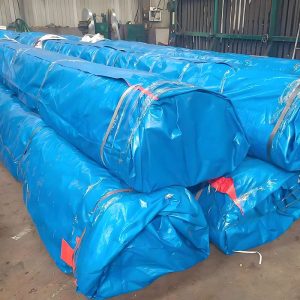
Identification, packaging, and preparation of factory documents.
Function: Facilitates traceability and on-site acceptance.


Overview of Inspection Standards for Thick-Walled LSAW Structural Pipes

Inspection Item Inspection Method / Standard Acceptance Criteria Practical Significance for Procurement / Use
Chemical Composition Analysis GB/T 4336 / ASTM A751 Each element meets the grade requirements Determines strength, weldability, and long-term reliability
Tensile Test GB/T 228 / ASTM A370 Yield strength, tensile strength, and elongation meet requirements Ensures load-bearing capacity
Impact Test (if required) GB/T 229 / ASTM A370 Passes impact test at room / low temperature Prevents brittle fracture
Plate Thickness Deviation GB/T 709 Within standard permissible deviation Ensures effective load-bearing cross-section
Visual Inspection Visual Check No cracks, laps, or severe scratches Prevents hidden defects entering welding process
Weld Seam Visual Inspection Visual / Weld Gauge No undercut, lack of fusion, or cracks First checkpoint for weld quality
Ultrasonic Testing (UT) GB/T 11345 / ASTM A435 No linear defects allowed Ensures safety of critical load-bearing welds
Radiographic Testing (RT, optional) GB/T 3323 / ASTM E1030 Internal defects meet allowable criteria Provides additional safety for high-grade projects
Outside Diameter & Roundness Check GB/T 17395 / API 5L OD and roundness within specifications Ensures proper installation and uniform load distribution
Wall Thickness Measurement Ultrasonic Thickness Gauge Negative deviation within standard limits Prevents “nominal thickness overstatement”
Length & Straightness Steel Tape / String Line Meets contract and standard requirements Facilitates on-site construction
Hydrostatic Test API 5L / ASTM A370 No leakage, no deformation Verifies overall pressure-bearing capacity
Surface Quality Inspection Visual No severe rust or peeling Affects service life and corrosion protection
Anti-Corrosion Coating Inspection (if any) Thickness Gauge / Adhesion Test Coating thickness and adhesion meet requirements Ensures performance in outdoor or corrosive environments
Documentation & Marking EN 10204 3.1 / 3.2 Material certificate and test reports complete Facilitates acceptance and traceability


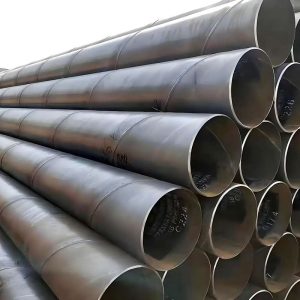
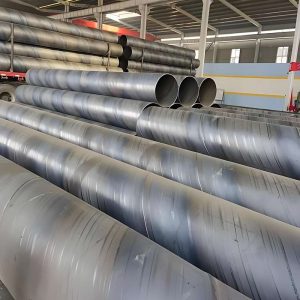
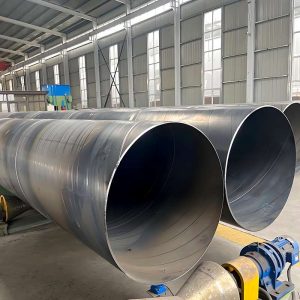
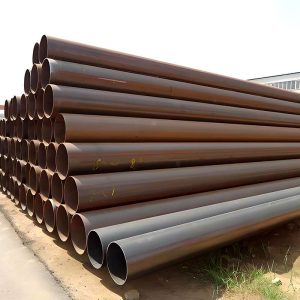
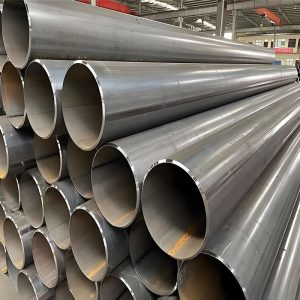
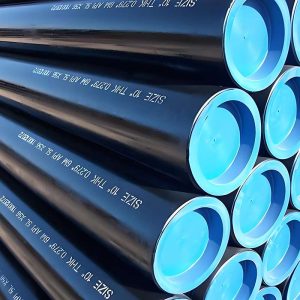
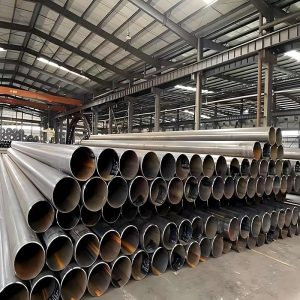
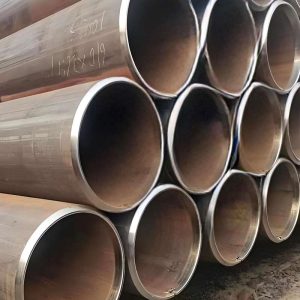
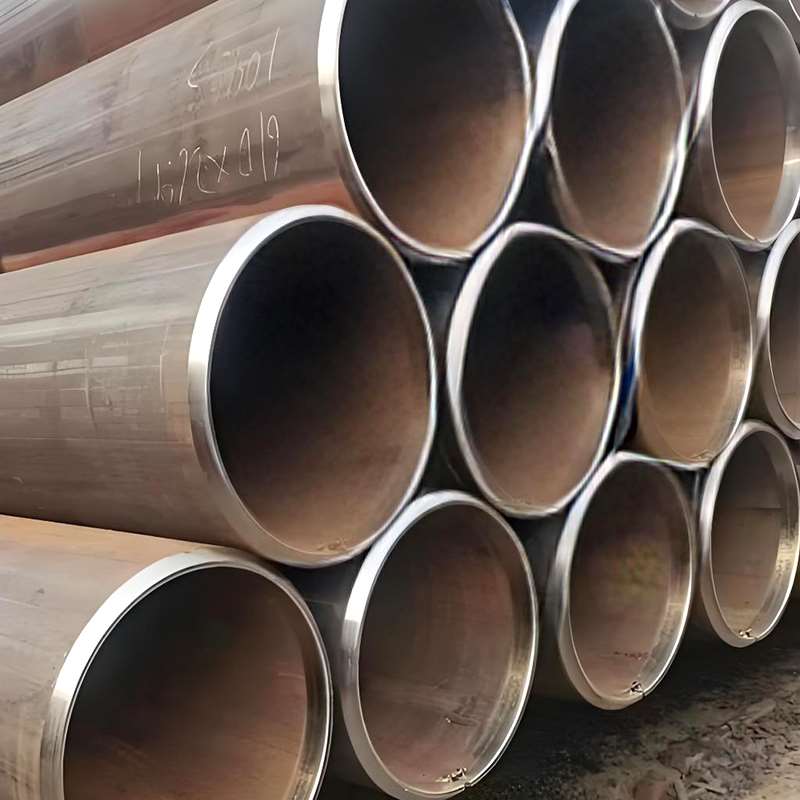
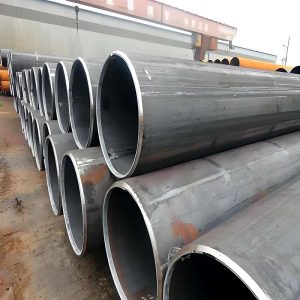
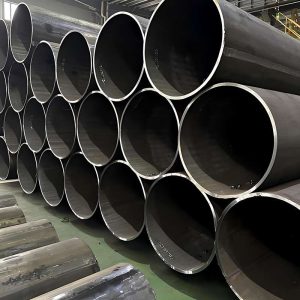
Thick-walled LSAW pipe for construction and large-scale frameworks

Thick-Walled LSAW Structural Pipe Procurement and Engineering Common FAQs

Q1: When is it necessary to use thick-walled LSAW structural pipes instead of ERW or SSAW pipes?

A:
Thick-walled LSAW structural pipes should be prioritized when the project involves any of the following situations:
High load-bearing capacity for individual components, belonging to the main load-bearing structure (bridges, pile foundations, columns)
Design wall thickness ≥ 16–20 mm
High requirements for weld quality, requiring fully automatic welding + 100% non-destructive testing
LSAW pipes have straight welds and less stress concentration, making them more suitable for high-load-bearing and high-safety-level projects; ERW is more suitable for small and medium diameters, while SSAW is more geared towards transportation or secondary load-bearing structures.

Q2: Is specifying the “nominal thickness” sufficient when purchasing? What deviations need to be considered?

A:
No, it’s not enough. The most common problem with thick-walled structural pipes is “insufficient actual wall thickness.”
When purchasing, it is essential to specify:
Allowable wall thickness deviation (usually ±10% or stricter)
Whether negative deviation is allowed in delivery
Whether a 100% ultrasonic thickness measurement report is provided
For load-bearing structures, it is recommended to specify in the contract:
“There shall be no systematic negative deviation in wall thickness, and key components are allowed 0 or positive deviation.”

Q3: Is it acceptable to perform UT (Ultrasonic Testing) on ​​a sample basis for weld inspection? When is 100% UT mandatory?

A:
Whether 100% UT is required depends on the structural risk level, not the price.
Situations requiring 100% UT:
Bridges, pile foundations, main load-bearing components
Wall thickness ≥ 20 mm
Projects where failure would have serious consequences
Situations where sample testing is acceptable:
Secondary structures, auxiliary supports
Moderate loads, sufficient redundant design
Procurement suggestion: Specify 100% UT for all load-bearing structures to avoid unclear responsibilities later.

Q4: Do different standards (GB / ASTM / API) significantly affect structural safety? How to choose?

A:
The impact is very significant. Standards determine:
Weld inspection level
Minimum mechanical properties
Allowable dimensional and wall thickness tolerances
Selection principles:
Domestic building structures → GB/T 1591 + LSAW
Pile foundation projects → ASTM A252 or API 5L
Export or high-safety-level projects → API 5L PSL2
Don’t just consider “whether it can be used,” but consider “who is responsible if something goes wrong.”

Q5: Is heat treatment mandatory for thick-walled LSAW structural pipes? What are the risks if it’s not done?

A:
It’s not mandatory for all projects, but it is strongly recommended in the following cases:
Wall thickness ≥ 40 mm
Used in low-temperature environments
Significant dynamic or fatigue loads
Risks of not performing heat treatment:
High residual stress in the weld
Reduced fatigue resistance
Microcracks may develop during later use
Engineering advice: For critical structures, it’s better to add an extra process step than to leave potential problems.

Q6: Besides price, what documents must be requested from the supplier during procurement?

A:
This is a point that many procurement personnel easily overlook, but it’s crucial. At a minimum, the following documents must be requested:
Material certificate (EN 10204 3.1 / 3.2)
Chemical composition and mechanical properties report
UT / RT / hydrostatic test report
Dimensional and wall thickness inspection records
These documents are not just “formalities,” but the basis for engineering responsibility and quality traceability.