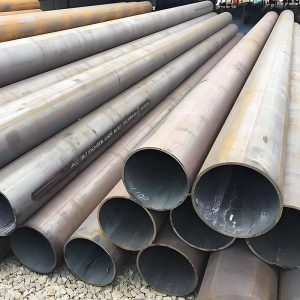
Products

Related News

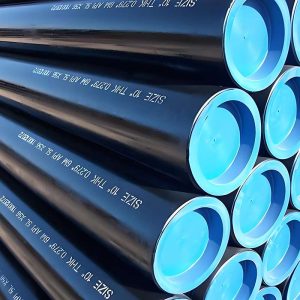
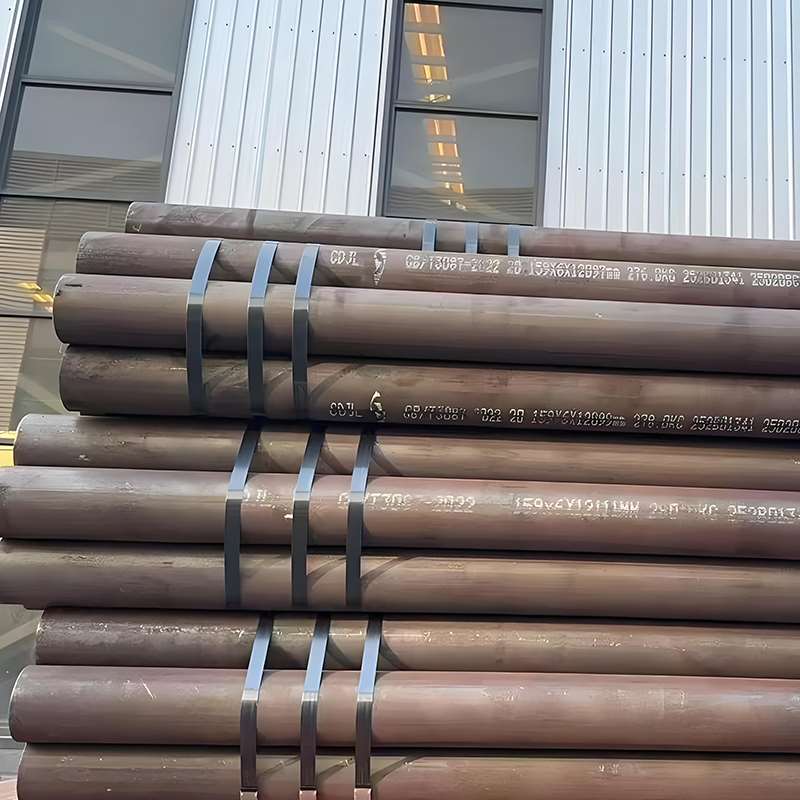
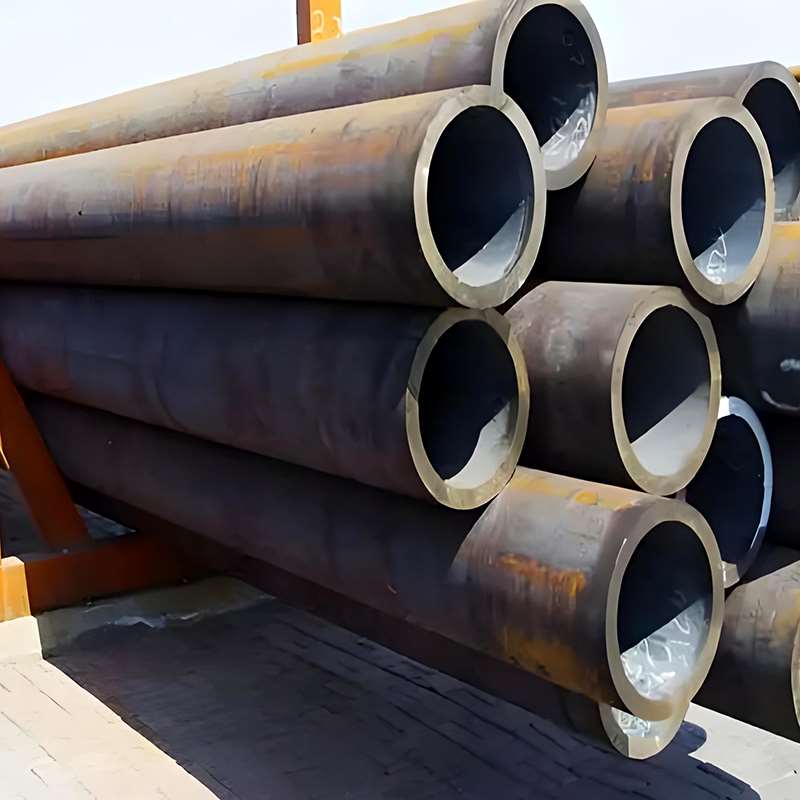
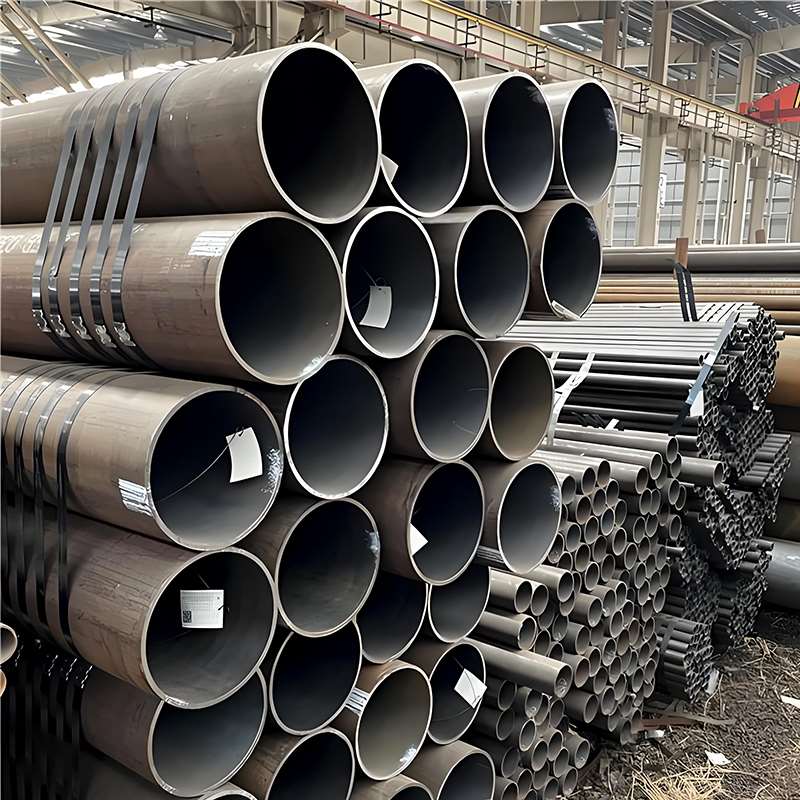
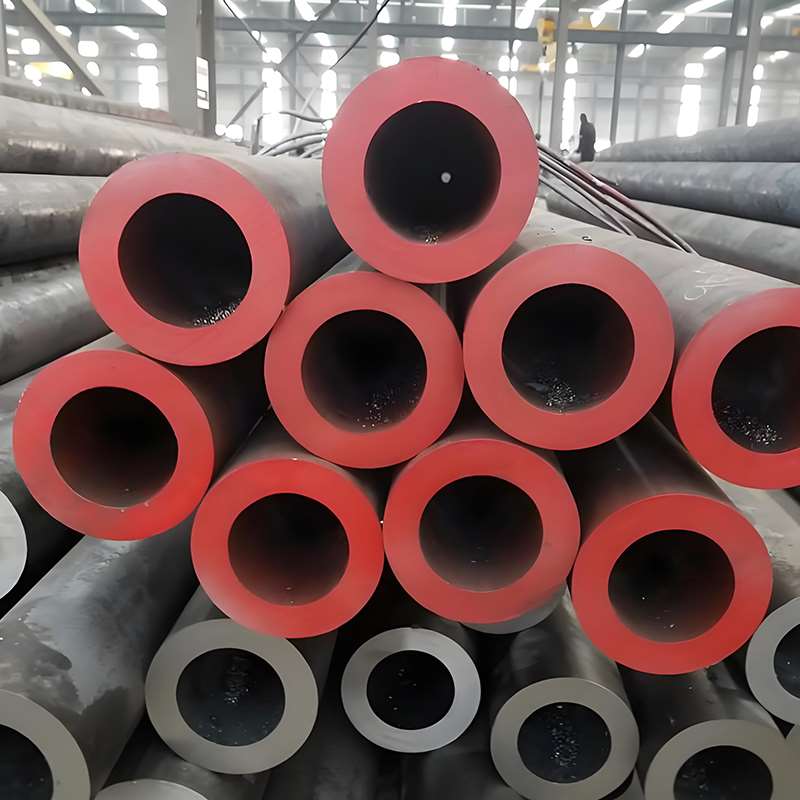
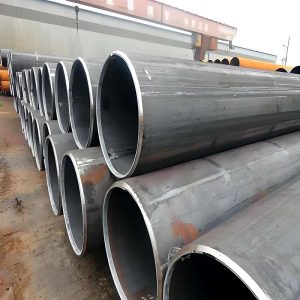
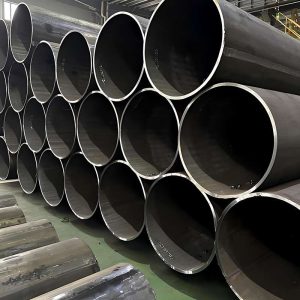
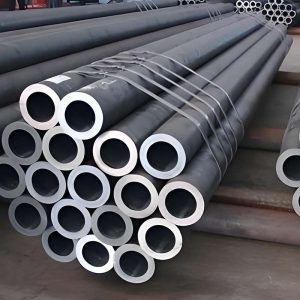
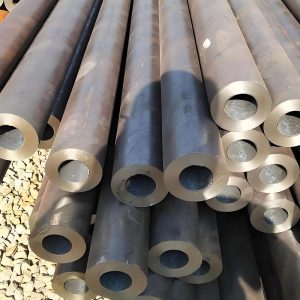
GB/T 3087 Seamless steel pipes

OD Range :

6 – 325 mm

WT Range :

2.0 – 25 mm

Length :

5.8 – 12 m

Tolerance :

Outside diameter tolerance: ±1% Wall thickness tolerance: ±10% Length tolerance: ±50 mm

Material :

Q195、Q215、Q235、Q345

Standard :

GB/T 3087-2022

Surface :

Rust-preventive oil, pickling, or blackening treatment

Application :

Mechanical structures, general fluid pipelines, building structures, low-pressure boiler auxiliary piping, HVAC systems.

Introduction :

GB/T 3087 seamless steel pipes are made of carbon steel and feature high dimensional accuracy and stable mechanical properties.

I. Overview of GB/T 3087 Seamless Steel Pipes

GB/T 3087 seamless steel pipes are carbon steel pipes manufactured according to the GB/T 3087-2022 standard, “Seamless Steel Pipes for General Structural Purposes.”
These pipes are manufactured using a seamless process and possess high strength, good toughness, and dimensional accuracy, making them widely applicable in mechanical structures, building structures, and medium- and low-pressure fluid transportation pipelines.

Main Features:

  1. Stable Material: Common steel grades include Q195, Q215, Q235, Q345, and other carbon structural steels.
  2. Diverse Sizes: Outer diameter ranges from 6–325 mm, wall thickness from 2–25 mm, and lengths can be customized according to customer requirements.
  3. Reliable Performance: Seamless design ensures good compressive strength and fatigue resistance.
  4. Wide Application: Suitable for mechanical equipment supports, bridges, towers, building structures, as well as low-pressure boiler auxiliary pipelines, water supply pipelines, and HVAC systems.
  5. Optional Surface Treatment: Anti-rust oil, pickling, blackening, or painting treatments are available to meet different environmental needs.

II. Main Material Classifications of GB/T 3087 Seamless Steel Pipes

Material / GradeChemical Composition FeaturesApplication ScopePerformance Characteristics
Q195Low carbon content, moderate strengthGeneral mechanical structures, light supports, low-pressure pipelinesEconomical and practical, easy to process, suitable for non-load-bearing structures
Q215Slightly higher carbon content than Q195, moderate strengthBuilding structures, mechanical structures, general fluid pipelinesHigher strength than Q195, good weldability
Q235Low carbon content, moderate manganese contentMechanical structures, building structures, low-pressure fluid transportBalanced strength and toughness, most commonly used material, highly versatile
Q345Low-alloy steel with trace elements such as Cr, Ni, MoHigh-strength mechanical structures, bridges, towers, pressure pipelinesHigh strength, good durability, suitable for load-bearing structures and medium-to-low pressure fluid pipelines

III. GB/T 3087 Seamless Steel Pipe Typical Applications and Selection Recommendations

1. Steel Grade: Q195

Typical Applications:

  • Lightweight mechanical structures: brackets, frames, non-load-bearing pipe fittings
  • Small-diameter low-pressure pipelines: air pipes, water pipes, general fluid transportation

Selection Recommendations:

  • Prioritize for projects with low strength requirements and cost sensitivity
  • Suitable for short-term use or non-critical structural components
  • Good weldability, easy to process and install

2. Steel Grade: Q215

Typical Applications:

  • Building structures, mechanical parts, support pipelines
  • Low-pressure fluid transportation pipelines, such as water supply and HVAC pipelines

Selection Recommendations:

  • Medium structural load-bearing capacity, suitable for general industrial and construction applications
  • Can be used for welding and cold bending, suitable for on-site construction
  • Economical when corrosion and wear requirements are not high

3. Steel Grade: Q235

Typical Applications:

  • Medium-load-bearing building structures: bridges, towers, factory frames
  • Industrial machinery supports and load-bearing pipe fittings
  • Low-to-medium pressure fluid pipelines: steam pipes, water supply pipes, low-pressure boiler auxiliary pipes

Selection Recommendations:

  • Most commonly used material, balancing strength and toughness
  • Suitable for load-bearing structures and medium-to-low pressure fluid pipelines
  • Highly versatile in engineering construction, easy to procure and replace

4. Steel Grade: Q345

Typical Applications:

  • High-strength mechanical structures: bridge main structures, towers, heavy-duty supports
  • Medium-to-low pressure fluid pipelines requiring high durability and reliability
  • Pressure pipelines or important load-bearing pipe fittings

Selection Recommendations:

  • Prioritize this grade for projects requiring higher strength
  • Suitable for medium-to-low pressure steam pipes or auxiliary boiler pipelines
  • Requires high construction quality; welding and processing require attention to heat treatment and stress control

5. Low and Medium Pressure Fluid Pipeline Applications

Typical Uses:

  • Water supply pipelines, air conditioning system pipelines, low-pressure steam pipelines
  • Industrial pipelines: conveying non-corrosive media such as water, air, and oil

Selection Suggestions:

  • Select Q235 or Q345 based on working pressure and temperature.
  • Pipe diameter and wall thickness should be determined based on flow rate and pipeline design calculations.
  • Surface treatment can be selected from rust-proof oil or pickling to ensure long-term durability.

6. Surface Treatment and Processing Suggestions

Common Surface Treatments: Rust-proof oil, pickling, blackening, painting

Suggestions:

  • For outdoor or humid environments, use rust-proof oil or paint.
  • The inner surface of industrial pipelines can be pickled to reduce the risk of corrosion.
  • During processing, pay attention to maintaining the outer diameter and wall thickness tolerances to ensure compatibility with fittings and valves.
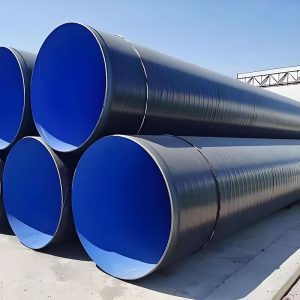
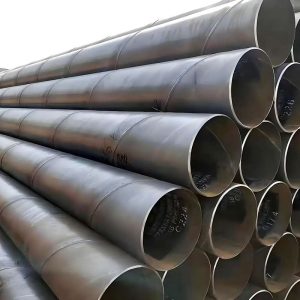
Related Products

GB/T 3087 Seamless Steel Pipe Specifications and Dimensions Table

Outer Diameter (mm) Wall Thickness Range (mm) Length (m) OD Tolerance (mm) Wall Thickness Tolerance (mm) Remarks
6 – 10 1.0 – 2.0 5.8 – 6 ±0.1 ±0.1 Small-diameter lightweight pipe
12 – 20 1.5 – 3.0 5.8 – 12 ±0.15 ±0.15 Common mechanical structural pipe
21.3 2.0 – 6.0 5.8 – 12 ±0.2 ±0.2 Engineering and fluid pipe
26.9 2.0 – 6.0 5.8 – 12 ±0.2 ±0.2 Engineering and fluid pipe
33.7 2.5 – 7.0 5.8 – 12 ±0.3 ±0.3 For engineering structures
42.4 2.5 – 7.5 5.8 – 12 ±0.3 ±0.3 Mechanical structural pipe
48.3 3.0 – 8.0 5.8 – 12 ±0.3 ±0.3 Structural and fluid pipe
60.3 3.0 – 9.0 5.8 – 12 ±0.4 ±0.4 Common load-bearing pipe
76.1 3.5 – 10.0 5.8 – 12 ±0.4 ±0.4 Industrial structural pipe
89.0 4.0 – 10.0 5.8 – 12 ±0.5 ±0.5 Medium load-bearing pipe
114.3 4.5 – 12.0 5.8 – 12 ±0.5 ±0.5 Large mechanical structural pipe
168.3 5.0 – 15.0 5.8 – 12 ±0.6 ±0.6 Pressure and structural pipe
219.1 6.0 – 16.0 5.8 – 12 ±0.6 ±0.6 Large pressure pipe
273.0 6.0 – 18.0 5.8 – 12 ±0.7 ±0.7 Large industrial structural pipe
323.9 8.0 – 20.0 5.8 – 12 ±0.8 ±0.8 Special engineering pipe

Remarks:

1. Length: Can be cut according to customer requirements; standard lengths are generally 5.8–12 m; custom lengths are available for special projects.
2. Tolerances:
Outer diameter tolerance: generally ±1% or according to the mm values ​​in the table above.
Wall thickness tolerance: ±10% or according to the mm values ​​in the table above.
3. Wall thickness selection: Selected based on structural strength or pipeline working pressure calculations; generally, large diameters use thick walls, and small diameters use thin walls.
4. Material: Carbon steel such as Q195, Q215, Q235, Q345, etc.
5. Applications: Mechanical structures, building structures, low-pressure fluid transportation, low and medium-pressure boiler auxiliary pipelines, etc.


GB/T 3087 Seamless Steel Pipe Standard Parameters

Parameter Name Standard Parameters / Description
Standard Name GB/T 3087-2022 “Seamless Steel Pipes for General Structural Use”
Pipe Type Seamless steel pipe
Outer Diameter Range 6 – 325 mm (common sizes: 21.3, 26.9, 33.7, 48.3, 60.3, 76.1, 89, 114.3, 168.3, 219.1, 273, 323.9 mm)
Wall Thickness Range 2.0 – 25 mm (customizable based on OD)
Length Standard 5.8 – 12 m, can be customized per customer requirements
OD Tolerance ±1% or ±0.1–0.8 mm (depending on pipe diameter)
Wall Thickness Tolerance ±10% or ±0.1–0.8 mm (depending on pipe diameter)
Material / Grade Carbon structural steel: Q195, Q215, Q235; Low-alloy steel: Q345
Mechanical Properties – Yield strength: Q195 ≥ 195 MPa, Q215 ≥ 215 MPa, Q235 ≥ 235 MPa, Q345 ≥ 345 MPa- Tensile strength: Q195 270–410 MPa, Q215 300–430 MPa, Q235 370–500 MPa, Q345 470–630 MPa- Elongation: ≥20% (Q345 ≥ 17%)
Chemical Composition Requirements Carbon (C), Manganese (Mn), Sulfur (S), Phosphorus (P), etc., controlled according to GB/T 700 and standard requirements
Surface Condition Bright, free of cracks, burrs, or pits; can be treated with anti-rust oil, pickling, blackening, or painting
Applicable Temperature Ambient to medium temperature (≤300°C); not suitable for high-pressure boiler main steam pipes
Typical Applications – Mechanical structures, equipment supports, plant structures, bridges, towers- General fluid pipelines: water, air, low-pressure steam, low-pressure boiler auxiliary pipes- Construction structural pipes
Remarks Outer diameter, wall thickness, length, and surface treatment can be customized per customer requirements to meet engineering needs


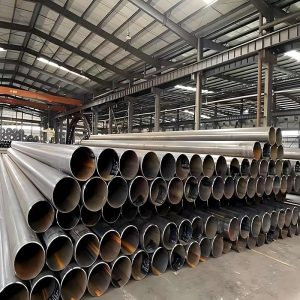
GB/T 3087 Seamless Steel Pipe Manufacturing Process

1. Raw Material Preparation
Materials: Steel billets (round or square billets), meeting the chemical composition requirements of GB/T 700, Q195~Q345.
Requirements: The steel billets must be free of cracks and inclusions, and the sulfur and phosphorus content must meet the standards.

2. Heating
Heating furnace: The billets are heated to 1050~1200℃, with the temperature adjusted according to the steel grade and wall thickness.
Purpose: To ensure good plasticity of the steel billets, facilitating piercing and hot rolling.

3. Piercing
Process: The hot-rolled billet is pierced on a piercing machine to form a hollow tube.
Effect: Creates a hollow structure in the billet, preparing it for subsequent rolling.

4. Hot Rolling (or Forming)
Process:
The hollow tube is rolled to the target outer diameter and wall thickness using a longitudinal or transverse hot rolling mill.
Continuous hot rolling or precision hot rolling of seamless steel pipes can be used.
Features: Ensures dimensional accuracy, roundness, and uniform wall thickness.

5. Cold Drawing/Cold Rolling (Optional)
Applicable to: Small-diameter tubes requiring higher dimensional accuracy and smoother surfaces.
Effect: More uniform outer diameter and wall thickness, high surface finish, and improved mechanical properties.

6. Normalizing or Heat Treatment
Process:
Normalizing, annealing, or tempering treatment
Adjusts the internal structure of the tube to improve toughness and mechanical properties.
Purpose: To ensure that the mechanical properties of Q195–Q345 steel grades meet engineering requirements.

7. Custom Length Cutting
Length: Standard length 5.8 – 12 m, custom lengths available upon customer request.
Note: Ensure that the cut ends are flat and free of burrs.

8. Dimensional Inspection and Quality Control
Dimensional inspection: Measurement of outer diameter, wall thickness, tolerances, and roundness
Mechanical property testing: Tensile strength, yield strength, elongation
Surface defect inspection: Bright surface, free of cracks, pits, and burrs

9. Surface Treatment
Options: Anti-rust oil, pickling, blackening, or painting
Purpose: Corrosion and rust prevention, meeting transportation and construction requirements.

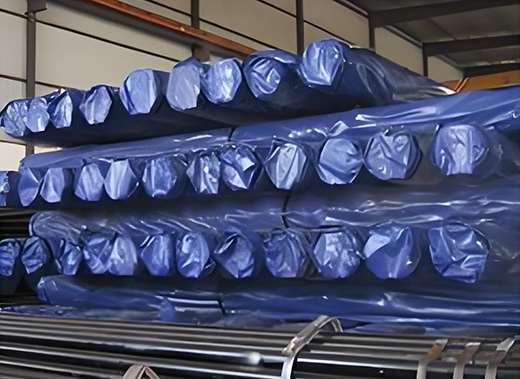
10. Factory Packaging
Method: Bundling, protective film packaging, or palletizing to prevent collision damage during transportation
Marking: Steel pipe specifications, steel grade, and standard number (GB/T 3087) clearly marked


GB/T 3087 Seamless Steel Pipe Testing Standard

Inspection Item Purpose / Requirement
Visual Inspection Check the pipe surface for cracks, pores, pitting, dents, burrs, or rust spots to ensure surface quality meets standards.
Dimensional Measurement Measure outer diameter, wall thickness, length, roundness, and straightness. Purpose: Ensure dimensional accuracy, uniform wall thickness, and proper fit for processing and installation.
Chemical Composition Testing Test the content of C, Mn, P, S, etc. Purpose: Ensure the steel’s chemical composition meets GB/T 700 and GB/T 3087 requirements for the grade, guaranteeing mechanical properties and weldability.
Mechanical Properties Testing Test yield strength, tensile strength, and elongation. Purpose: Ensure the pipe can bear load and maintain toughness under stress, meeting standard requirements for different steel grades (Q195, Q215, Q235, Q345).
Flattening Test Flatten the pipe to a specified length. Purpose: Assess pipe plasticity and toughness, ensuring no cracks or fracture.
Hardness Testing Typically Brinell or Rockwell hardness. Purpose: Verify material uniformity and mechanical properties meet steel grade requirements.
Hydrostatic / Pressure Test Conduct internal pressure test for some medium- and low-pressure fluid pipes. Purpose: Ensure pressure resistance and prevent leakage or rupture during operation.
Non-Destructive Testing (NDT) Ultrasonic testing (UT) or magnetic particle testing (MT). Purpose: Detect internal or surface defects such as cracks or pores to improve safety and reliability.
End-Face Quality Inspection Check that cut ends are smooth and burr-free. Purpose: Facilitate welding and installation, ensuring a tight joint seal.
Surface Treatment Inspection Check anti-rust oil, pickling, blackening, or painting for uniformity and completeness. Purpose: Prevent rust during transport and storage, extending service life.


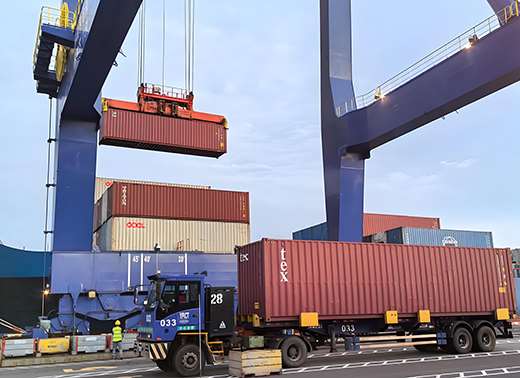
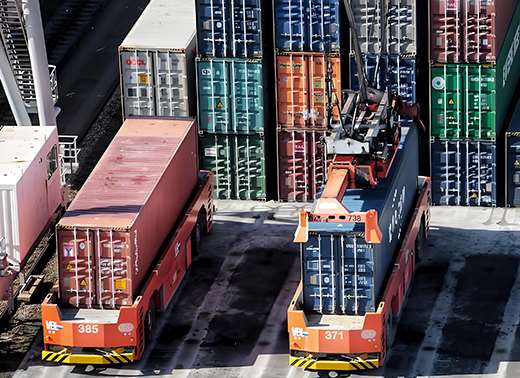
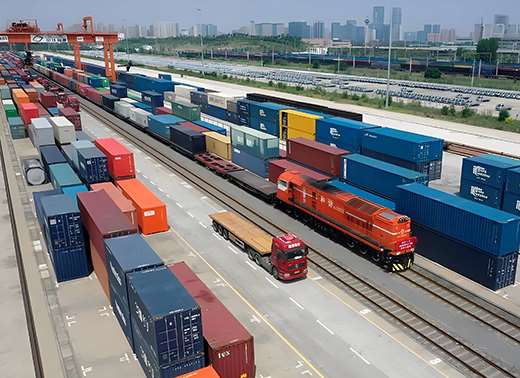
Seamless Carbon Steel Pipe Sea Freight

GB/T 3087 Seamless Steel Pipe Selection – Frequently Asked Questions

1. Q: What are the main applications of GB/T 3087 seamless steel pipes?

A:
They are mainly used in load-bearing structures such as mechanical structures, building structures, factory supports, bridges, and towers.
They can also be used for low-pressure fluid conveying pipelines, such as water supply pipes, HVAC pipes, and auxiliary pipes for low-pressure steam or low-to-medium pressure boilers.
They are not suitable for high-temperature and high-pressure boiler main steam pipes or high-pressure chemical pipelines.

2. Q: How to select the appropriate steel grade based on engineering requirements?

A:
Q195 / Q215: For lightweight structures or non-load-bearing pipelines, offering high cost-effectiveness.
Q235: General-purpose structural pipes, balancing strength and toughness, and the most commonly used steel grade.
Q345: For high-strength load-bearing structures or medium-to-low pressure fluid pipelines requiring higher toughness and durability.
Material selection should be based on a comprehensive consideration of structural load requirements and pipeline working pressure.

3. Q: Can GB/T 3087 pipes be used for boiler pipelines?

A:
They can be used for auxiliary pipes of low-to-medium pressure boilers or low-pressure steam pipes.
They are not suitable for high-pressure or high-temperature boiler main steam pipes; high-temperature and high-pressure boiler pipes should use alloy steel pipes conforming to standards such as GB/T 5310 or ASTM A335.

4. Question: How to choose the outer diameter and wall thickness?

Answer:
The outer diameter and wall thickness should be determined based on structural strength requirements, fluid pressure, and flow rate calculations.
Small-diameter pipes generally use thin walls, while large-diameter pipes for load-bearing or medium-to-low pressure fluid pipelines can use thick walls.
Standard range: outer diameter 6–325 mm, wall thickness 2–25 mm, customizable according to customer requirements.

5. Question: What surface treatments are available for GB/T 3087 seamless steel pipes?

Answer:
Options include anti-rust oil, pickling, blackening, or painting.
For outdoor or humid environments, anti-rust oil or painting is recommended; the inner surface of industrial pipelines can be pickled.
Surface treatment can extend the service life of the pipes and ensure construction quality.

6. Question: How to guarantee the quality and safety of the pipes?

Answer:
Quality is ensured through dimensional inspection, chemical composition testing, mechanical performance testing, flattening tests, hydraulic testing, and non-destructive testing.
When purchasing, it is recommended to choose suppliers with complete quality inspection reports and GB/T 3087 standard certificates.
Parameters such as dimensions, wall thickness, steel grade, and surface treatment should be consistent with design requirements.