Products

Related News

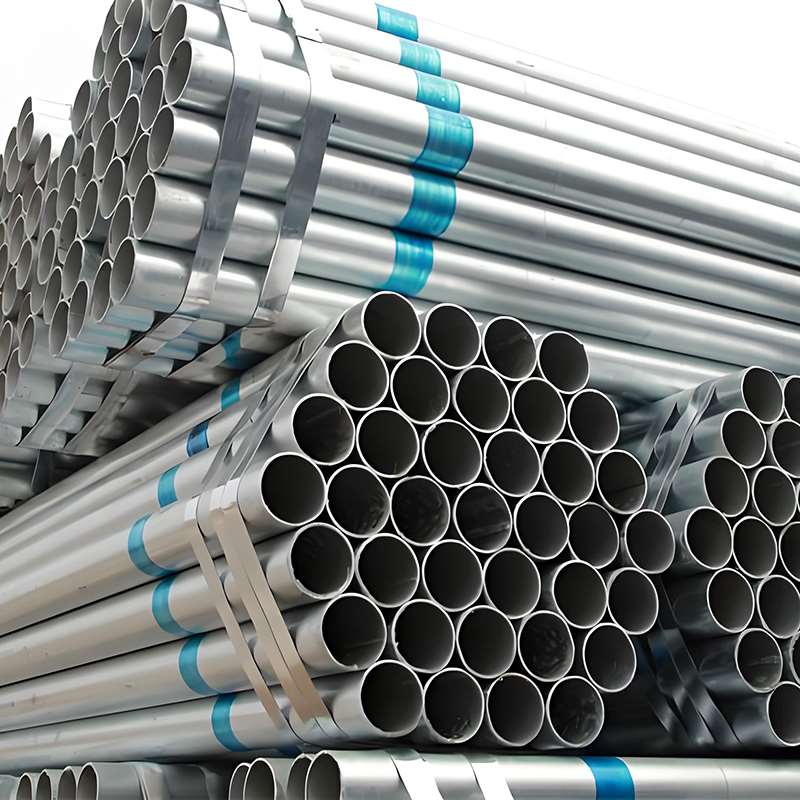
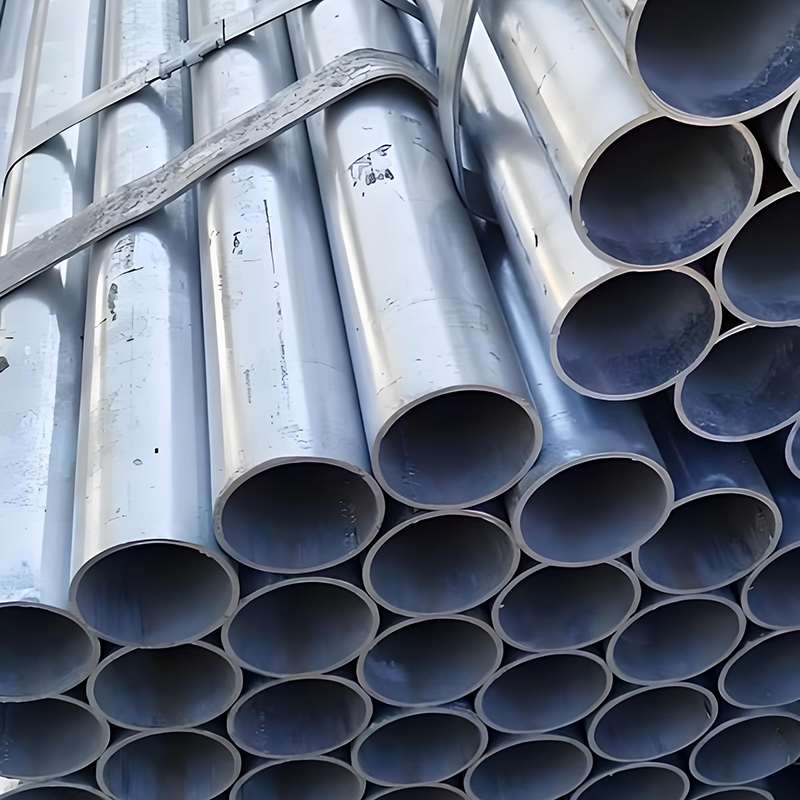
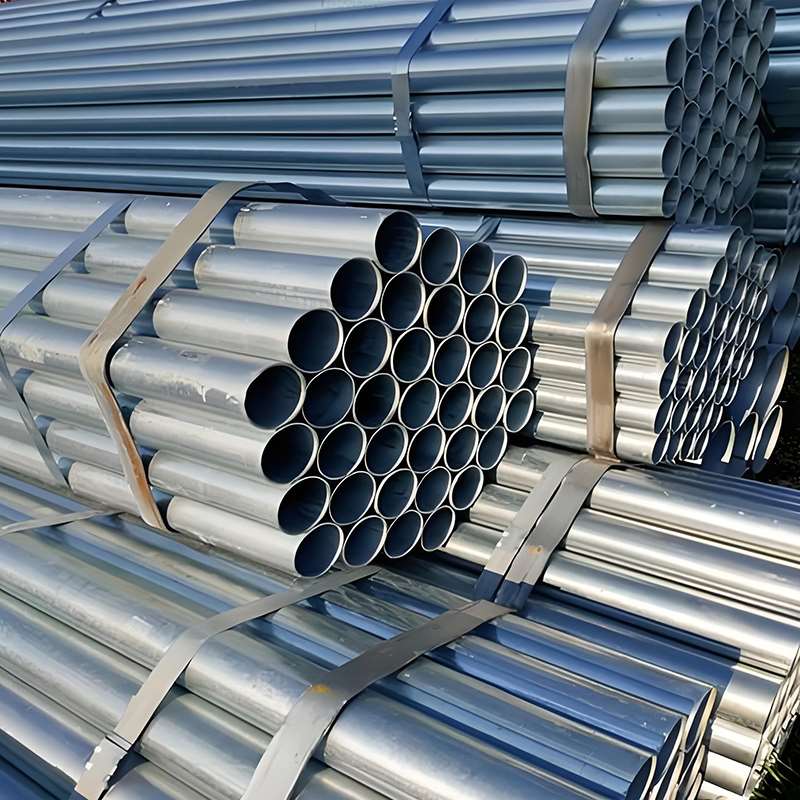
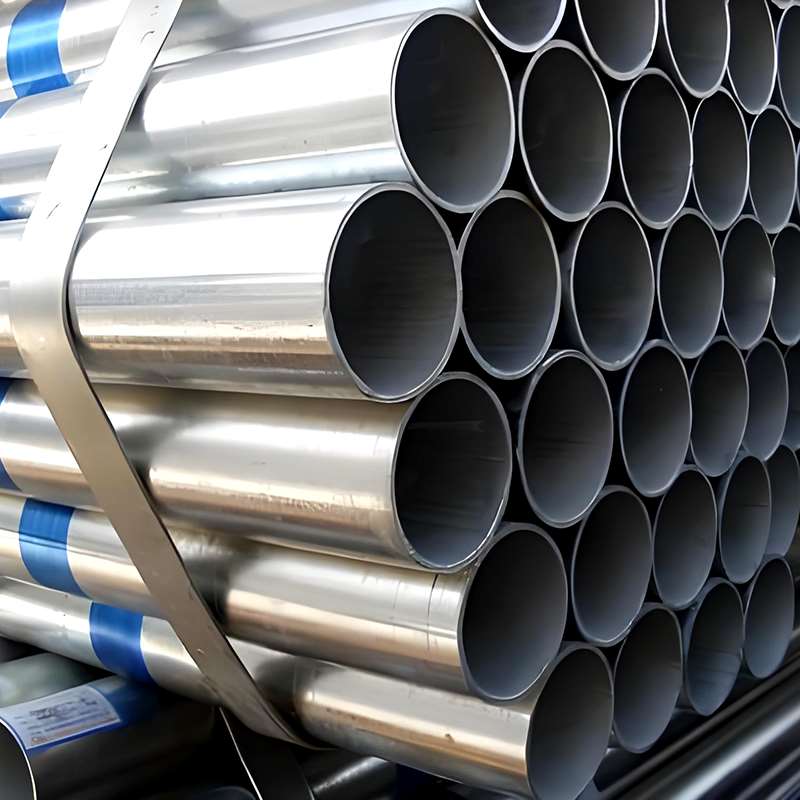
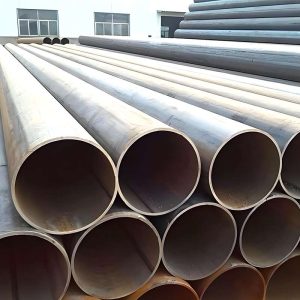
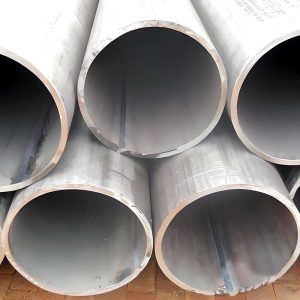
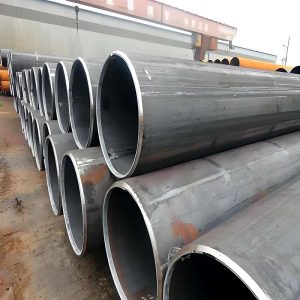
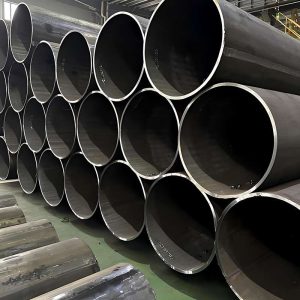
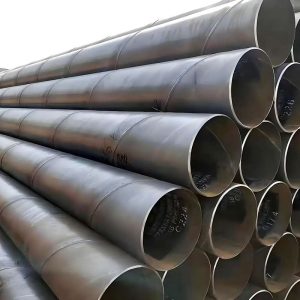
ERW Galvanized Steel Pipe

OD Range :

1/2″ ~ 12″(21.3 mm ~ 323.9 mm)

WT Range :

SCH10 ~ SCH80 (2.77 mm ~ 12.7 mm, according to Schedule)

Length :

6m and 12m are available for customization.

Tolerance :

Outer diameter ±1%, wall thickness ±12.5% ​​(according to ASTM/EN standards)

Material :

Carbon steel, low alloy steel (such as ASTM A53, ASTM A500 grade)

Standard :

ASTM A53 / ASTM A500 / EN 10219 / EN 10210

Surface :

Hot-dip galvanizing, cold-dip galvanizing

Application :

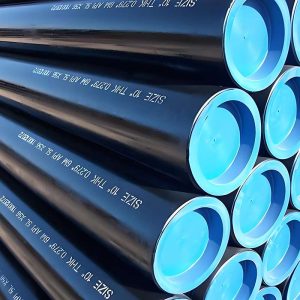
Pipelines for transporting water, gas, and low-pressure fluids; outdoor structural pipes, support frames, fences, and building pipes.

I. Overview of ERW Galvanized Steel Pipes

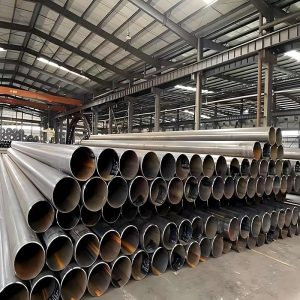
ERW galvanized steel pipes are steel pipes manufactured by forming hot-rolled or cold-rolled steel strips into pipe blanks using high-frequency resistance welding (ERW), followed by galvanizing.

They possess advantages such as cost-effectiveness, high processing precision, and strong corrosion resistance, and are widely used in industries, construction, water supply and drainage, gas transportation, structural support, and other fields.

Main Features:

  • High Dimensional Accuracy: Continuous weld seam, uniform outer diameter and wall thickness, facilitating installation and connection.
  • Corrosion-Resistant and Durable: Hot-dip galvanized or electroplated surface effectively extends the service life of the pipe, suitable for outdoor and humid environments.
  • Economical and Efficient: Lower cost and higher production efficiency compared to seamless pipes.
  • Wide Range of Applications: Can be used for medium and low-pressure fluid transportation, industrial structural support, building frameworks, and municipal pipelines, etc.

II. Application Areas of ERW Galvanized Steel Pipes

ApplicationService ConditionsSelection Recommendation
Municipal Water Supply PipelinesMedium to low pressure water supply, long-term underground installationSelect SCH40–SCH80 ERW galvanized pipes with moderate wall thickness; corrosion protection ≥ 50 μm; pipe diameter to be calculated based on flow rate
Gas Transmission PipelinesMedium to low pressure gas service, outdoor environmentHot-dip galvanized ERW pipes are recommended; wall thickness SCH40 or above; weld seams to be ultrasonically tested to ensure safety
Industrial PipelinesLiquid conveyance or structural support in industrial plantsSelect SCH40–SCH80 based on conveyed media and operating pressure; galvanized or epoxy coating for corrosion protection
Structural Support in BuildingsIndoor and outdoor steel structures, sheds, scaffoldingERW pipes with uniform wall thickness and tight OD tolerance; galvanized finish for corrosion resistance; suitable for welding or bolted connections
Agricultural / Irrigation SystemsUnderground or open-air water conveyance and sprinkler systemsSCH40 ERW galvanized pipes recommended; corrosion-resistant and rust-proof to ensure durability
Outdoor Fences, Railings & Pipe FittingsOutdoor exposure with high corrosion resistance requirementsUse hot-dip galvanized ERW pipes with zinc coating thickness ≥ 60 μm for enhanced weather resistance

III. Selection Recommendations for ERW Galvanized Steel Pipes

When selecting ERW galvanized steel pipes, first consider the pipe’s intended use, the environment it will be used in, and the pressure it will withstand. This is the core starting point for the entire selection process.

1. Clarify Purpose and Operating Conditions

For municipal water supply, gas transmission, or industrial liquid pipelines, the pipe primarily withstands fluid pressure.
For building structural support, scaffolding, or temporary structures, the pipe withstands force and weight.
Different uses determine which aspects of the pipe you should focus on, such as wall thickness, corrosion resistance, and steel grade.

2. Select Appropriate Wall Thickness and Diameter

For low-pressure water pipes or lightweight structures, SCH10~SCH40 wall thickness is usually sufficient.
For medium-pressure pipelines or industrial pipes, SCH40~SCH80 is safer and more reliable.
The pipe diameter should be calculated based on flow rate, pressure, and construction site layout to ensure smooth flow of water, gas, or liquid, and to facilitate installation.

3. Consider Corrosion Protection Needs

For outdoor or buried environments, hot-dip galvanized ERW pipes must be selected, with a galvanizing layer of at least 50μm for long-term corrosion resistance.
For chemical or humid environments, epoxy coating or 3PE anti-corrosion treatment can be chosen.
For dry indoor environments or temporary pipelines, black pipes or simple painted pipes can be selected to save costs.

4. Pay Attention to Steel Grade and Mechanical Properties

Ordinary pipelines can use Q195~Q345 carbon steel; for high-pressure or high-strength structural applications, high-strength X42~X52 steel should be selected.
The steel grade directly affects the pipe’s pressure bearing capacity and safety, and is one of the key parameters for selection.

5. Ensure Weld and Dimensional Tolerances are Qualified

The weld strength of ERW pipes usually reaches or slightly exceeds that of the base material, but ultrasonic testing (UT) or radiographic testing (RT) must be performed for critical pipelines or high-pressure applications.
Uniformity of outer diameter and wall thickness is also important, especially for structural applications or secondary processing, as it directly affects pipe fitting and construction efficiency.

6. Consider Length and Construction Convenience

Standard lengths are usually 6-12 meters. Choose an appropriate length based on the construction site layout to reduce on-site welding or connection points and improve construction efficiency.
Related Products

ERW Galvanized Steel Pipe Specifications and Dimensions Table

NPS (inch) Outside Diameter OD (mm) Common Wall Thickness WT (mm) Theoretical Weight (kg/m) Tolerance
1/2″ 21.34 2.11 / 2.77 / 3.73 / 4.78 0.99 / 1.27 / 1.62 / 2.08 OD ±1%, WT −12.5%
3/4″ 26.67 2.11 / 2.87 / 3.91 / 5.16 1.25 / 1.63 / 2.12 / 2.78 Same as above
1″ 33.40 2.77 / 3.38 / 4.55 / 6.02 2.09 / 2.54 / 3.24 / 4.27 Same as above
1-1/4″ 42.16 2.77 / 3.56 / 4.85 / 6.35 2.73 / 3.39 / 4.12 / 5.38 Same as above
1-1/2″ 48.26 2.77 / 3.68 / 5.08 / 6.35 3.12 / 4.05 / 5.41 / 6.76 Same as above
2″ 60.33 2.77 / 3.91 / 5.54 / 7.11 4.08 / 5.44 / 7.48 / 9.55 Same as above
2-1/2″ 73.03 3.05 / 4.78 / 6.35 / 7.92 5.41 / 8.63 / 11.6 / 14.6 Same as above
3″ 88.90 3.05 / 5.49 / 7.62 / 9.27 6.29 / 11.3 / 15.3 / 18.4 Same as above
4″ 114.30 3.05 / 6.02 / 8.56 / 10.97 8.56 / 16.1 / 22.3 / 28.6 Same as above
5″ 141.30 3.40 / 6.55 / 9.53 / 12.70 11.6 / 21.8 / 30.9 / 41.2 Same as above
6″ 168.28 3.40 / 7.11 / 10.97 / 12.70 14.6 / 28.3 / 42.6 / 49.4 Same as above
8″ 219.08 4.78 / 6.35 / 10.31 / 12.70 25.0 / 32.7 / 52.0 / 63.3 Same as above
10″ 273.05 4.78 / 6.35 / 9.27 / 12.70 34.0 / 45.2 / 64.6 / 88.5 Same as above
12″ 323.85 5.56 / 6.35 / 10.31 / 12.70 42.5 / 48.9 / 78.6 / 96.8 Same as above
14″ 355.60 6.35 / 9.53 / 12.70 54.6 / 81.3 / 106.9 Same as above
16″ 406.40 6.35 / 9.53 / 12.70 62.8 / 93.8 / 123.8 Same as above
18″ 457.20 6.35 / 9.53 / 12.70 71.0 / 106.3 / 140.7 Same as above
20″ 508.00 6.35 / 9.53 / 12.70 79.2 / 118.8 / 157.6 Same as above
24″ 609.60 6.35 / 9.53 / 12.70 95.6 / 143.8 / 191.9 Same as above

Table Description
Outer Diameter (OD): Actual outer diameter is fixed, unit in mm
Wall Thickness (WT): Corresponding to common SCH (Schedule) wall thickness grades
Theoretical Weight: Calculated based on carbon steel density of 7.85 g/cm³
Tolerance: OD ±1%, WT −12.5%, conforming to GB/T 3091 / ASTM A53 / EN 10219 standards
Applications: Municipal water supply, gas transmission, industrial pipelines, building structures, agricultural irrigation, etc.

ERW galvanized steel pipe standards

Standard System Standard Designation Scope of Application Remarks
GB / T GB/T 3091-2015 Welded Steel Pipes for Low-Pressure Fluid Transmission Domestic ERW pipes for low-pressure pipelines, water supply lines, and structural applications Suitable for low to medium pressure fluid service and general structural use
GB / T GB/T 6728-2002 Steel Pipes for Building Structures Structural support, scaffolding, sheds, and building frameworks Emphasis on dimensional accuracy, mechanical properties, and weld quality
ASTM / A53 ASTM A53 / A53M Carbon steel welded and seamless pipes for water, steam, air, gas, and other services SCH10 to SCH160 available; weld seams subject to inspection
ASTM / A120 ASTM A120 Hot-dip galvanized steel pipes Mainly used for outdoor water supply pipelines and applications requiring high corrosion resistance
API / 5L API 5L PSL1 / PSL2 Steel line pipes for oil and natural gas pipelines Available in ERW and LSAW; suitable for low to medium pressure oil and gas transmission
EN EN 10219 Cold-formed welded structural hollow sections (square & round) Used in building and mechanical structures; emphasizes dimensional tolerances and mechanical performance


ERW Galvanized Steel Pipe Production Process Flow:

Steel coil → Annealing (optional) → Longitudinal forming → High-frequency resistance welding → Weld seam shaping → Straightening → Galvanizing → Cutting and packaging → Inspection → Finished product

1. Raw Material Preparation
Material: Hot-rolled or cold-rolled steel coils
Requirements: Chemical composition meets standards (e.g., GB/T 3091, ASTM A53)
Inspection: No cracks or rust spots on the surface, uniform steel coil thickness

2. Annealing / Tempering (Optional)
Purpose: Reduce internal stress, improve steel strip plasticity and formability
Method: Continuous annealing or normalizing
Applicable to: High-precision pipes or large-diameter thick-walled pipes

3. Longitudinal Forming
Equipment: Plate rolling machine or forming machine
Process: Rolling the steel strip into a circular pipe blank, aligning the edges
Note: Ensure uniform pipe diameter and correct weld seam position

4. High-Frequency Resistance Welding
Method: HF-ERW (High-Frequency Electric Resistance Welding)
Principle: The edges of the steel strip are heated and melted, then welded under pressure to form a pipe.
Features: Continuous and dense weld seam, strength can reach the level of the base material

5. Weld Seam Shaping
Purpose: Eliminate weld seam protrusions and ensure outer diameter roundness
Method: Pressing and shaping with straightening rollers
Result: Flat weld seam, aesthetically pleasing appearance, convenient for galvanizing and construction

6. Dimensional Correction
Content: Straightening the pipe, controlling length, straightness, and outer diameter
Tool: Straightening machine
Effect: Ensures installation accuracy and facilitates on-site connection

7. Galvanizing Treatment
Method: Hot-dip galvanizing or electro-galvanizing
Purpose: Anti-corrosion, rust prevention, improved durability
Coating thickness: Generally hot-dip galvanizing ≥50μm
Galvanizing is an important step that distinguishes ERW pipes from black pipes, directly affecting the service life in outdoor or humid environments.

8. Cutting and Packaging
Cutting: Cut to the length required by the customer
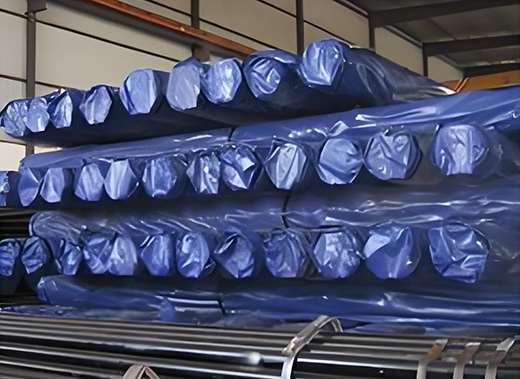
Packaging: Bundling, wooden pallets or crates for easy transportation
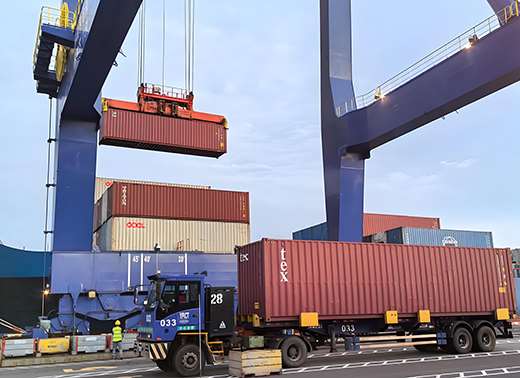
Transportation: Sea, land, or rail transport

9. Testing
Dimensional testing: Outer diameter, wall thickness, length
Weld seam testing: Ultrasonic or radiographic non-destructive testing (UT/RT)
Mechanical properties: Tensile, impact, bending tests
Standards: GB/T 3091 / ASTM A53 / EN 10219


ERW Galvanized Steel Pipe Testing Standards

Inspection Item Inspection Details Standard / Requirement Value to the End User
Visual Inspection Surface condition of the pipe body, weld seam smoothness, presence of cracks, zinc lumps, or scratches Visual inspection in accordance with GB/T 3091 / ASTM A53 / EN 10219 Ensures good appearance and corrosion protection, preventing potential corrosion initiation points
Dimensional Inspection Outside diameter, wall thickness, length, and end straightness GB/T 3091 ±1–2% / ASTM A53 Ensures smooth installation and proper fit, avoiding joint mismatch or pressure loss
Weld Seam Quality Weld strength, compactness, absence of porosity and slag inclusions Ultrasonic Testing (UT) or Radiographic Testing (RT) Ensures pressure-bearing capacity and safe operation; the weld seam is the core strength of ERW pipes
Mechanical Properties Yield strength, tensile strength, elongation, impact toughness As required by GB/T 3091 / ASTM A53 / EN 10219 Ensures the pipe resists fracture or deformation during installation and service
Bending Test Single-side bending and double-side bending Specified bending radius and angle as per standard Verifies ductility and fabrication suitability, ensuring safety during on-site processing
Galvanized Coating Thickness Hot-dip galvanized coating thickness ≥ 50 μm (standard hot-dip galvanizing) Ensures long-term corrosion resistance, suitable for outdoor or humid environments
Theoretical Weight Calculated based on outside diameter and wall thickness ±5% Used for material budgeting, transportation planning, and construction cost estimation


ERW Galvanized Steel Pipe Frequently Asked Questions

Q1: What is the difference between ERW galvanized steel pipes and ordinary black pipes? How should I choose?

A1:
ERW galvanized steel pipes have a galvanized layer on the surface, providing corrosion and rust resistance, making them especially suitable for outdoor, underground, or humid environments.
For dry indoor environments → ordinary black pipes or painted pipes can be used, which are more cost-effective.
For outdoor/underground/high-humidity environments → ERW hot-dip galvanized pipes are preferred, with a galvanized layer of ≥50μm for a longer service life.
Recommendation: First determine the application and environment, then decide whether galvanizing is necessary.

Q2: How do I know if the ERW pipe weld is reliable? Will it leak or crack?

A2:
High-frequency resistance welds typically have strength comparable to the base material, but non-destructive testing (UT/RT) is mandatory for critical pipelines or medium-to-high pressure pipelines.
Require the supplier to provide a weld ultrasonic testing report during procurement.
For structural or secondary processing applications, weld shaping and flatness are also very important to ensure smooth installation.

Q3: How much does the galvanized layer thickness affect the service life?

A3:
The thicker the hot-dip galvanized layer, the better the corrosion resistance.
Generally, outdoor pipelines require ≥50μm, and humid or corrosive environments require ≥60μm for greater safety.
A thin galvanized layer is prone to rusting during long-term use; a thicker layer increases cost but improves lifespan.
Recommendation: Choose the galvanizing thickness based on the environment, balancing cost and durability.

Q4: How to select the appropriate wall thickness and diameter for ERW pipes to avoid waste or insufficient capacity?

A4:
Low-pressure water supply or light structures → SCH10~SCH40 is sufficient
Medium-pressure industrial pipelines → SCH40~SCH80
High-pressure or critical pipelines → Pressure resistance must be strictly calculated; thick-walled or seamless pipes should be selected if necessary.
Pipe diameter needs to be calculated based on flow rate and pressure, while also considering the layout of the construction site to ensure smooth installation.

Q5: Are ERW pipes of different standards interchangeable? For example, GB/T, ASTM, EN?

A5:
Interchangeability is not recommended without careful consideration. Different standards may have different outer diameters, tolerances, wall thicknesses, and mechanical properties.
Confirm the standard before purchasing, especially for export projects, to ensure that interfaces, pressure resistance, and construction requirements match.
Commonly used domestic standards include GB/T 3091 and GB/T 6728; commonly used export standards include ASTM A53, API 5L, and EN 10219.

Q6: What issues need attention during installation and transportation?

A6:
Transportation: Pipes should be bundled or placed on wooden pallets to prevent collision damage to the galvanized layer.
Storage: Outdoor storage should avoid water accumulation or prolonged contact with damp ground.
Installation: Before connection, check that the outer diameter, wall thickness, and galvanized layer are intact. Weld seams of critical pipelines can be re-inspected.
Cutting and secondary processing: Pay attention to the weld location to avoid damaging the galvanized layer, and apply anti-corrosion treatment to the cut edges.