Products

Related News

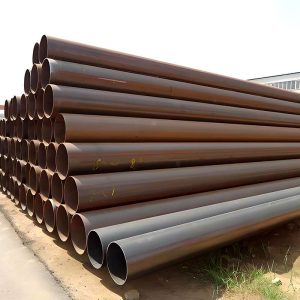
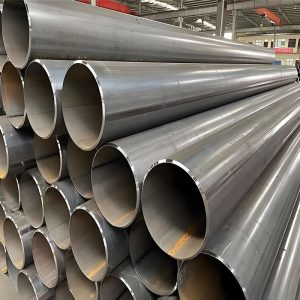
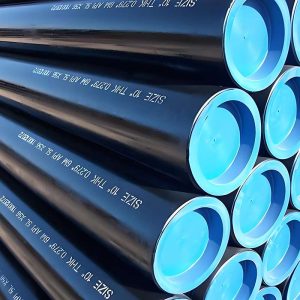
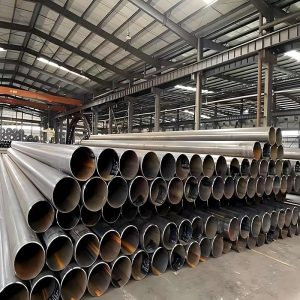
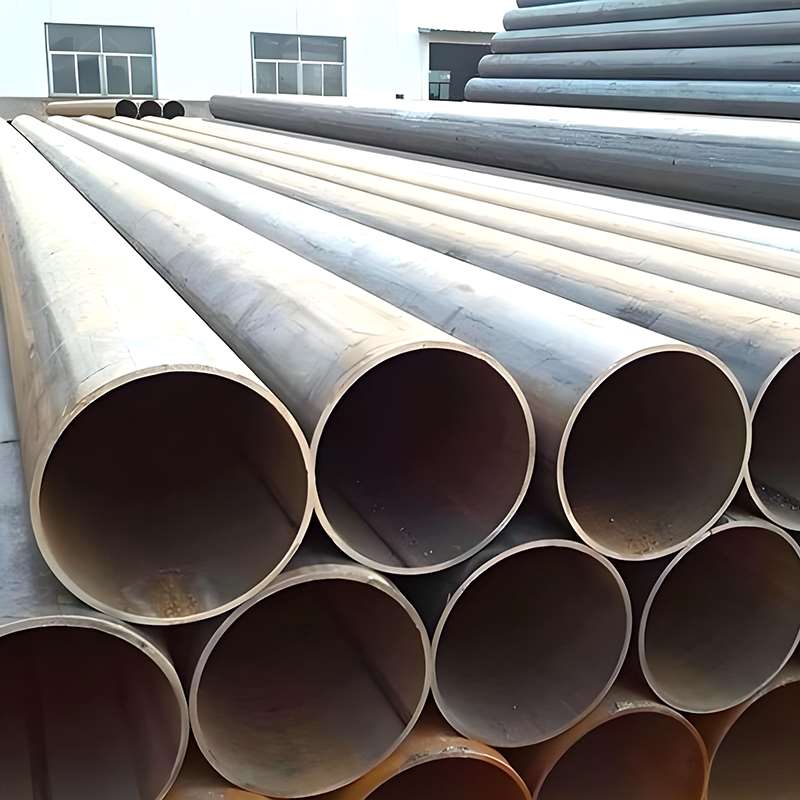
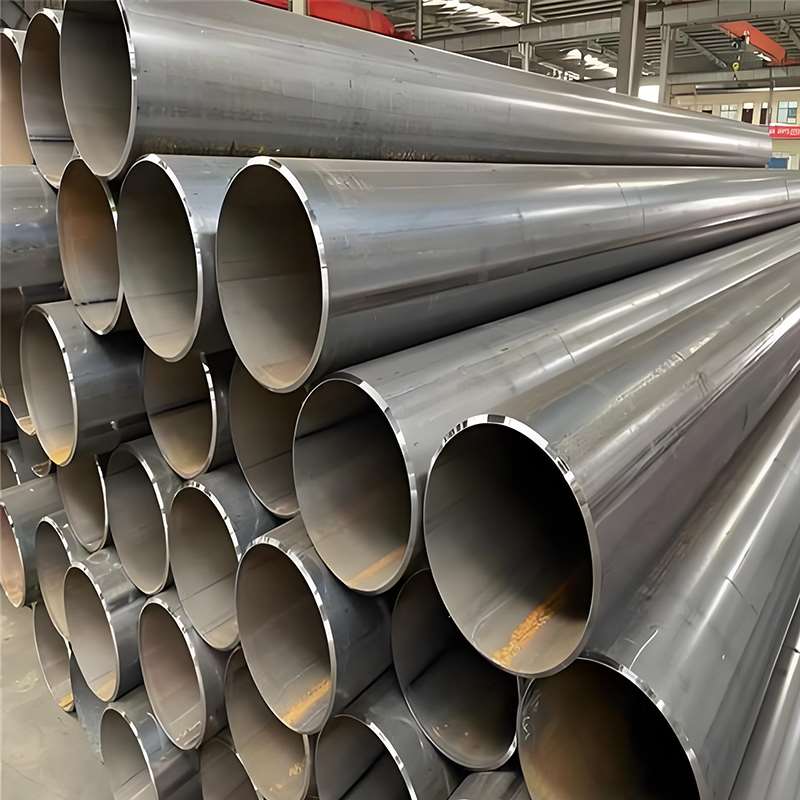
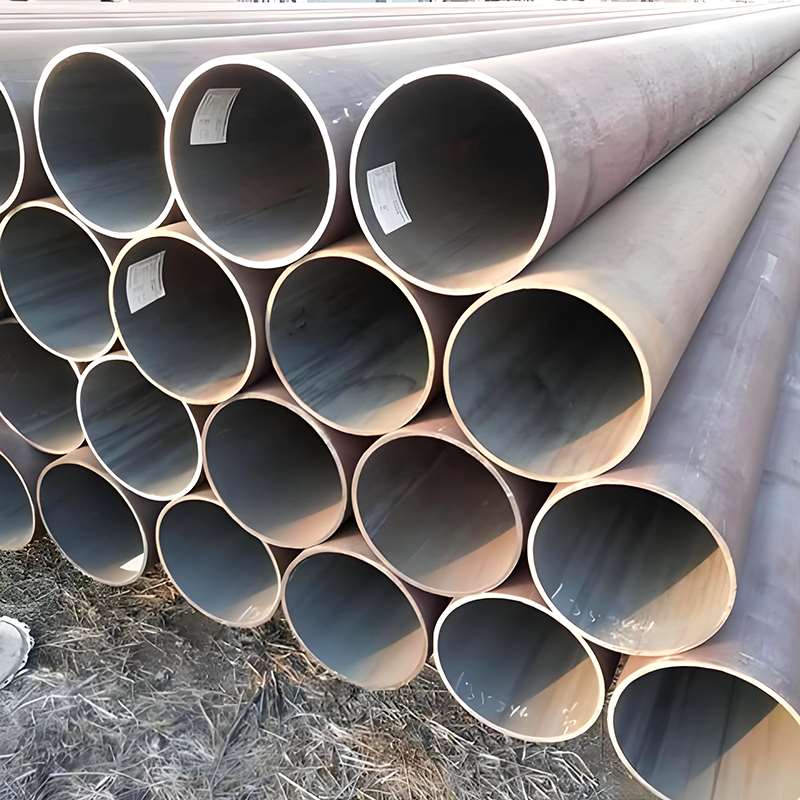
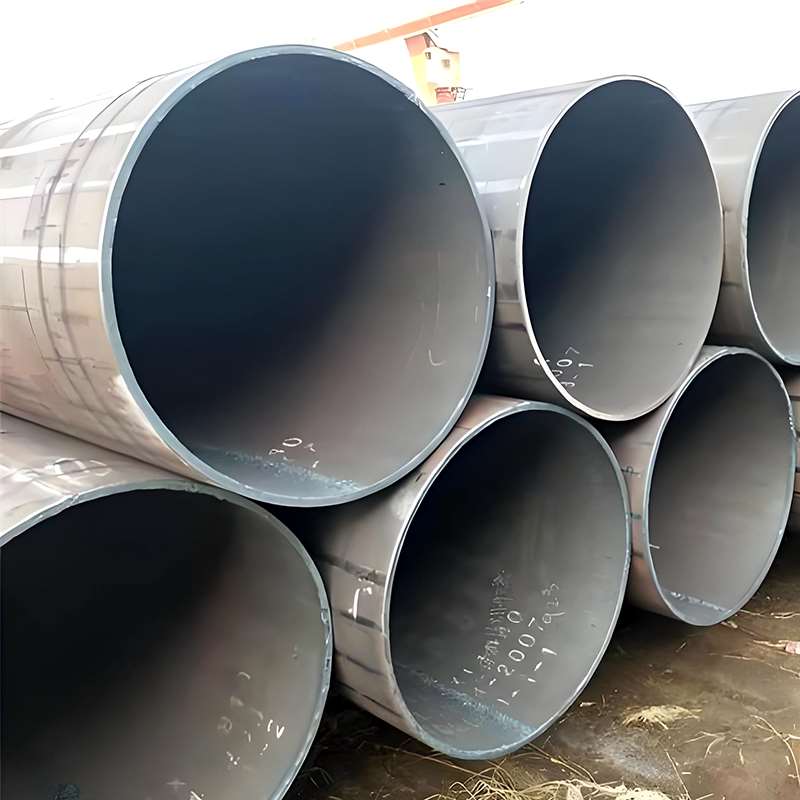
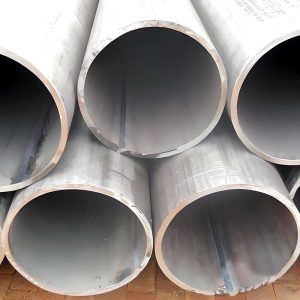
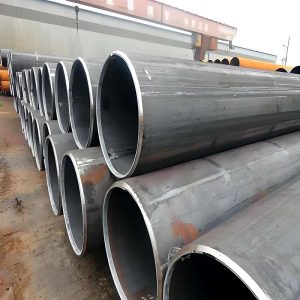
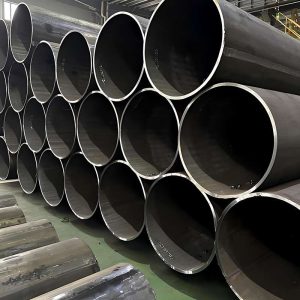
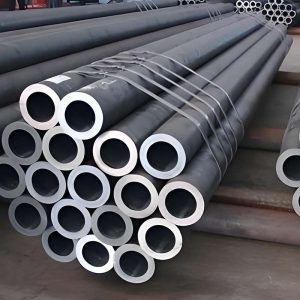
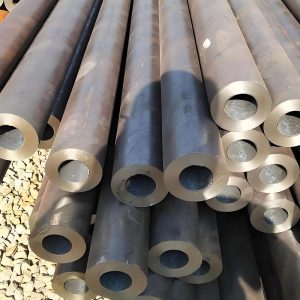
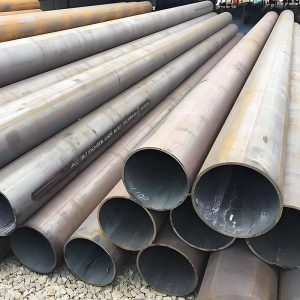
ERW Carbon Steel Pipe

OD Range :

16 mm – 660 mm

WT Range :

1.5 mm – 20 mm

Length :

Fixed lengths 6 m / 12 m, cut to length upon request

Tolerance :

Outer Diameter (OD): ±1% or ±0.5 mm (whichever is greater)、Wall Thickness WT: -12.5% to +12.5%、Straightness: ≤ 1.5 mm/m

Material :

Common carbon steels such as Q195, Q215, Q235, Q345

Standard :

ASTM A53, ASTM A500, EN 10219, GB/T 3091, etc.

Surface :

Black pipe, hot-dip galvanized, oil coating, rustproofing;

Application :

ERW carbon steel pipes are widely used in fluid transportation, building structural support, machinery manufacturing, automotive components, and various industrial pipeline projects.

I. Introduction to ERW Carbon Steel Pipes

i. Core Definitions and Terminology Analysis

ERW: An abbreviation for Electric Resistance Welding, a process that heats the edges of steel plates using high-frequency current and welds them under pressure.

Carbon Steel Pipe: Manufactured from carbon steel with a carbon content typically ranging from 0.06% to 2%, it combines strength with weldability and is the most commonly used steel pipe material in industry.

ERW Carbon Steel Pipe: Combining both characteristics, this refers to carbon steel straight seam welded pipes manufactured using the high-frequency resistance welding process.

In municipal water supply and drainage systems, as well as gas transmission and distribution networks, ERW carbon steel pipes are extensively used in medium- and low-pressure pipeline projects. Produced through welding, they feature robust welds and uniform wall thickness, ensuring the safe and reliable transportation of water, natural gas, and liquefied petroleum gas.

Owing to their low cost, high production efficiency, and ease of installation, they have become the standard piping material for urban water supply networks, gas distribution systems, and industrial building pipelines.

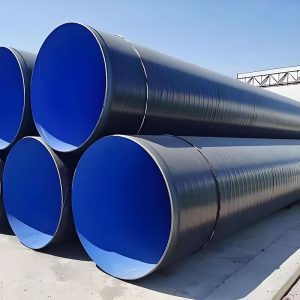
Furthermore, through corrosion-resistant treatments such as galvanization, epoxy coating, or plastic coating, the durability and corrosion resistance of ERW carbon steel pipes are significantly enhanced, meeting the long-term service requirements of modern municipal and industrial pipelines.

ii. ERW Carbon Steel Pipe Manufacturing Process

(1) Raw Material Preparation
High-quality hot-rolled coil is selected as raw material.
The coil features superior surface quality with tight thickness tolerances (within ±0.05mm).
It exhibits a dense microstructure free of columnar grain zones, shrinkage cavities, and porosity.
The material undergoes pre-treatment including slitting, decoiling, leveling, end trimming, strip butt welding, and loop storage.

(2) Forming Process
Roll-forming technology is employed.
The strip is progressively curved by the forming machine’s rollers.
This ultimately forms a circular pipe blank, preparing it for subsequent welding.

(3) High-Frequency Welding
Utilizes the skin effect and proximity effect of high-frequency current.
Heats the edges of the pipe blank to 1350-1400°C, melting the metal.
Under the action of squeeze rollers, the molten metal achieves metallurgical bonding to form the weld seam.
Strictly controls welding speed, pressure, and other parameters to ensure weld quality.

(4) Burr Removal
A circular cutter is used to remove burrs from both the inner and outer surfaces of the weld.
The height of internal burrs is controlled between -0.2 and 0.5 mm.
This ensures a smooth and flat inner surface of the steel pipe, reducing fluid resistance.

(5) Weld Heat Treatment
The weld zone is processed using a medium-frequency induction heating device.
After heating to 927°C (AC3 point), air cooling or water cooling is performed.
This eliminates welding stresses, refines grain structure, and enhances weld properties.
It ensures the weld’s mechanical properties match those of the base metal.

(6) Sizing and Straightening
Pipes enter the sizing machine for outer diameter and wall thickness adjustment.
Ensures dimensions meet standard requirements (diameter ±0.5%, wall thickness ±10%).
Improves pipe straightness and reduces bending deformation via the straightening machine.

(7) Quality Inspection
Performs ultrasonic testing to detect internal defects.
Perform hydrostatic testing to validate pressure-bearing capacity.
Verify dimensional tolerances to ensure precision compliance.
Test mechanical properties such as tensile strength and bending.
Meet standards including API 5L and GB/T 9711.1.

(8) Surface Treatment and Packaging
Apply surface treatments like rust removal and painting.
Protect pipe surfaces from corrosion to extend service life.
Final packaging facilitates transportation and storage.

II. Types of ERW Carbon Steel Pipes

i. Classification by Application

TypeMain StandardTypical ApplicationFeatures
ERW Pipe for TransportationAPI 5L PSL1/PSL2Transport of oil, natural gas, water, and other fluidsHigh weld quality requirements; hydraulic testing and non-destructive testing needed
ERW Pipe for Structural UseASTM A500, EN 10219, GB/T 6728Building structures, steel structures, bridge supportsHigh dimensional accuracy, good strength, smooth surface
ERW Pipe for General UseASTM A53 Gr.A/B, GB/T 3091Transport of low-pressure fluids, mechanical componentsWide range of applications, cost-effective
ERW Pipe for Pipeline AccessoriesBS 1139, ASTM A135Scaffolding, supports, protective tubesThinner wall thickness, standardized outer diameter
ERW Pipe for Firefighting and Water SupplyASTM A53, EN 10255Building fire protection pipelines, water supply and drainage projectsOften used with internal/external coatings (e.g., plastic coating or galvanization)

ii. Classified by Material Grade

MaterialFeaturesApplications
Low Carbon Steel (Q195, Q215, Q235, Gr.A)Good weldability, high plasticityConstruction, mechanical structures
Medium Carbon Steel (Gr.B, S275, S355)High strength, suitable for medium-pressure transportIndustrial pipelines, support structures
High-Strength Line Pipe Steel (X42–X70)High tensile strength, good corrosion resistanceLong-distance oil and natural gas pipelines

iii. Classified by Surface Treatment Method

TypeFeaturesTypical Applications
Black PipeSurface not galvanized, coated with anti-rust oil or paintedIndustrial pipes, structural pipes
Galvanized ERW PipeSurface hot-dip galvanized or electro-galvanizedWater supply, fire protection, HVAC systems
Coated ERW PipeInner and outer walls coated with epoxy or PEWater supply and drainage, chemical, environmental protection systems
Anti-Corrosion ERW PipeExternal anti-corrosion layerBuried or subsea pipelines

iv. Classification by cross-sectional shape

ShapeCommon StandardsApplications
Round PipeASTM A53, API 5LFluid transportation
Square TubeEN 10219, ASTM A500Building structures, mechanical frameworks
Rectangular TubeEN 10219, GB/T 6728Steel structures, furniture, vehicle manufacturing

v. Classification by Weld Type

TypeFeaturesRemarks
Straight Seam ERW PipeWeld seam runs along the pipe axisMarket mainstream
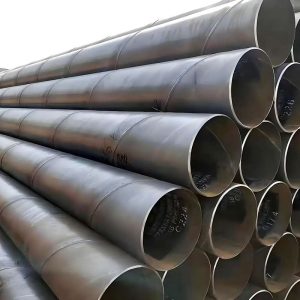
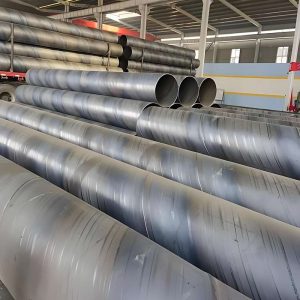
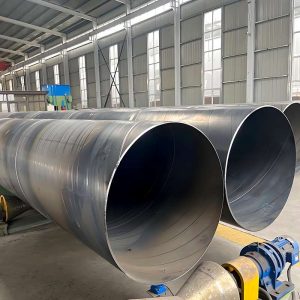
Spiral Welded ERW PipeWeld seam is in a spiral shapeLess commonly used, mostly seen in SAW pipe category

III. The Main Differences Between Straight Seam ERW Pipes and Spiral Welded Pipes

Comparison ItemStraight Seam ERW PipeSpiral Welded Pipe
Welding MethodHigh-Frequency Resistance Welding (HFRW)Submerged Arc Welding (SAW)
Weld Seam DirectionParallel to pipe axis (straight seam)Spiral around pipe axis (spiral seam)
Production RangeSmall to medium diameter (≤ 24 inches)Large diameter (24–120 inches)
Wall Thickness CapabilityGenerally ≤ 20 mmUp to 25 mm or thicker
Dimensional AccuracyHigh, smooth appearanceModerate, slightly lower roundness
Weld Seam LengthShort, uniform stress distributionLong, complex stress in weld zone
Production EfficiencyHigh, suitable for mass productionLow, suitable for large-diameter, thick-walled pipes
Main ApplicationsBuilding structures, machinery manufacturing, firefighting, medium/low-pressure fluid transportationLong-distance oil and gas pipelines, high-pressure applications
CostLowerHigher

Related Products

Outer Diameter OD (mm) Wall Thickness WT (mm) Theoretical Weight (kg/m) Common Standards Typical Applications
21.3 2.0 1.11 ASTM A53 / GB/T 3091 Water supply, gas, firefighting pipelines
26.9 2.6 1.97 ASTM A53 / GB/T 3091 Medium/low-pressure transport pipes
33.7 3.2 2.98 ASTM A53 / API 5L Building structures and fluid transportation
42.4 3.6 4.25 ASTM A53 / API 5L Industrial and municipal pipelines
48.3 4.0 5.12 ASTM A53 / API 5L Water supply, gas, firefighting pipelines
60.3 4.5 7.01 ASTM A53 / API 5L Medium-diameter transport pipes
76.1 5.0 9.57 ASTM A53 / API 5L Urban water supply, main gas pipelines
88.9 5.0 11.2 ASTM A53 / API 5L Large-diameter low-pressure pipes
114.3 6.0 18.5 ASTM A53 / API 5L High-strength structures and medium-pressure pipelines
139.7 6.5 25.5 ASTM A53 / API 5L Water/gas trunk lines
168.3 7.0 34.4 ASTM A53 / API 5L Urban pipelines or industrial pipes
193.7 7.5 43.8 ASTM A53 / API 5L High-pressure fluid transport
219.1 8.0 54.2 ASTM A53 / API 5L Main pipelines, firefighting pipes
244.5 8.0 60.5 ASTM A53 / API 5L Large-diameter low-pressure pipes
273.0 9.0 84.3 ASTM A53 / API 5L High-capacity water and gas pipes
323.9 10.0 109.5 ASTM A53 / API 5L Large-diameter industrial transport
355.6 10.0 120.5 ASTM A53 / API 5L Water, gas, and large building pipelines
406.4 12.0 157.0 ASTM A53 / API 5L High-pressure industrial pipelines
457.0 12.0 177.5 ASTM A53 / API 5L Large-diameter industrial and transport pipes
508.0 14.0 225.5 ASTM A53 / API 5L Extra-large industrial pipes
560.0 14.0 245.0 ASTM A53 / API 5L Extra-large municipal pipelines
610.0 16.0 302.0 ASTM A53 / API 5L Extra-large pipelines, gas trunk lines
660.0 16–20 330–410 ASTM A53 / API 5L Urban main pipelines, large-diameter gas pipes
720.0 18–22 420–510 ASTM A53 / API 5L Industrial water and gas pipelines
800.0 20–25 560–700 ASTM A53 / API 5L High-capacity municipal water and gas pipelines
900.0 20–25 700–850 ASTM A53 / API 5L Industrial and municipal trunk pipelines
1000.0 22–28 850–1100 ASTM A53 / API 5L Extra-large high-pressure transport pipelines

Commonly Used Standards for ERW Carbon Steel Pipes

ASTM A53 —— For potable water supply, fire protection, construction, and general fluid conveyance.
API 5L PSL1/PSL2 —— For long-distance transmission pipelines for petroleum, natural gas, and similar applications.
ASTM A500 / EN 10219 —— For building structures and steel structural frameworks.
GB/T 3091 — For low-pressure fluid conveyance, such as municipal water supply and HVAC systems.
GB/T 9711 — For petroleum, natural gas, and urban gas/oil transmission networks.

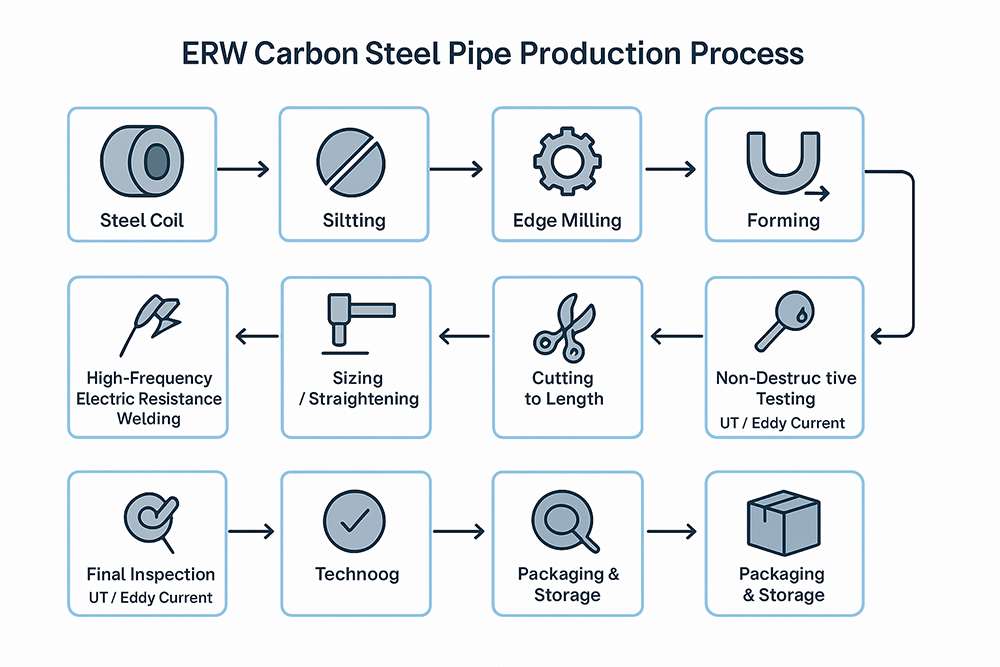
Steel Coil → Slitting → Edge Milling → Forming (U-shape → Round) → High-Frequency Electric Resistance Welding → Sizing / Straightening → Cutting to Length → Surface Treatment (Oil / Galvanizing) → Non-Destructive Testing (UT / Eddy Current) → Final Inspection → Packaging & Storage

ERW Carbon Steel Pipe Production Process

ERW Carbon Steel Pipe Inspection Standards Table

No. Inspection Item Inspection Content Acceptance Criteria / Parameters Inspection Method / Tool
1 Appearance Quality No cracks, folds, dents, rough surface, or discontinuous weld seams Not allowed Visual inspection, magnifier
2 Outer Diameter OD Deviation from nominal size ±1% or ±0.5 mm (whichever is larger) Outside micrometer, caliper
3 Wall Thickness WT Deviation from nominal thickness ±12.5% Ultrasonic thickness gauge, micrometer
4 Length L Nominal length ±10 mm Steel tape measure
5 Out-of-roundness Maximum OD difference ≤ 0.5% Outside micrometer
6 Straightness Bending per meter ≤ 1.5 mm/m Spirit level, straightedge
7 Carbon C Chemical composition ≤ 0.25 – 0.30% OES spectrometer / chemical analysis
8 Manganese Mn Chemical composition 0.30 – 1.06% OES spectrometer / chemical analysis
9 Phosphorus P Chemical composition ≤ 0.035% OES spectrometer / chemical analysis
10 Sulfur S Chemical composition ≤ 0.035% OES spectrometer / chemical analysis
11 Silicon Si Chemical composition 0.10 – 0.35% OES spectrometer / chemical analysis
12 Chromium Cr Chemical composition ≤ 0.40% OES spectrometer / chemical analysis
13 Nickel Ni Chemical composition ≤ 0.40% OES spectrometer / chemical analysis
14 Copper Cu Chemical composition ≤ 0.40% OES spectrometer / chemical analysis
15 Yield Strength σy Mechanical property ≥ 205 – 240 MPa Tensile testing machine
16 Tensile Strength σb Mechanical property 360 – 485 MPa Tensile testing machine
17 Elongation δ5 Mechanical property ≥ 20 – 30% Tensile testing machine
18 Hardness HB Mechanical property ≤ 187 HBW Rockwell / Brinell hardness tester
19 Ultrasonic Test UT Weld and base material internal defects No defects ≥ 5% wall thickness UT testing equipment
20 Magnetic Particle / Eddy Current Test Surface cracks and weld defects No cracks, no incomplete welds Magnetic particle / Eddy current tester
21 Radiographic Test RT (Optional) Weld and critical areas No cracks, slag, or porosity X-ray or γ-ray equipment
22 Hydrostatic Test Pipe pressure resistance According to formula P = 2St/D or standard, hold ≥5 s, no leakage Hydrostatic testing machine
23 Documentation Inspection records and certificates Material Test Certificate (MTC), dimension inspection sheet, NDT records, hydrostatic test records Document archive

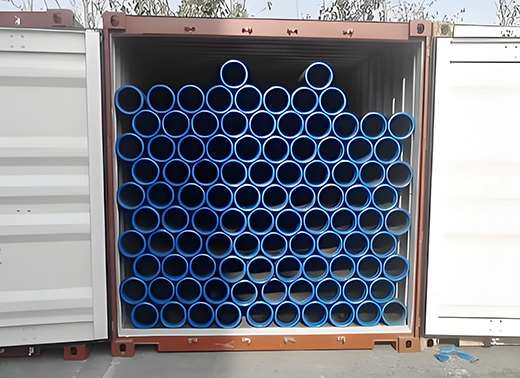
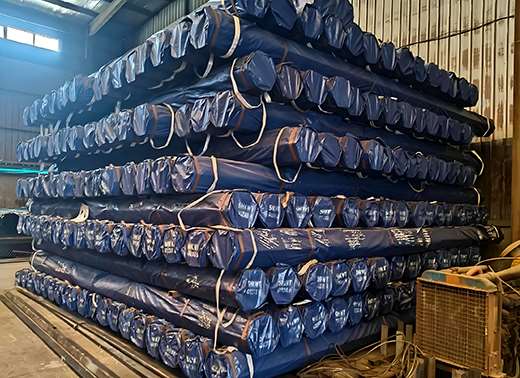
Seamless Carbon Steel Pipe Packing Shipment of Anti-Corrosion Seamless Carbon Steel Pipes

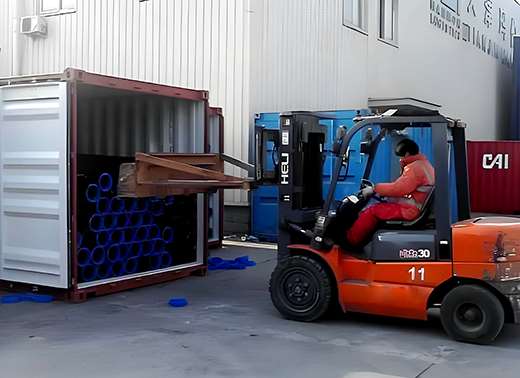
Seamless Carbon Steel Pipe Finished Products Seamless Carbon Steel Pipe Packaging and Shipping

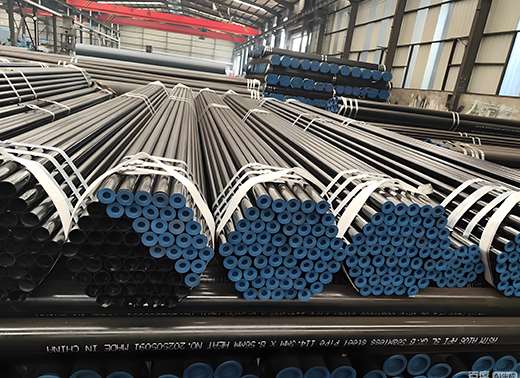
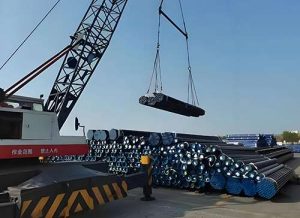
API 5L X52 Line Pipe Transportation

Common FAQs About ERW Carbon Steel Pipes in Water and Gas Applications

(1) Can ERW carbon steel pipes rust or corrode?

Yes, ERW carbon steel pipes are made of carbon steel and are prone to oxidation and rust when exposed to water or gas over extended periods. This is especially true for underground pipelines or in humid environments, where the pipe lifespan can be significantly shortened without proper anti-corrosion treatment.
Common corrosion prevention methods include:
– Hot-dip galvanizing or electrogalvanizing
– Epoxy coating or internal/external plastic lining
– Polyethylene (PE) or polypropylene (PP) protective layers
Selecting appropriate corrosion prevention methods can significantly extend pipeline service life and ensure the safe, stable operation of water and gas transmission systems.

(2) Can water or gas leak from the weld?

Weld seams represent a potential vulnerability in ERW pipes. If weld quality is substandard or the pipe endures prolonged pressure, leakage may occur. Particularly in gas transmission, weld quality directly impacts pipeline safety. To prevent issues:
Select reliable pipe suppliers to ensure robust high-frequency welds.
Conduct non-destructive testing on gas pipeline welds, promptly repairing any micro-cracks.
Strictly adhere to standard operating procedures during installation to guarantee joint integrity.

(3) What pressure can ERW carbon steel pipes withstand?

Pressure resistance is closely related to pipe diameter, wall thickness, and standard requirements. Generally, medium- and low-pressure water supply and gas pipelines (DN21–DN200) can withstand 0.6–1.6 MPa; large-diameter thick-walled pipes used for municipal or industrial transportation can withstand higher pressures. Recommendations for pipeline network design:
Select appropriate pipe diameter and wall thickness based on the pressure of the conveyed medium and pipeline length.
For high-pressure gas pipelines, consider using pipes with thicker walls or upgrading to seamless pipes.

(4) Will pipeline flow be affected?

If the inner surface of ERW carbon steel pipes is rough or develops scale buildup over extended use, it increases fluid resistance and reduces delivery efficiency. To maintain pipeline flow and efficiency:
Select pipes with smooth inner walls and high dimensional accuracy.
Regularly clean or flush the pipeline to prevent sediment accumulation.
For potable water and gas systems, prioritize pipes with anti-corrosion coatings or plastic linings to minimize corrosion and scaling.

(5) What are common issues during installation?

Non-compliant installation is the primary cause of leaks in ERW carbon steel pipes. Common issues include:
– Loose or poorly sealed flange or threaded connections.
– Non-standard installation of beveled welds or welded fittings.
– Improper alignment or inadequate support of pipe fittings like elbows and tees.
Solutions:
– Install strictly according to design specifications and construction standards.
– Use certified sealing materials and pipe fittings.
– Conduct pressure testing after installation to ensure pipeline integrity.

(6) Does the underground environment affect ERW carbon steel pipes?

Yes, soil pH, humidity, groundwater, and chemicals can accelerate pipeline corrosion, particularly in long-distance gas or water transmission systems. Countermeasures include:
Applying galvanized coatings or anti-corrosion coatings to underground pipelines.
Installing cathodic protection devices in high-corrosion areas.
Conducting regular inspections and maintenance, addressing corrosion or leaks promptly upon discovery.