Products

Related News

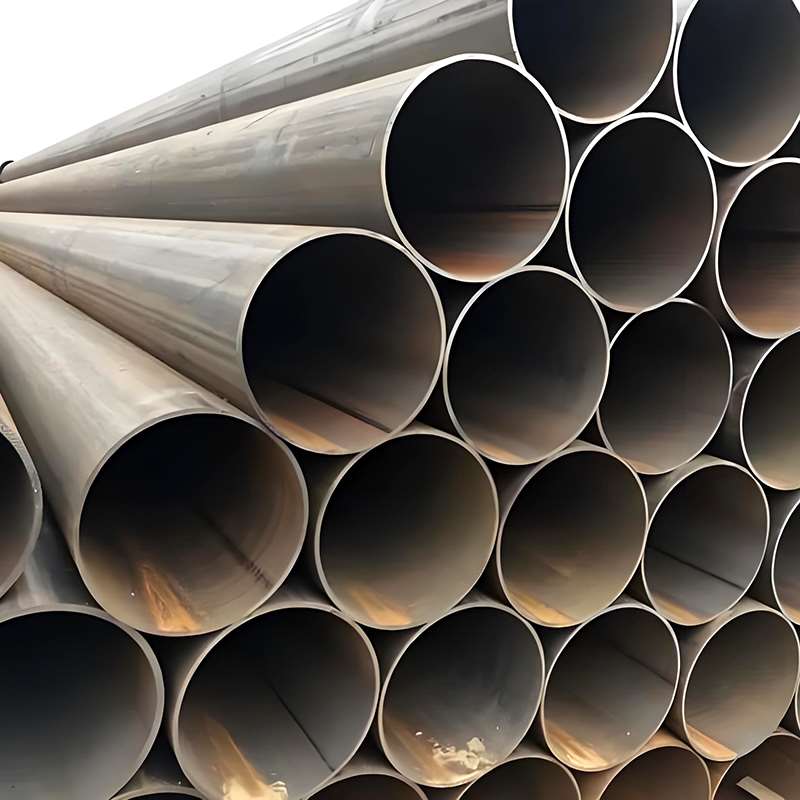
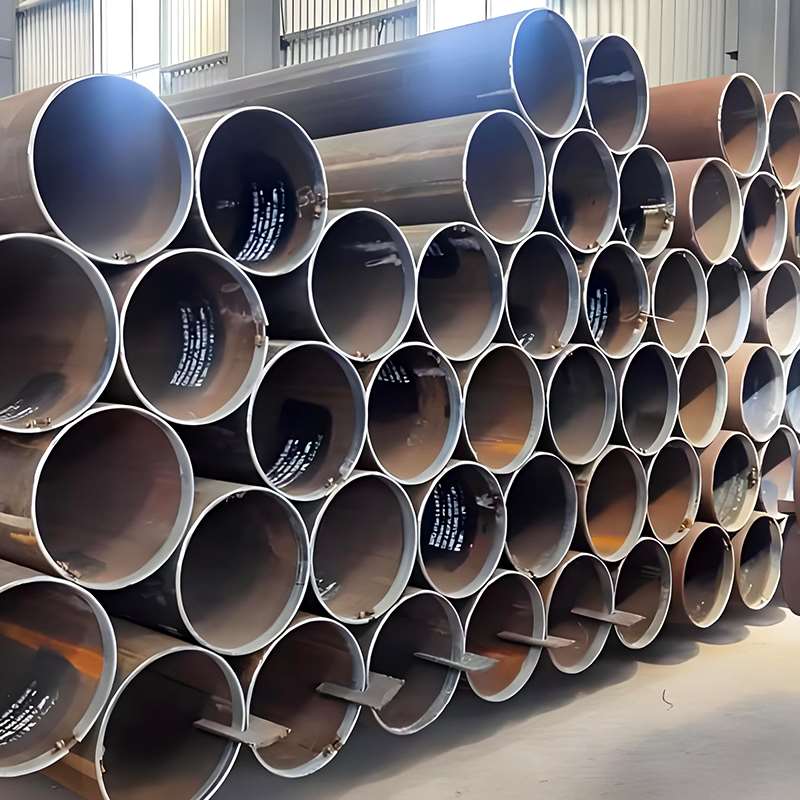
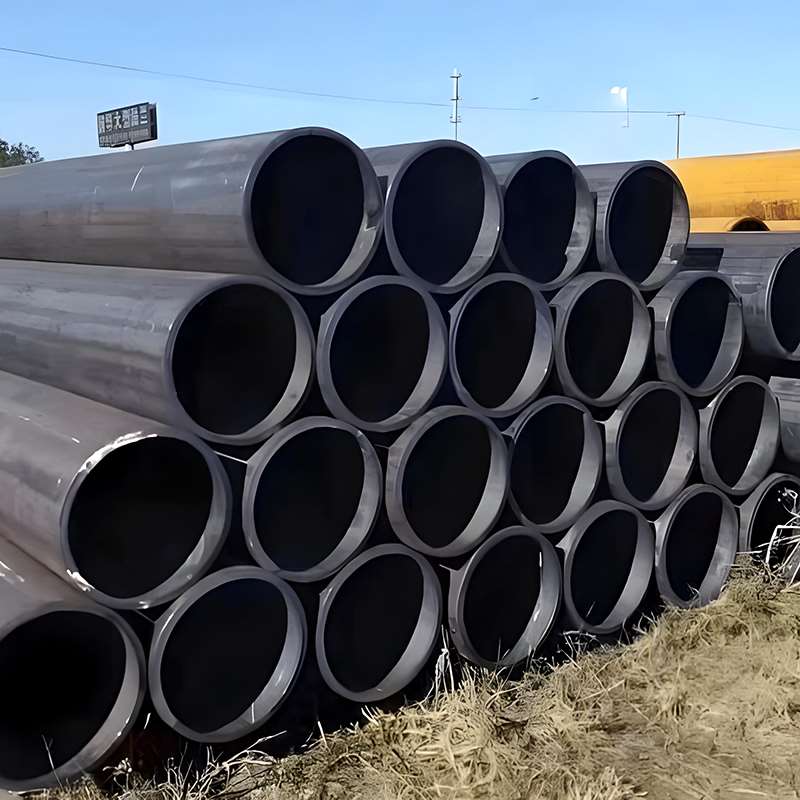
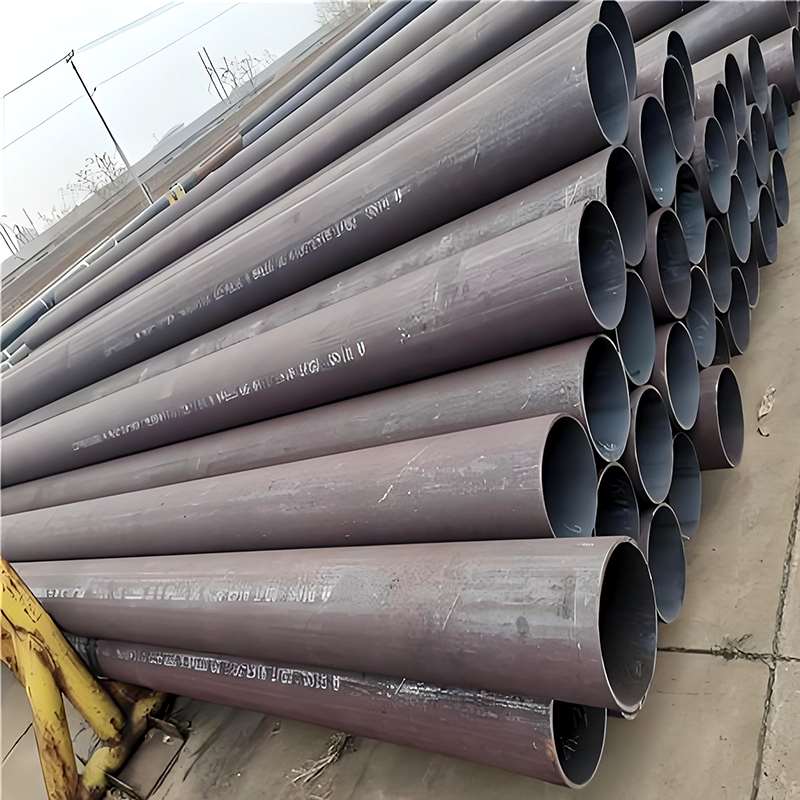
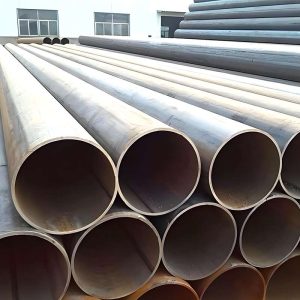
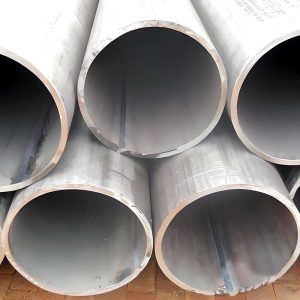
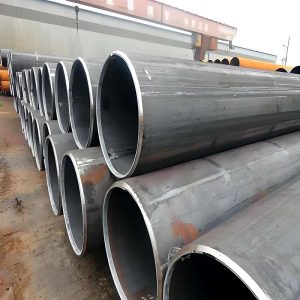
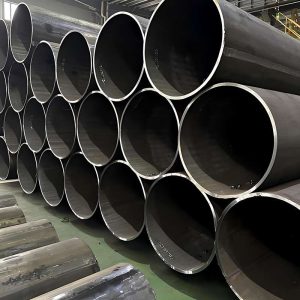
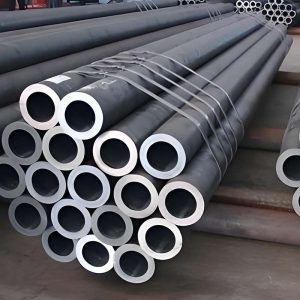
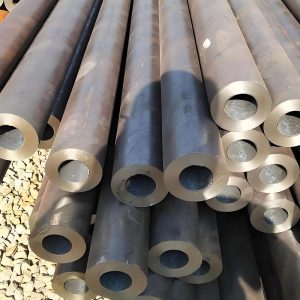
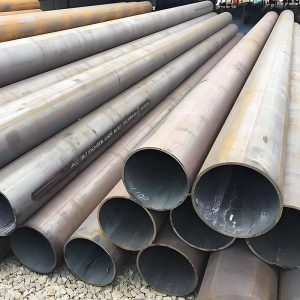
DIN 2458 Welded Steel Pipe

OD Range :

10 – 2000 mm

WT Range :

1 – 50 mm

Length :

6 m / 12 m

Tolerance :

Outside diameter ±0.8%, wall thickness ±12.5%, length ±10 mm

Material :

Carbon steel: ST37, ST44, ST52 Low-alloy steel: 16Mo3, 13CrMo44

Standard :

DIN 2458 / EN 10217-1 (ERW carbon steel pipes) / EN 10217-2 (low-alloy steel welded pipes)

Surface :

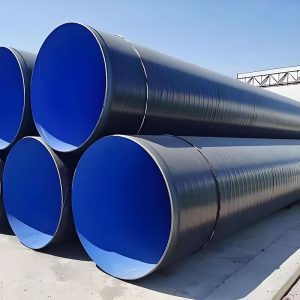
Black steel pipes, rust-inhibiting oil, hot-dip galvanizing, painting, corrosion-resistant coating

Application :

Industrial pipelines, boiler steam pipes, mechanical equipment, building structures, petrochemical pipelines, oil and natural gas pipelines

I. Overview of DIN 2458 Welded Steel Pipes

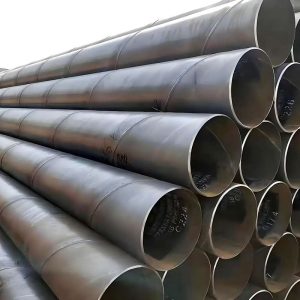
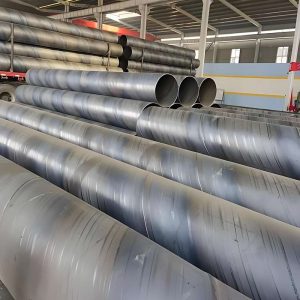
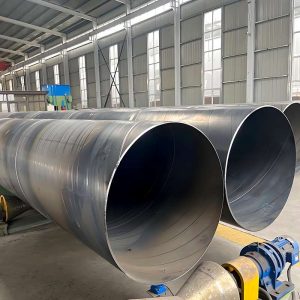
DIN 2458 welded steel pipes are a type of high-precision carbon steel and low-alloy steel pipe manufactured according to German standards. They are produced using ERW (high-frequency resistance welding) or SAW (submerged arc welding) processes and are widely used in industrial pipelines, boiler steam pipelines, mechanical equipment, building structures, and the petrochemical and energy industries.

This product is characterized by high dimensional accuracy, stable mechanical properties, and cost-effectiveness, making it an ideal choice for small to large diameter engineering pipelines.

II. Mechanical Properties and Pressure Resistance of DIN 2458 Welded Steel Pipes

Steel Grade / MaterialYield Strength Rp0.2 (MPa)Tensile Strength Rm (MPa)Elongation A (%)Impact Toughness KV (J)Service Temperature (°C)Reference Pressure Class / Typical Application
ST37 Carbon Steel235360 – 500≥ 22J0 / J2−20 – 100Small-diameter industrial piping, low to medium pressure service
ST44 Carbon Steel295430 – 580≥ 20J0 / J2−20 – 120Medium-pressure industrial piping, structural tubes
ST52 Carbon Steel355470 – 630≥ 20J2−20 – 150Medium to high-pressure industrial and structural applications
16Mo3 Low Alloy Steel275430 – 580≥ 22J20 – 550Boiler steam pipes, high-temperature medium-pressure pipelines
13CrMo44 Low Alloy Steel310470 – 630≥ 20J20 – 560High-temperature, high-pressure steam and chemical pipelines

III. DIN 2458 Welded Steel Pipe Applications and Selection Recommendations

1. Industrial Piping

Corrosion Protection:

  • Indoor low-humidity environments: Black pipe or coated with rust-inhibiting oil
  • Outdoor or humid environments: Hot-dip galvanized or painted
  • Chemical media: Corrosion-resistant coating

Selection:

  • For small and medium diameters, choose ERW high-frequency welded pipes; for large diameters, choose SAW submerged arc welded pipes.
  • Carbon steel is suitable for normal temperature and low-pressure pipelines; low-alloy steel is suitable for high-temperature, high-pressure, or corrosive media.
  • Wall thickness should be selected based on the design pressure to ensure safety and cost balance.

2. Boilers and Steam Pipelines

Corrosion Protection:

  • Apply anti-corrosion paint after heat treatment.
  • High-temperature steam pipelines can use high-temperature resistant coatings.

Selection:

  • Use 16Mo3 or 13CrMo44 low-alloy steel.
  • Wall thickness is calculated according to the design pressure.
  • Cut to specified lengths for easy installation.
  • Ensure complete material certificates (MTC).

3. Building Structures and Mechanical Equipment

Corrosion Protection:

  • Galvanized or painted treatment
  • Rust-inhibiting oil can be used in indoor environments

Selection:

  • Steel grade selection: ST37 / ST44 / ST52
  • Diameter and wall thickness are determined according to structural load
  • Standard-length pipes can reduce on-site cutting

4. Petrochemical and Energy Pipelines

Corrosion Protection:

  • Epoxy resin lining or external anti-corrosion coating
  • Outdoor pipelines can have an anti-corrosion and insulation layer

Selection:

  • Carbon steel or low-alloy steel is selected based on the medium temperature
  • SAW submerged arc welded pipes are recommended for medium and large diameter pipelines
  • High-pressure pipelines require non-destructive testing (UT/RT) to ensure weld quality

IV. DIN 2458 Welded Steel Pipe Transportation and Packaging

ItemDescription
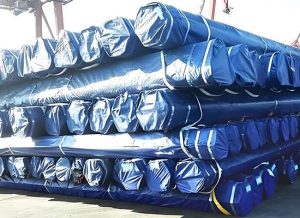
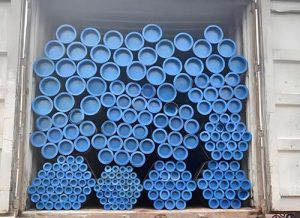
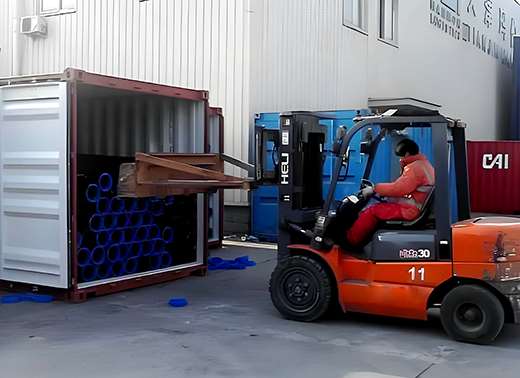
Finished Product Packaging1. Bundled and secured2. Palletized3. Protective corner guards to prevent impact damage
Transportation Precautions1. Prevent impact and surface scratches2. Anti-rust protection (e.g. anti-rust oil coating or rust-proof wrapping)3. Waterproof covering to avoid rain or moisture exposure
Customized PackagingAvailable upon request, including cut-to-length service, special strapping, reinforced pallets, additional anti-corrosion protection, or customized packaging labels

Related Products

DIN 2458 Welded Steel Pipe Specifications Table

Outside Diameter OD (mm) Wall Thickness WT (mm) Theoretical Weight Range (kg/m)
10 1, 1.5, 2 0.19 – 0.37
12 1, 1.5, 2, 2.5 0.23 – 0.57
15 1.5, 2, 2.5 0.43 – 0.72
18 1.5, 2, 2.5, 3 0.51 – 0.97
20 2, 2.5, 3, 4 0.76 – 1.14
25 2, 2.5, 3, 4, 5 0.95 – 1.89
32 2, 2.5, 3, 4, 5, 6 1.22 – 3.06
40 2, 2.5, 3, 4, 5, 6 1.53 – 3.80
50 3, 4, 5, 6, 7 2.85 – 5.00
65 4, 5, 6, 7, 8 5.00 – 9.10
80 5, 6, 7, 8, 9 7.56 – 12.8
100 6, 8, 10 11.3 – 18.6
125 8, 10, 12 18.6 – 27.8
150 10, 12, 14 27.9 – 39.1
168 12, 14, 16 38.5 – 50.9
200 12, 16, 20 45.7 – 75.9
219 14, 18, 22 58.9 – 93.0
273 16, 20, 25 94.5 – 146.6
325 18, 22, 25 136 – 187
355 20, 25, 28 174 – 242
406 20, 25, 30 200 – 303
508 25, 30, 35 317 – 445
610 30, 35, 40 455 – 606
800 35, 40 835 – 950
1000 40, 50 1180 – 1470
1200 – 2000 20 – 50 1470 – 3500

Notes:
The theoretical weight is the weight per meter, for convenient engineering calculations and logistics estimation.
Small diameter pipes (≤508 mm) are mostly ERW high-frequency welded pipes, while large diameter pipes (>508 mm) are mostly SAW submerged arc welded pipes.
Wall thickness selection is determined by working pressure, temperature, and usage requirements.


DIN 2458 Welded Steel Pipe Standard Introduction

1. Standard Overview

DIN 2458 is a German industrial standard (Deutsches Institut für Normung) that specifies the dimensions, wall thickness, tolerances, and mechanical properties of carbon steel and low-alloy welded steel pipes. It is applicable to industrial pipelines, boiler steam pipes, mechanical equipment, and building structures.
Applicable pipe diameter: 10 – 2000 mm
Applicable wall thickness: 1 – 50 mm
Includes ERW high-frequency welded and SAW submerged arc welded pipes

2. Standard Content

Content Category Description
Pipe Diameter & Wall Thickness Specifies standard pipe diameters, wall thicknesses, and allowable tolerances to ensure dimensional accuracy
Tolerance Requirements Outside diameter ±0.8%, wall thickness ±12.5%, length ±10 mm
Steel Grades & Materials Carbon steel: ST37, ST44, ST52; Low alloy steel: 16Mo3, 13CrMo44
Welding Process ERW high-frequency welded pipes (small diameters); SAW submerged arc welded pipes (large diameters)
Mechanical Properties Yield strength, tensile strength, elongation, impact toughness, etc.
Applicable Temperature & Pressure From ambient, low- and medium-pressure to high-temperature and high-pressure pipelines, depending on the selected steel grade


DIN 2458 Welded Steel Pipe Manufacturing Process Flow

Raw material inspection → Leveling and uncoiling → Cold bending (forming the pipe blank) → Welding (small diameter ERW / large diameter SAW) → Weld seam correction and stress relief → Pipe straightening and shaping → Cutting to length → Dimensional, mechanical properties and non-destructive testing (UT/RT) → Surface treatment → Packaging, bundling, and shipping

DIN 2458 Welded Steel Pipe Production Process Chart

Process Stage Description Application / Features
Welding Method ERW (Electric Resistance Welding) Small-diameter pipes 10 – 508 mm; smooth and uniform welds; suitable for medium- and small-diameter industrial pipelines
SAW (Submerged Arc Welding) Large-diameter pipes 508 – 2000 mm; strong and reliable welds; suitable for high-pressure, large-diameter pipelines
Heat Treatment Post-weld stress relieving Mainly for low-alloy or large-diameter pipes; improves mechanical properties and weld stability
Straightening Straightening machine or roller leveling Ensures pipe straightness and roundness; OD tolerance ±0.8%, wall thickness tolerance ±12.5%
Quality Control Raw material inspection → Incoming inspection of plates/coils → Dimensional check → Mechanical testing → Weld inspection → Final inspection Ensures chemical composition, mechanical properties, dimensional tolerances, and surface quality meet DIN 2458 standard requirements


DIN 2458 Welded Steel Pipe Inspection Standards Table

Inspection Category Inspection Item Parameters / Requirements
Appearance & Dimensions Surface Quality No cracks, porosity, weld spatter, flaking, or visible rust
Outside Diameter (OD) ±0.8%
Wall Thickness (WT) ±12.5%
Length ±10 mm
Straightness / Bend Within standard limits to ensure ease of installation
Mechanical Properties Yield Strength Re (MPa) Meets steel grade standard (e.g., ST37 ≥ 235, ST52 ≥ 355)
Tensile Strength Rm (MPa) Meets steel grade standard (e.g., ST37 360–500, ST52 490–630)
Elongation A (%) ≥ 20–25% depending on steel grade
Impact Toughness KV (J) At −20℃ to 0℃, minimum value according to steel grade
Welds & NDT Weld Quality Visual inspection; smooth weld surface with no cracks or porosity
Non-Destructive Testing UT / RT to detect internal weld defects; 100% acceptance rate
Pressure Test Hydrostatic or pneumatic test to ensure design pressure capability
Chemical Composition Chemical Analysis Check C, Mn, S, P, etc., according to steel grade standards
Surface Treatment & Corrosion Protection Anti-Rust Oil Coating Uniform coverage; thickness meets standard
Hot-Dip Galvanizing Uniform coating; thickness meets standard
Paint / Protective Coating Even coverage; no bubbles, peeling, or defects

Instructions:
All testing is performed strictly according to DIN 2458 standard or customer requirements.
Both small-diameter pipes (≤508 mm) and large-diameter pipes (>508 mm) are subject to dimensional, mechanical property, and weld testing.
Surface treatment ensures that the pipes are resistant to rust during transportation and use.


API 5L X52 Line Pipe Packaging

Shipment of Anti-Corrosion Seamless Carbon Steel Pipes

DIN 2458 Welded Steel Pipe Procurement: Frequently Asked Questions

1. What are the common steel grades for DIN 2458 welded steel pipes?

Common steel grades include: ST37, ST44, ST52, 16Mo3, 13CrMo44
ST37/ST44 are suitable for general low-pressure pipelines, ST52 has high strength and is suitable for pressure pipelines, and 16Mo3/13CrMo44 are suitable for high-temperature and high-pressure conditions.

2. How to choose the outer diameter and wall thickness?

Outer diameter range: 10–2000 mm; Wall thickness range: 1–50 mm
Choose the appropriate outer diameter and wall thickness based on design pressure, temperature, fluid type, and installation requirements.
Small diameters commonly use ERW welding, while large diameters commonly use SAW submerged arc welding.

3. How to choose the surface treatment?

Indoor, dry environment: Black pipe or rust-proof oil is sufficient.
Outdoor or corrosive environment: Hot-dip galvanizing, painting, or anti-corrosion coating is recommended.
Surface treatment directly affects the service life and maintenance costs of the pipe.

4. How to confirm the quality of the pipes?

The supplier is required to provide a Material Test Certificate (MTC).
Testing items include appearance, dimensions, tolerances, mechanical properties, non-destructive testing of welds, and chemical composition.
Additional pressure tests can be performed according to DIN 2458 standard or customer requirements.

5. Can the delivery time and custom cutting be customized?

Standard lengths: 6 / 12 meters
Custom cutting can be provided according to project requirements to shorten construction time and reduce transportation costs.
Please confirm the delivery time for large diameter or special steel grades in advance.

6. How to ensure transportation safety?

Pipes need to be bundled, palletized, or protected with corner guards.
Protection against bumps, water damage, and rust is provided.
Custom packaging is available for long-distance transportation or special projects.