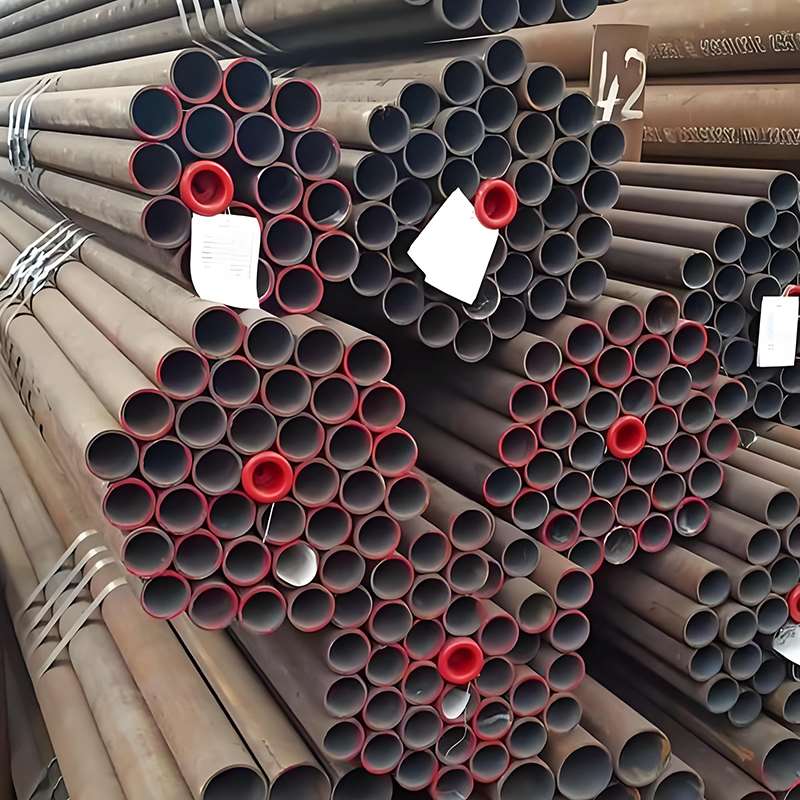
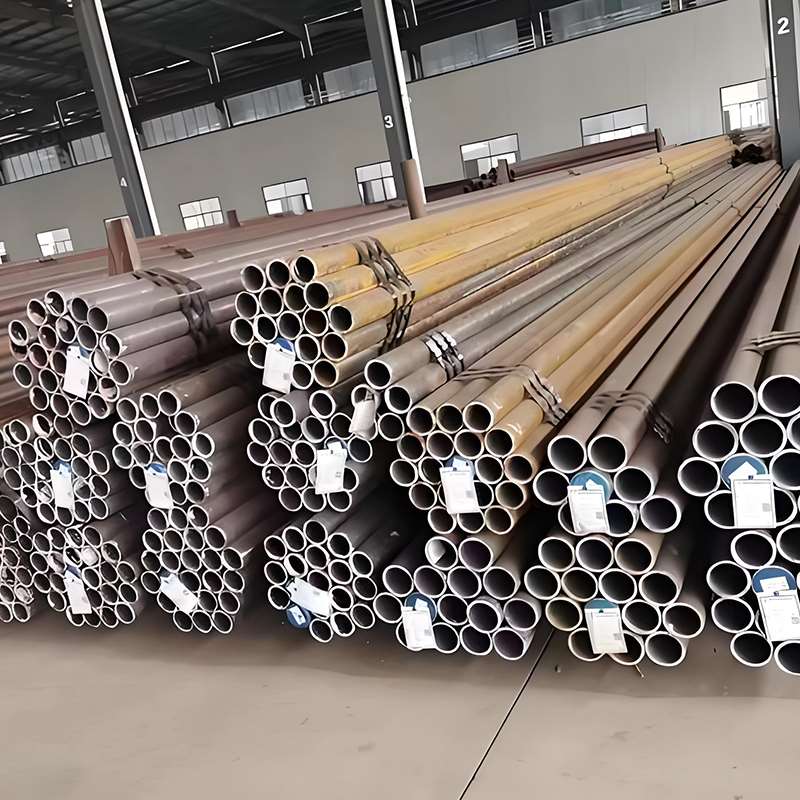
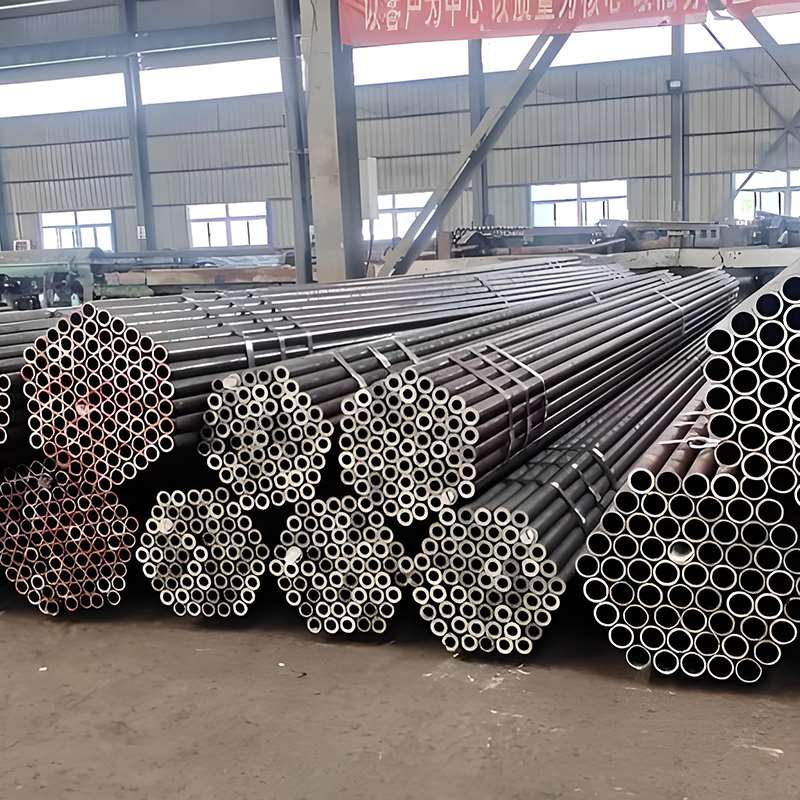
Common Problems with ASTM A213 T22 Seamless Carbon Steel Tubes in Heat Exchanger Applications
(1) Why are ASTM A213 T22 tubes commonly used in heat exchangers?
Answer: T22 contains 2.25% chromium (Cr) and 1% molybdenum (Mo), possessing excellent high-temperature strength, oxidation resistance, and creep resistance.
In high-temperature steam, superheaters, or petrochemical heat exchangers, it is more heat-resistant and has a longer service life than ordinary carbon steel, making it an ideal high-temperature and pressure-resistant material.
(2) What are the common failure problems during use?
Answer: These mainly include: creep deformation caused by long-term high-temperature operation; oxidation corrosion or scaling caused by poor water quality inside the pipe; bulging or cracks caused by localized overheating; and microcracks caused by stress concentration at welded joints.
Solutions: Maintain water purity, control temperature gradient, and conduct regular non-destructive testing.
(3) What are the differences between T22 and carbon steel tubes (such as SA210 A1)?
Answer:
T22 is alloy steel (Cr-Mo series), with a temperature resistance of over 600℃; A1 is ordinary carbon steel, with lower temperature resistance, approximately 450℃.
Therefore, T22 is usually selected for heat exchangers operating in the medium-to-high temperature range to improve lifespan and safety.
(4) What quality items should be focused on when purchasing T22 heat exchanger tubes?
Answer:
It is recommended to focus on the following 5 points:
Whether the chemical composition report (MTC) meets the requirements of ASTM A213;
Heat treatment condition: must be normalized + tempered;
Non-destructive testing report: confirm 100% eddy current or ultrasonic testing;
Dimensional tolerances: OD, WT meet ASTM A450;
Third-party testing and certification: such as SGS / TUV / BV.
(5) What precautions should be taken when installing or welding T22 tubes?
Answer: Preheat to 200~300℃ before welding to prevent cold cracking;
Post-weld stress relief heat treatment (PWHT) should be performed;
Keep the inner wall clean to avoid weld slag or oil residue;
Strictly control alignment deviation to avoid stress concentration during installation.
(6) How to extend the life of T22 tubes during heat exchanger use?
Answer: Keep the fluid inside the tube clean and free of corrosive impurities;
Regular cleaning and non-destructive testing (UT or ECT);
Prevent overheating operation or frequent start-stop;
Replace severely oxidized or thinned tube sections promptly.