
Seamless carbon steel pipes are a key material in petroleum, chemical, boiler, and industrial piping systems. The ASTM A106 standard, as an internationally recognized specification, provides a reliable basis for the design, procurement, and construction of industrial pipelines.
I. Introduction to ASTM A106 Standard Grades
ASTM A106 seamless carbon steel pipes are primarily used for high-temperature and high-pressure industrial piping. They are divided into three grades: Grade A, Grade B, and Grade C, distinguished by their chemical composition and mechanical properties.
| Grade | Yield Strength (MPa) | Tensile Strength (MPa) | Elongation (%) | Applicable Temperature Range |
|---|---|---|---|---|
| A | ≥205 | 330–440 | ≥30 | ≤400 °C |
| B | ≥245 | 415–540 | ≥30 | ≤450 °C |
| C | ≥310 | 485–620 | ≥30 | ≤480 °C |
Note:
Grade B is the most commonly used grade and is suitable for most high-temperature industrial pipes.
Grade C is used for even higher temperatures and special operating conditions, but it is more expensive.
II. Chemical Composition and Mechanical Properties Analysis
i. Chemical Composition Analysis
The chemical composition of ASTM A106 pipes directly affects their weldability, toughness, and high-temperature performance. Below are the main elements and their functions:
| Element | Content Range (%) | Function / Description |
|---|---|---|
| C | 0.25–0.30 | Controls strength and weldability |
| Mn | 0.29–1.06 | Improves toughness and hardness |
| P | ≤0.035 | Reduces brittleness, enhances weldability |
| S | ≤0.035 | Prevents brittle fracture |
| Si | 0.10–0.50 | Increases strength and heat resistance |
ii. Mechanical Property Analysis
The mechanical properties of ASTM A106 pipes include yield strength, tensile strength, and elongation, which are directly related to the pipe’s load-bearing capacity:
| Performance Indicator | Grade A | Grade B | Grade C | Description |
|---|---|---|---|---|
| Yield Strength (MPa) | ≥205 | ≥245 | ≥310 | Minimum stress at which the pipe begins to deform permanently |
| Tensile Strength (MPa) | 330–440 | 415–540 | 485–620 | Maximum stress the pipe can withstand, ensuring structural safety |
| Elongation (%) | ≥30 | ≥30 | ≥30 | Pipe elongation under tension, measures toughness and impact resistance |
| Applicable Temperature | ≤400 °C | ≤450 °C | ≤480 °C | Critical for high-temperature industrial piping |
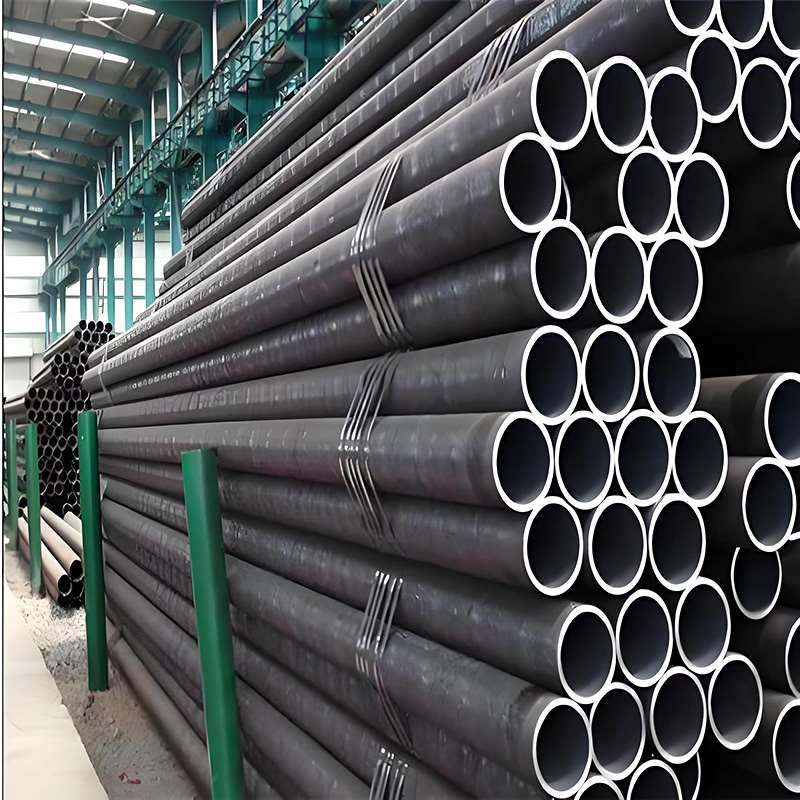
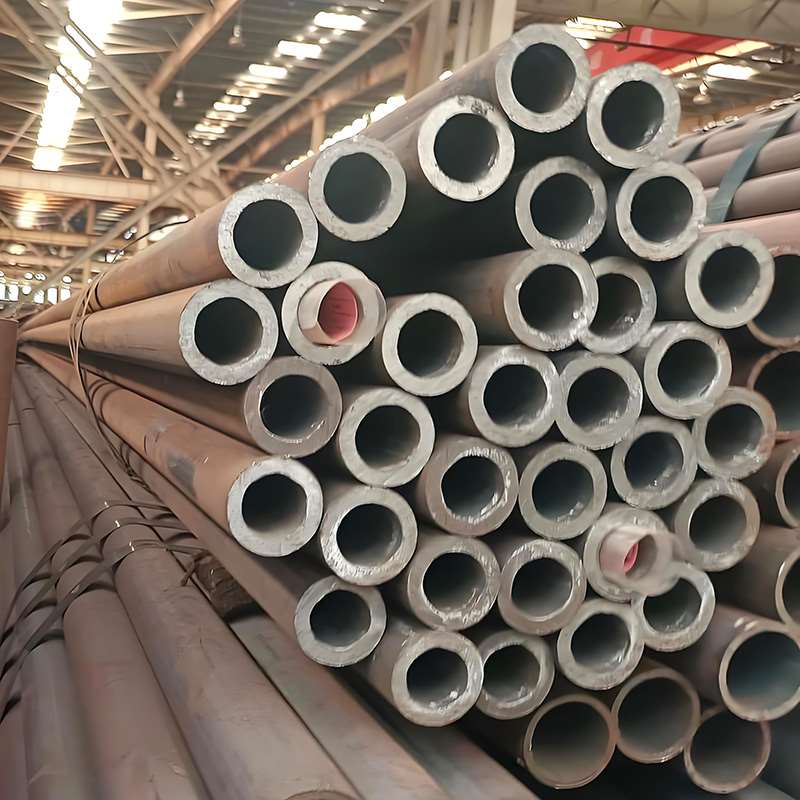
III. Industrial Seamless Carbon Steel Pipe Specifications and Dimensions
| Outer Diameter OD (mm) | Wall Thickness WT (mm) | Theoretical Weight (kg/m) | Applicable Grade | Typical Applications |
|---|---|---|---|---|
| 21.3 | 2.77 | 1.68 | A/B/C | Low-pressure industrial pipelines, branch pipes |
| 26.9 | 2.87 | 2.15 | A/B/C | Industrial circulating water, process pipelines |
| 33.4 | 3.38 | 2.77 | A/B/C | Medium and small diameter high-temperature pipelines |
| 42.2 | 3.56 | 3.66 | A/B/C | Industrial heating and steam pipelines |
| 48.3 | 3.91 | 4.35 | A/B/C | Medium-diameter industrial main pipelines |
| 60.3 | 3.91–6.35 | 5.11–8.18 | A/B/C | High-temperature, high-pressure industrial pipelines |
| 76.1 | 4.55–7.11 | 7.52–12.0 | B/C | Chemical and petroleum transport pipelines |
| 88.9 | 4.85–8.56 | 9.17–15.9 | B/C | High-temperature steam pipelines, boiler pipes |
| 114.3 | 6.02–10.97 | 15.9–29.6 | B/C | Large-diameter industrial main pipelines |
| 139.7 | 6.35–12.7 | 21.5–38.2 | B/C | High-temperature, high-pressure pipelines, boiler systems |
| 168.3 | 7.11–14.27 | 28.1–49.1 | B/C | Large industrial transport pipelines |
| 219.1 | 8.18–15.88 | 44.0–78.5 | B/C | Large-diameter high-pressure pipelines |
IV. Typical Application Scenarios
Industrial seamless carbon steel pipe ASTM A106 is widely used in:
| Application Scenario | Description |
|---|---|
| High-Temperature Pipelines | Refineries, chemical high-temperature steam lines |
| Industrial Pipelines | Circulating water and steam transport in petrochemical plants |
| Boiler Pipes | High-temperature, high-pressure boiler pipes and heat exchanger pipelines |
| Pressure Systems | Low to medium-high pressure networks, ensuring safety and stability |
| Energy Equipment | Main pipelines for thermal power, nuclear power, and heating systems |
V. Procurement Recommendations for Seamless Carbon Steel Pipes (ASTM A106 Standard)
1. Pipe Grade Selection
Grade B: Most commonly used, suitable for general high-temperature and high-pressure industrial pipelines, offering a balance of strength and toughness.
Grade C: Suitable for high-temperature and high-pressure or special operating conditions, with stronger pressure resistance, but higher cost.
2. Size and Specification Selection
Outer Diameter and Wall Thickness: Determined based on system operating pressure, flow rate, and installation conditions.
Reference Range: Small and medium diameters (60–114 mm) for industrial circulating water and steam pipelines; large diameters (168–219 mm) for high-temperature and high-pressure main pipelines.
3. Chemical Composition and Mechanical Properties
Check that the pipe’s chemical composition (C, Mn, Si, P, S) conforms to the ASTM A106 standard.
Check mechanical properties: yield strength, tensile strength, and elongation to ensure safe operation of the pipeline under high temperature and high pressure.
4. Corrosion Protection
Select the appropriate corrosion protection method based on the medium and environment: epoxy coating, PE cladding, or cement mortar lining.
Ensure the inner and outer anti-corrosion layers are intact before installation to avoid damage during transportation or construction.
5. Supplier Qualifications
Possess ASTM certification and complete test reports (chemical composition, mechanical properties, dimensional inspection).
Have ISO9001 or other quality management system certification.
Extensive production experience, stable supply, ensuring consistency in large-volume procurement.
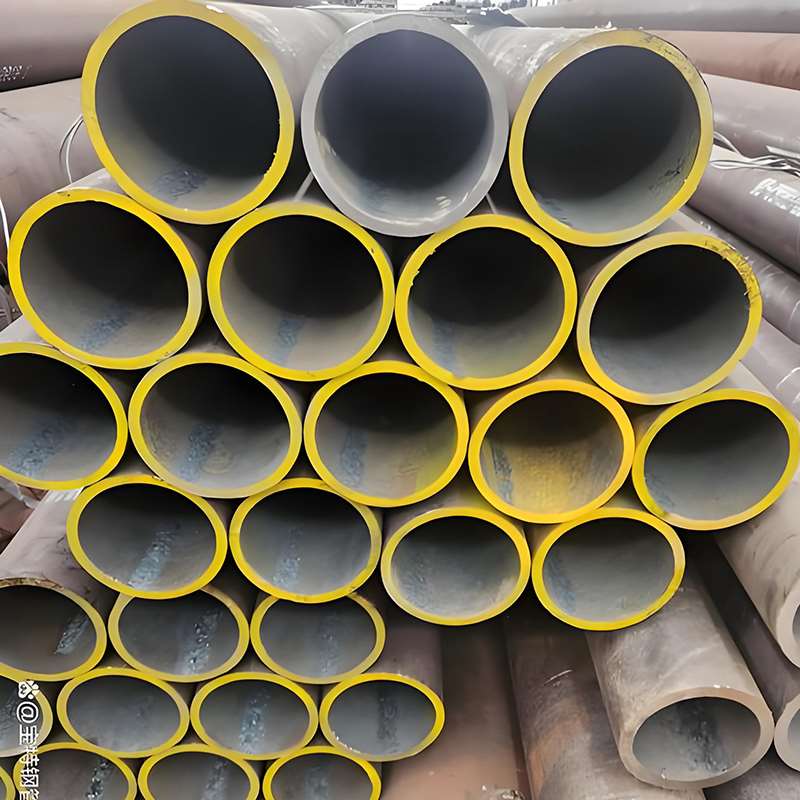
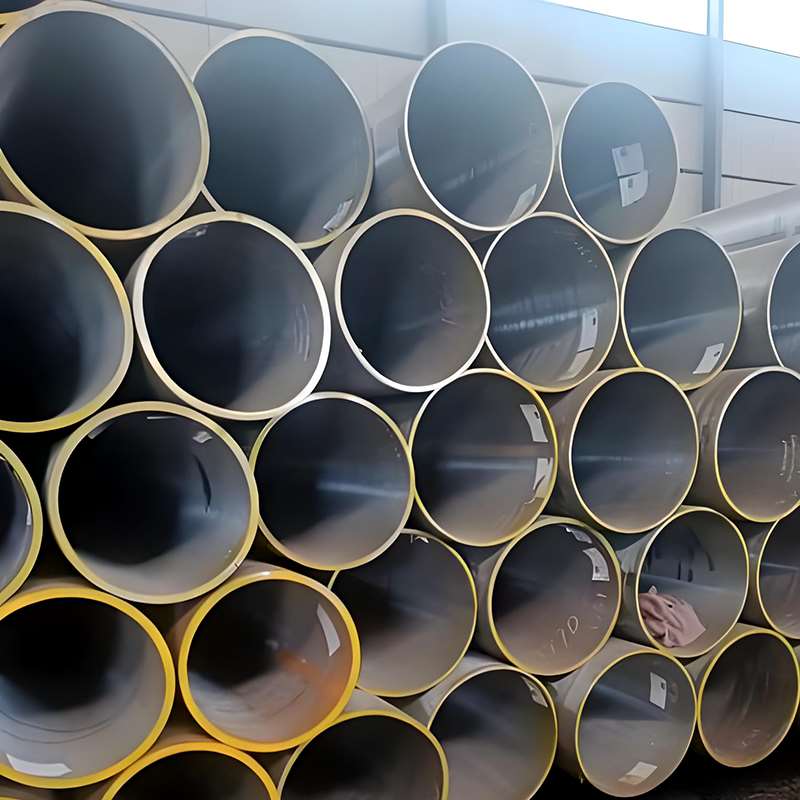
VI. Comparison of Industrial Seamless Carbon Steel Pipe Standards
i. Common Seamless Carbon Steel Pipe Standards
| Standard | Applicable Scope | Main Grades / Classification | Features / Applications |
|---|---|---|---|
| ASTM A106 | High-temperature, high-pressure industrial pipelines | Grade A/B/C | US standard, suitable for boilers, steam, and chemical pipelines; widely exported |
| ASTM A53 | Low- and medium-pressure pipelines | Grade A/B | US standard, weldable, suitable for water, gas, and steam pipelines |
| GB/T 8162 | Seamless steel pipes for fluid transport | L245/L290/L360, etc. | Chinese standard, covers low- and medium-pressure fluid transport; commonly used in municipal and industrial pipelines |
| GB/T 8163 | Seamless steel pipes for fluid transport (pressure) | Grade B | Chinese standard, suitable for pressure-bearing pipelines; balances weldability and pressure resistance |
| EN 10216-1 | Seamless steel pipes for fluid transport | P235TR1/P265TR1, etc. | European standard, covers ambient and high-temperature industrial pipelines; suitable for EU export projects |
| API 5L | Oil and gas pipelines | PSL1/PSL2 | International petroleum standard, emphasizes high strength and low-temperature toughness; suitable for long-distance pipelines |
ii. Comparison of ASTM A106 with other standards
| Comparison Item | ASTM A106 | ASTM A53 | GB/T 8162/8163 | EN 10216-1 | API 5L |
|---|---|---|---|---|---|
| Main Application | High-temperature, high-pressure pipelines | Low- and medium-pressure pipelines | Industrial and municipal fluid transport | Industrial high-temperature pipelines | Oil and gas pipelines |
| Grade / Performance | Grade A/B/C | Grade A/B | L245/L290 / Grade B | P235TR1/P265TR1 | PSL1/PSL2 |
| Operating Temperature | Up to 450 °C | Ambient to medium temperature | Ambient to medium temperature | Ambient to high temperature | Ambient to -50 °C or lower (low-temperature pipes) |
| Applicable Media | Steam, chemicals, high-temperature water | Water, steam, air | Industrial and municipal fluids | High-temperature fluids | Oil, natural gas |
| Export Suitability | Internationally recognized, widely exported | Internationally recognized, low-pressure pipelines | Commonly used domestically in China | European standard, suitable for EU export | Widely used in international oil & gas projects |