
I. Overview of GB/T 8163 Seamless Steel Pipes for Fluid Transportation Standard
GB/T 8163 is a Chinese national standard for seamless steel pipes for fluid transportation, used to carry general fluids such as water, oil, and gas, and applicable to various industrial, engineering, and equipment piping systems.
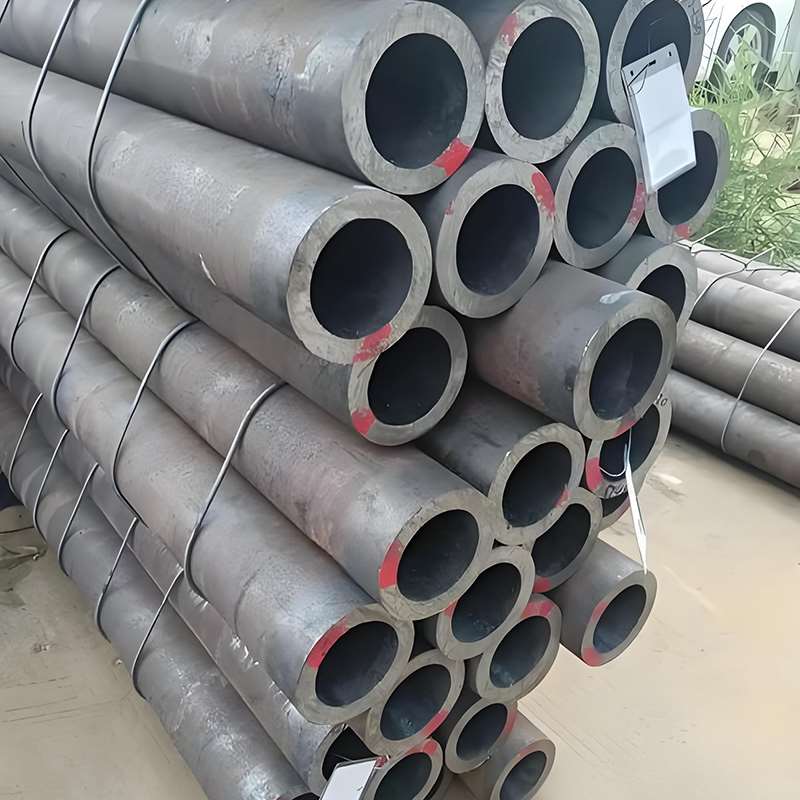
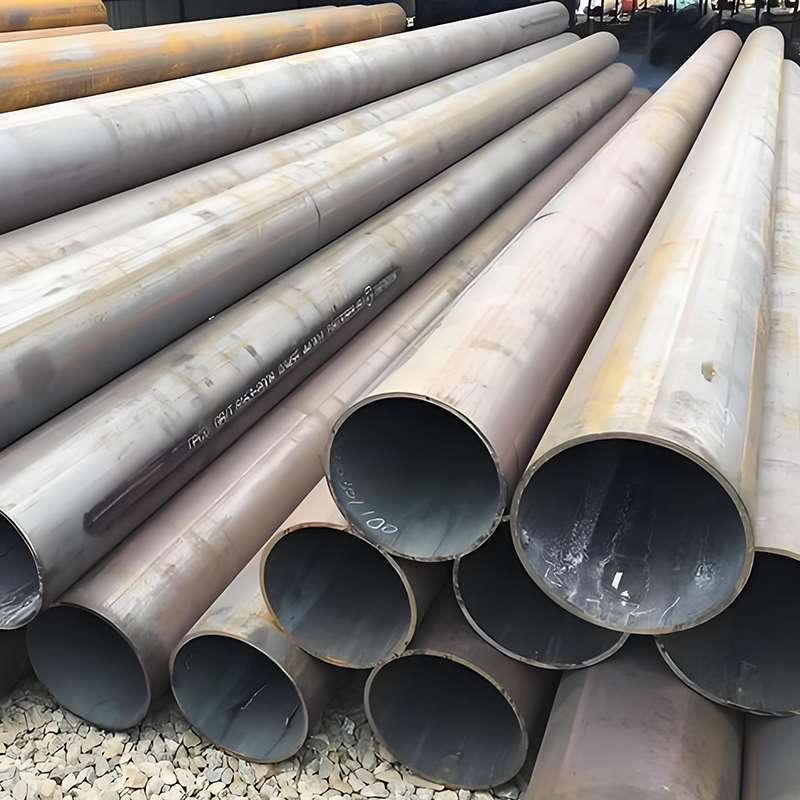
II. Comparison Table of Main Materials/Grades in GB/T 8163
| Material Grade | Type | Chemical Composition Features | Mechanical Properties Features | Key Differences / Remarks |
|---|---|---|---|---|
| 10# | Carbon Structural Steel | Low carbon content, few impurities | Lower strength, good plasticity, easy to process | Suitable for low-pressure, cost-sensitive applications; lowest strength, best ductility |
| 20# (Most Common) | Carbon Structural Steel | Medium strength, stable composition | Tensile strength ~410–550 MPa, good weldability | Most commonly used in GB/T 8163; cost-effective with balanced performance |
| Q345 (A/B/C) | Low-Alloy High-Strength Steel | Contains trace Nb/V/Ti, increased strength | Yield ≥345 MPa, high pressure resistance | Significantly stronger than 10# and 20#; thinner wall can be chosen for same specifications to reduce weight |
| Q390 / Q420 | Low-Alloy High-Strength Steel | More alloying, higher strength | Yield 390–420 MPa, higher pressure resistance | Higher strength, but reduced weldability and machinability; higher cost |
| 15CrMo (Alloy Steel) | Cr-Mo Alloy Steel | Heat and pressure resistant | High-temperature strength, creep resistance | Suitable for high-temperature service; preferred for high-temperature, high-pressure environments |
| 12Cr1MoV | Alloy Steel | Contains Cr, Mo, V; excellent temperature resistance | Good long-term high-temperature stability | Better temperature resistance than 15CrMo; slightly higher cost |
| 35 / 45# | Structural Steel | High strength | High tensile strength, poor weldability | Often used for structural parts; not recommended for long-distance fluid pipelines |
| ST45 / ST52 (Equivalent foreign grades) | High-Strength Steel | Refer to DIN/EN composition | High strength, moderate plasticity | Commonly matched with GB/T 8163 in export projects |
III. GB/T 8163 Chemical Composition and Mechanical Properties of Seamless Steel Pipes for Fluid Transportation
i. Chemical Composition Table
| Material | C (%) | Mn (%) | Si (%) | S (%) ≤ | P (%) ≤ | Cr (%) | Mo (%) | V (%) |
|---|---|---|---|---|---|---|---|---|
| 10# | 0.07–0.13 | 0.35–0.65 | ≤0.35 | 0.035 | 0.035 | — | — | — |
| 20# (Most Common) | 0.17–0.23 | 0.35–0.65 | ≤0.35 | 0.035 | 0.035 | — | — | — |
| Q345 | ≤0.18 | 1.0–1.6 | 0.20–0.50 | 0.035 | 0.035 | — | — | Nb/V/Ti trace |
| 15CrMo | 0.12–0.18 | 0.40–0.70 | 0.30–0.60 | 0.030 | 0.030 | 0.80–1.10 | 0.45–0.60 | — |
| 12Cr1MoV | 0.08–0.15 | 0.40–0.70 | 0.17–0.37 | 0.030 | 0.030 | 0.90–1.20 | 0.25–0.35 | 0.15–0.30 |
ii. Mechanical Properties Table
| Material | Yield Strength ReL (MPa) ≥ | Tensile Strength Rm (MPa) | Elongation A (%) ≥ | Features |
|---|---|---|---|---|
| 10# | 195 | 315–430 | 32 | Soft, easy to bend and process |
| 20# (Most Common) | 245 | 410–550 | 26 | Suitable for water, oil, and gas pipelines |
| Q345 | 345 | 470–630 | 20 | High strength, used for higher pressure or structural applications |
| 15CrMo | 310 | 470–630 | 17 | Good high-temperature and high-pressure performance |
| 12Cr1MoV | 275 | 440–600 | 18 | Best high-temperature creep performance |
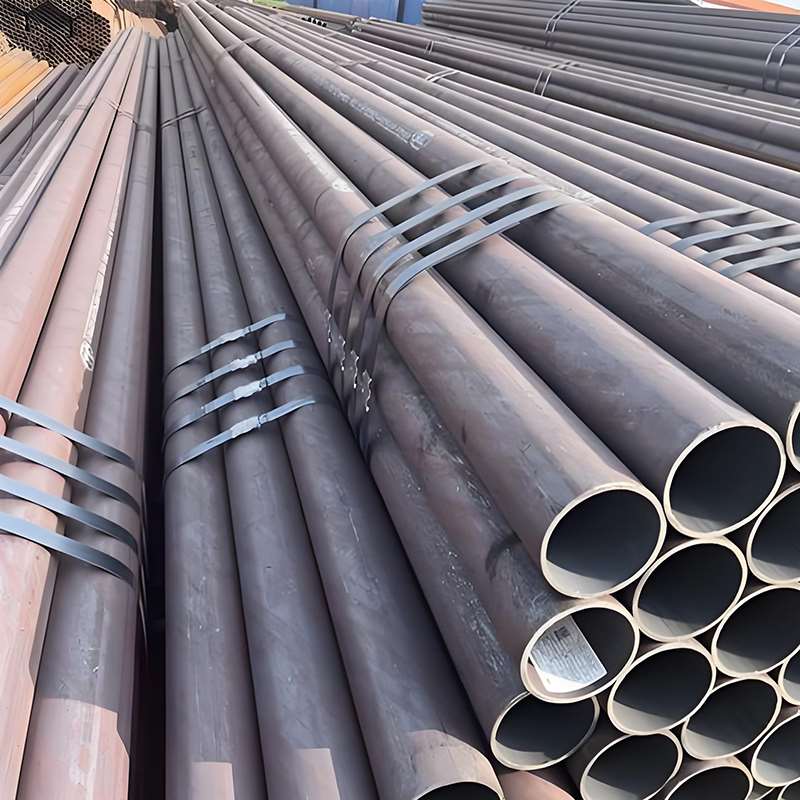
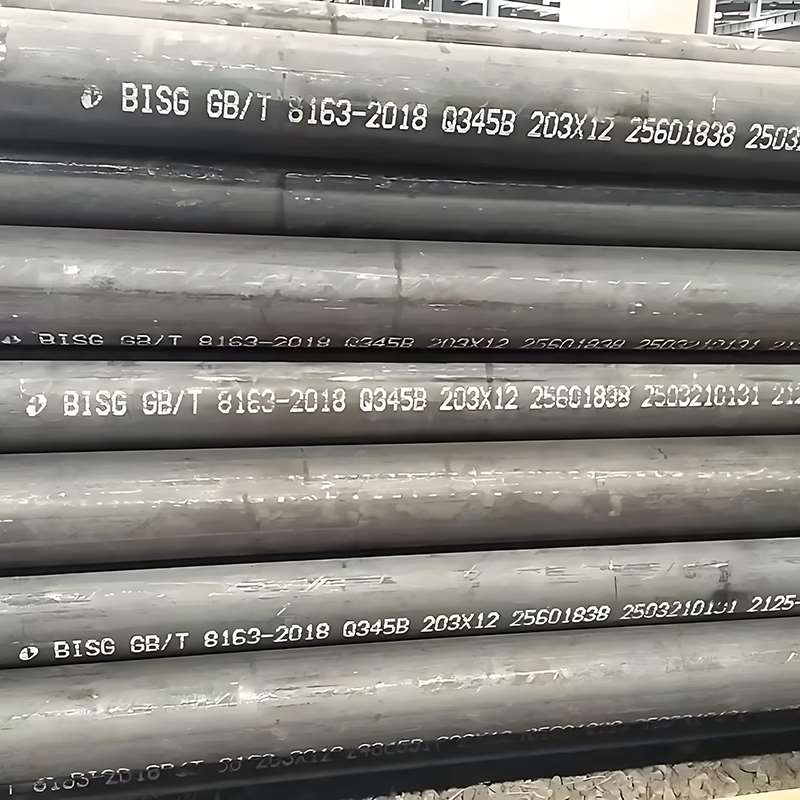
IV. GB/T 8163 Specifications and Dimensions of Seamless Steel Pipes for Fluid Transportation
i. Small Diameter Fluid Pipes (10.3–60.3 mm)
| Outer Diameter OD (mm) | Wall Thickness WT Range (mm) |
|---|---|
| 10.3 | 1.8–3.0 |
| 13.7 | 1.8–3.0 |
| 17.2 | 1.8–3.5 |
| 21.3 | 2.0–4.0 |
| 26.9 | 2.0–4.5 |
| 33.4 | 2.5–5.0 |
| 42.3 | 2.5–6.0 |
| 48.3 | 2.5–6.0 |
| 60.3 | 3.0–8.0 |
ii. Commonly used medium-diameter sizes (73–168 mm)
| Outer Diameter OD (mm) | Wall Thickness WT Range (mm) |
|---|---|
| 73.0 | 3.5–10 |
| 76.1 | 3.5–10 |
| 88.9 | 4.0–12 |
| 101.6 | 4.0–14 |
| 108 | 4.0–14 |
| 114.3 | 4.0–14 |
| 121 | 4.0–14 |
| 133 | 4.5–16 |
| 139.7 | 4.5–16 |
| 159 | 5–18 |
| 168.3 | 5–20 |
iii. Large-diameter fluid pipes (≥ 219 mm)
| Outer Diameter OD (mm) | Wall Thickness WT Range (mm) |
|---|---|
| 219 | 6–25 |
| 245 | 6–25 |
| 273 | 6–30 |
| 325 | 6–30 |
| 355.6 | 8–30 |
| 377 | 8–32 |
| 406.4 | 8–36 |
| 426 | 8–36 |
| 457 | 8–40 |
| 508 | 8–45 |
| 530 | 8–50 |
| 559 | 10–50 |
| 610 | 10–60 |
V. Production Process
Round tube blank → Heating → Piercing → Rolling → Sizing/Reduction → Cooling → Cutting → Heat treatment (if required) → Surface treatment → Inspection → Finished product
VI. GB/T 8163 Quality Inspection Standard for Seamless Steel Pipes for Fluid Transportation
| Inspection Item | Test Method / Standard | Acceptance Criteria (According to GB/T 8163) |
|---|---|---|
| Chemical Composition | Spectral Analysis (OES) or Chemical Analysis | Must meet the chemical composition requirements of the corresponding steel grade (10#, 20#, Q345, 15CrMo, etc.) |
| Mechanical Properties | Tensile Test (GB/T 228) | Yield strength, tensile strength, and elongation must meet the standard values of the corresponding steel grade (e.g., 20#: ReL ≥245 MPa, Rm 410–550 MPa) |
| Impact Test (for Low Alloy Steel) | Charpy Impact Test (GB/T 229) | Q345 and similar grades must meet the specified impact energy (room temperature ≥27 J) |
| Hydrostatic Test / Pressure Test | GB/T 241 | Must withstand the specified pressure without leakage or rupture (P ≥ standard value, generally ≥20 MPa, calculated according to WT/OD) |
| Nondestructive Testing (UT/ET) | Ultrasonic Test or Eddy Current Test (GB/T 7735, GB/T 5777) | No cracks, slag inclusions, delaminations, or harmful defects are allowed |
| Surface Quality | Visual Inspection (GB/T 8163) | Pipe surface must be free of cracks, folds, laps, delaminations, weld overlaps, scars, etc.; minor scratches allowed locally but must be within tolerance |
| Dimensional Measurement | Calipers, Wall Thickness Gauge, Steel Tape | OD, WT, length, and tolerances must comply with GB/T 8163 requirements (OD ±1%, WT -12.5% or ±10%, etc.) |
| Ovality Check | OD Measurement | Ovality must be within OD tolerance range (usually ≤1%) |
| End Inspection | Visual + Caliper | Plain ends must be smooth and burr-free; bevel angle 30° ±2.5°, blunt edge 1.6 ±0.8 mm |
| Straightness (Bending) | GB/T 8163 Straightness Test | Overall bending ≤1.5‰; local bending ≤3 mm/m |
| Weight Deviation | Theoretical Weight Comparison | Weight deviation must meet the standard (generally ±10%) |
| Pipe End Seal (Threaded Pipe) | Thread Gauge Inspection | Threads must meet G pressure thread requirements; no cross-threading or damage |
VII. GB/T 8163 Application Areas of Seamless Steel Pipes for Fluid Transportation
| Application | Typical Medium / Working Condition | Why Choose GB/T 8163 (Advantages) | Common Steel Grades |
|---|---|---|---|
| Industrial Fluid Transport | Water, oil, gas, compressed air, inert gases | Seamless structure provides stability, high pressure resistance, good weldability | 20, Q345 |
| Boiler Room & Heat Exchange Piping | Hot water, steam systems (≤350°C) | Good pressure and temperature resistance, suitable for thermal cycles | 20, Q345B |
| Petrochemical Pipelines | Chemical media, light oils, water injection systems | High strength, corrosion resistance can be enhanced with internal coatings | 20, Q345, Q345E |
| Urban Infrastructure | Tap water, fire-fighting networks, pressurized water supply | High reliability and long service life of seamless steel pipes | 20 |
| Mechanical Equipment Piping | Hydraulic oil, lubricating oil, machine cooling water | Uniform wall thickness, good machinability, suitable for mechanical piping | 20, Q345 |
| Mining & Tunnel Engineering | High-pressure water supply, drainage, grouting systems | Impact and pressure resistant, suitable for harsh environments | Q345B / Q345E |
| Marine & Port Engineering | Seawater pipelines, anti-corrosion transport systems | High strength and corrosion resistance, external anti-corrosion layer can be applied | Q345E |
| Power Plant Auxiliary Piping | Industrial water, circulating water, oil systems | Moderate cost, stable performance | 20, Q345B |
VIII. GB/T 8163 Selection Guide for Seamless Steel Pipes
| Selection Dimension | Key Considerations | Recommended Choice / Notes |
|---|---|---|
| Medium Type | Water, air, oil, gas, chemical liquids | For water and air: 20#; for oil or light chemical liquids: 20# or Q345; highly corrosive media require internal coating or low-alloy steel |
| Working Pressure | Medium to low pressure, pressure > 2 MPa | Medium/low pressure pipelines: 20#; high pressure or large diameter: Q345 (wall thickness can be reduced) |
| Operating Temperature | Normal, medium, high | Normal ≤100°C: carbon steel; medium ≤300°C: Q345 recommended; high-temperature steam or boiler systems: 15CrMo or 12Cr1MoV |
| Pipe Diameter & Wall Thickness | Diameter size and wall thickness matching pressure | Small diameter ≤60 mm: wall thickness 2–8 mm; large diameter ≥219 mm: 8–60 mm, calculated based on design pressure |
| Installation Method | Welding, threaded, socket | Welded pipelines: plain / beveled ends; small diameter fast installation: threaded ends; frequent assembly/disassembly: socket ends |
| Environmental Conditions | Indoor, outdoor, seaside, low temperature | Indoor dry: black steel; outdoor/humid: hot-dip galvanized or epoxy-coated; marine/port: Q345E + 3PE / epoxy zinc-rich coating |
| Corrosion Resistance | Contact with acidic/alkaline or corrosive fluids | General water/oil: carbon steel; highly corrosive fluids: low-alloy steel or additional anti-corrosion coating (FBE / 3PE / epoxy) |
| Length Requirements | Reduce welds, facilitate transport | Longer lengths reduce welds: choose 12 m or multiples; short pipes or transport-limited: 4–6 m |
| Cost Efficiency | Cost vs performance | Standard low-pressure water pipes: 20# offers best cost-performance; high pressure or high-temperature: consider low-alloy or alloy steel |