
I. Overview of EN 10210 Hollow Structural Steel Tubes
i. Standard Definition
EN 10210 is a European standard applicable to hot-formed hollow structural steel tubes.
Primarily used in load-bearing structures and building steel structures, suitable for withstanding bending, compressive, and torsional loads.
Applicable to square, rectangular, and circular hollow tubes.
ii. Material Range
Carbon steel and low-alloy steel
Common steel grades: S235, S275, S355, etc.
Corrosion-resistant or high-strength materials can be selected according to design requirements.
iii. Pipe Types
Hollow Section Types:
Circular Hollow Section (CHS)
Square Hollow Section (SHS)
Rectangular Hollow Section (RHS)
Manufacturing Process:
Hot Finished Welded Pipe (HSS)
The pipe is manufactured through hot rolling or hot expansion, resulting in smooth welds and uniform mechanical properties.
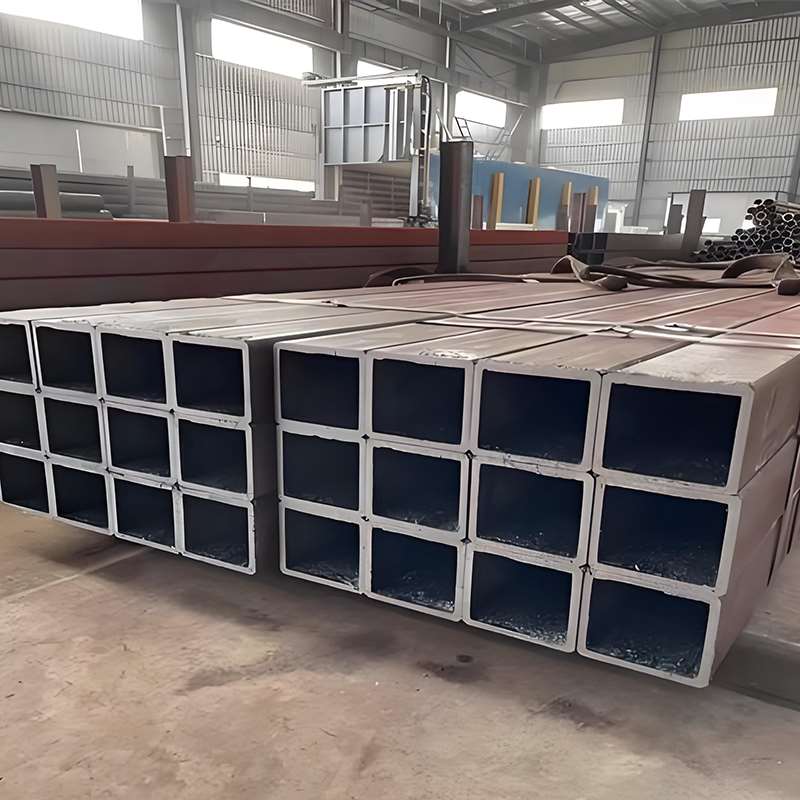
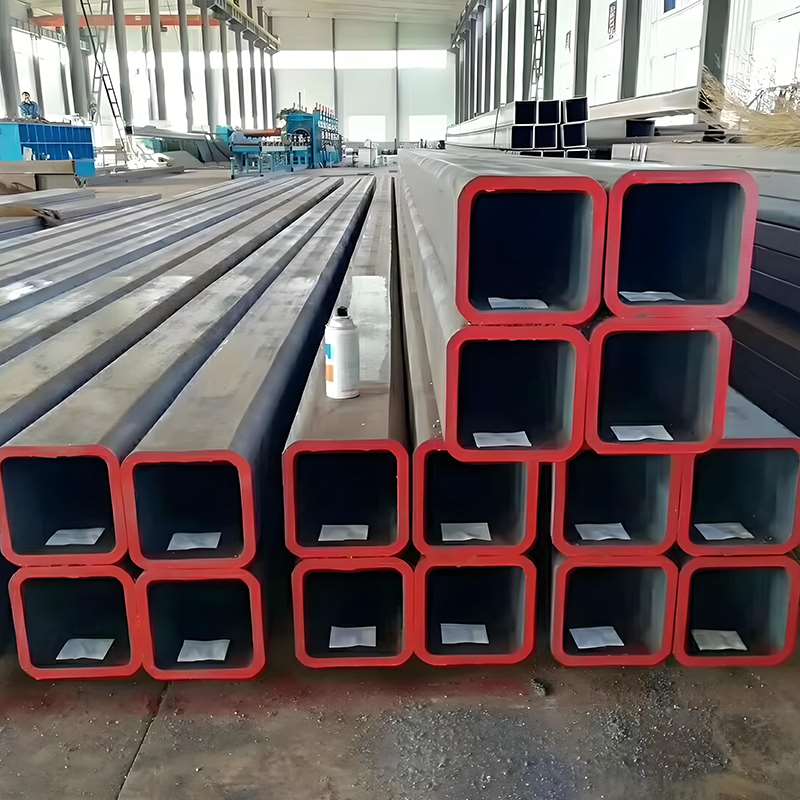
II. EN 10210 Chemical Composition and Mechanical Properties of Hollow Structural Steel Tubes
i. Chemical Composition
| Element | Carbon Steel | Low-Alloy Steel | Remarks |
|---|---|---|---|
| Carbon (C) | ≤0.20–0.30% | ≤0.20–0.30% | Controls weldability; low-alloy steel achieves higher strength through other alloying elements |
| Manganese (Mn) | 0.60–1.50% | 0.60–1.50% | Enhances toughness |
| Sulfur (S) | ≤0.035% | ≤0.035% | Reduces brittleness |
| Phosphorus (P) | ≤0.035% | ≤0.035% | Reduces brittleness |
| Silicon (Si) | 0.10–0.55% | 0.10–0.55% | Increases strength and elasticity |
| Nickel (Ni) | — | 0.30–1.00% (optional) | Improves strength and corrosion resistance |
| Chromium (Cr) | — | 0.30–1.00% (optional) | Improves hardness and weather resistance |
| Molybdenum (Mo) | — | 0.05–0.30% (optional) | Enhances corrosion resistance and high-temperature strength |
| Copper (Cu) | ≤0.30% | ≤0.30% | Improves corrosion resistance |
ii. Mechanical properties
| Steel Type | Grade | Yield Strength σy (MPa) | Tensile Strength σu (MPa) | Elongation A (%) | Impact Toughness |
|---|---|---|---|---|---|
| Carbon Steel | S235 | 235 | 360–510 | ≥20 | ≥27 J (20°C) |
| Carbon Steel | S275 | 275 | 410–560 | ≥20 | ≥27 J (20°C) |
| Carbon Steel | S355 | 355 | 470–630 | ≥20 | ≥27 J (20°C) |
| Low-Alloy Steel | S355NL / S420 | 355–420 | 470–680 | ≥20 | ≥27 J (−20°C optional) |
III. EN 10210 Hollow Structural Steel Tube Production Process
Bill Preparation → Heat Treatment → Hot Forming (Extrusion/Hot Rolling) → Cooling and Straightening → Cutting and End Finishing → Surface Treatment → Inspection and Quality Control → Finished Product Delivery
IV. EN 10210 Surface Treatment and Corrosion Protection of Hollow Structural Steel Pipes
i. Untreated Black Pipe
Suitable Environments: Indoor, dry environments
Features: Low cost, easy construction
Precautions: Prone to rusting in outdoor or humid environments, requires regular maintenance
ii. Hot-dip Galvanizing
Suitable Environments: Outdoor, humid or rainy environments
Features: Forms a strong zinc layer, strong corrosion resistance
Advantages: High durability, low maintenance cost
Common Applications: Bridge structures, outdoor buildings, industrial supports
iii. Painted or Composite Anti-corrosion Coating
Suitable Environments: Special industrial environments, coastal areas, chemically corrosive zones
Features: Can use epoxy primer + topcoat, powder coating, or multi-layer composite anti-corrosion coating
Advantages: Customized protection for corrosive environments, extending service life
Precautions: Higher cost than galvanized pipes, but more economical in extreme environments.
V. EN 10210 Standard for Testing Hollow Structural Steel Pipes
| Test Item | Test Method | Acceptance Criteria / Requirements | Remarks |
|---|---|---|---|
| Chemical Composition | Optical Emission Spectroscopy (OES) or Chemical Analysis | According to steel grade: • S275: C ≤ 0.22%, Mn 1.40%, P ≤ 0.035%, S ≤ 0.035% • S355: C ≤ 0.24%, Mn 1.60%, P ≤ 0.035%, S ≤ 0.035% | Ensures mechanical properties and weldability |
| Visual Inspection | Visual or Magnifying Glass | Smooth surface, no cracks, pits, porosity, or severe mill scale | Affects welding, corrosion protection, and structural performance |
| Outer Diameter / Section Dimensions | Vernier Caliper, Steel Tape, Laser Measurement | OD, width, wall thickness, tolerances comply with EN 10210, e.g.: • Round pipe: OD ±2%, WT ±10% • Square/rectangular pipe: width/height ±1.5%, WT ±10% | Ensures installation accuracy and load-bearing capacity |
| Length | Steel Tape | ±50 mm or per customer requirement | Ensures construction length accuracy |
| Straightness | Laser or Straightedge | Deviation ≤0.5% × pipe length | Ensures straightness and assembly accuracy |
| Yield Strength | Tensile Test (EN ISO 6892-1) | According to steel grade: • S275: ≥275 MPa • S355: ≥355 MPa | Ensures load-bearing capacity |
| Tensile Strength | Tensile Test | According to steel grade: • S275: 410–560 MPa • S355: 470–630 MPa | Meets design requirements |
| Elongation | Tensile Test | • S275: ≥20% • S355: ≥22% | Ensures toughness, prevents brittle fracture |
| Impact Toughness (Charpy) | EN ISO 148-1 | • 20°C: KV ≥27 J • -20°C: KV ≥27 J (low-temperature requirement) | Suitable for low-temperature or impact environments |
| Weldability (Optional) | Bend / Tensile Test | Welds free of cracks and porosity, meets design requirements | Ensures welding safety |
| Surface Anti-Corrosion Layer Thickness | Magnetic Thickness Gauge or Coating Thickness Gauge | • Hot-dip galvanized ≥65 μm • Painted / composite layer per design | Ensures corrosion resistance and service life |
| Marking & Batch Check | Visual Inspection + Document Review | Complete product marking, accompanied by factory certificate (MTC) | Facilitates traceability and quality management |
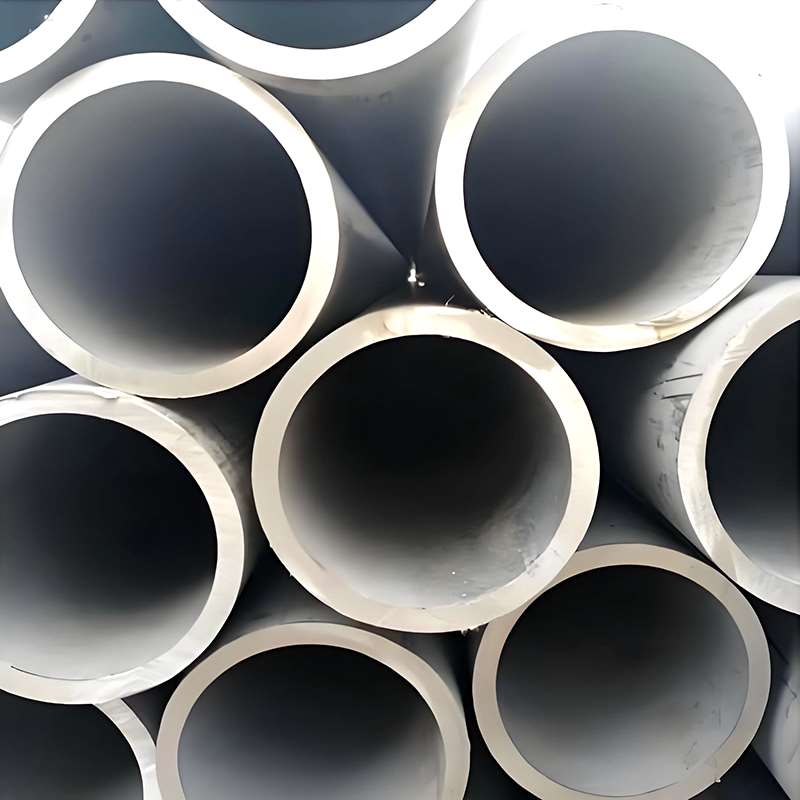
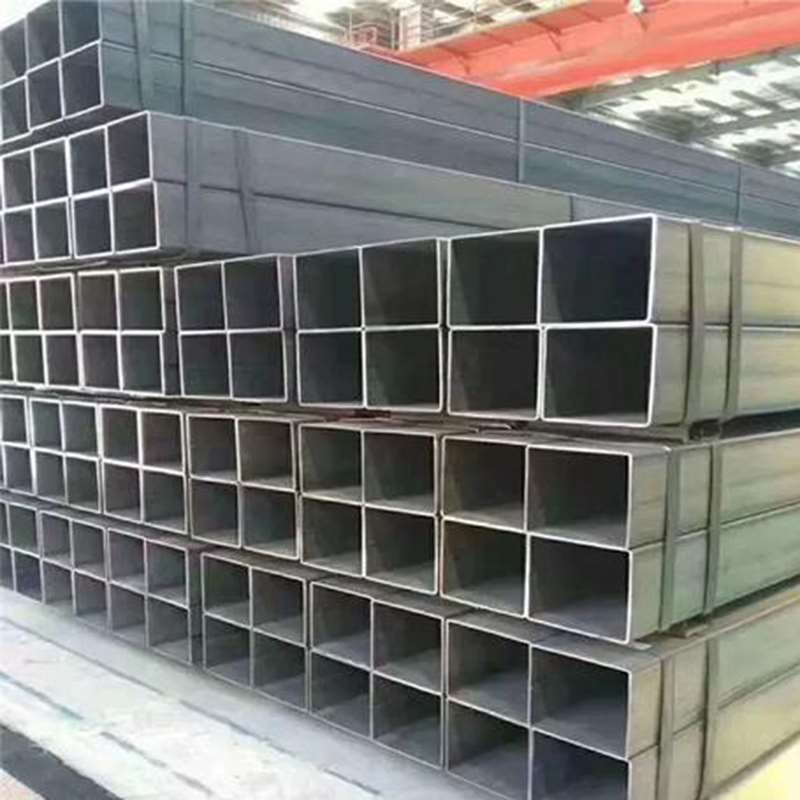
VI. Application Areas and Selection Guidelines for Hollow Structural Steel Tubes (EN 10210)
i. Application Areas of Hollow Structural Steel Tubes (EN 10210)
| Application | Service Characteristics | Applicable Reason |
|---|---|---|
| Building Structures | Frames, columns, beams, load-bearing structures | Hollow sections provide high load capacity with light weight, easy for construction and welding |
| Bridge Structures | Bridge beams, supports, railings | Hot-formed HSS steel pipes have high strength, good bending and torsion resistance |
| Industrial Machinery Supports | Equipment supports, platforms, racks | Uniform cross-section, stable load-bearing, easy for welding and assembly |
| Outdoor Structures | Billboards, guardrails, communication towers | Can choose hot-dip galvanizing or anti-corrosion coating to enhance weather resistance |
| Special Environments | Coastal areas, chemical plants, humid or corrosive environments | Use composite anti-corrosion coatings or high-grade steel to extend service life |
ii. EN 10210 Hollow Structural Steel Pipe Selection Guide
(1) Selection based on cross-sectional shape
Round pipe: withstands uniform loads and has good torsional resistance
Square/rectangular pipe: withstands bending loads and facilitates structural splicing
(2) Selection based on dimensions and wall thickness
Outer diameter and wall thickness are determined based on load-bearing capacity and design load
The tolerance range provided by the EN 10210 standard ensures structural accuracy
(3) Selection based on steel grade
Commonly used are non-alloy or fine-grained steels such as S275 and S355
High-load or low-temperature environments can select high-grade or low-temperature steels
(4) Selection based on environment
Indoor dry environment: black pipe is sufficient
Outdoor, humid environment: hot-dip galvanizing
Seaside or chemically corrosive environment: composite anti-corrosion coating
VII. EN 10210 Hollow Tube Selection Tips
| Step | Key Points | Remarks / Recommendations |
|---|---|---|
| 1. Calculate Load First | Determine pipe diameter and wall thickness based on structural load, bending moment, and axial force | Avoid selecting pipes by guesswork; ensure safety and reliability |
| 2. Let Environment Decide Anti-Corrosion | Indoor dry → Black steel; Outdoor humid → Hot-dip galvanized; Coastal/chemical → Painted or composite anti-corrosion | Choose proper corrosion protection to reduce future maintenance costs |
| 3. Prefer Standard Sizes | Select standard round or square/rectangular sizes provided by EN 10210 whenever possible | Reduces custom fabrication, cost, and lead time |
| 4. Consider Welding Construction | Ensure thick-wall or high-strength steel is weldable | Avoid excessive construction difficulty, save time and cost |
| 5. Make Samples for Critical Scenarios | For special environments or non-standard sizes, make anti-corrosion or weld test pieces first | Detect potential issues early, avoid rejecting the entire batch |