
I. Standard Overview
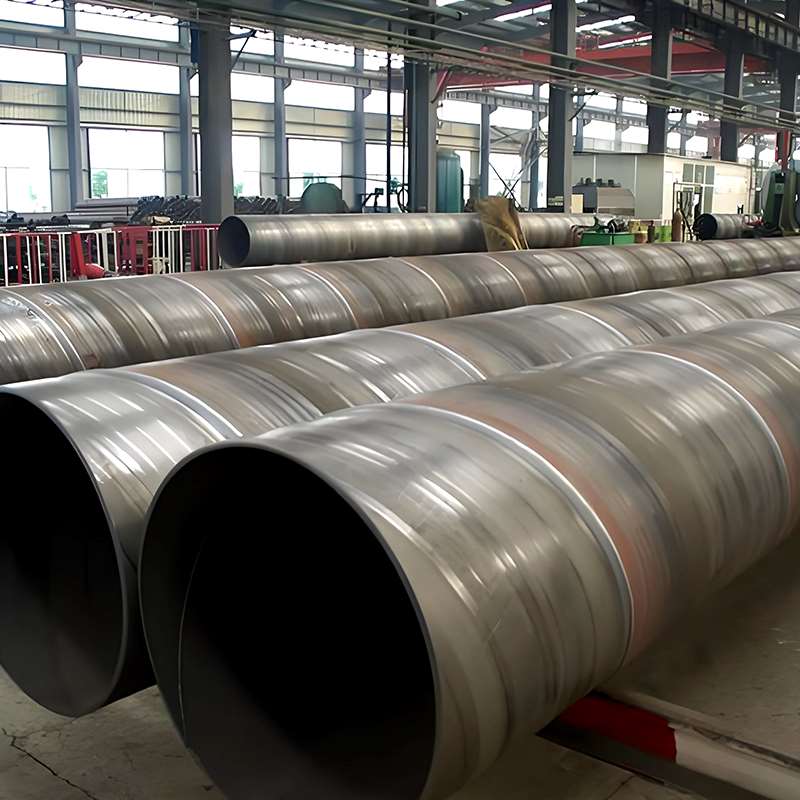
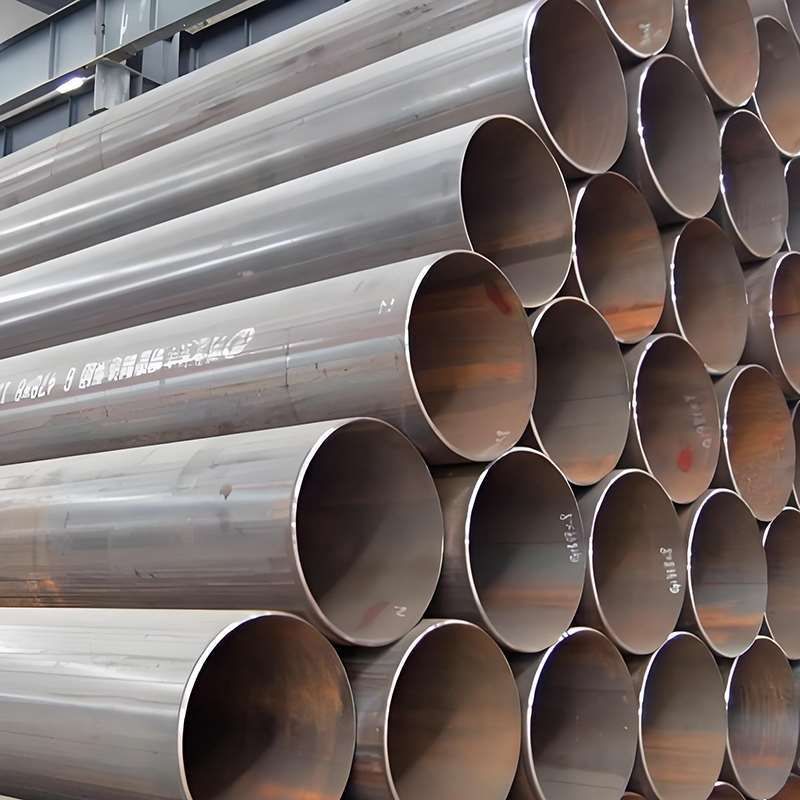
ASTM A252 is an international standard from the American Society for Testing and Materials (ASTM), specifically regulating the manufacture, chemical composition, mechanical properties, and testing requirements for steel pipe piles.
ASTM A252 covers two types of pipes:
Welded Pipe Piles
Seamless Pipe Piles
They are classified by strength grade into Grade 1, Grade 2, and Grade 3, with different grades suitable for engineering projects with different load-bearing capacities and construction requirements.
This standard is widely applicable to bridges, wharves, high-rise building foundations, and heavy civil engineering, providing a reliable basis for engineering design.
II. Material and Mechanical Properties
ASTM A252 steel pipe piles are classified into Grade 1, Grade 2, and Grade 3. Each grade has specific requirements for chemical composition and mechanical properties to ensure the reliable load-bearing capacity of the pile foundation in building and civil engineering projects.
i. Chemical Composition (Main Elements)
| Grade | Carbon (C) | Manganese (Mn) | Phosphorus (P) | Sulfur (S) |
| Grade 1 | ≤ 0.30% | ≤ 1.25% | ≤ 0.035% | ≤ 0.035% |
| Grade 2 | ≤ 0.33% | ≤ 1.25% | ≤ 0.035% | ≤ 0.035% |
| Grade 3 | ≤ 0.35% | ≤ 1.25% | ≤ 0.035% | ≤ 0.035% |
ii. Mechanical properties
| Grade | Yield Strength (MPa) | Tensile Strength (MPa) | Elongation (%) |
|---|---|---|---|
| Grade 1 | ≥ 205 | 340–480 | ≥ 30 |
| Grade 2 | ≥ 240 | 415–540 | ≥ 25 |
| Grade 3 | ≥ 260 | 455–590 | ≥ 20 |
Note: Specific values may vary depending on pile diameter and wall thickness. Users should refer to the actual engineering design requirements when selecting and constructing the system.
III. Specifications and Dimensions
ASTM A252 steel pipe piles are widely used in building and civil engineering foundations. They come in a variety of specifications to meet different load-bearing capacities and construction requirements. Commonly used specifications are shown in the table below:
| NPS(inch) | OD(mm) | WT(mm) | Standard Length(m) | Theoretical Weight Range(kg/m) |
| 4″ | 114.3 | 4.0–9.5 | 6–12 | 22–34 |
| 6″ | 168.3 | 6.0–12.7 | 6–12 | 40–64 |
| 8″ | 219.1 | 7.0–15.0 | 6–12 | 61–96 |
| 10″ | 273.0 | 7.0–17.5 | 6–12 | 83–130 |
| 12″ | 323.9 | 8.0–19.0 | 6–12 | 104–168 |
| 14″ | 355.6 | 8.0–20.0 | 6–12 | 118–185 |
| 16″ | 406.4 | 8.0–22.0 | 6–12 | 140–215 |
Note: Wall thickness and theoretical weight are common ranges and can be selected according to construction design requirements and load-bearing capacity; length is usually 6–12 meters, but can be customized.
IV. Production Process and Characteristics
i. Seamless Steel Pipe Pile Manufacturing Process (Hot Rolling/Cold Drawing)
Bill Preparation → Heating → Piercing → Hot Rolling/Drawing → Annealing or Normalizing → Cold Drawing and Shaping (Optional) → Straightening → Cutting → Inspection → Packaging and Shipping
ii. Welded Steel Pipe Pile Manufacturing Process (ERW/LSAW)
Steel Strip/Plate → Forming → Welding → Annealing or Normalizing (Optional) → Straightening → Cutting → Inspection → Packaging and Shipping
iii. Process Characteristics and Impacts
Seamless Steel Pipe Pile: High load-bearing capacity, no welds, suitable for high-load-bearing foundation projects, but relatively high cost.
Welded Steel Pipe Pile: High production efficiency, low cost, suitable for general load-bearing foundation projects; weld quality requires strict control.
Heat Treatment: Improves pile toughness and tensile strength, ensuring construction and long-term load safety.
Straightening and Cutting: Ensures pile verticality and length accuracy, facilitating pile driving or pile driving.
V. Application Scenarios and Selection Recommendations
| Application Scenario | Recommended Grade | Nominal Diameter (NPS) | Wall Thickness Range | Anti-Corrosion / Surface Treatment | Description |
|---|---|---|---|---|---|
| Building Foundation Piles (High-Rise, Residential) | Grade 2 / 3 | 6″–12″ | 6–12 mm | Hot-dip Galvanized or Epoxy Coating | Supports vertical building loads; requires high pile strength and corrosion resistance |
| Bridge Foundation Piles | Grade 3 | 8″–16″ | 8–22 mm | FBE or 3PE Composite Coating | Supports bridge weight and vehicle dynamic loads; high corrosion protection required |
| Port Wharf Piles | Grade 2 / 3 | 8″–16″ | 8–20 mm | FBE / 3PE or Epoxy Coating | Marine environment; corrosion resistance is critical |
| Industrial Plant Foundation | Grade 1 / 2 | 4″–10″ | 4–15 mm | Anti-Rust Paint or Epoxy Coating | Supports medium loads; cost-effective |
| Temporary Civil Engineering Supports | Grade 1 | 4″–8″ | 4–12 mm | Anti-Rust Coating | Temporary support piles; moderate strength required, easy installation |
Selection Guidelines
(1) Grade Selection
High load-bearing capacity or important projects such as bridges and wharves → Grade 3
Medium load-bearing capacity building foundations → Grade 2
Temporary supports or lightweight foundations → Grade 1
(2) Pile Diameter and Wall Thickness
Select the nominal diameter and wall thickness according to the design load, soil conditions, and construction method.
For high load-bearing piles, it is recommended to choose large-diameter and thick-walled piles.
(3) Anti-corrosion Coating Selection
Seawater or highly corrosive environments → FBE/3PE composite coating
General soil or building foundations → Hot-dip galvanizing or epoxy coating
Temporary use or short construction period → Rust-proof paint is sufficient.
(4) Construction and Inspection
Confirm chemical composition, mechanical properties, and dimensional tolerances.
Check weld quality, anti-corrosion coating thickness, and integrity.
Conduct sampling inspections before construction to ensure pile foundation safety.
VI. ASTM A252 Standard for Testing Steel Pipe Piles
| Inspection Category | Inspection Item | Method / Standard | Acceptance Criteria / Parameters |
|---|---|---|---|
| Chemical Composition | Carbon (C) | Spectral Analysis / Chemical Analysis | Grade 1 ≤ 0.30%, Grade 2 ≤ 0.33%, Grade 3 ≤ 0.35% |
| Manganese (Mn) | Spectral Analysis / Chemical Analysis | ≤ 1.25% | |
| Phosphorus (P) | Spectral Analysis / Chemical Analysis | ≤ 0.035% | |
| Sulfur (S) | Spectral Analysis / Chemical Analysis | ≤ 0.035% | |
| Mechanical Properties | Yield Strength | Tensile Test | Grade 1 ≥ 205 MPa, Grade 2 ≥ 240 MPa, Grade 3 ≥ 260 MPa |
| Tensile Strength | Tensile Test | Grade 1 340–480 MPa, Grade 2 415–540 MPa, Grade 3 455–590 MPa | |
| Elongation (%) | Tensile Test | Grade 1 ≥ 30%, Grade 2 ≥ 25%, Grade 3 ≥ 20% | |
| Dimensions & Appearance | Outer Diameter (OD) / Wall Thickness (WT) | Vernier Caliper / Steel Ruler | Meet nominal size ± standard tolerance |
| Length | Steel Ruler / Tape Measure | Per order ± tolerance | |
| End Treatment | Visual / Standard Inspection | Plain End / Beveled End | |
| Surface Defects | Visual / Standard Inspection | No cracks, pits, or obvious scratches | |
| Weld Quality (for welded piles) | Weld Integrity | Ultrasonic Testing (UT) / Magnetic Particle Testing (MT) | No cracks, lack of fusion, porosity, or other defects |
| Anti-Corrosion Coating | Coating Thickness & Adhesion | Coating Thickness Gauge / Pull-Off Test | Hot-dip Galvanized ≥ 65 μm, FBE / 3PE per design thickness, adhesion qualified |
VII. Construction and Installation Precautions for ASTM A252 Steel Pipe Piles
i. Pile Foundation Construction Preparation
Pile Material Acceptance: Confirm that the specifications, grade, wall thickness, anti-corrosion coating, and inspection report of the steel pipe piles meet the requirements of ASTM A252 standard.
Construction Site Preparation: Clear the pile location, ensuring the ground is level and the piling machine or pile driving equipment is stable.
ii. Pile Driving Construction
Driving Methods: Drop hammers, vibratory hammers, hydraulic hammers, etc., can be used. The appropriate equipment should be selected based on the soil conditions.
Verticality Control: Use pile guide frames or laser instruments to ensure pile verticality and prevent deviation that could affect bearing capacity.
Vibration and Impact Control: Prevent pile damage or weld cracking by controlling the construction speed.
iii. Pile Connection and Reinforcement
Welded pile or sleeve connection: Ensure weld quality and butt joint dimensions; perform non-destructive testing (UT/MT) if necessary.
Reinforcement measures: For long piles, they can be driven in sections and then connected with sleeves to ensure overall stability.
iv. Corrosion Prevention and Protection
Underground pile corrosion prevention: Inspect the integrity of the coating after construction, and recoat or repair as necessary.
Overhead pile protection: Avoid scratches and impacts during installation to prevent affecting corrosion resistance.
v. Construction Records and Inspection
Construction Records: Detailed records of the driving depth, verticality, pile number, and weld inspection status of each pile.
On-site Spot Inspection: Dimensional, weld, and corrosion protection inspections of key pile sections to ensure the overall quality of the pile foundation.