
I. Overview of ASTM A135 Standard
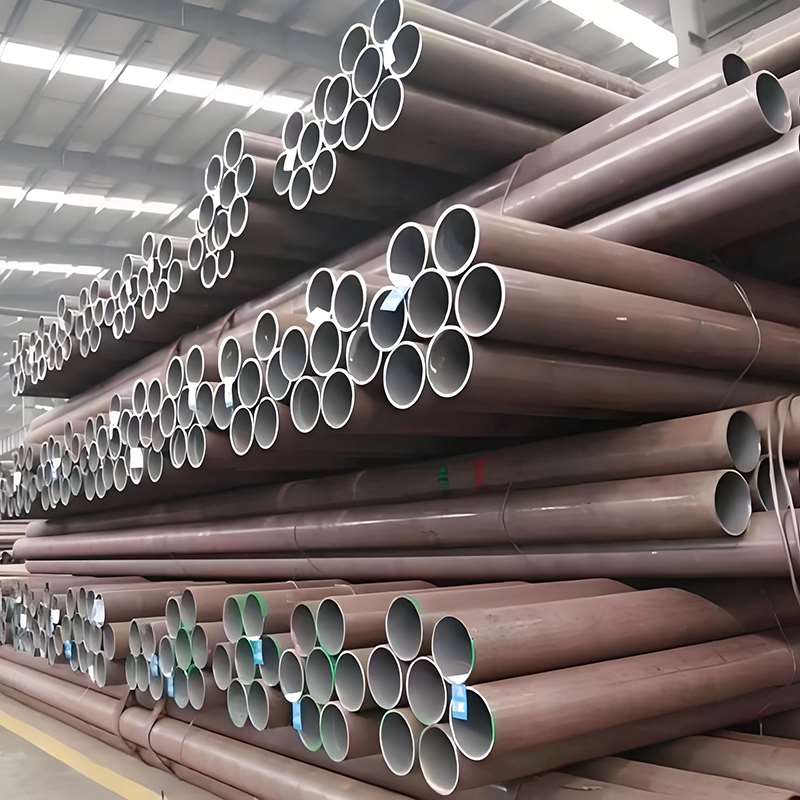
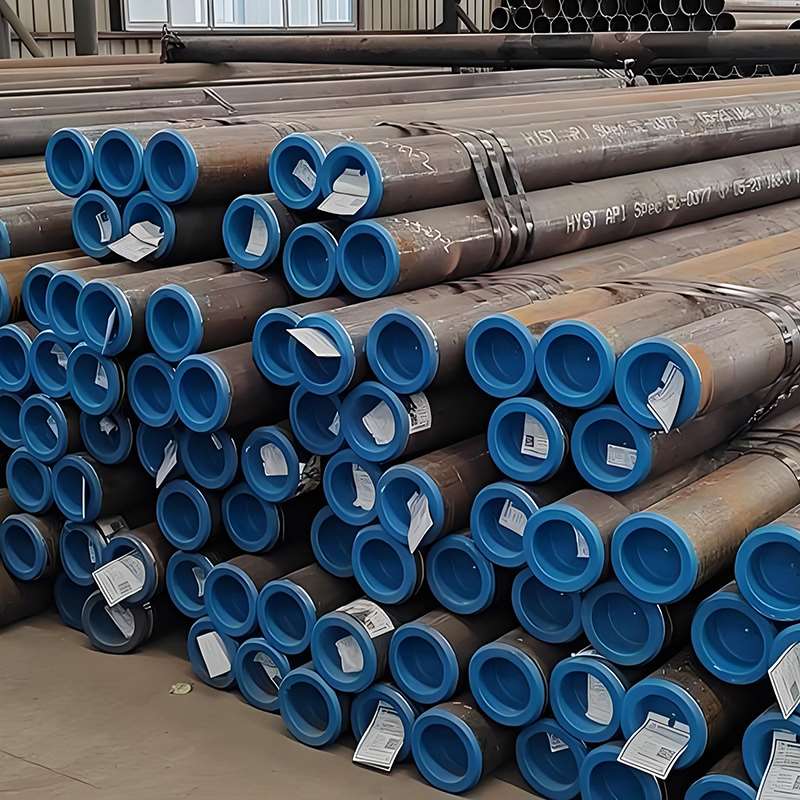
Pipe Type: Welded Pipe
Grade Classification:
Grade A, Grade B
Main Features:
Low carbon steel, easy to process, good weldability
Used for low-pressure water and steam pipelines, also suitable for building structural pipes
Black appearance
Typical Applications:
Building structural columns, support frames
Scaffolding pipes
Industrial low-pressure steam or water pipes
General structural load-bearing fittings
II. Chemical Composition and Mechanical Properties
i. Key Chemical Element Requirements (Grade A / B)
| Element | Grade A (%) | Grade B (%) | Function & Effect |
|---|---|---|---|
| Carbon (C) | ≤ 0.30 | ≤ 0.30 | Affects strength and hardness; higher carbon increases strength but reduces weldability |
| Manganese (Mn) | 0.27–0.90 | 0.27–0.90 | Improves strength and toughness, enhances weldability |
| Phosphorus (P) | ≤ 0.035 | ≤ 0.035 | Excess reduces toughness, prone to brittleness |
| Sulfur (S) | ≤ 0.035 | ≤ 0.035 | High sulfur content can cause hot cracking |
| Copper (Cu) | 0.20 | 0.20 | Increases corrosion resistance and strength |
ii. Comparison of mechanical properties (Grade A / Grade B)
| Performance Indicator | Grade A | Grade B | Applicable Scenario Description |
|---|---|---|---|
| Yield Strength (min) | 205 MPa | 240 MPa | Grade A can be used for general structures or low-pressure steam/water systems |
| Tensile Strength (min) | 330 MPa | 400 MPa | Grade B is suitable for systems subject to higher pressure or mechanical loads |
| Elongation (min) | 20% | 20% | Elongation ensures pipe toughness and impact resistance |
iii. In which scenarios should Grade B be used? In which scenarios is Grade A sufficient?
| Scenario | Recommended Grade | Reason |
|---|---|---|
| Low-pressure water pipelines or general building structures | Grade A | Meets load requirements, lower cost |
| Low-pressure steam, hot water pipes, or load-bearing support structures | Grade B | Higher yield and tensile strength, safer |
| Mechanical supports or environments with high vibration loads | Grade B | High strength and toughness resist fatigue and impact |
III. ASTM A135 Resistance Welded Steel Pipe Specifications and Dimensions Table
| NPS(inch) | OD(mm) | WT(mm) | Schedule | Theoretical weight kg/m | Remark |
| 2 | 60.3 | 2.77 – 6.02 | SCH 10, 20, 40 | 4.0 – 6.2 | PE / BE Optional |
| 2½ | 73.0 | 3.38 – 6.55 | SCH 10, 20, 40 | 5.0 – 7.8 | — |
| 3 | 88.9 | 3.68 – 7.11 | SCH 10, 20, 40, 80 | 6.8 – 11.5 | — |
| 4 | 114.3 | 3.68 – 9.27 | SCH 10, 20, 40, 80 | 10 – 18 | — |
| 5 | 141.3 | 4.19 – 9.27 | SCH 10, 40, 80 | 13 – 22 | — |
| 6 | 168.3 | 4.78 – 12.70 | SCH 10, 40, 80 | 17 – 32 | — |
| 8 | 219.1 | 4.78 – 12.70 | SCH 10, 40, 80 | 23 – 41 | — |
| 10 | 273.0 | 6.02 – 15.09 | SCH 20, 40, 80 | 34 – 56 | — |
| 12 | 323.9 | 6.35 – 16.66 | SCH 20, 40, 80 | 46 – 76 | — |
| 14 | 355.6 | 7.11 – 19.05 | SCH 40, 80 | 60 – 95 | — |
| 16 | 406.4 | 7.92 – 19.05 | SCH 40, 80 | 74 – 117 | — |
| 18 | 457.2 | 8.56 – 22.23 | SCH 40, 80 | 90 – 140 | — |
| 20 | 508.0 | 9.27 – 25.40 | SCH 40, 80 | 108 – 170 | — |
| 24 | 609.6 | 9.27 – 25.40 | SCH 40, 80 | 130 – 220 | — |
| 30 | 762.0 | 12.70 – 31.75 | SCH 40, 80 | 210 – 320 | — |
IV. ASTM A135 Resistance Welded Steel Pipe Manufacturing Process
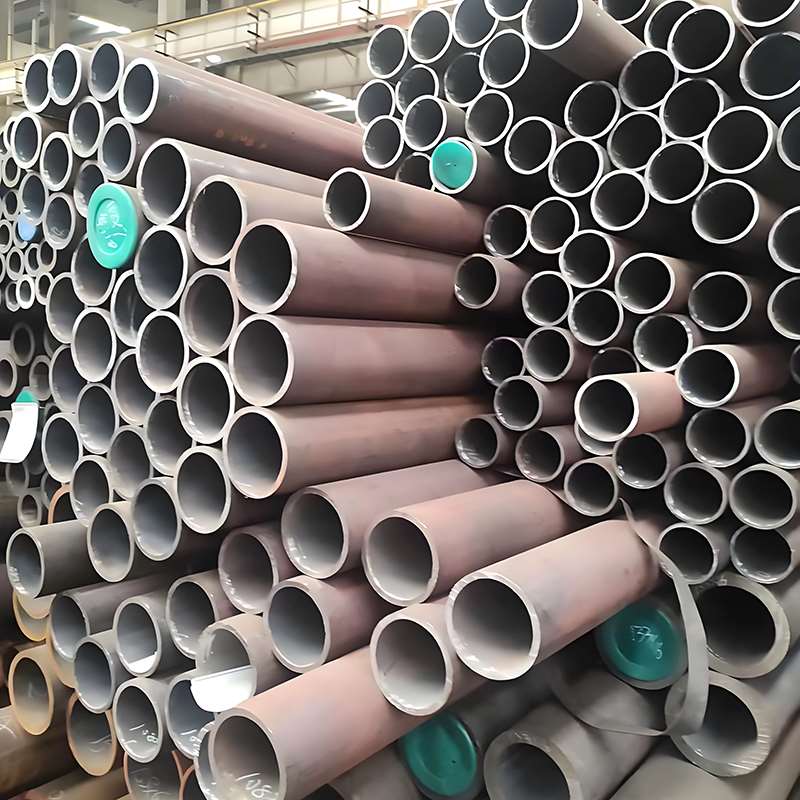
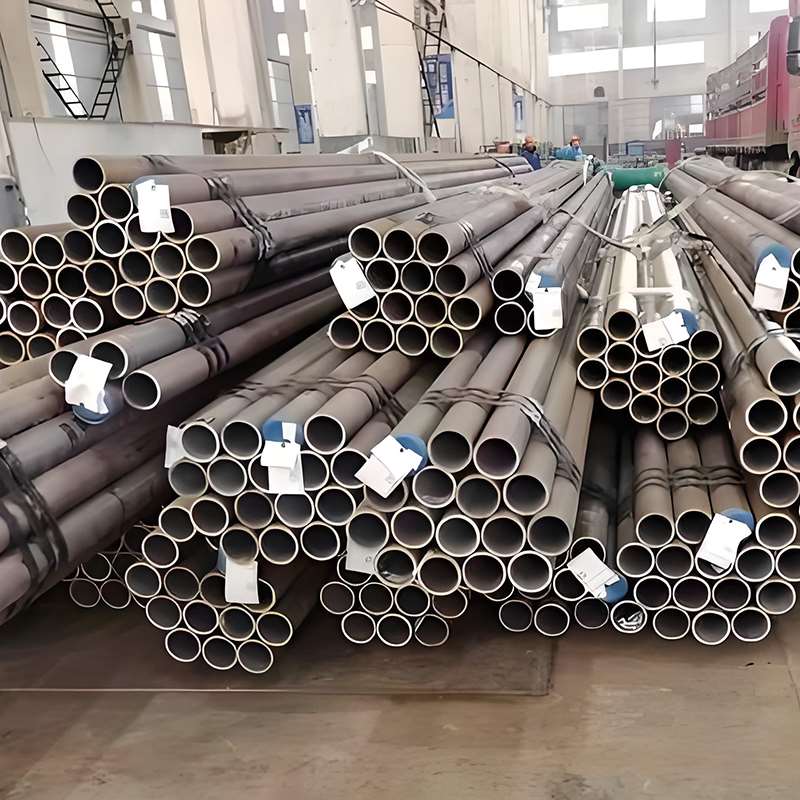
Uncoiling → Leveling → Strip Shearing → Forming (Cold-bent Round Pipe) → High-Frequency Resistance Welding (ERW) → Weld Bead Removal → Sizing and Straightening → Cutting to Length → Non-destructive Testing → Dimensional Inspection → Surface Rust Prevention Treatment → Finished Product Warehousing
V. Testing Standards and Acceptance Requirements (ASTM A135 ERW Steel Pipes)
| Inspection Category | Inspection Item | Method / Standard | Acceptance Criteria |
|---|---|---|---|
| Chemical Composition | C, Mn, P, S, Cu | Spectral Analysis or Chemical Analysis | Meet ASTM A135 Grade A / B limits |
| Mechanical Properties | Yield Strength, Tensile Strength, Elongation | Tensile Test | Grade A: Yield ≥ 205 MPa, Tensile ≥ 330 MPa, Elongation ≥ 20%Grade B: Yield ≥ 240 MPa, Tensile ≥ 400 MPa, Elongation ≥ 20% |
| Visual Inspection | Surface defects, weld quality | Visual or Magnified Inspection | Smooth surface, no cracks, pores, weld spatter, or obvious pits |
| Weld Inspection | Weld integrity | Eddy Current Testing (ECT) or Ultrasonic Testing (UT) | Continuous welds, no lack of penetration or cracks |
| Wall Thickness & Outer Diameter | Wall Thickness (WT), Outer Diameter (OD), Tolerance | Vernier Caliper, OD Gauge, Ultrasonic Thickness Measurement | OD ±1%, WT ±10%, Ovality ≤1.5% |
| Straightness | Pipe bending or deformation | Straightness Measurement | Bend ≤ 1.5 mm per meter |
| End Form | PE / BE check | Visual Inspection | Pipe ends flat, bevel angle meets standard |
| Finished Weight | Theoretical Weight | Calculation & Weighing | Theoretical weight deviation ±5% |
VI. ASTM A135 Resistance Welded Steel Pipe Selection Reference Table
| Application Scenario | Recommended Grade | NPS (inch) | Outer Diameter (OD, mm) | Wall Thickness / SCH | End Form | Anti-Corrosion Treatment | Selection Notes |
|---|---|---|---|---|---|---|---|
| Building structure columns / trusses | Grade A | 2–12 | 60.3–323.9 | SCH 10–40 | PE / BE | Oiled for rust prevention | General structural load, light to medium span, cost-effective choice |
| Scaffolding pipes / pipe rack supports | Grade A / B | 2–8 | 60.3–219.1 | SCH 10–40 | PE | Oiled or painted for rust prevention | Low height, light load, easy installation |
| Low-pressure steam pipelines | Grade B | 2–12 | 60.3–323.9 | SCH 40–80 | BE | Oiled or galvanized | Must withstand steam pressure; wall thickness and welds must ensure safety |
| Low-pressure hot water / industrial water | Grade A | 2–10 | 60.3–273.0 | SCH 10–40 | PE / BE | Oiled for rust prevention | Low-pressure fluid, light load sufficient |
| Mechanical supports / equipment supports | Grade B | 2–12 | 60.3–323.9 | SCH 40–80 | PE / BE | Oiled for rust prevention | High vibration or impact; select high-strength pipe |
| Long-span pipe racks / truss beams | Grade B | 6–24 | 168.3–609.6 | SCH 40–80 | BE | Galvanized or special anti-corrosion | Long span, high load; ensure structural stability |
Selection Guidelines Summary:
Application First → First determine whether it’s for structural support or fluid transport.
Pressure Rating → Use Grade A for low pressure, and Grade B for pressurized or vibrating environments.
Pipe Diameter and Wall Thickness Matching → Select the appropriate wall thickness based on the SCH series and outer diameter.
Port Type Selection → PE is suitable for flat-end welding or flange connections, while BE is suitable for field butt welding.
Corrosion Protection → For outdoor or humid environments, galvanizing or painting is optional; for indoor environments, ordinary oiling is sufficient.