
I. Standard Overview
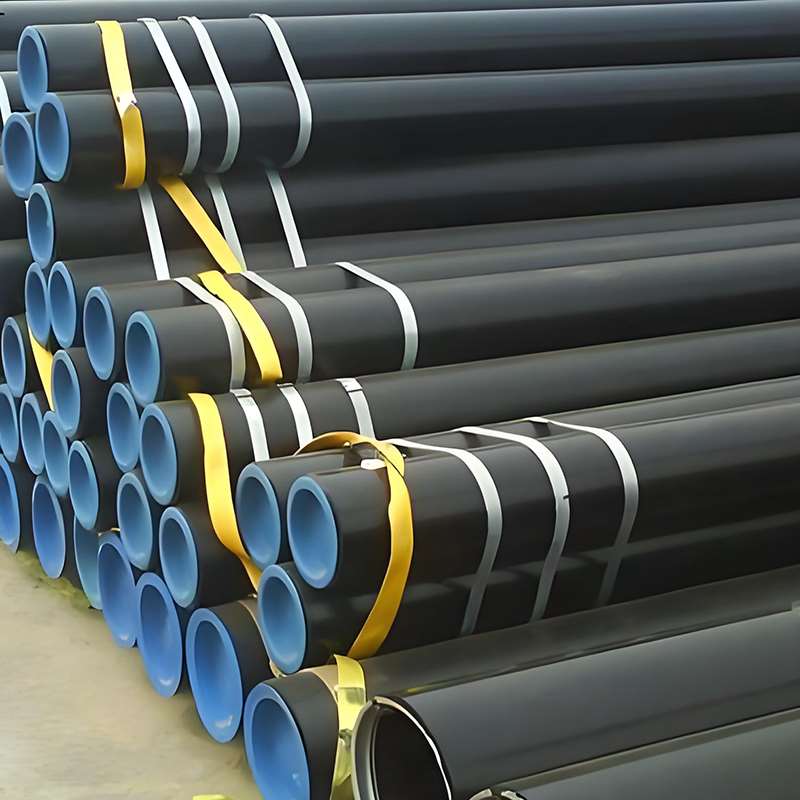
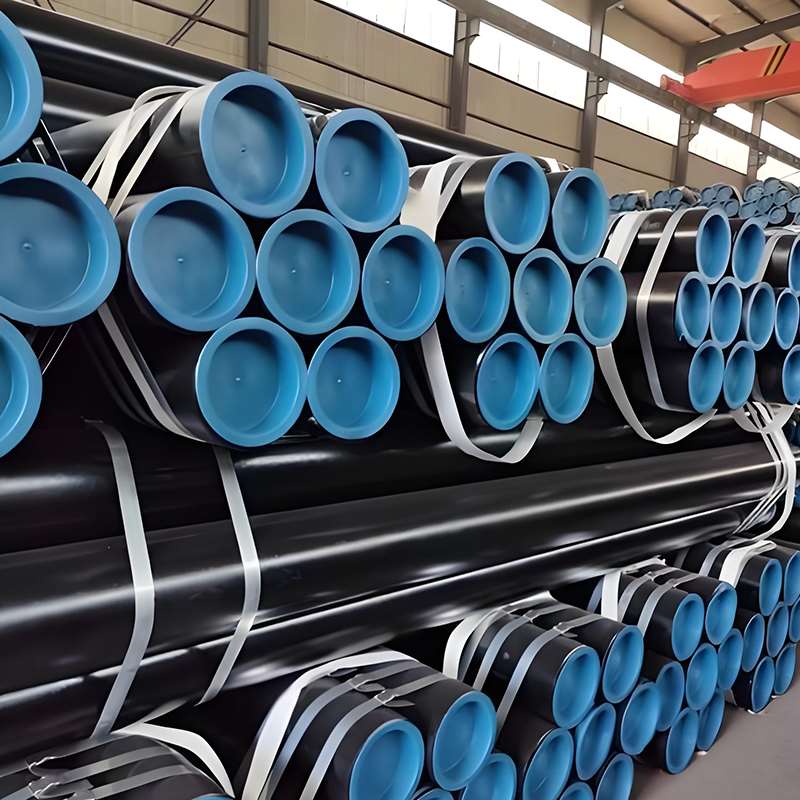
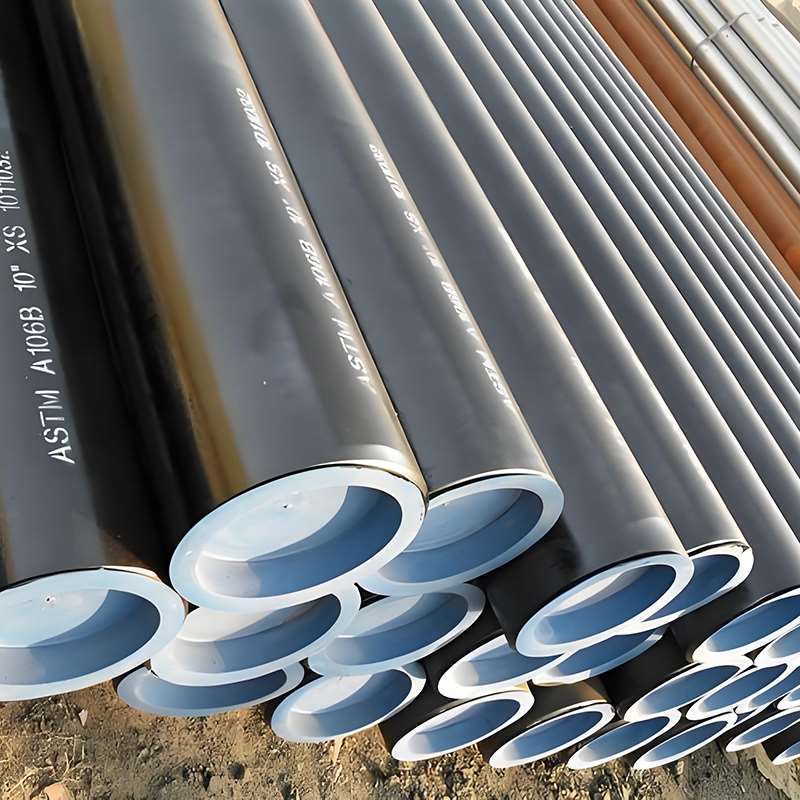
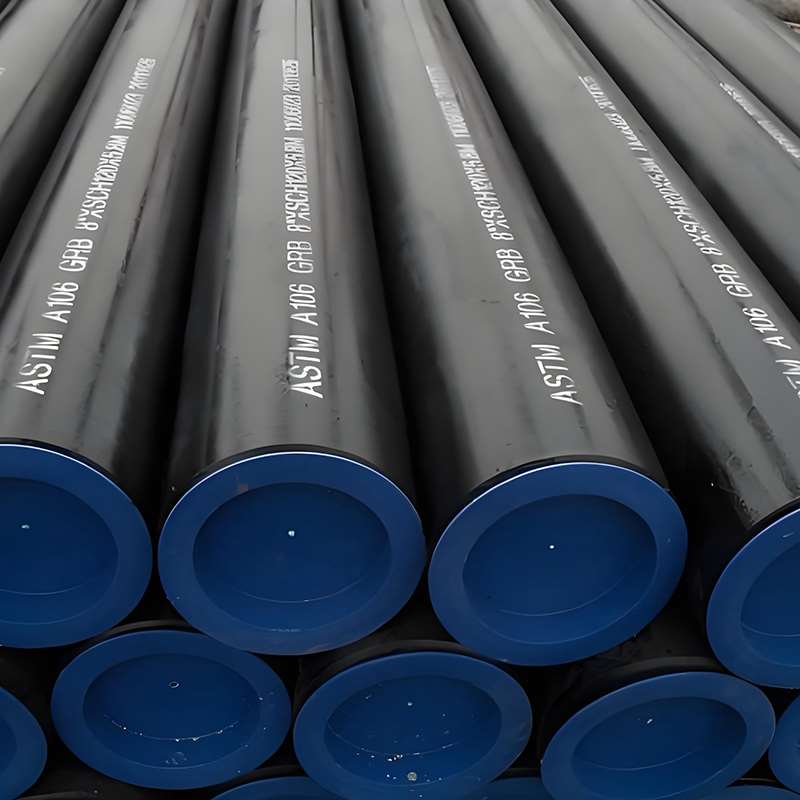
ASTM A106 is a standard for seamless carbon steel pipes used in high-temperature services. It primarily specifies the manufacturing, chemical composition, mechanical properties, and inspection requirements for the pipes.
ASTM A106 covers only seamless steel pipes, classifying them into Grade A, Grade B, and Grade C based on performance and strength. Different grades are suitable for different temperature and pressure conditions.
This standard is suitable for various industrial boilers, heat exchange equipment, steam pipelines, and high-temperature fluid transport systems, and is one of the most commonly used pipe specifications in high-temperature piping engineering.
II. Material and Mechanical Properties
ASTM A106 seamless carbon steel pipes are classified into Grade A, Grade B, and Grade C. Each grade has specific requirements for chemical composition and mechanical properties to ensure the reliability of the pipes under high temperature and high pressure environments.
i. Chemical Composition (Main Elements)
| Grade | Carbon (C) | Manganese (Mn) | Phosphorus (P) | Sulfur (S) | Silicon (Si) |
|---|---|---|---|---|---|
| Grade A | ≤ 0.30% | 0.29–1.06% | ≤ 0.035% | ≤ 0.035% | 0.10–0.35% |
| Grade B | ≤ 0.30% | 0.29–1.06% | ≤ 0.035% | ≤ 0.035% | 0.10–0.35% |
| Grade C | ≤ 0.35% | 0.29–1.06% | ≤ 0.035% | ≤ 0.035% | 0.10–0.35% |
ii. Mechanical properties
| Grade | Yield Strength (MPa) | Tensile Strength (MPa) | Elongation (%) |
| Grade A | ≥ 205 | 330–480 | ≥ 30 |
| Grade B | ≥ 240 | 415–540 | ≥ 25 |
| Grade C | ≥ 260 | 455–590 | ≥ 20 |
Note: Specific values may vary depending on pipe diameter and wall thickness. Users should refer to actual working conditions when selecting a model.
III. Specifications and Dimensions
ASTM A106 seamless carbon steel pipes are commonly used for transporting high-temperature steam, oil, and natural gas. A variety of pipe specifications are available, covering different diameters and wall thicknesses to meet diverse operating conditions. The table below lists the commonly used specification ranges:
| NPS (inch) | Outer Diameter OD (mm) | Wall Thickness Range WT (mm) | Standard Length (m) | Theoretical Weight Range (kg/m) |
|---|---|---|---|---|
| 1/2″ | 21.3 | 2.11–2.87 | 6–12 | 2.5–3.2 |
| 3/4″ | 26.7 | 2.11–3.38 | 6–12 | 3.2–4.3 |
| 1″ | 33.4 | 2.77–4.55 | 6–12 | 4.3–6.0 |
| 1 1/4″ | 42.2 | 2.87–4.85 | 6–12 | 5.4–7.6 |
| 1 1/2″ | 48.3 | 2.77–5.54 | 6–12 | 6.2–9.1 |
| 2″ | 60.3 | 3.91–6.02 | 6–12 | 9.0–12.7 |
| 2 1/2″ | 73.0 | 4.19–7.11 | 6–12 | 12.5–17.0 |
| 3″ | 88.9 | 4.57–7.62 | 6–12 | 16.2–23.0 |
| 4″ | 114.3 | 4.78–9.53 | 6–12 | 22.6–33.7 |
| 6″ | 168.3 | 6.35–12.70 | 6–12 | 40.0–64.0 |
| 8″ | 219.1 | 7.11–15.09 | 6–12 | 61.0–96.0 |
| 10″ | 273.0 | 7.11–17.48 | 6–12 | 83.0–130.0 |
| 12″ | 323.9 | 7.92–19.05 | 6–12 | 104.0–168.0 |
IV. Production Process and Characteristics
i. Seamless Steel Pipe Manufacturing Process (Hot Rolling/Cold Drawing)
Bill Preparation → Heating → Piercing → Hot Rolling/Drawing → Annealing or Normalizing → Cold Drawing and Shaping (Optional) → Straightening → Cutting → Inspection → Packaging and Shipping
Billet Preparation: Select carbon steel round bars or ingots that meet the chemical composition requirements.
Heating: Heat the billet to a suitable high temperature for deformation.
Piercing: Pierce the core through a piercing machine to form a tube.
Hot Rolling/Drawing: After heating, hot roll or draw the tube to the finished size.
Annealing or Normalizing: Improve the microstructure, toughness, and machinability.
Cold Drawing (Optional): Used to improve dimensional accuracy and surface finish.
Straightening: Ensure the straightness of the tube.
Cutting: Cut to standard or fixed lengths according to customer requirements.
Inspection: Perform chemical composition, mechanical properties, dimensional, surface defects, and non-destructive testing (such as UT) checks.
Packaging and Shipping: Finished tubes are packaged according to standard packaging for easy transportation and on-site installation.
ii. Process Characteristics and Their Impact on Performance
Seamless: High pressure resistance, suitable for high-temperature and high-pressure conditions.
Hot-rolled: Stable mechanical properties, suitable for medium and large diameter pipelines.
Cold-drawn: High dimensional accuracy and smooth surface, suitable for small-diameter, high-precision pipelines.
Heat treatment: Improves toughness and tensile strength, ensuring long-term high-temperature stability of the pipeline.
V. Application Scenarios and Selection Recommendations
| Application | Recommended Pipe Grade | Common NPS | Wall Thickness / Schedule | Corrosion Protection / Surface Treatment | Notes |
|---|---|---|---|---|---|
| High-Temperature Steam Piping | Grade B / C | 1/2″–12″ | SCH 40–SCH 80 | Optional FBE or Hot-Dip Galvanizing | High-pressure steam transport, requires high pressure capacity and good temperature resistance |
| Oil Transport Pipeline | Grade B / C | 1″–12″ | SCH 40–SCH 80 | FBE or 3PE Composite Coating | Suitable for high-temperature oil transport, high corrosion resistance required |
| Natural Gas Pipeline | Grade B | 1/2″–8″ | SCH 40–SCH 80 | FBE or 3PE Composite Coating | Suitable for buried or overhead installation, corrosion resistance is important |
| Industrial Hot Fluid Piping | Grade A / B | 1/2″–6″ | SCH 10–SCH 80 | Epoxy Coating or Anti-Rust Paint | High-temperature hot water or thermal oil systems, moderate pressure, cost-effective |
| Boiler Feedwater / Heat Exchange Equipment | Grade B / C | 1/2″–8″ | SCH 40–SCH 80 | Epoxy Coating | High-temperature steam or hot water pipelines, requires high-temperature strength and long-term stability |
Selection Guidelines
(1) Grade Selection
High-temperature, high-pressure, or steam pipes → Recommended Grade B/C
General industrial hot fluids → Grade A/B is sufficient
(2) Pipe Diameter and Wall Thickness
Select appropriate NPS and SCH series pipes based on flow rate, pressure, and pipe length
Small diameter pipes can use SCH 10–40, large diameter pipes are recommended SCH 40–80
(3) Anti-corrosion Coating Selection
Overhead pipes or low-corrosion environments → Hot-dip galvanizing or epoxy coating
Buried pipes, high-corrosion environments → FBE or 3PE composite coating
(4) Construction and Inspection
Confirm chemical composition, mechanical properties, and dimensional tolerances
Check end treatment, coating thickness, and non-destructive testing
VI. ASTM A106 Seamless Steel Pipe Testing Standard
| Inspection Category | Inspection Item | Method / Standard | Acceptable Parameters / Criteria |
|---|---|---|---|
| Chemical Composition | Carbon (C) | Spectroscopy / Chemical Analysis | Grade A/B ≤ 0.30%, Grade C ≤ 0.35% |
| Manganese (Mn) | Spectroscopy / Chemical Analysis | 0.29–1.06% | |
| Phosphorus (P) | Spectroscopy / Chemical Analysis | ≤ 0.035% | |
| Sulfur (S) | Spectroscopy / Chemical Analysis | ≤ 0.035% | |
| Silicon (Si) | Spectroscopy / Chemical Analysis | 0.10–0.35% | |
| Mechanical Properties | Yield Strength | Tensile Test | Grade A ≥ 205 MPa, Grade B ≥ 240 MPa, Grade C ≥ 260 MPa |
| Tensile Strength | Tensile Test | Grade A 330–480 MPa, Grade B 415–540 MPa, Grade C 455–590 MPa | |
| Elongation (%) | Tensile Test | Grade A ≥ 30%, Grade B ≥ 25%, Grade C ≥ 20% | |
| Dimensional & Visual | Outer Diameter (OD) / Wall Thickness (WT) | Vernier Caliper / Steel Ruler | Meet nominal size ± standard tolerance |
| Length | Steel Ruler / Tape Measure | According to order ± tolerance | |
| End Treatment | Visual / Standard Inspection | Plain End / Beveled End | |
| Surface Defects | Visual / Standard Inspection | No cracks, pits, or obvious scratches | |
| Non-Destructive Testing | Pipe Body & Critical Areas | Ultrasonic Testing (UT) | No cracks, laminations, porosity, or defects |
| Surface Defects | Magnetic Particle Testing (MT) / Penetrant Testing (PT) | No defects in welded or machined areas | |
| Pressure Test | Hydrostatic / Pneumatic Test | Hydrostatic Test / Pneumatic Test | Pass sampling according to design pressure rating |
VII. ASTM A106 Seamless Steel Pipe Selection Table (Complete Process)
| Application / Service | Recommended Grade | Nominal Diameter NPS | Wall Thickness / Schedule | Corrosion Protection / Surface Treatment | Inspection Requirements |
|---|---|---|---|---|---|
| High-Temperature Steam Piping | Grade B / C | 1/2″–12″ | SCH 40–SCH 80 | Optional FBE or Hot-Dip Galvanizing | Chemical composition, mechanical properties, dimensions, UT testing, pressure test |
| Oil Transport Pipeline | Grade B / C | 1″–12″ | SCH 40–SCH 80 | FBE or 3PE Composite Coating | Chemical composition, mechanical properties, dimensions, UT testing, pressure test |
| Natural Gas Pipeline | Grade B | 1/2″–8″ | SCH 40–SCH 80 | FBE or 3PE Composite Coating | Chemical composition, mechanical properties, dimensions, UT testing, pressure test |
| Industrial Hot Fluid Piping | Grade A / B | 1/2″–6″ | SCH 10–SCH 80 | Epoxy coating or anti-rust paint | Chemical composition, mechanical properties, dimensions, visual inspection |
| Boiler Feedwater / Heat Exchange Equipment | Grade B / C | 1/2″–8″ | SCH 40–SCH 80 | Epoxy coating | Chemical composition, mechanical properties, dimensions, visual inspection, pressure test |