
I. Standard Overview
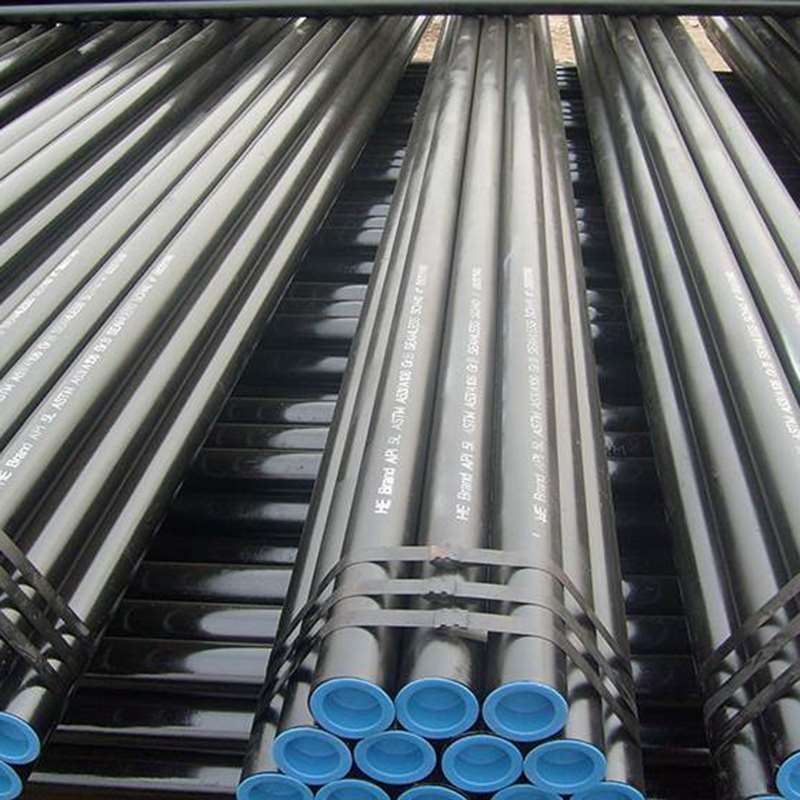
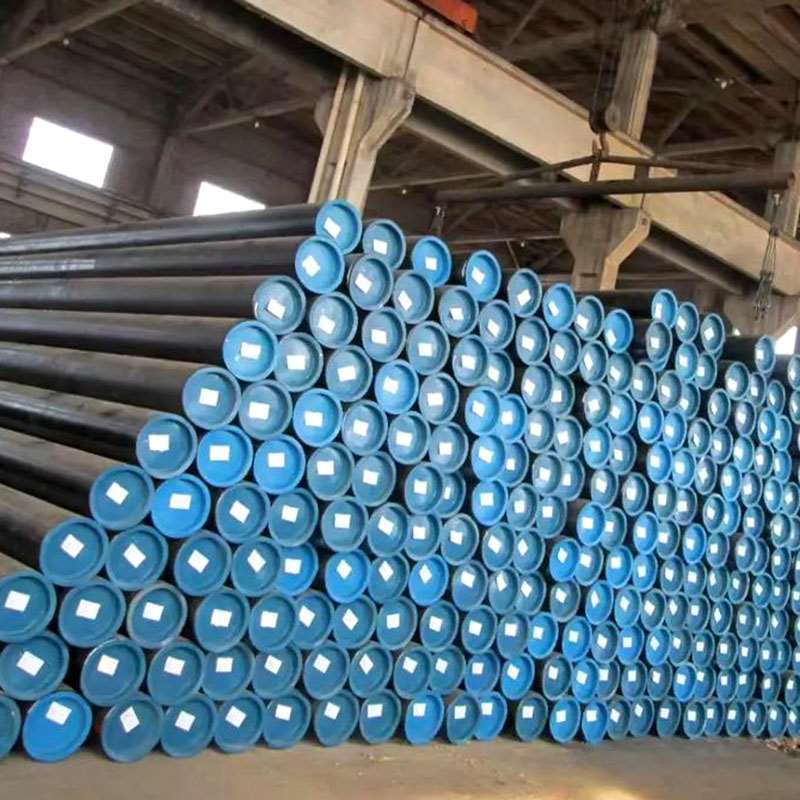
API 5L is a professional pipeline steel pipe standard developed by the American Petroleum Institute (API), widely used in oil, natural gas, and water transportation pipeline projects.
This standard covers two main categories: API 5L seamless steel pipe and API 5L welded steel pipe, meeting the requirements for high-pressure, high-temperature, and long-distance oil pipelines.
Whether in oil pipelines, natural gas pipeline networks, or urban water supply systems, API 5L steel pipes, with their reliable material strength, precise dimensions, and excellent corrosion resistance, have become the preferred pipe material in engineering design and construction.
II. API 5L Steel Pipe Full Grade Material and Mechanical Properties Table
| Grade | Chemical Composition | Tensile Strength (MPa) | Yield Strength (MPa) | Elongation (%) | Impact Toughness (J) | Applicable Pipe Type |
|---|---|---|---|---|---|---|
| X42 | C ≤0.28%, Mn 0.60–1.20%, P ≤0.030%, S ≤0.030%, Si ≤0.50%, Nb+V+Ti ≤0.10% | 415–535 | 290 | ≥25 | -29℃ ≥27 | Seamless & Welded Pipes |
| X46 | C ≤0.28%, Mn 0.60–1.40%, P ≤0.030%, S ≤0.030%, Si ≤0.50%, Nb+V+Ti ≤0.10% | 455–585 | 315 | ≥22 | -29℃ ≥27 | Seamless & Welded Pipes |
| X52 | C ≤0.26%, Mn 0.60–1.40%, P ≤0.030%, S ≤0.030%, Si ≤0.50%, Nb+V+Ti ≤0.10% | 485–620 | 355 | ≥22 | -29℃ ≥27 | Seamless & Welded Pipes |
| X56 | C ≤0.26%, Mn 0.60–1.60%, P ≤0.030%, S ≤0.030%, Si ≤0.50%, Nb+V+Ti ≤0.10% | 510–635 | 385 | ≥20 | -29℃ ≥27 | Seamless & Welded Pipes |
| X60 | C ≤0.26%, Mn 0.60–1.60%, P ≤0.030%, S ≤0.030%, Si ≤0.50%, Nb+V+Ti ≤0.10% | 520–665 | 415 | ≥20 | -29℃ ≥27 | Seamless & Welded Pipes |
| X65 | C ≤0.26%, Mn 0.60–1.60%, P ≤0.030%, S ≤0.030%, Si ≤0.50%, Nb+V+Ti ≤0.10% | 565–690 | 450 | ≥18 | -29℃ ≥27 | Seamless & Welded Pipes |
| X70 | C ≤0.26%, Mn 0.60–1.60%, P ≤0.030%, S ≤0.030%, Si ≤0.50%, Nb+V+Ti ≤0.10% | 595–725 | 483 | ≥18 | -29℃ ≥27 | Seamless & Welded Pipes |
III. Differences between API 5L Seamless Steel Pipes and Welded Steel Pipes
i. Characteristics of Seamless Steel Pipes
API 5L seamless steel pipes are manufactured from a single round billet through piercing, hot rolling, or cold drawing processes. The entire pipe body is seamless, thus possessing higher structural integrity and pressure resistance.
Seamless steel pipes are suitable for transporting materials in high-temperature, high-pressure, deep-well, high-sulfur, or other harsh environments, such as high-pressure natural gas pipelines and refining plant pipelines.
Common specifications generally cover 1/2″–24″ (outer diameter 21.3 mm–610 mm), and wall thicknesses can meet high wall thickness requirements such as SCH10 to SCH160 and XXS.
ii. Characteristics of Welded Steel Pipes
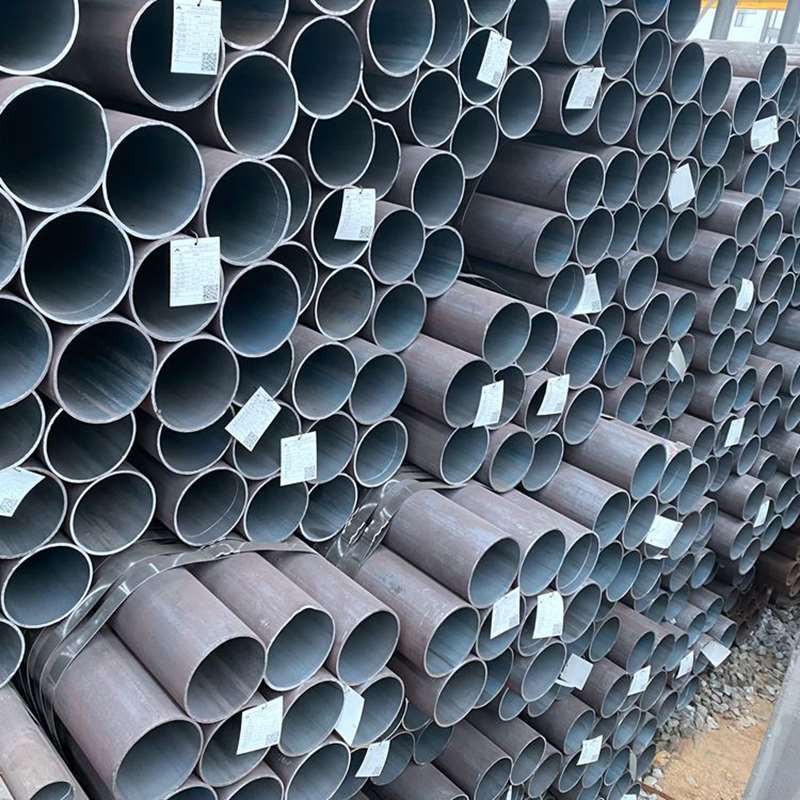
API 5L welded steel pipes are mainly classified into three types according to their forming method: ERW (Electrical Resistance Welding), LSAW (Straight Seam Submerged Arc Welding), and SSAW (Spiral Submerged Arc Welding).
ERW: Utilizes high-frequency resistance welding, suitable for small and medium diameter pipelines, producing neat welds.
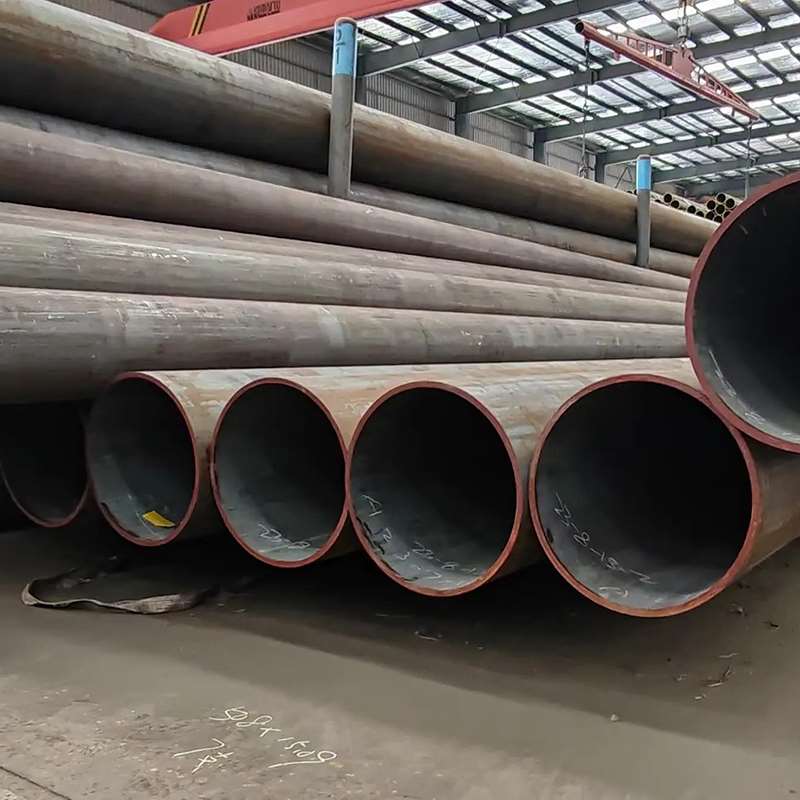
LSAW: Straight seam welding, high weld quality, commonly used for large-diameter, high-strength pipelines, such as long-distance oil and gas pipelines.
SSAW: Spiral forming, high production efficiency, suitable for applications with large diameters and longer welds.
Welded steel pipes undergo rigorous non-destructive testing, including weld flaw detection, ultrasonic testing (UT), and radiographic testing (RT), to ensure weld quality and overall performance.
Compared to seamless pipes, welded pipes offer advantages such as lower cost, the ability to produce larger diameters, and longer lengths, and are widely used in inter-regional oil pipelines, water transportation projects, and station pipelines.
iii. Performance Comparison Table of Seamless and Welded Joints
| Item | API 5L Seamless Pipe | API 5L Welded Pipe (ERW/LSAW/SSAW) |
|---|---|---|
| Manufacturing Method | Fully rolled, no weld seam | Formed from steel plate or strip and welded |
| Strength & Pressure Resistance | Higher, suitable for high-pressure and high-temperature environments | Slightly lower than seamless, but PSL2 welded pipes have excellent performance |
| Weld Seam Risk | No weld seam, safer to use | Depends on weld quality control; requires UT/RT inspection |
| Common Diameter Range | Medium and small diameters (1/2″–24″) | Can achieve large diameters (12″–48″ or above) |
| Cost | Higher | More economical |
| Typical Applications | High-pressure natural gas, high-temperature pipelines, refining units | Long-distance oil & gas, water pipelines, large-scale engineering pipelines |
| Custom Length Availability | Typically 6–12m | Can achieve longer custom lengths, convenient for large projects |
IV. API 5L (Seamless and Welded) Common Specifications and Dimensions (OD × WT)
| Outer Diameter OD (mm) | Common Wall Thickness WT (mm) | Corresponding Schedule | Applicable for Seamless / Welded |
|---|---|---|---|
| 21.3 | 2.77 / 3.73 / 4.55 | SCH40 / SCH80 | Seamless |
| 33.4 | 3.38 / 4.55 / 6.35 | SCH40 / SCH80 | Seamless |
| 48.3 | 3.68 / 5.08 / 7.14 | SCH40 / SCH80 | Seamless |
| 60.3 | 3.91 / 5.54 / 8.74 | SCH40 / SCH80 | Seamless |
| 88.9 | 5.49 / 7.04 / 11.13 | SCH40 / SCH80 / XS | Seamless |
| 114.3 | 6.02 / 8.56 / 13.49 | SCH40 / SCH80 | Seamless / Welded |
| 168.3 | 5.0 / 7.11 / 10.97 / 14.27 | SCH20–SCH80 | Seamless / Welded |
| 219.1 | 6.35 / 8.18 / 12.7 | SCH40 / SCH80 | Mainly Welded |
| 273.1 | 6.35 / 9.27 / 12.7 / 18.3 | SCH20–SCH80 | LSAW / SSAW |
| 323.9 | 6.4 / 9.5 / 12.7 / 20.6 | SCH20–SCH80 | LSAW / SSAW |
| 406.4 | 6.4–22.0 | Custom | LSAW / SSAW |
| 508.0 | 6.4–25.4 | Custom | LSAW / SSAW |
| 610.0 | 6.4–28.6 | Custom | LSAW / SSAW |
| 762–1219 | 8.0–35.0 | Thick Wall Custom | SSAW / LSAW |
V. Production Process Flow
i. API 5L Seamless Steel Pipe Production Process Flow
Round billet → Heating in furnace → Piercing → Rolling on a three-roll or continuous rolling mill → Sizing/reduction → Cooling → Heat treatment (normalizing/quenching and tempering) → Straightening → Non-destructive testing (UT/ET) → Hydrostatic test → Cutting to length → Surface treatment (sandblasting/coating) → Finished product inspection and packaging
ii. API 5L Welded Steel Pipe Production Process
(1) ERW (High Frequency Resistance Welding) Steel Pipe Process
Strip uncoiling → Leveling → Forming → High Frequency Welding (ERW) → Weld Removal → Online Eddy Current Testing → Sizing → Cutting → Hydrostatic Test → Surface Treatment → Finished Product Inspection and Packaging
(2) LSAW (Straight Seam Submerged Arc Welding) Steel Pipe Process
Steel plate pre-bending → UOE or JCOE forming → Inner Welding (SAW) → Outer Welding (SAW) → Diameter Expansion → Heat Treatment → UT/RT Weld Inspection → Hydrostatic Test → Sandblasting and Coating → Finished Product Inspection and Packaging
(3) SSAW (Spiral Submerged Arc Welding) Steel Pipe Process
Strip uncoiling → Forming into a spiral angle → Inner Welding (SAW) → Outer Welding (SAW) → Weld UT/RT → Cutting to Length → Hydrostatic Test → Sandblasting/3PE Anti-corrosion → Finished Product Inspection and Packaging
VI. API 5L Steel Pipe Testing Standards
i. Chemical Composition Testing
| Element | PSL1 Limit | PSL2 Limit (B & X Series) |
|---|---|---|
| C (Carbon) | ≤ 0.28% | ≤ 0.24% (X52 and above: 0.12–0.22%) |
| Mn (Manganese) | ≤ 1.20–1.40% | ≤ 1.40% (slight adjustments allowed for some higher grades) |
| P (Phosphorus) | ≤ 0.030% | ≤ 0.025% |
| S (Sulfur) | ≤ 0.030% | ≤ 0.015% |
| Si (Silicon) | ≤ 0.50% | ≤ 0.45% |
| Nb+V+Ti | ≤ 0.15% | ≤ 0.15% (controls grain size, improves strength) |
ii. Mechanical property testing
| Grade | Yield Strength (MPa) | Tensile Strength (MPa) | Elongation (%) | Impact Toughness (PSL2, J) |
|---|---|---|---|---|
| X42 | ≥ 290 | 415–565 | ≥ 24 | -30℃ ≥ 27 J |
| X46 | ≥ 315 | 435–600 | ≥ 22 | -30℃ ≥ 27 J |
| X52 | ≥ 355 | 460–625 | ≥ 22 | -30℃ ≥ 27 J |
| X56 | ≥ 390 | 490–675 | ≥ 20 | -30℃ ≥ 27 J |
| X60 | ≥ 415 | 520–705 | ≥ 20 | -30℃ ≥ 27 J |
| X65 | ≥ 450 | 535–760 | ≥ 18 | -30℃ ≥ 27 J |
| X70 | ≥ 485 | 570–760 | ≥ 18 | -30℃ ≥ 27 J |
iii. API 5L Dimensions and Tolerances
| Item | Requirement / Tolerance | Notes |
|---|---|---|
| Outer Diameter (OD) Tolerance | OD ≤ 168.3 mm: ±0.75% or ±0.5 mm (whichever is greater) OD > 168.3 mm: ±0.75% | Applicable for PSL1 / PSL2 |
| Wall Thickness (WT) Tolerance | -12.5% (PSL1) -12.5% ~ +12.5% (PSL2) | Based on nominal wall thickness |
| Length | Standard Length (SRL) 5–7 m Double Random Length (DRL) 10–12 m Allowed deviation: +50 mm / -0 mm | Generally SRL / DRL |
| Ovality | Should not exceed 2× OD tolerance | Same requirement for PSL1 / PSL2 |
| End Bevel | 30° ± 5°; blunt edge 1.6 mm ± 0.8 mm | Complies with API 5L standard |
| Straightness | ≤ 0.2% of total length | Pipe bending must not exceed limit |
| Weight Tolerance | -3.5% (PSL1) PSL2: no negative deviation | Calculated based on theoretical weight |
iv. Non-destructive Testing
PSL1
ERW welds: Eddy current testing (ET) required
LSAW/SSAW: Routine UT testing at the factory (not mandatory)
PSL2 (Mandatory)
Seamless steel pipes: UT or ET required (longitudinal defects)
Welded steel pipes: 100% UT or RT for welds. Defects not allowed include: cracks, incomplete penetration, porosity, slag inclusions, delamination, etc.
v. Hydrostatic Test
Each API 5L steel pipe must undergo a hydrostatic test.
Test pressure: Calculated using the formula:
P = 2 × S × t / D
S = Test stress (usually 60% of yield strength)
Holding time: not less than 5 seconds
No defects such as leakage, bulging, or cracking are allowed.
PSL2 may be replaced by EDDY/UT under certain conditions.
VII. Typical Application Areas of API 5L Steel Pipes
API 5L steel pipes are widely used in oil, natural gas, and industrial transportation systems. Their selection is typically based on pressure rating, media corrosivity, temperature, terrain, and construction methods. The following are the main application scenarios and corresponding selection recommendations:
i. Long-distance Crude Oil and Natural Gas Pipelines
Characteristics: Long transportation distances, high pressures, complex environments.
Recommended Selection: PSL2 / High-grade (X52–X70), LSAW or SSAW (large diameter); seamless pipes are available for high-requirement applications.
ii. Buried Water Transmission and Urban Pipeline Network Projects
Characteristics: Mostly involves ambient temperature and low-corrosion media; long pipeline lengths.
Recommended Selection: ERW, SSAW, and LSAW are all acceptable; anti-corrosion coatings (3PE/FBE) are typically chosen.
iii. Gathering and Transmission Pipelines and In-Station Process Pipelines
Characteristics: Mostly located within oil fields and natural gas stations, with varying pressure levels.
Recommended Selection: PSL2 seamless pipes are suitable for medium and high pressures; ERW pipes are suitable for low pressures and conventional operating conditions.
iv. Marine Engineering Pipelines
Characteristics: High salt spray, strong corrosion, large temperature and pressure variations.
Recommended Selection: LSAW/SSAW high-strength steel grade (X60–X80) + heavy-duty anti-corrosion coating (3LPE/3LPP).
v. Pipelines for High-Sulfur (H₂S) and Highly Corrosive Media
Characteristics: Must meet NACE MR0175 / ISO 15156 requirements, resistant to sulfide stress cracking.
Recommended Selection: PSL2 / Sour Service grade (X42S, X52S, X60S).
vi. High-Pressure and Critical Industrial Pipelines
Characteristics: High-temperature and high-pressure environments such as refineries and chemical plants.
Recommended Selection: Seamless steel pipe, PSL2 grade.
VIII. API 5L Steel Pipe Corrosion Protection and Coating Selection Comparison Table
| Coating Type | Outer Layer Thickness | Inner Layer Thickness | Temperature Resistance | Construction / Features | Typical Applications |
|---|---|---|---|---|---|
| 3PE (Three-Layer Polyethylene) | 2.0–3.7 mm | — | ≤ 80 ℃ | Epoxy primer + adhesive + PE outer layer, impact resistant, cathodic disbondment resistant | Buried long-distance pipelines, corrosive soil, natural gas/crude oil pipelines |
| 3PP (Three-Layer Polypropylene) | 3.0–4.5 mm | — | ≤ 120 ℃ | Epoxy primer + adhesive + PP outer layer, high-temperature corrosion resistant | High-temperature oil & gas pipelines, offshore engineering, corrosive environments |
| Single Layer FBE (Fusion Bonded Epoxy) | 300–500 μm | — | ≤ 110 ℃ | Strong adhesion, easy application | Conventional oil & gas pipelines, medium corrosive environments |
| Double Layer FBE | 450–1000 μm | — | ≤ 120 ℃ | Wear and corrosion resistant, suitable for highly corrosive environments | High-temperature, highly corrosive pipelines, process pipelines within stations |
| Internal Epoxy Coating | — | 200–400 μm | ≤ 90 ℃ | Prevents scaling, reduces friction, protects water quality | Water pipelines, natural gas pipelines, process pipelines |
| Hot-Dip Galvanizing | ≥ 65 μm | — | ≤ 200 ℃ (non-oil & gas) | Galvanized layer resists atmospheric corrosion, suitable for above-ground supports | Above-ground pipe racks, low-corrosion environment pipelines, support pipes |
IX. Key Points and Procurement Recommendations for API 5L Steel Pipes
i. Selection Principles for PSL1 and PSL2
| Grade | Features | Applicable Scenarios | Notes / Precautions |
|---|---|---|---|
| PSL1 | Standard chemical composition, basic mechanical properties | Low-pressure, short-distance pipelines | Suitable for general oil & gas and water transportation |
| PSL2 | Strict chemical composition, high impact toughness, 100% NDT | High-pressure, long-distance pipelines, corrosive media, offshore projects | Must provide MTC, third-party inspection, and strict non-destructive testing |
Selection Principles: For high pressure, long-distance transportation, or corrosive media, PSL2 is recommended; for low pressure and general transportation, PSL1 is suitable.
ii. Selection of Seamless/LSAW/SSAW Pipe Types
| Pipe Type | Features | Recommended Applications |
|---|---|---|
| Seamless Pipe (Seamless) | High strength, no weld seam, high pressure & high temperature resistant | High-pressure natural gas pipelines, process pipelines within stations, corrosive media |
| LSAW (Longitudinal Submerged Arc Welded) | Large diameter, high strength, reliable weld | Long-distance oil & gas pipelines, buried main pipelines |
| SSAW (Spiral Submerged Arc Welded) | Large diameter, high production efficiency, lower cost | Low- to medium-pressure long-distance pipelines, cost-effective projects |
iii. Steel grade (X42–X70) matching conditions
| Steel Grade | Yield Strength (MPa) | Recommended Service Conditions |
|---|---|---|
| X42–X52 | 290–460 | Medium to low pressure, general oil & gas transportation, urban water supply |
| X56–X60 | 390–520 | Medium to high pressure pipelines, long-distance transmission lines |
| X65–X70 | 450–570 | High pressure, harsh environments, offshore projects, pipelines for corrosive media |
iv. Reference for selecting pipelines for different media
| Medium | Recommended Steel Grade | Coating / Corrosion Protection Suggestion |
|---|---|---|
| Crude Oil | X52–X65 | 3PE / 3PP / Double Layer FBE |
| Natural Gas | X42–X60 | 3PE / Single Layer FBE |
| Water / Urban Water Supply | X42–X52 | Internal Epoxy Coating, FBE Coating |
v. Precautions for Procurement and Inspection
| Item | Recommendation |
|---|---|
| Certification | Choose suppliers with API, ISO, or relevant local certifications |
| MTC (Material Test Certificate) | Must provide records of chemical composition, mechanical properties, dimensions, coating thickness, etc. |
| Third-Party Inspection | For PSL2 pipes, UT/RT, pressure testing, and coating inspection are recommended to ensure compliance with design requirements |
| Packaging & Transportation | Coating must remain intact; transport should prevent collision and scratches |
X. Summary
The API 5L standard holds a core position in global oil and gas and industrial pipeline transportation, serving as the preferred standard for long-distance pipelines, in-station process pipelines, and pipelines carrying special media.
The selection logic for seamless and welded steel pipes: A reasonable match should be made based on pressure rating, pipe diameter, process, corrosive media, and construction environment. Seamless steel pipes are suitable for high-pressure and harsh environments, while welded steel pipes are suitable for large-diameter, long-distance pipelines and economical projects.
The importance of correct grade, material, and process selection: Appropriate selection of PSL grade, steel grade, pipe type, and anti-corrosion coating not only ensures project safety but also reduces costs and extends pipeline life.
Core recommendation: A comprehensive selection based on project pressure, media type, buried or offshore environment, economics, and ease of construction, along with ensuring material certification and testing compliance, is essential to truly realize the value of API 5L steel pipes.