
I. Introduction to Carbon Steel Pipes
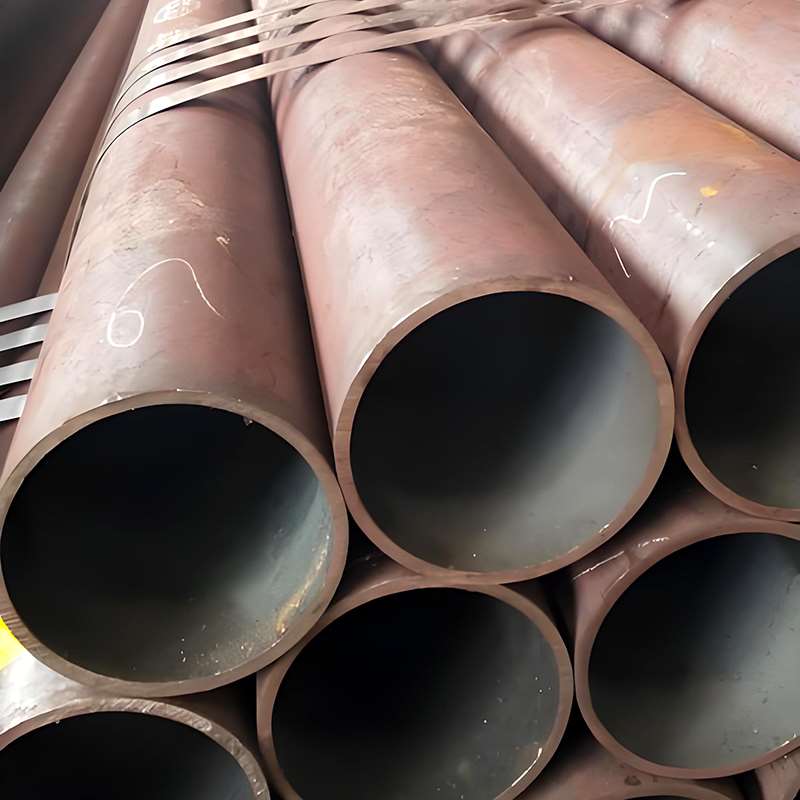
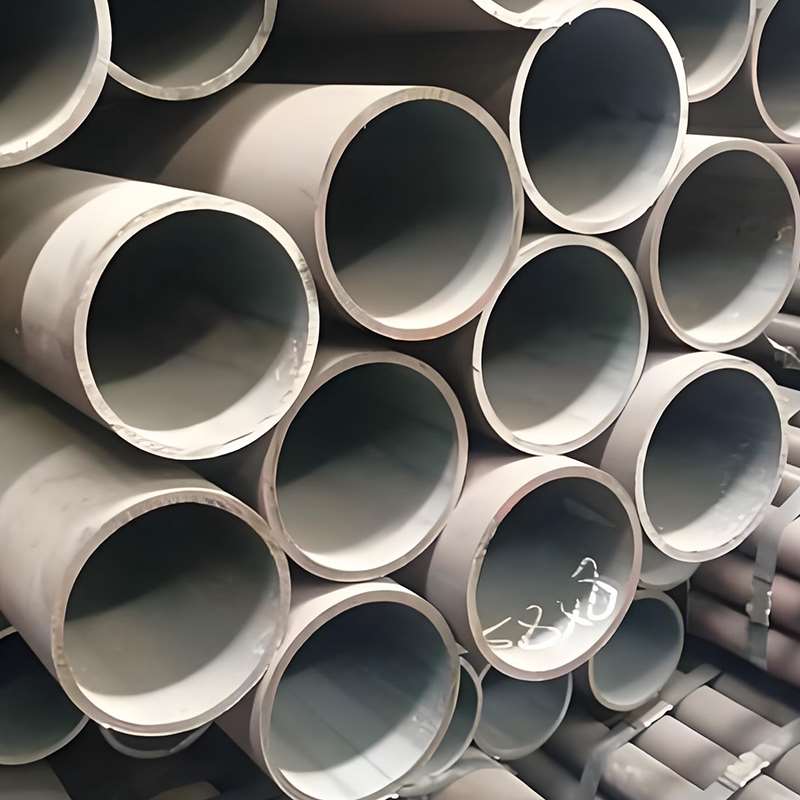
Carbon steel pipes are circular pipes made from carbon steel and are one of the commonly used types of pipes in industrial, construction, petroleum, natural gas, and water conservancy projects.
Based on the manufacturing process, carbon steel pipes are mainly divided into two categories: seamless carbon steel pipes and welded carbon steel pipes.
Seamless carbon steel pipes: Formed directly through hot rolling, hot drawing, or cold drawing processes, without welds. They have strong pressure resistance and are suitable for high-pressure, high-temperature, or critical piping systems, such as boiler tubes, steam pipes, and oil pipelines.
Welded carbon steel pipes: Made by welding rolled steel plates or strips, including ERW carbon steel pipes (high-frequency resistance welding) and SSAW/LSAW steel pipes (spiral welding or straight seam welding). Welded pipes are suitable for medium-to-low pressure, medium-to-large diameter piping systems, offering high economic efficiency and convenient construction.
Carbon steel pipes have the following main characteristics:
- High strength: Carbon steel pipes have good yield strength and tensile strength, and can withstand high internal pressure and external loads.
- Good processing performance: Easy to cut, weld, and form on-site, facilitating installation and secondary processing.
- High cost-effectiveness: Compared with stainless steel pipes or alloy steel pipes, carbon steel pipes have lower costs and significant economic advantages.
In practical applications, carbon steel pipes can be selected according to different standards and specifications based on working conditions and intended use, such as ASTM A53, ASTM A106, and API 5L, covering different pressure ratings, temperature conditions, and pipe diameter ranges.
Furthermore, carbon steel pipes can undergo surface treatments such as galvanizing, painting, or epoxy coating to improve corrosion resistance and adapt to complex environments.
II. Standard Dimensions and Wall Thickness Table for Carbon Steel Pipes (Referencing ASTM/ASME Standards)
| Nominal Pipe Size (NPS) | Outside Diameter (OD, inch / mm) | SCH 10 (mm) | SCH 40 / STD (mm) | SCH 80 / XS (mm) | SCH 160 / XXH (mm) | Typical Applications |
|---|---|---|---|---|---|---|
| 1/2″ | 0.84″ / 21.3 | 2.11 | 2.77 | 3.73 | 6.02 | Low-pressure water supply, HVAC systems |
| 3/4″ | 1.05″ / 26.7 | 2.11 | 2.87 | 3.91 | 6.02 | Industrial piping, water supply |
| 1″ | 1.315″ / 33.4 | 2.11 | 3.38 | 4.55 | 6.55 | ERW pipes, general industrial piping |
| 1 1/4″ | 1.66″ / 42.2 | 2.11 | 3.56 | 4.78 | 7.11 | Medium-pressure water transmission, steam pipes |
| 1 1/2″ | 1.9″ / 48.3 | 2.11 | 3.68 | 4.85 | 7.24 | Industrial fluid transport, HVAC systems |
| 2″ | 2.375″ / 60.3 | 2.11 | 3.91 | 5.54 | 8.74 | SSAW medium-diameter pipes, municipal water supply |
| 2 1/2″ | 2.875″ / 73.0 | 2.11 | 4.00 | 5.79 | 9.27 | Industrial fluids, boiler piping |
| 3″ | 3.5″ / 88.9 | 2.11 | 4.19 | 6.02 | 9.27 | High-pressure steam pipes, oil & gas pipelines |
| 4″ | 4.5″ / 114.3 | 2.77 | 6.02 | 7.11 | 10.97 | Large-diameter water transmission, drainage pipes |
| 6″ | 6.625″ / 168.3 | 3.38 | 7.11 | 9.27 | 13.49 | Oil pipelines, steam pipelines |
| 8″ | 8.625″ / 219.1 | 3.68 | 9.27 | 11.13 | 15.09 | Long-distance pipelines, municipal water supply |
| 10″ | 10.75″ / 273.1 | 4.19 | 10.97 | 12.70 | 17.48 | Large-diameter pipelines, industrial piping |
| 12″ | 12.75″ / 323.9 | 4.57 | 12.70 | 14.27 | 19.05 | Oil & gas transmission, drainage systems |
III. Selection Principles for Carbon Steel Pipes
1. Working Pressure
The higher the internal pressure the pipeline withstands, the thicker the pipe wall needs to be to ensure safety.
For low-pressure pipelines, ERW carbon steel pipes or standard thickness welded pipes can be used;
For high-pressure pipelines, seamless pipes or SCH 80 / SCH 160 thick-walled pipes are recommended, such as carbon steel boiler tubes, to ensure pressure resistance and service life.
2. Working Temperature
High-temperature environments require pipes with high toughness and heat resistance.
For normal or medium temperature conditions, ERW or SSAW pipes can be selected;
For high-temperature conditions, such as steam pipes, boiler pipes, or hot oil transmission pipes, high-temperature resistant ASTM A106 grade B seamless carbon steel pipes or carbon steel boiler pipes should be selected to ensure long-term safe operation.
3. Pipe Diameter and Transmission Distance
For small-diameter, short-distance pipelines, standard welded pipes can be used, offering ease of construction and low cost;
For large-diameter or long-distance pipelines, SSAW spiral welded pipes or LSAW straight seam welded pipes are recommended to meet structural strength and fluid transmission requirements.
4. Economic Considerations
While meeting pressure and safety requirements, material costs and construction costs should also be considered.
Seamless pipes are more expensive and suitable for high-pressure and high-temperature conditions;
Welded pipes are more economical and suitable for medium-to-low pressure or large-diameter pipelines.
5. Corrosive Environments
Underground pipelines or those in seawater environments are prone to corrosion; therefore, galvanized pipes, epoxy-coated pipes, or corrosion-resistant coated pipes are recommended.
For special industrial liquids, plastic-lined, coated, or corrosion-resistant pipes can be used to extend their service life.