
I. Standard Overview
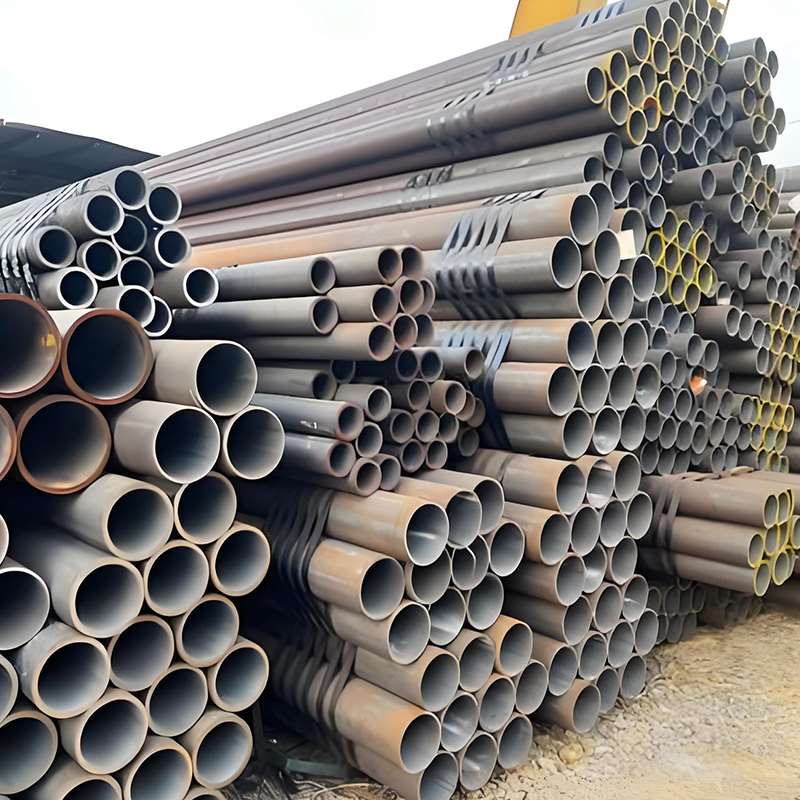
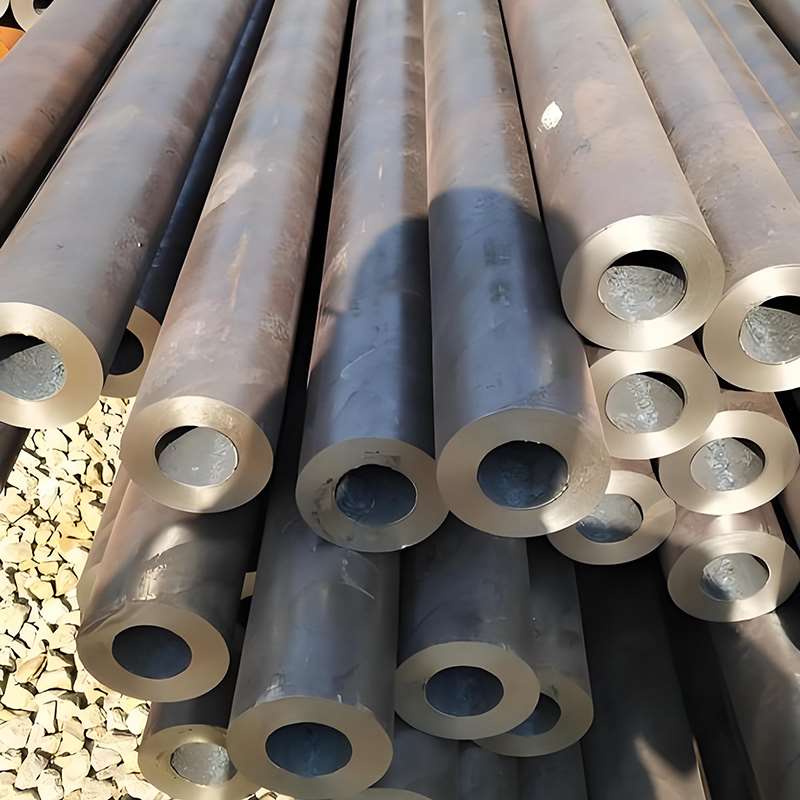
GB/T 8162 seamless steel pipe standard is a national standard specification for seamless steel pipes used in structural applications, primarily in load-bearing scenarios such as bridges, buildings, mechanical structures, and industrial supports.
This standard specifies the material grade, chemical composition, mechanical properties, dimensional tolerances, and inspection requirements for the pipes, ensuring that the steel pipes possess sufficient strength, reliable weldability, and machinability in load-bearing structures.
II. GB/T 8162 Standard Steel Pipe Classification
| Classification Dimension | Type | Description / Characteristics |
|---|---|---|
| By Application | Load-bearing structural steel pipe | Used for bridges, buildings, mechanical structures, industrial supports, etc.; focuses on yield strength and load-carrying capacity |
| By Steel Type | Non-alloy steel | Q195, Q215, Q235; good plasticity and weldability; suitable for general load-bearing structures |
| Low-alloy steel | Q345; high-strength low-alloy steel with higher load capacity; suitable for large bridges or heavy structural applications | |
| By Manufacturing Process | Hot-rolled seamless steel pipe | Rolled at high temperature; large size, uniform wall thickness; suitable for medium to large diameters |
| Cold-drawn seamless steel pipe | Precision processed; high dimensional accuracy; suitable for small-diameter structural pipes or mechanical supports | |
| By Cross-section Shape | Round pipe | Most common structural pipe; uniform stress distribution; easy for welding and fabrication |
| Square pipe | Square cross-section; high bending stiffness; widely used in frame structures | |
| Rectangular pipe | Rectangular cross-section; strong load-bearing capacity; suitable for industrial supports and mechanical frames |
III. Production Process Flow
Bill Preparation → Heating → Piercing/Extrusion → Rolling → Sizing/Reduction → Cooling → Straightening → Cutting → Surface Treatment → Inspection → Finished Product
IV. GB/T 8162 Chemical Composition and Mechanical Properties of Seamless Steel Pipes of Different Grades
i. Chemical Composition
| Steel Grade | C (%) | Mn (%) | P (%) | S (%) | Notes / Other Elements |
|---|---|---|---|---|---|
| Q195 | ≤0.20 | ≤0.50 | ≤0.045 | ≤0.045 | Low-carbon steel with good plasticity and easy weldability |
| Q215 | ≤0.22 | ≤0.60 | ≤0.045 | ≤0.045 | Low-carbon steel with good weldability; suitable for light to medium load-bearing |
| Q235 | ≤0.22 | 0.30–1.40 | ≤0.045 | ≤0.045 | General low-carbon steel with moderate strength; suitable for common structural applications |
| Q345 | ≤0.22 | 1.0–1.6 | ≤0.045 | ≤0.045 | Low-alloy high-strength steel; may contain trace elements such as Nb, V, and Ti to enhance strength and toughness |
ii. Mechanical properties
| Steel Grade | Yield Strength ReL (MPa) | Tensile Strength Rm (MPa) | Elongation A (%) | Applicable Temperature |
|---|---|---|---|---|
| Q195 | 135–195 | 270–410 | ≥26 | Room temperature |
| Q215 | 185–215 | 300–430 | ≥25 | Room temperature |
| Q235 | 235 | 375–500 | ≥23 | Room temperature |
| Q345 | 345 | 470–630 | ≥20 | Room temperature; low-temperature options include Q345B/E/N grades with guaranteed impact toughness |
V. GB/T 8162 Seamless steel tubes for structural use—Surface treatment
| Treatment Method | Characteristics | Suitable Environment / Recommendation |
|---|---|---|
| Black pipe (as-rolled) | Hot-rolled or pickled only; dark gray surface | Indoor dry environments or non-corrosive conditions; lowest cost |
| Hot-dip galvanizing | Zinc layer on the outer surface; strong corrosion resistance | Outdoor, humid environments, areas with frequent rain; suitable for building or bridge structures |
| Painting / Anti-rust coating | Epoxy or polyurethane coatings can be applied | Prevents oxidation and enhances durability; suitable for both indoor and outdoor structures, including coastal areas |
| Epoxy powder coating / 3PE coating | Epoxy or three-layer protective coating | Highly corrosive environments such as chemical plants, ports, docks, or marine structures |
| Pickling + passivation | Removes scale and forms a passivation film | Suitable for structural pipes requiring good weldability; ideal for subsequent welding and painting |
VI. GB/T 8162 Seamless Steel Pipes – Quality Inspection Standard
| Inspection Item | Test Method / Standard | Acceptance Criteria / Parameters |
|---|---|---|
| Chemical composition | Spectrometer (OES) or chemical analysis | Chemical composition of each grade must meet Q195, Q215, Q235, Q345 requirements (C, Mn, P, S ≤ standard limits; Q345 may contain trace Nb/V/Ti) |
| Mechanical properties | Tensile test (GB/T 228) | Yield strength, tensile strength, and elongation must meet the grade requirements (e.g., Q235: ReL 235 MPa, Rm 375–500 MPa, A ≥23%) |
| Impact toughness (for low-temperature grades such as Q345E) | Charpy impact test (GB/T 229) | Absorbed energy ≥27 J at −20°C or −40°C |
| Hydrostatic test (for pressure pipelines) | Hydraulic test (GB/T 241) | No leakage or cracking; test pressure calculated per wall thickness, OD, and design pressure |
| Dimensions & tolerances | Measurement of OD / WT / length | OD, WT, and tolerances shall meet GB/T 8162 (OD ±1%, WT ±10%, or per design) |
| Straightness (bending) | Full-length straightness inspection | Total bending ≤1.5‰ of length; local bending ≤3 mm/m |
| Pipe ends quality | Visual check + caliper | Plain ends must be smooth and burr-free; bevel angle 30° ±2.5°; root face 1.6 ±0.8 mm |
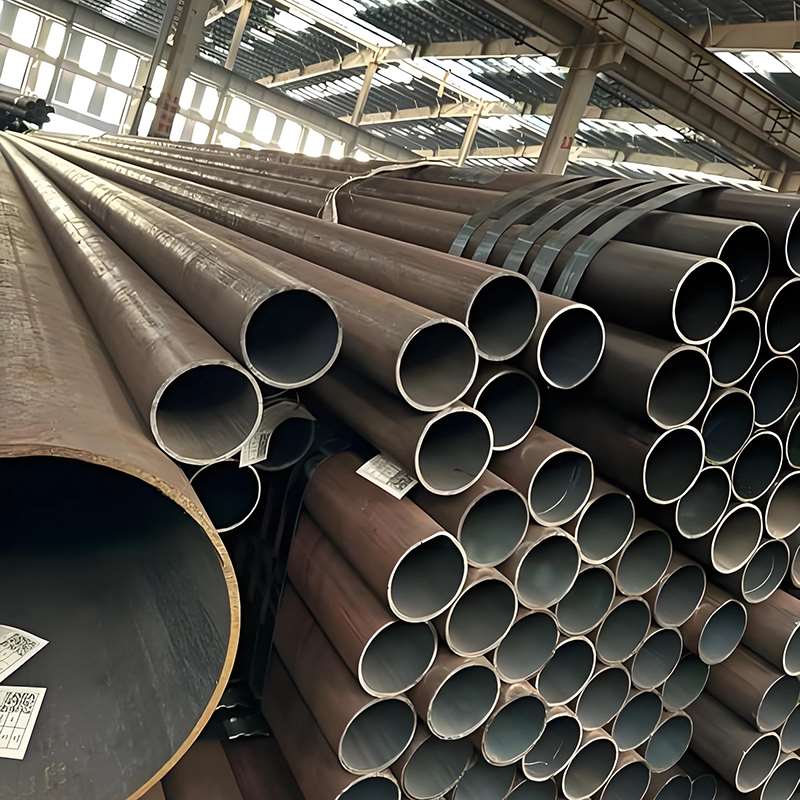
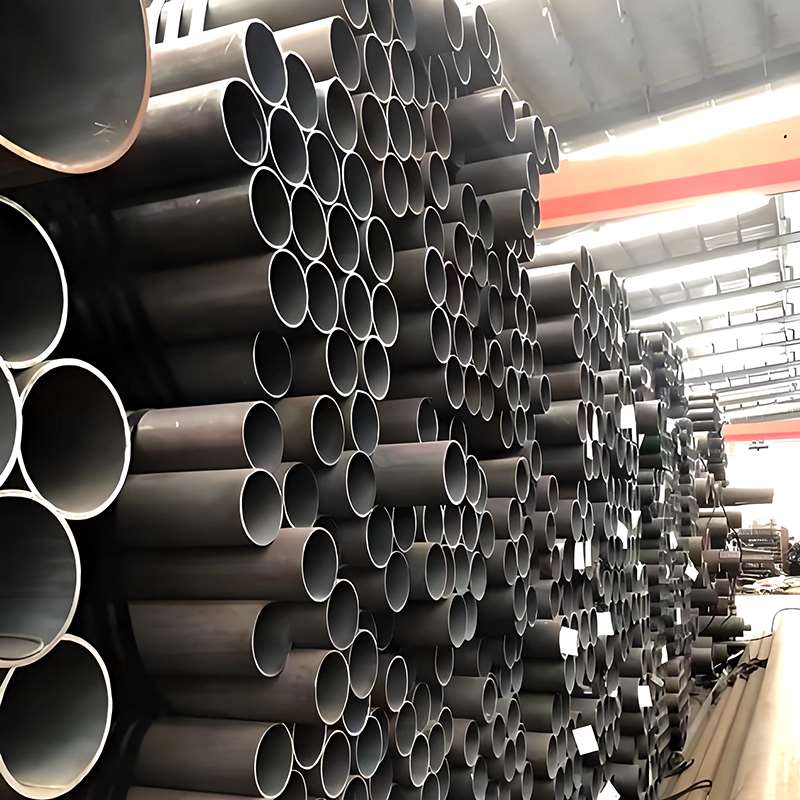
| Surface quality | Visual inspection | No cracks, folds, laps, delamination, scabs, or other visible defects |
| Weldability (for structural pipes) | Bending or impact test | Good weldability; no cracking or delamination |
| Ovality | OD measurement | Ovality ≤1% of OD |
VII. GB/T 8162 Seamless steel tubes for structural use—Application areas and selection guidelines
| Application Field | Typical Load / Working Conditions | Recommended Steel Grade | Pipe Ends / Surface Treatment | Selection Notes |
|---|---|---|---|---|
| Building structures | Building frames, roof supports, light/medium steel structures | Q195 / Q215 / Q235 | Plain ends or beveled ends; black pipe or painted | Q195 for light supports; Q235 for general structural loads; painting or galvanizing recommended for outdoor use |
| Bridge structures | Bridge trusses, load-bearing beams, handrail supports | Q235 / Q345 | Beveled for welding; hot-dip galvanizing or epoxy coating | Q345 preferred for high-load bridge main structures to ensure yield strength and toughness; outdoor corrosion protection is essential (galvanizing or epoxy) |
| Mechanical supports & equipment frames | Machinery frames, supports, industrial equipment structures | Q215 / Q235 | Plain or beveled ends | Ensures weldability and strength; medium-duty loads can use Q215/Q235; for heavy loads consider Q345 |
| Industrial supports & pipe racks | Plant platforms, storage racks, pipe supports | Q215 / Q235 | Plain or beveled ends; paint optional | Black pipe suitable for indoor dry environments; painting or galvanizing recommended for outdoor or humid areas |
| Power & energy engineering | Power plant pipe supports, towers, equipment support | Q235 / Q345 | Beveled for welding; corrosion protection required | For high temperature or long-term outdoor use, Q345 is preferred, combined with hot-dip galvanizing or epoxy coating |
| Transportation facilities | Road guardrails, billboard supports, signal towers | Q215 / Q235 | Plain/beveled ends; galvanized or painted | Outdoor facilities require weather and corrosion resistance; Q215 for small/light supports, Q235 for higher loads |
Practical Tips for Pipe Selection
(1) Select Steel Grade Based on Load-Bearing Requirements
Lightweight Supports → Q195/Q215
General Load-Bearing Capacity → Q235
High Load-Bearing Capacity or Critical Structures → Q345
(2) Select Surface Treatment Based on Environment
Indoor Dry Conditions → Black Pipe is sufficient
Outdoor Humid Conditions → Hot-Dip Galvanizing
Highly Corrosive Environments → Epoxy Coating or 3PE
(3) Select End Type Based on Construction Method
Welded Structures → Plain End/Bevel End
For Quick Installation/Disassembly → Threaded or Sleeve End
(4) Match Pipe Diameter and Wall Thickness to Load-Bearing Capacity
Small Diameter, Light Load → Thin Wall
Large Diameter, High Load → Thick Wall or High-Strength Steel Grade