
I. Overview of EN 10255 Standard
i. Standard Definition
EN 10255 is a European standard that specifies the dimensional, tolerance, mechanical properties, and chemical composition requirements for steel pipes used in low-pressure water, gas, and general industrial piping systems.
The standard applies to carbon steel pipes and can be used for welded or seamless pipes.
EN 10255 primarily targets medium- and low-pressure piping systems and is suitable for the transport of water, gas, and general industrial fluids.
ii. Scope of Application
Low-pressure water pipelines: Municipal tap water, fire water supply, cooling water systems, etc.
Gas pipelines: Transmission of natural gas, coal gas, or low-pressure industrial gases.
General industrial pipelines: Transmission of liquids or gases in factories, low-pressure steam pipelines, pipe rack support systems.
Note: Not applicable to high-pressure pipelines, high-temperature fluids, or load-bearing structures.
II. EN 10255 Pipe Types and Specifications
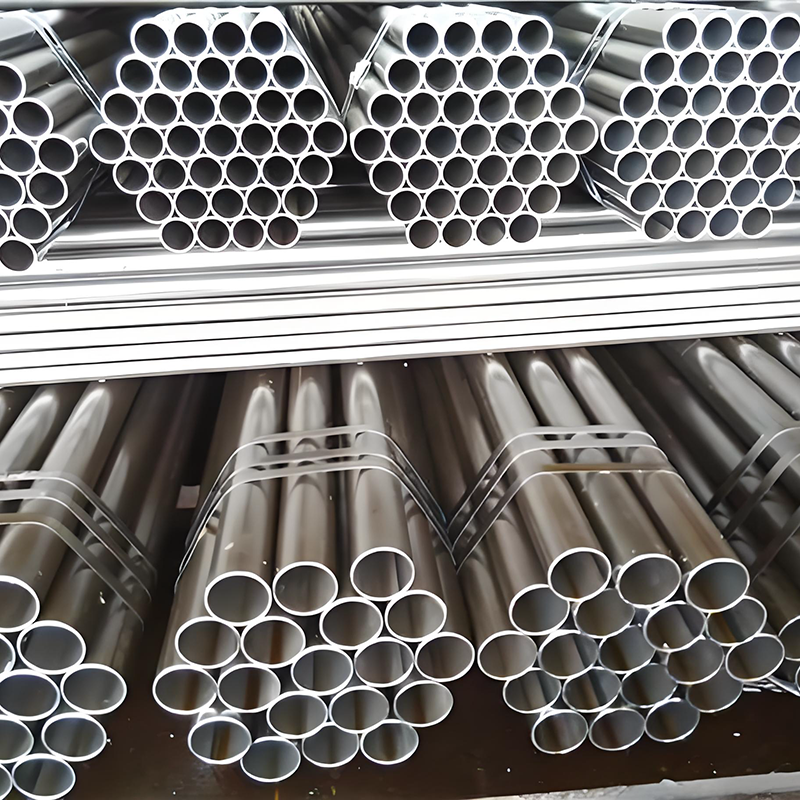
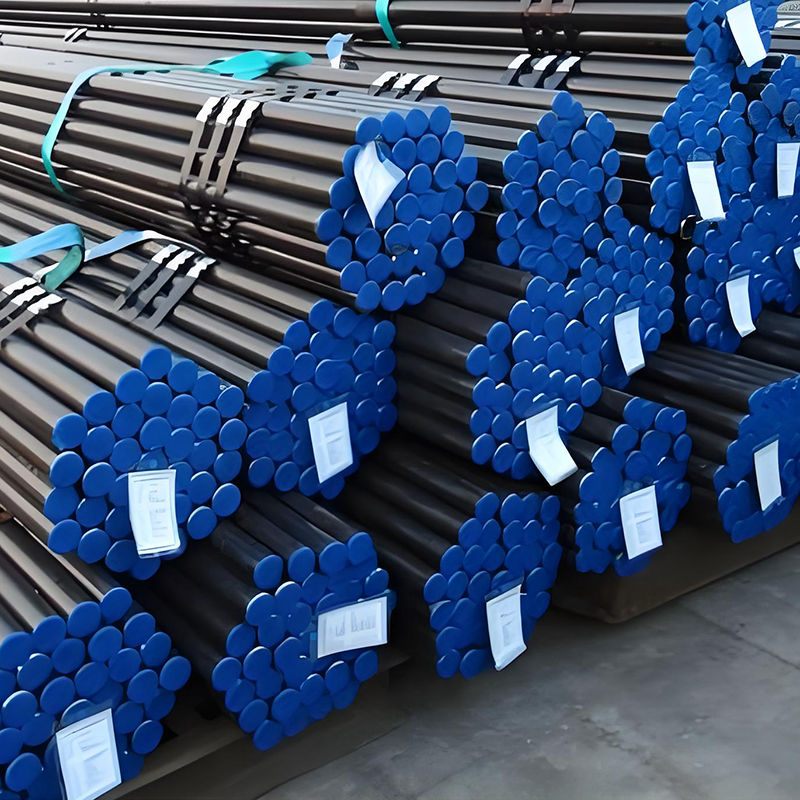
i. EN 10255 Standard Pipe Types
Threaded Ends: Facilitates quick connection of low-pressure pipes
Sleeve Ends: Enables easy disassembly and maintenance
Straight Ends: For welding or custom connections
ii. EN 10255 Pipe Ends and Connection Methods
EN 10255 standard pipes support three end types, each with different applicable scenarios and construction advantages:
| End Type | Main Features | Applicable Scenarios | Selection Tips |
|---|---|---|---|
| Threaded End | Pipe ends machined with internal/external threads, can connect directly to fittings | Small-diameter low-pressure pipelines, such as residential water supply or gas pipes | Quick installation, suitable for frequent assembly/disassembly or space-constrained areas |
| Socketed End | Pipe ends can be inserted into a socket and fixed with threads or sealing elements | Industrial pipelines, pipeline networks with frequent construction | Easy to assemble and maintain, suitable for medium-diameter pipes |
| Plain / Welding End | Both ends are straight, suitable for welding | Large-diameter pipelines, long-term fixed pipelines | Welded connection ensures long-term stability, suitable for critical projects |
iii. Dimensions and Specifications (Common Pipe Diameters and Wall Thicknesses)
| Nominal Diameter DN (mm) | Outer Diameter OD (mm) | Wall Thickness WT (mm) | Length per Piece (m) | Remarks |
|---|---|---|---|---|
| 15 | 21.3 | 2.6 | 6 | Small-diameter low-pressure pipe |
| 20 | 26.9 | 2.8 | 6 | — |
| 25 | 33.7 | 3.2 | 6 | — |
| 32 | 42.4 | 3.6 | 6 | — |
| 40 | 48.3 | 3.6 | 6 | — |
| 50 | 60.3 | 3.6 | 6 | Common medium-diameter pipe |
| 65 | 76.1 | 4.0 | 6 | — |
| 80 | 88.9 | 4.0 | 6 | — |
| 100 | 114.3 | 4.5 | 6 | — |
| 125 | 139.7 | 5.0 | 6 | — |
| 150 | 168.3 | 5.6 | 6 | — |
| 200 | 219.1 | 6.0 | 6 | Large-diameter pipe |
| 250 | 273.0 | 7.0 | 6 | — |
| 300 | 323.9 | 7.5 | 6 | — |
III. EN 10255 Carbon Steel Pipe Manufacturing Process
i. Welded Pipe (ERW)
Raw materials (steel strip) → Leveling and uncoiling → Rolling into tube blank → Longitudinal resistance welding → Annealing/normalizing (optional) → Straightening and cutting → End processing (threading/sleeves/straight pipe) → Surface treatment (black pipe/galvanizing/painting) → Inspection → Packaging and shipping
ii. Seamless Pipe
Raw materials (steel billet) → Heating → Piercing/extrusion into tube blank → Hot rolling/sizing → Straightening and cutting → End processing (threading/sleeves/straight pipe) → Surface treatment (black pipe/galvanizing/painting) → Inspection → Packaging and shipping
IV. EN 10255 Chemical Composition and Mechanical Properties of Carbon Steel Pipes
i. Chemical Composition
| Element | Test Method | Standard Requirement / Reference Value | Remarks / Notes |
|---|---|---|---|
| Carbon (C) | Optical Emission Spectroscopy (OES) / Chemical Analysis | ≤0.25–0.30% | Controls hardness and ensures weldability |
| Manganese (Mn) | Optical Emission Spectroscopy (OES) | 0.30–1.50% | Improves toughness and tensile strength |
| Sulfur (S) | Optical Emission Spectroscopy (OES) | ≤0.04% | Reduces brittleness, ensures welding performance |
| Phosphorus (P) | Optical Emission Spectroscopy (OES) | ≤0.04% | Improves corrosion resistance, reduces brittleness |
| Silicon (Si) | Optical Emission Spectroscopy (OES) | 0.10–0.30% | Increases elasticity and strength |
| Copper (Cu) | Optical Emission Spectroscopy (OES) | ≤0.30% (optional) | Enhances corrosion resistance |
| Nickel (Ni) / Chromium (Cr) / Molybdenum (Mo) | Optical Emission Spectroscopy (OES) | Can be added in low-alloy steels, as per design requirements | Improves strength or corrosion resistance |
ii. Mechanical properties
| Property | Test Method | Standard Requirement | Remarks / Notes |
|---|---|---|---|
| Yield Strength σy | Tensile Test | 210–250 MPa | Pipe does not undergo permanent deformation under working pressure |
| Tensile Strength σu | Tensile Test | 350–500 MPa | Ensures overall pipe strength |
| Elongation A | Tensile Test | ≥20% | Ensures plasticity and weldability |
| Impact Toughness (Optional) | Impact Test | ≥27 J (20°C) | Prevents brittle fracture at low temperatures |
V. EN 10255 Application Areas and Selection Reference for Carbon Steel Pipes
| Application | Usage / Characteristics | Recommended Pipe Type | Recommended End Type | Suggested Diameter / Wall Thickness | Material / Process | Anti-Corrosion Requirement | Selection Tips |
|---|---|---|---|---|---|---|---|
| Residential Water Supply | Indoor low-pressure tap water, small flow, limited installation space | ERW Welded Pipe | Threaded End | DN15–DN32 / 2.6–3.6 mm | Carbon Steel | Black pipe or indoor painted | Small-diameter pipe; threaded ends allow quick installation and maintenance |
| Fire Water Pipe | High-flow water supply system, reliability required | ERW Welded Pipe | Socketed or Threaded End | DN40–DN100 / 3.6–4.5 mm | Carbon Steel | Hot-dip galvanized or painted | Medium-diameter pipe; socketed ends facilitate disassembly and maintenance |
| Industrial Low-Pressure Water Pipe | Cooling water or factory liquid transport, medium corrosion | ERW Welded Pipe or Seamless Pipe | Plain / Threaded End | DN50–DN150 / 3.6–5.6 mm | Carbon Steel | Galvanized or painted | For large flow, choose larger diameter; seamless pipe for higher pressure requirements |
| Gas Pipeline | Low-pressure natural gas or coal gas transport, high safety requirement | ERW Welded Pipe | Threaded End | DN15–DN65 / 2.6–4 mm | Carbon Steel | Black pipe or hot-dip galvanized | Threaded ends facilitate fitting connections and ensure reliable sealing |
| Low-Pressure Steam Pipe | Industrial low-pressure steam or air transport | Seamless Pipe or ERW Welded Pipe | Plain End | DN20–DN100 / 3.2–4.5 mm | Carbon Steel | Galvanized or painted | For higher temperature fluids, use seamless pipe to ensure pressure resistance |
| Mechanical / Pipe Support | Pipe supports, light equipment supports | ERW Welded Pipe | Plain End | DN25–DN100 / 2.6–4 mm | Carbon Steel | Black pipe | For light loads, choose economical wall thickness |
| Outdoor Low-Pressure Pipeline | Outdoor municipal or factory drainage | ERW Welded Pipe | Socketed or Threaded End | DN50–DN200 / 4–6 mm | Carbon Steel | Hot-dip galvanized | For large-diameter pipes, socketed ends facilitate installation; high corrosion resistance requires galvanization |
Practical Selection Principles
Application First: Clearly define the medium being transported (water/gas/steam) and pressure rating.
Pipe Diameter and Wall Thickness Matching: High flow rate or high pressure → Select large diameter, thick wall; Low flow rate, low pressure → Small diameter is sufficient.
End Type Determines Installation Method: Threaded end → Quick installation; Sleeve end → Easy disassembly and maintenance; Straight pipe end → Welding fixation.
Material and Manufacturing Process: General low pressure → Carbon steel ERW; High flow rate, high pressure requirements → Seamless pipe.
Corrosion Protection: Outdoor or humid environments → Galvanized or painted; Low corrosion indoors → Black pipe is sufficient.
VI. EN 10255 Corrosion Protection and Surface Treatment of Carbon Steel Pipes
| Surface Treatment | Features | Applicable Environment | Selection Recommendations |
|---|---|---|---|
| Black Steel | Original steel surface, no additional protection | Indoor dry, non-corrosive environments | Economical choice, suitable for indoor low-pressure water or gas pipelines |
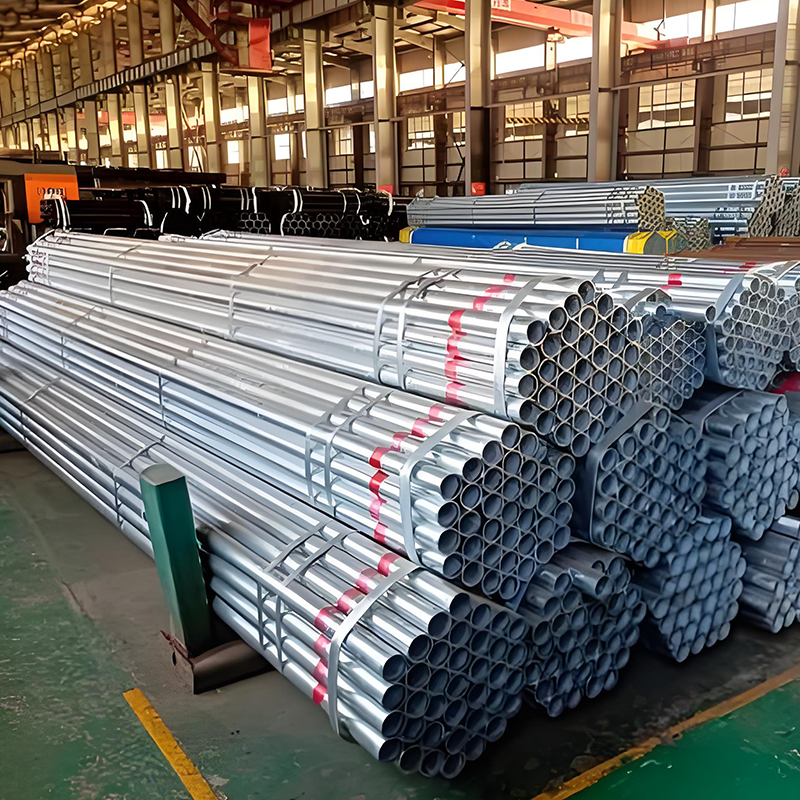
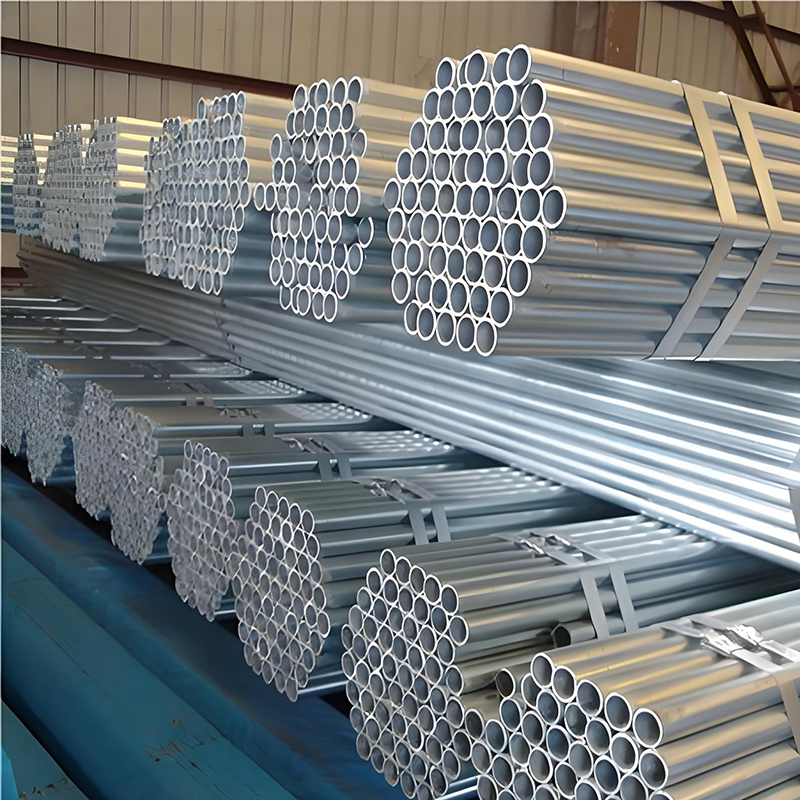
| Hot-Dip Galvanized | Uniform zinc coating on surface, corrosion resistant | Outdoor, humid, or rainy environments | Suitable for outdoor pipelines, industrial low-pressure water pipes, drainage pipes; extends service life |
| Painted / Coated | Surface coating, various protective paints optional | High-corrosion environments or extra protection required | Can be combined with black steel or galvanized pipes; suitable for special industrial environments or coastal projects |
VII. EN 10255 Standard for Quality Inspection of Carbon Steel Pipes
| Test Item | Test Method | Acceptance Criteria / Reference Value | Practical Notes |
|---|---|---|---|
| Chemical Composition | Optical Emission Spectroscopy (OES) / Chemical Analysis | C ≤0.25–0.30%, Mn 0.30–1.50%, S/P ≤0.04%, Si 0.10–0.30% | Ensures weldability, corrosion resistance, and mechanical properties |
| Yield Strength σy | Tensile Test | 210–250 MPa | Ensures the pipe does not undergo permanent deformation under working pressure |
| Tensile Strength σu | Tensile Test | 350–500 MPa | Ensures overall pipe strength |
| Elongation A | Tensile Test | ≥20% | Ensures pipe plasticity, convenient for welding or installation |
| Straightness | Dimensional Measurement | Pipe bending within allowed tolerance | Ensures straight installation, reduces on-site adjustments |
| Outer Diameter / Wall Thickness | Vernier Caliper / Ultrasonic Gauge | ± allowable tolerance | Ensures match with design dimensions, facilitates fitting connections |
| Weld Quality | Ultrasonic / Radiographic Testing | No cracks, porosity, or slag inclusions | Ensures welded pipe safety, prevents leaks or rupture |
| End Machining | Dimensional Measurement / Thread Inspection | Threaded / Socketed ends meet standards | Ensures smooth pipe connections and reliable sealing |
| Surface Quality | Visual Inspection / Coating Thickness Measurement | Smooth surface, no obvious defects; galvanized layer ≥ specified thickness | Ensures corrosion protection and aesthetic appearance |
| Factory Certification | MTC (Material Test Certificate) | Includes chemical composition and mechanical properties report | Facilitates acceptance and project documentation |
VIII. Practical Tips for Selecting Carbon Steel Pipes (EN 10255)
| Step | Key Considerations | Practical Advice |
|---|---|---|
| Define Application | Conveyed medium (water, gas, steam, etc.) | Select pipe type based on application (e.g., low-pressure water → ERW welded pipe; low-pressure steam → seamless pipe) |
| Determine Diameter & Wall Thickness | Flow rate, pressure, pipeline length | Small-diameter low-pressure → DN15–DN50, WT 2.6–3.6 mm; Medium-diameter → DN50–DN150, WT 3.6–5.6 mm; Large-diameter → DN150+, WT ≥5 mm |
| Choose End Type | Installation method, maintenance requirement | Threaded end → quick installation for small diameter; Socketed end → frequent assembly/disassembly; Plain end → welded, for large or long-term pipelines |
| Select Material & Process | Strength, corrosion resistance | General low-pressure → carbon steel ERW; High-pressure or large-diameter → seamless pipe; Corrosive environments → low-alloy steel |
| Anti-Corrosion Method | Usage environment (indoor/outdoor, humidity, corrosiveness) | Indoor → black steel; Outdoor humid → hot-dip galvanized; High-corrosion environment → painted or galvanized + painted |
| Length & Installation Convenience | Installation space, fitting connection | Standard length 6 m, customizable; End type determines connection method |
| Verify Quality | Chemical composition, mechanical properties, dimensions, welds | Require factory MTC; third-party testing if needed; ensure compliance with EN 10255 standard |