
I. Standard Overview
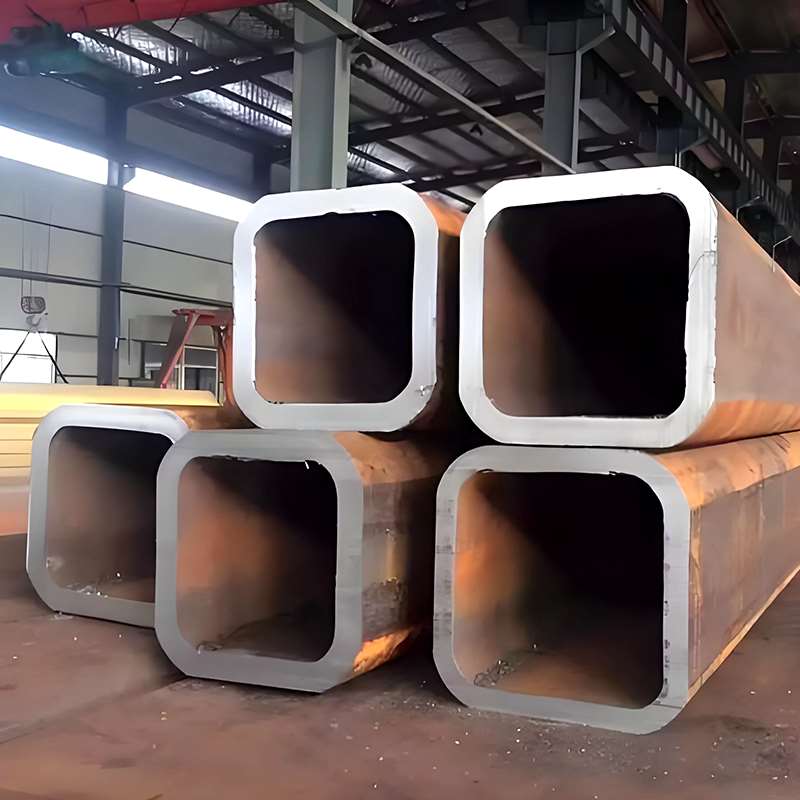
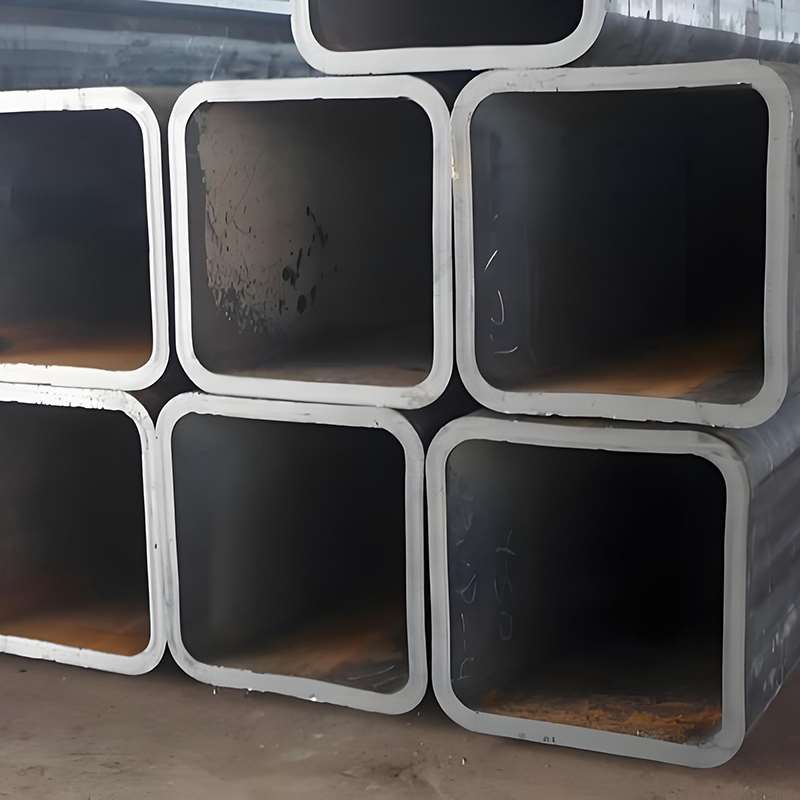
ASTM A500 is a standard for cold-formed carbon steel structural tubing developed by ASTM International in the United States. It applies to both welded and seamless steel tubing.
This standard classifies structural tubing into Grades A, B, C, and D, with strength levels increasing sequentially to meet different load and engineering requirements.
II. Chemical Composition and Mechanical Properties
i. Chemical Composition of ASTM A500 Carbon Steel Structural Tubing
| Grade | C (%) | Mn (%) | P (max %) | S (max %) |
|---|---|---|---|---|
| Grade A | ≤ 0.26 | ≤ 1.35 | 0.035 | 0.035 |
| Grade B | ≤ 0.26 | ≤ 1.35 | 0.035 | 0.035 |
| Grade C | ≤ 0.26 | ≤ 1.35 | 0.035 | 0.035 |
| Grade D | ≤ 0.26 | ≤ 1.35 | 0.035 | 0.035 |
ii. Mechanical properties of ASTM A500 carbon steel structural tubes
| Grade | Yield Strength (min, MPa) | Tensile Strength (min, MPa) |
|---|---|---|
| Grade A | 205 | 330 |
| Grade B | 240 | 400 |
| Grade C | 290 | 400 |
| Grade D | 317 | 400 |
III. ASTM A500 Standard Dimensions for Round/Square/Rectangular Tubes
i. Dimension Range Table for Round Structural Tubes
| Item | Size Range |
|---|---|
| Outer Diameter (OD) | 21.3 mm – 508 mm |
| Wall Thickness (WT) | 1.5 mm – 25 mm |
| Length | 6 m, 12 m, or custom length |
| Tolerance | OD ±1%, WT ±10%, Length ±10 mm |
ii. Square Structure Tube Size Range Table
| Item | Size Range |
|---|---|
| Side Length | 20 × 20 mm – 400 × 400 mm |
| Wall Thickness (WT) | 1.5 mm – 20 mm |
| Length | 6 m, 12 m, or custom length |
| Tolerance | Side Length ±1%, Diagonal ≤2%, Wall Thickness ±10% |
iii. Rectangular Structure Tube Size Range Table
| Item | Size Range |
|---|---|
| Section Size (H × W) | 40 × 20 mm – 600 × 400 mm |
| Wall Thickness (WT) | 1.5 mm – 20 mm |
| Length | 6 m, 12 m, custom lengths supported |
| Tolerance | Dimensions ±1%, Diagonal ≤2%, Wall Thickness ±10% |
IV. ASTM A500 Cold-Formed Carbon Steel Structural Tube Production Process
i. Production Process
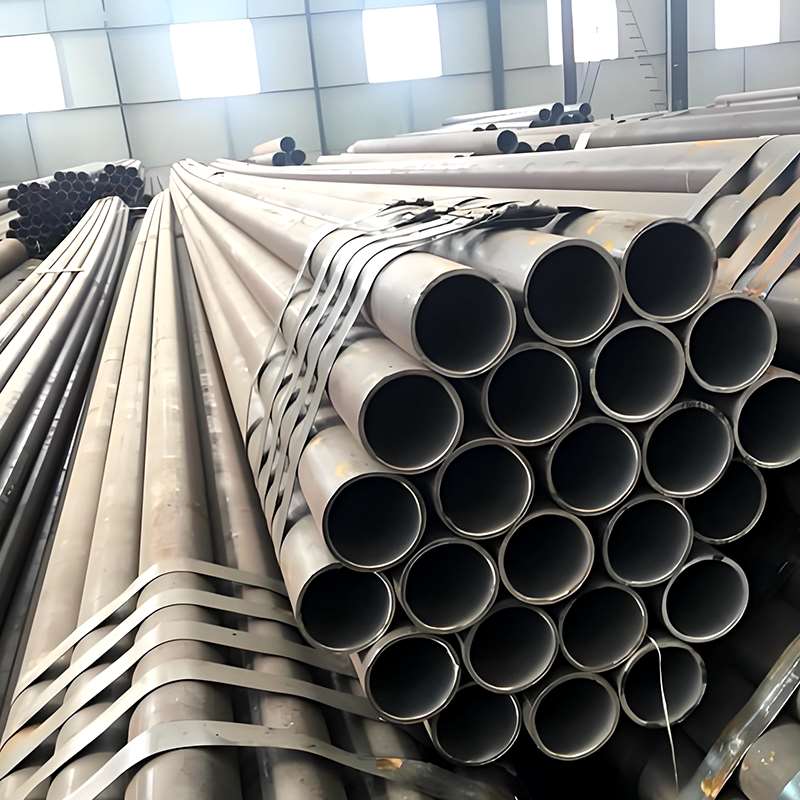
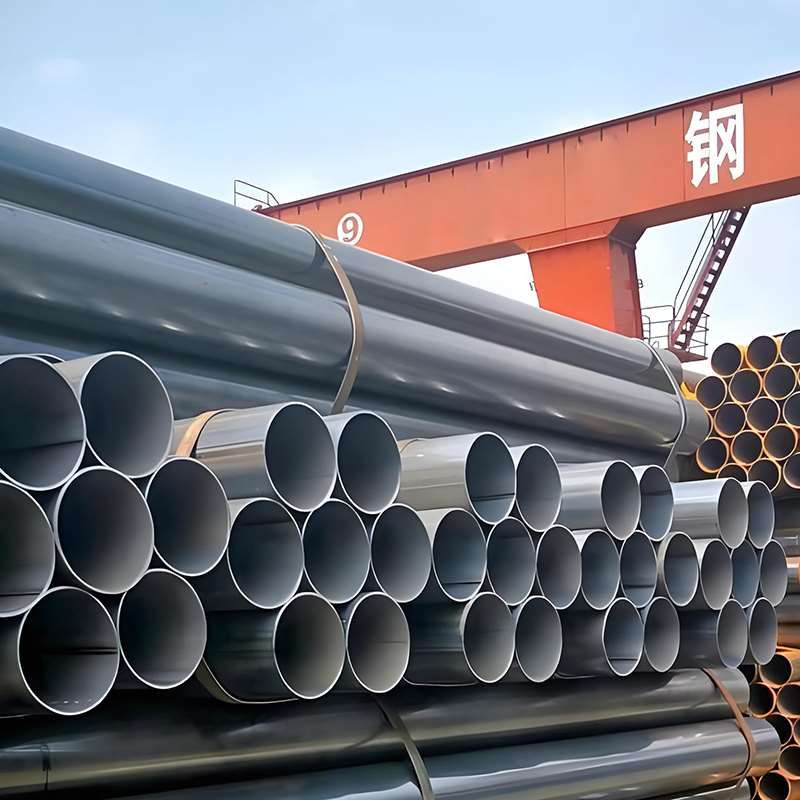
(1) Round Structural Tube Production Process
Uncoiling → Leveling → Strip Shearing → Forming (Cold Bending) → High-Frequency Welding (ERW) → Weld Bead Removal → Sizing and Straightening → Cutting to Length → Hydrostatic/Edge Current Testing → Dimensional Inspection → Finished Product
(2) Square/Rectangular Tube Production Process
Uncoiling → Leveling → Strip Shearing → Initial Forming of Round Tube (ERW) → Cold Bending into Square/Rectangular Tubes → Sizing and Forming → Straightening → Cutting to Length → Non-Destructive Testing → Dimensional and Appearance Inspection → Finished Product Packaging
ii. Main Process Steps
(1) Cold Forming
The strip steel is gradually bent into circular, square, or rectangular sections at room temperature.
Advantages: High dimensional accuracy; neat appearance and sharp edges; better strength than hot-rolled pipe (cold working strengthening)
(2) High-Frequency Welding
The joint edges are heated to a molten state using high-frequency current and then pressure welded.
Features: Weld strength is close to that of the base material, widely used in structural load-bearing applications.
(3) Cold Bending to Form Square or Rectangular Tubes
The welded round tube is cold-pressed into square or rectangular shapes using multiple molds.
Advantages: More standard angles, better straightness, and smoother appearance.
(4) Sizing and Straightening
Adjusting external dimensions, side lengths, and diagonal deviations to ensure the finished product meets ASTM A500 requirements.
(5) Non-destructive Testing
Commonly used: Eddy current testing (ECT), ultrasonic testing (UT)
Applications: Inspecting weld defects and uneven wall thickness to ensure structural safety.
(6) Surface Treatment
Black pipe: Painting, oiling for rust prevention
Hot-dip galvanizing available upon request (not a requirement of ASTM A500, but common)
V. Structural Performance and Application Reference
i. Structural Performance Characteristics of Different Shapes (ASTM A500 Structural Tubes)
| Shape | Load Characteristics | Structural Performance Advantages | Applicable Working Conditions | Typical Applications |
|---|---|---|---|---|
| Round Tube | Symmetrical cross-section, uniform load | Good compressive performance, stable torsional resistance | Suitable for structures with unclear or uniform load directions | Handrails, scaffolding, mechanical pipe fittings, traffic sign poles, light supports |
| Square Tube | Balanced bending resistance in all directions | Better bending and compressive performance than round tubes; easy to connect | Suitable for columns, frames, or structures requiring multi-directional load | Building frames, factory columns, machinery structures, support components |
| Rectangular Tube | Strongest bending in a single direction (large moment of inertia) | High bending stiffness, especially for horizontal loads or directional stress | Suitable for projects with large spans and clear load directions | Large beam structures, portal frame beams, pipe rack supports, load-bearing equipment platforms |
| Square-Rectangular Composite Section | Flexible selection based on design | Achieves optimal balance between weight and strength | Often used for projects balancing strength, appearance, and cost | Light steel structures, curtain wall frames, storage racks |
ii. Application Scenarios
- Building Structures (Medium to High Strength Requirements)
Suitable Selection: ASTM A500 Grade B / C / D
Typical Applications: Floor frame columns, roof trusses, curtain wall joists, industrial plant structural components. Square and rectangular tubes offer higher section efficiency, resulting in greater steel savings. - Bridges and Municipal Engineering (High Durability and Load-Bearing Requirements)
Recommended Selection: Grade C / D
Applications: Bridge handrails, bridge supports, bridge deck structural components, railing systems - Industrial Equipment and Machinery Manufacturing
Suitable Selection: Grade B / C
Applications: Machinery frames, conveyor structures, power equipment supports, shelving structures - Traffic Facilities and Steel Component Fabrication
Recommended: Square and rectangular tubes
Applications: Road sign poles, light pole crossarms, traffic sign frames, signal frames - Pipe Gallery/Support Systems (Easy Installation, Clear Stress Distribution)
Recommended: Rectangular tubes (high bending strength), Grade B / C
Applications: Pipe supports, cable tray supports, equipment maintenance platforms - Enclosure Structures / Architectural Exterior Finishing
Recommended: Round tubes, square tubes, Grade A / B
Applications: Guardrails, handrails, landscape frameworks, decorative structures
iii. Summary of Quick Selection Recommendations
| Working Condition Requirement | Recommended Shape | Recommended Grade | Recommendation Reason |
|---|---|---|---|
| Maximum bending resistance (beam) | Rectangular Tube | C / D | Large moment of inertia, high load-bearing capacity |
| Balanced compression and torsion (column) | Square Tube | B / C | Stable load-bearing, easy installation |
| Light-load or decorative structure | Round Tube | A / B | Low cost, aesthetically pleasing |
| Heavy-load structure or large span | Square-Rectangular Tube | C / D | High strength, structural stability |
| Emphasis on economy | Welded Square/Rectangular Tube | B | Significant cost advantage |
VI. Comparison of ASTM A500 with other structural pipe standards
| Comparison Item | ASTM A500 | ASTM A501 | EN 10210 (Europe) | EN 10219 (Europe) | GB/T 6728 (China) |
|---|---|---|---|---|---|
| Pipe Type | Cold-formed welded / seamless | Hot-formed structural pipe | Hot-formed structural pipe | Cold-formed structural pipe | Cold-formed steel pipe for steel structures |
| Material Type | Carbon steel structural pipe | Carbon steel structural pipe | Non-alloy steel / fine-grain steel | Non-alloy steel / fine-grain steel | Mild / low-alloy structural steel |
| Application Area | Building structures, bridges, machinery | Building structures, heavy-load structures | High-demand structural engineering | General structural engineering | Building, machinery, steel structures |
| Strength Grade | Grade A/B/C/D | No grade classification | S235 / S275 / S355 | S235 / S275 / S355 | Q235 / Q355, etc. |
| Manufacturing Method | Mainly cold-formed welded | Hot-processed | Hot-processed | Cold-processed | Cold-processed |
| Structural Performance | High strength, good section accuracy | Performance lower than A500 | High strength, good toughness | Economical for structural use | Standard structural use |
| Suitable for Load-Bearing Structures | Main standard for buildings & engineering | For hot-formed structures | High-strength structures | Structural use | Widely used for structures |