
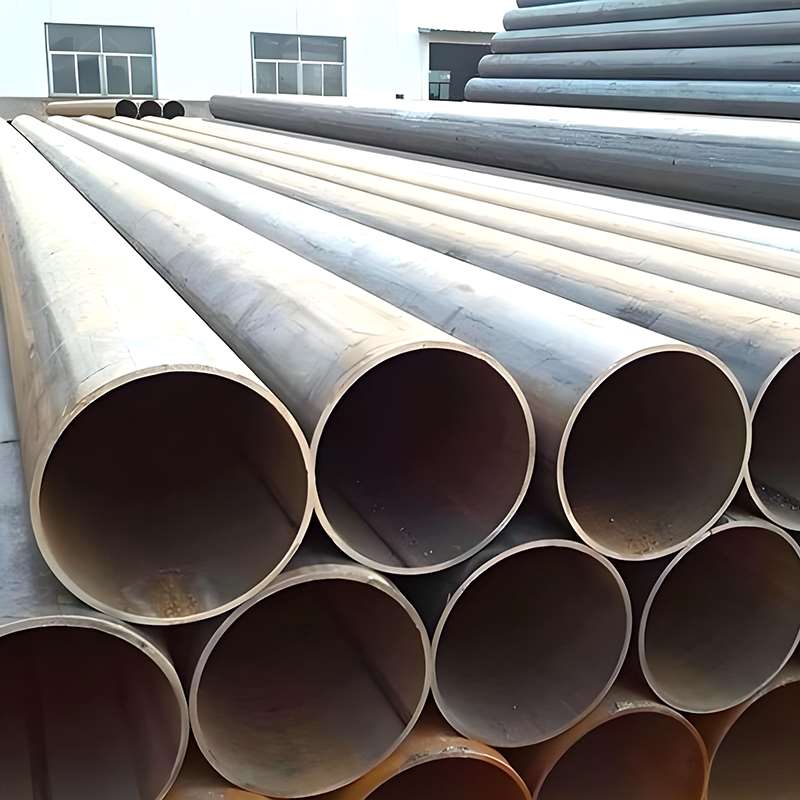
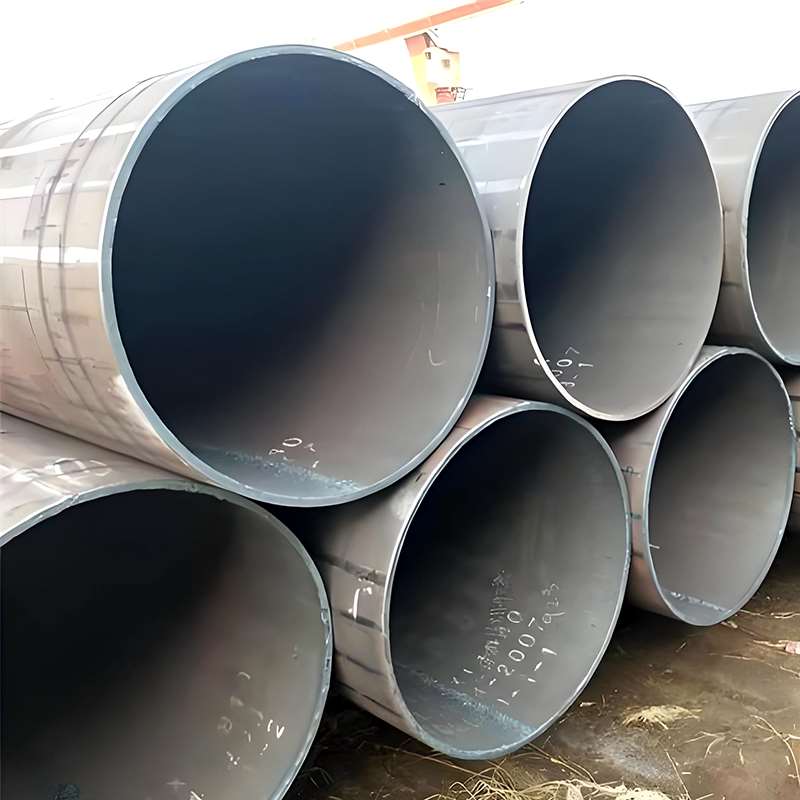
In the industrial field, ERW welded carbon steel pipes are widely used for transporting water, oil and gas, chemical liquids, and mechanical structures due to their high production efficiency and good dimensional accuracy. However, one of the most important questions for many customers when purchasing these pipes is: how much pressure can they withstand?
I. Factors Affecting the Pressure of ERW Welded Carbon Steel Pipes
The pressure-bearing capacity of ERW welded pipes mainly depends on the following factors:
(1) Pipe Material Grade
ERW pipes are usually classified into different strength grades according to carbon steel material, such as Q195, Q215, Q235, and Q345.
High-strength grade pipes allow for higher working pressures.
(2) Pipe Diameter and Wall Thickness
The larger the pipe diameter and the thicker the wall, the stronger the pipe’s pressure-bearing capacity.
Common wall thickness and pipe diameter ratios must conform to standards (such as GB/T 3091, ASTM A53).
(3) Weld Quality
The weld seam of ERW carbon steel pipe is a weak point under stress; therefore, the welding process and weld inspection directly affect the pipe’s pressure-bearing capacity.
(4) Operating Temperature
High or low temperature environments can affect the strength and toughness of steel, thus affecting the allowable pressure.
II. Reference Table for Pressure Bearing Capacity of ERW Welded Carbon Steel Pipes
| Outer Diameter OD (mm) | Wall Thickness WT (mm) | Pipe Grade | Material | Allowable Working Pressure P (MPa) | Remarks |
|---|---|---|---|---|---|
| 25 | 2.5 | Q195 | Carbon Steel | 6.0 | Low-pressure general pipeline |
| 25 | 3.5 | Q215 | Carbon Steel | 8.0 | Reinforced strength |
| 32 | 3.0 | Q235 | Carbon Steel | 7.5 | Standard industrial use |
| 32 | 4.0 | Q345 | High-strength Carbon Steel | 10.0 | High-pressure pipeline |
| 50 | 3.0 | Q235 | Carbon Steel | 5.5 | Medium-pressure pipeline |
| 50 | 5.0 | Q345 | High-strength Carbon Steel | 9.0 | High-pressure pipeline |
| 76 | 4.0 | Q235 | Carbon Steel | 6.0 | Medium-pressure application |
| 76 | 6.0 | Q345 | High-strength Carbon Steel | 10.5 | High-pressure application |
| 89 | 5.0 | Q345 | High-strength Carbon Steel | 9.0 | Industrial pipeline |
| 108 | 6.0 | Q345 | High-strength Carbon Steel | 9.5 | High-pressure long-distance pipe |
| 114 | 6.0 | Q345 | High-strength Carbon Steel | 9.0 | Common industrial specification |
| 133 | 7.0 | Q345 | High-strength Carbon Steel | 10.0 | High-pressure industrial pipeline |
| 159 | 8.0 | Q345 | High-strength Carbon Steel | 10.5 | Oil & gas transport pipeline |
| 219 | 10.0 | Q345 | High-strength Carbon Steel | 12.0 | Long-distance high-pressure pipe |
| 273 | 12.0 | Q345 | High-strength Carbon Steel | 11.5 | Large-diameter high-pressure |
III. ERW Welded Carbon Steel Pipe Selection Recommendations
1. Clarify Application and Operating Conditions
When selecting ERW steel pipes, first determine the pipe’s purpose. Is it for structural support or fluid transportation?
Consider the working pressure, type of medium, and temperature conditions. This will ensure you select the appropriate pipe material.
2. Choose the Appropriate Steel Grade
Different steel grades have different pressure-bearing capacities.
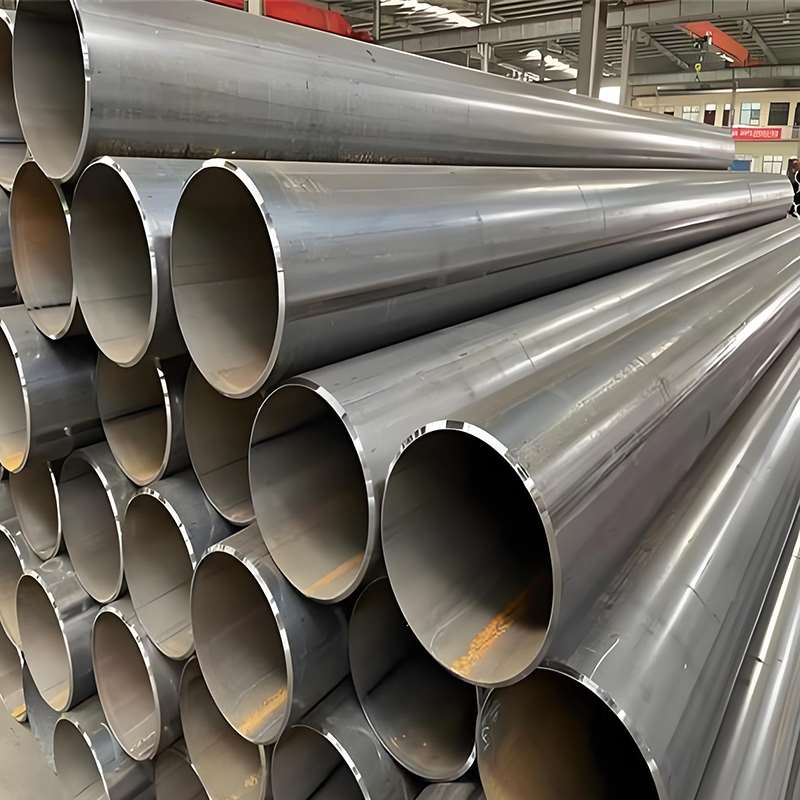
For example, ASTM A53 Grade B ERW steel pipes are commonly used for low to medium-pressure fluid transportation and general industrial structures.
For high-strength or special operating conditions, higher-grade steel materials should be selected.
3. Optimize Pipe Diameter and Wall Thickness
Pipe diameter and wall thickness directly affect pressure-bearing capacity.
Don’t just increase the wall thickness; a reasonable match between outer diameter and thickness is more economical.
This can reduce costs while ensuring strength.
4. Pay Attention to Weld Quality
The weld quality of ERW welded pipes determines safety.
In critical projects, non-destructive testing or strict welding procedures should be required.
5. Consider the Operating Environment
For outdoor or humid environments, anti-corrosion measures should be added, such as coatings or galvanizing.
For high or low-temperature conditions, material performance adjustments should be made according to standards.
6. Follow Design Specifications
When selecting pipes, refer to relevant engineering specifications and safety factors.
Do not select pipes based solely on theoretical maximum pressure; ensure safety and reliability.