
Oil and gas pipeline projects place extremely high demands on the safety, reliability, and durability of pipe materials. Seamless carbon steel pipelines for oil and gas are the industry’s choice due to their intact structure, high pressure resistance, and excellent low-temperature performance.
I. What are Seamless Carbon Steel Pipelines for Oil and Gas?
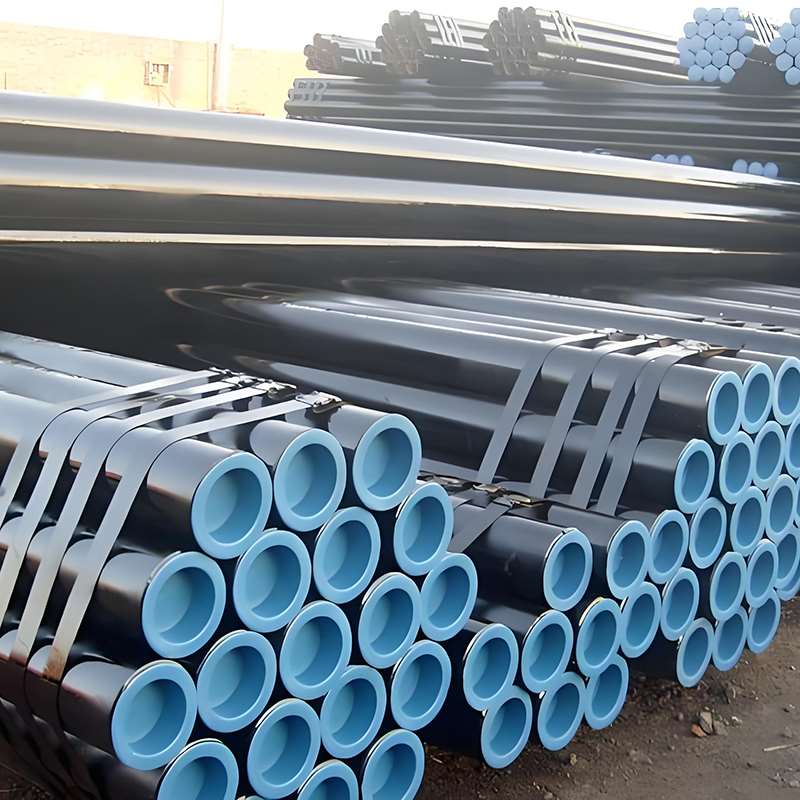
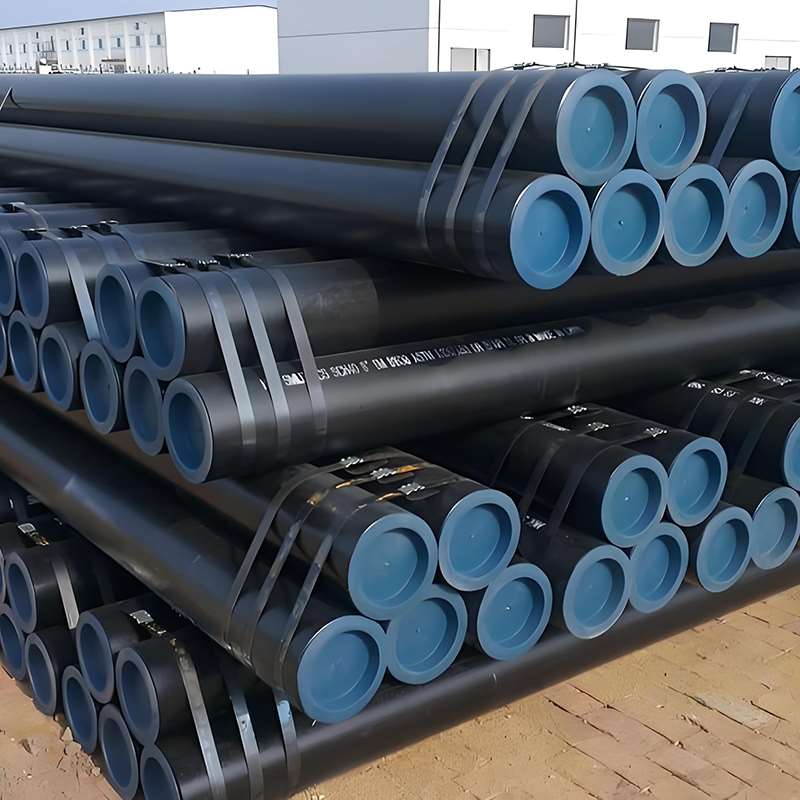
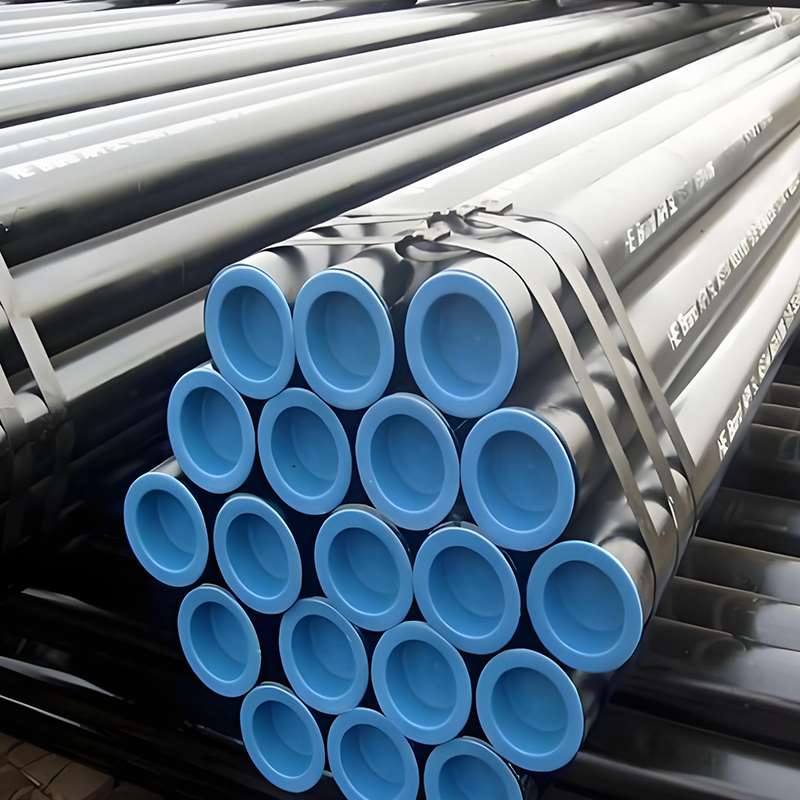
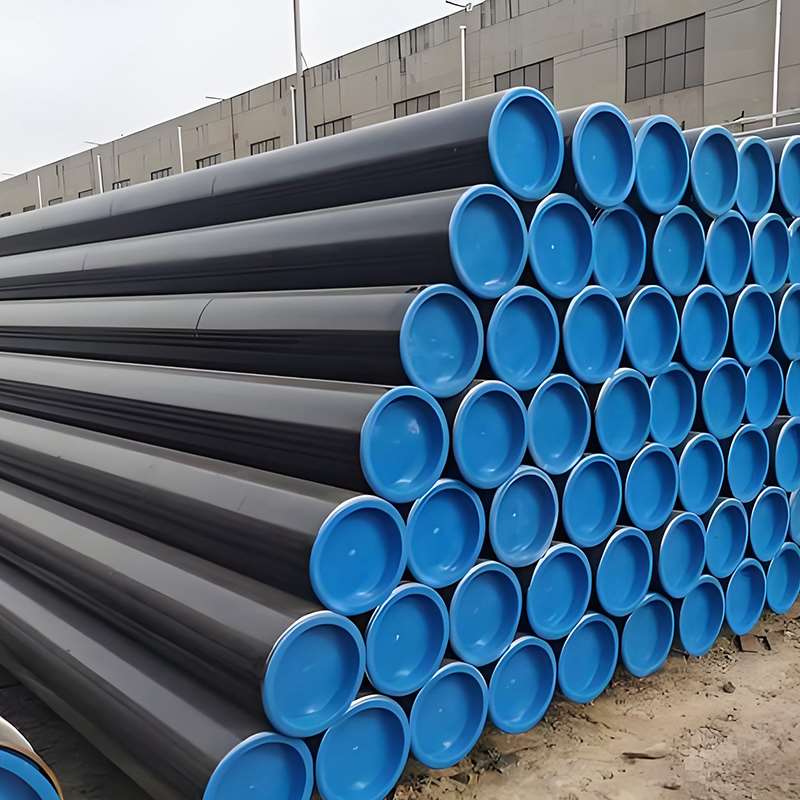
Definition: Seamless carbon steel pipelines refer to carbon steel pipes without weld seams, used for transporting oil, natural gas, and other industrial media.
Advantages: The seamless structure makes the pipe material uniform overall, with high pressure resistance, and superior corrosion resistance and low-temperature toughness compared to welded pipes.
Applications: Oil pipelines, long-distance natural gas pipelines, city gas trunk lines, high-pressure pipelines in petrochemical plants, etc.
II. What are the Grades of Seamless Carbon Steel Pipelines?
i. Common Grades of Seamless Carbon Steel Pipelines
| Grade | Minimum Specified Yield Strength (MPa) | Specified Tensile Strength (MPa) | Features & Applicable Environment |
|---|---|---|---|
| X42 | 290 | 415–550 | Moderate strength, suitable for medium- to low-pressure natural gas branch or auxiliary pipelines; lower cost |
| X46 | 315 | 450–580 | Slightly higher strength than X42, can withstand slightly higher pressure; suitable for medium-pressure pipelines |
| X52 | 355 | 450–620 | Commonly used for main transmission pipelines; high strength, suitable for high-pressure oil and gas pipelines |
| X56 | 380 | 485–650 | High strength, suitable for high-pressure long-distance pipelines; partially suitable for low-temperature environments |
| X60 | 415 | 485–650 | High-strength grade, suitable for long-distance, high-pressure natural gas pipelines |
| X65 | 450 | 510–690 | Suitable for extremely high-pressure or high-strength requirements; higher construction cost; welding and construction quality must be strictly controlled |
| X70 / X80 | 485–550 | 540–700+ | Ultra-high-strength pipes, typically for special high-pressure or extra-long-distance pipelines; high requirements for low-temperature toughness and welding procedures |
ii. Key Differences Between Different Grades
(1) Yield Strength and Tensile Strength
The higher the yield strength, the stronger the pressure-bearing capacity of the pipe.
High-grade pipes (X52 and above) are suitable for high-pressure long-distance pipelines.
(2) Low-Temperature Toughness
Low-grade pipes (X42/X46) have better impact toughness at low temperatures, but high-grade pipes require low-temperature impact testing to ensure safety.
In low-temperature areas (-20℃~-50℃), special attention should be paid to impact toughness when using grades above X52.
(3) Applicable Pressure Range
The higher the grade, the greater the allowable working pressure. For the same pipe diameter, the wall thickness can be relatively reduced, thus saving materials.
(4) Cost and Construction Difficulty
High-grade pipes are expensive, and welding and construction requirements are strict.
Low-grade pipes are economical, but have limited pressure-bearing capacity and are only suitable for medium and low-pressure pipelines.
(5) Differences in Applicable Scenarios
X42/X46: Medium and low-pressure branch pipelines, auxiliary transportation. X52/X56/X60: High-pressure trunk pipelines, long-distance oil and gas pipelines.
X65 and above: Ultra-high pressure or extreme condition pipelines, used in special projects.
III. Selection List for Seamless Carbon Steel Pipelines for Oil and Gas
i. Basic Operating Parameters
| Parameter | Description | Considerations / Notes |
|---|---|---|
| Design Pressure | Pipeline design operating pressure (MPa) | Determines pipe grade and wall thickness |
| Operating Temperature | Long-term operating temperature range of the pipeline (°C) | Low temperatures require attention to impact toughness; high temperatures require attention to creep and strength |
| Medium Type | Crude oil, natural gas, steam, or corrosive fluids | Determines requirements for internal lining and corrosion protection |
| Pipeline Length | Single segment length and total length | Long-distance pipelines require consideration of construction and transportation |
| Geographical Environment | Buried, coastal, mountainous | Affects corrosion protection measures and construction methods |
ii. Pipe grades and standards
| Item | Description | Recommended Selection |
|---|---|---|
| Pipe Standard | API 5L, GB/T 9711, ISO 3183 | Choose certified pipes that meet the design standards |
| Strength Grade | X42, X46, X52, X56, X60, X65 | For high-pressure pipelines, select X52 or above; for medium- and low-pressure pipelines, select X42/X46 |
| Low-Temperature Toughness | Impact energy (J) | Environments of -20°C to -50°C require meeting impact toughness requirements |
| Welding Performance | Weldability, weld seam strength | Ensure safe and reliable on-site welding |
iii. Pipe diameter and wall thickness
| Item | Description | Recommended Selection |
|---|---|---|
| Outer Diameter (OD) | Calculated based on flow requirements | Common sizes: 89–1219 mm |
| Wall Thickness (WT) | Calculated based on pressure and formulas | Use standard design formulas |
| Allowable Pressure | Pipe’s pressure-bearing capacity at given wall thickness | Ensure it exceeds design pressure and includes a safety margin |
| Tolerance | Wall thickness and outer diameter tolerance | Follow API/GB standards to ensure proper installation fit |
iv. Corrosion Prevention and Protection
| Item | Description | Recommended Selection |
|---|---|---|
| External Corrosion Protection | PE coating, epoxy coating, hot-dip galvanizing | Preferred for buried pipelines and coastal pipelines |
| Internal Corrosion Protection | Epoxy lining, FBE, polyethylene | For corrosive media such as sour oil & gas or CO₂ pipelines |
| Cathodic Protection | Grounding or installation of cathodic protection system | Recommended for long-service pipelines |
v. Connection and Construction Requirements
| Item | Description | Recommended Selection |
|---|---|---|
| Connection Method | Welding (butt weld, socket weld) | Follow construction standards and welding codes |
| Welding Process | SMAW, GTAW, SAW, etc. | Select appropriate welding method based on pipe diameter and wall thickness |
| Construction Conditions | Safety distance, slope, supports | Ensure smooth installation and avoid stress concentration |
vi. Quality and Acceptance
| Item | Description | Recommended Selection |
|---|---|---|
| Chemical Composition | Content of C, Mn, P, S, etc. | Must meet standard requirements to ensure strength and toughness |
| Mechanical Properties | Yield strength, tensile strength, elongation | Ensure compliance with design requirements |
| Impact Test | Charpy V-notch impact | Mandatory for low-temperature pipelines to ensure toughness |
| Nondestructive Testing | X-ray, ultrasonic, magnetic particle | Welds and pipe body must pass inspection to ensure no defects |
| Mill Test Certificate | Quality inspection report, standard certificate | Verify supplier qualifications and product consistency |
IV. Common Problems with Seamless Carbon Steel Pipelines for Oil and Gas
Q1: How to select the appropriate pipe grade based on pressure and temperature?
A: The pipe grade is mainly determined by the design pressure and operating temperature:
Pressure factors: For high-pressure pipelines (≥10 MPa), high-strength grades such as X52/X60/X65 are recommended; for medium and low-pressure pipelines, medium grades such as X42/X46 can be selected.
Temperature factors: Low-temperature environments (e.g., -20°C ~ -50°C) require the pipe material to have sufficient low-temperature impact toughness; high-temperature environments (e.g., steam transportation) require high-temperature resistance and no creep during long-term service.
Operational suggestions: First determine the approximate grade based on the pressure, then fine-tune it according to the temperature and low-temperature impact toughness requirements to ensure safety and economy.
Q2: How to rationally select pipe diameter and wall thickness?
A: Pipe diameter and wall thickness affect pressure bearing capacity and flow rate:

Where: P = working pressure, D = outer diameter, S = allowable stress of the pipe material, F = safety factor.
Practical advice: Choose a wall thickness that meets pressure requirements without wasting material. For long-distance pipelines, the wall thickness can be optimized by combining pressure and flow calculations to avoid excessive thickness increasing costs or insufficient thickness reducing safety.
Q3: Are there significant differences between different grades of pipe materials? How to choose?
A: The main differences between different grades lie in yield strength, tensile strength, low-temperature toughness, applicable pressure, and cost:
X42/X46: Medium and low pressure pipelines, low cost, easy construction.
X52/X60: High-pressure main pipelines, safe and reliable, wall thickness can be relatively reduced.
X65 and above: Ultra-high pressure or special working conditions, strict construction and welding requirements, high cost.
Material selection recommendation: Prioritize selecting the grade based on pressure and safety factor, then consider construction feasibility and cost optimization.
Q4: How to prevent corrosion of buried pipelines or coastal pipelines?
A: Oil and gas pipelines buried for long distances or in coastal areas are susceptible to corrosion:
Common anti-corrosion measures: PE coating, epoxy lining, anti-corrosion coating, etc.
Highly corrosive fluids: such as sulfur-containing oil and gas or CO₂, internal pipe lining anti-corrosion should be considered.
Purchase Recommendations: The corrosion resistance level should match the pipeline’s service environment to avoid excessive maintenance costs later.
Q5: How to ensure pipe quality matches standards during procurement?
A: Pipe quality varies greatly in the market. Common problems include substandard chemical composition and mechanical properties.
Key Practices: Verify the supplier’s test reports and certificates (e.g., API 5L PSL2, ISO 9001).
Require suppliers to provide proof of chemical composition, mechanical properties, impact tests, etc.
When purchasing large quantities of pipes, random sampling for third-party testing can be conducted.
Practical Advice: Strictly control procurement channels and acceptance standards to ensure that each batch of pipes meets design and safety requirements, avoiding project risks.