
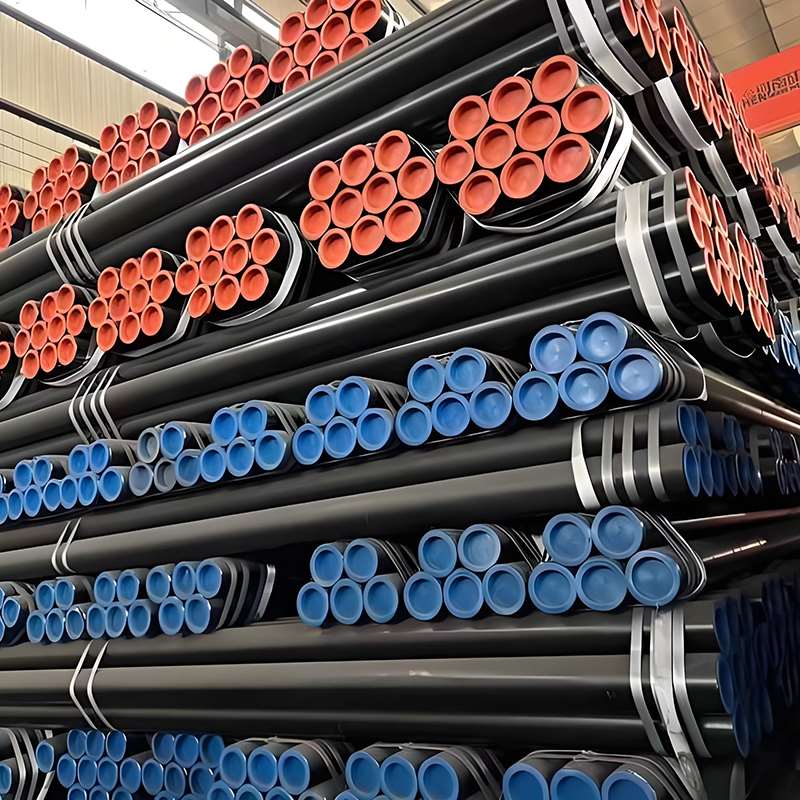
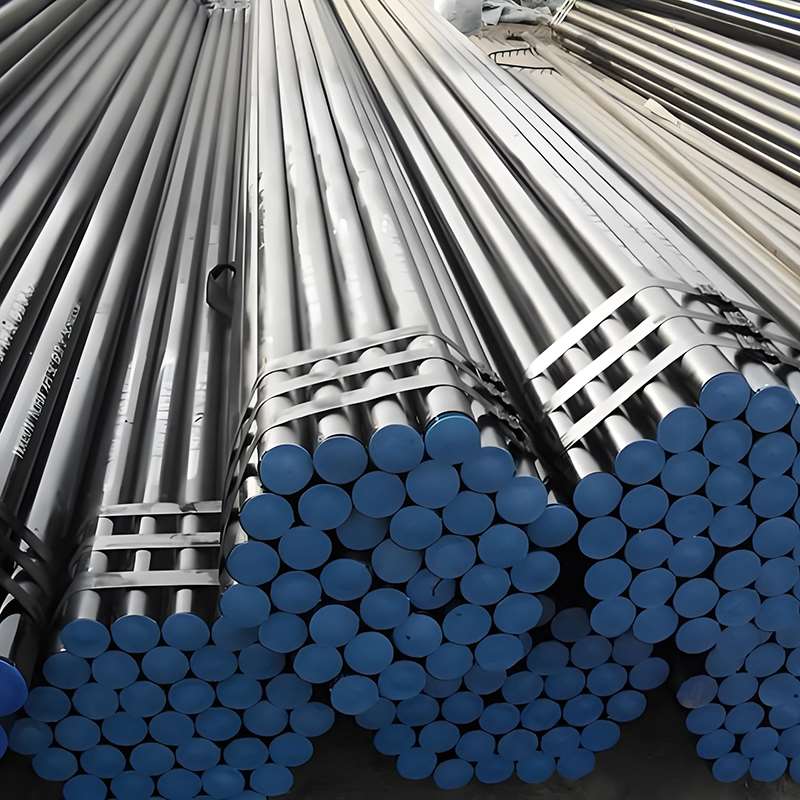
Seamless carbon steel pipes for structural applications are widely used in building structures, machinery supports, bridges, and industrial plants.
They possess high strength, good pressure resistance, and strong resistance to deformation; however, improper installation can easily lead to problems such as weld cracking, misalignment, or peeling of the anti-corrosion layer.
This guide will detail the installation process and key parameters from five aspects: preparation, cutting, welding, fixing, and corrosion protection, enabling construction personnel to truly achieve “one-time installation, long-term reliability.”
I. Pre-installation Preparation and Inspection Points
Before installing seamless carbon steel pipes for the structure, a comprehensive inspection of appearance, dimensions, and material should be conducted. The following is a list of commonly used inspection items:
| Inspection Item | Technical Requirement | Inspection Method | Remarks |
|---|---|---|---|
| Outer Diameter & Wall Thickness | Conforms to design and standards (GB/T 8162, ASTM A106) | Vernier caliper measurement | Deviation ≤ ±1% |
| Surface Quality | No cracks, folds, delamination, dents | Visual inspection | Surface should be smooth |
| Material Verification | Provide certificate of quality, chemical and mechanical properties report | Document review | Verify heat batch number |
| Cleanliness | No oil, metal chips, or moisture | Inspect inner and outer surface | Clean thoroughly before installation |
II. Measurement and Cutting Accuracy Control
Seamless carbon steel tubing for structural use is typically employed in load-bearing systems; therefore, installation dimensions must be accurate.
The following are recommended measurement and cutting parameters:
| Item | Recommended Standard | Technical Description |
|---|---|---|
| Centerline Deviation | ≤ 2 mm | Recheck using a laser marking device |
| Butt Gap | 1–2 mm | Allowance for welding shrinkage |
| Bevel Angle | 30°–37.5° | Facilitates full penetration welding |
| Root Face Thickness | 1.5 mm | Maintain root strength |
| Cutting Method | Abrasive wheel or band saw | Oxygen cutting prohibited to avoid carburization |
Tip: After cutting, use sandpaper or an electric grinder to polish the cut surface to keep it smooth and burr-free, so as to ensure a tight weld.
III. Welding Process and Quality Requirements
Welding is a crucial step in determining the overall strength of seamless carbon steel pipes used in structures.
To ensure weld stability, current, voltage, and interpass temperature must be strictly controlled.
| Welding Item | Recommended Parameters | Technical Description |
|---|---|---|
| Welding Method | Shielded Metal Arc Welding (SMAW) or Gas Metal Arc Welding (GMAW) | Choose based on construction environment |
| Electrode Type | E6010 / E7018 | Commonly used for carbon steel structures |
| Welding Current | 80–130 A | Control heat input |
| Interpass Temperature | 100–150 °C | Prevent cracking |
| Misalignment at Joint | ≤10% of wall thickness and ≤2 mm | Ensure uniform weld seam |
| Inspection Method | Visual + Ultrasonic (UT) / Radiographic (RT) | Post-weld acceptance rate ≥98% |
The welding process of seamless carbon steel pipes for structural use directly affects their stability and durability in applications such as frame structures and factory columns.
IV. Installation, Fixing, and Support Design
(1) Pipe Support Methods
Horizontal Installation: Install a support every 3-4 meters to prevent sagging.
Vertical Installation: Use hangers or clamps for fixing, and add limiting rings at the joints.
Seismic Zones: Use elastic damping supports to mitigate the impact of vibration.
(2) Alignment and Straightening
After installation, re-check the straightness of the pipeline using a level.
For load-bearing frames, correct to ensure the allowable deviation does not exceed L/1000 (L is the pipe length).
Re-check the positioning points after welding to prevent displacement caused by thermal stress.
V. Corrosion Prevention and Surface Protection Measures
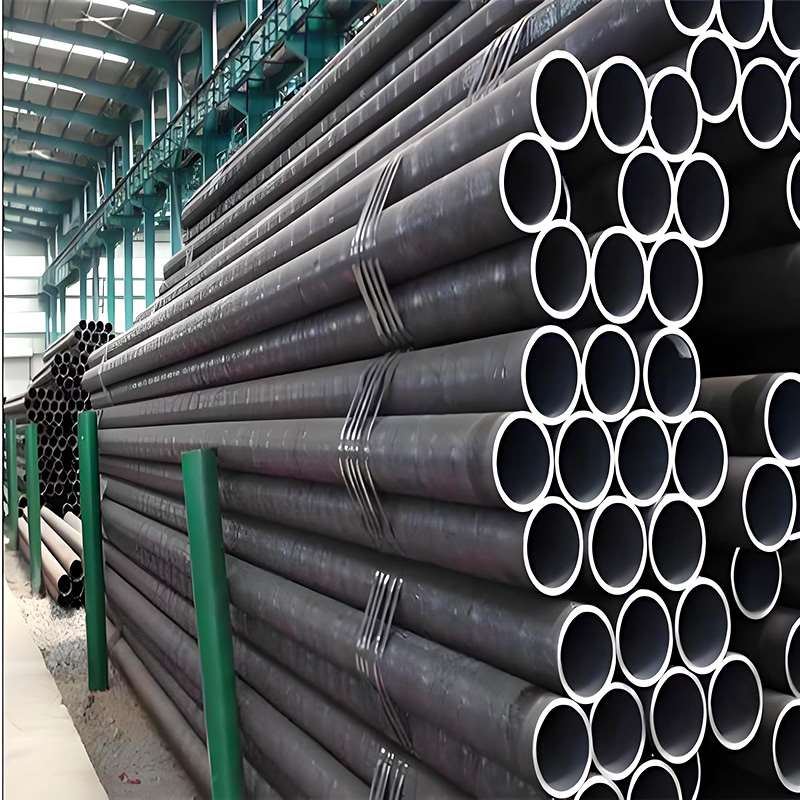
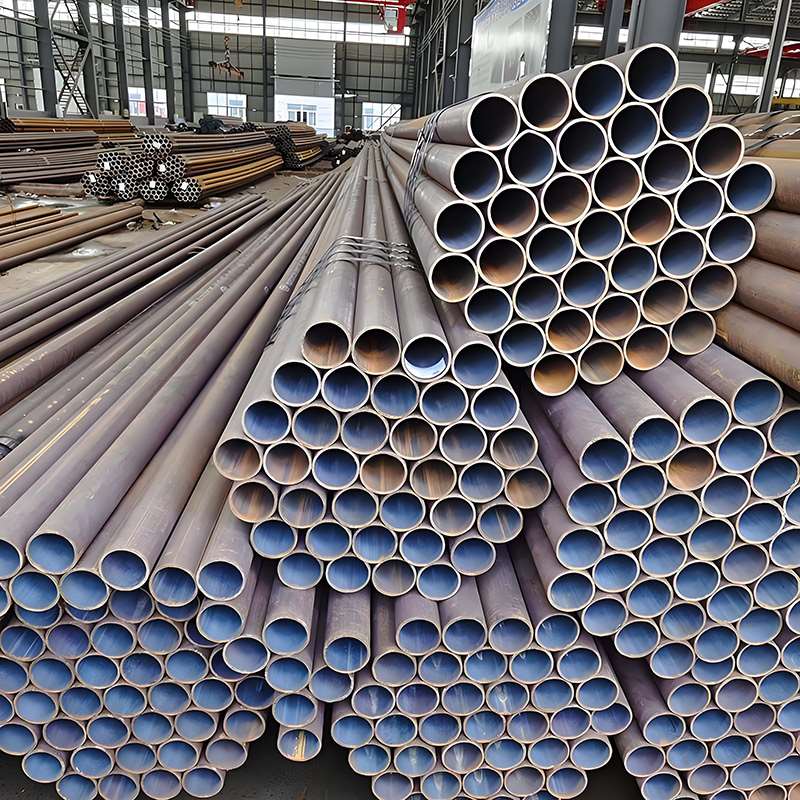
After the seamless carbon steel pipes for the structure are installed, if they are exposed to the outdoors or in a humid environment, they must be treated with anti-corrosion measures in a timely manner.
| Protection Type | Applicable Environment | Process Description | Coating Thickness |
|---|---|---|---|
| Epoxy Primer + Polyurethane Topcoat | General outdoor environment | Two-layer spraying | ≥120 μm |
| Hot-Dip Galvanizing | High humidity, highly corrosive areas | Zinc layer ≥70 μm | Long-term corrosion resistance |
| FBE (Fusion Bonded Epoxy) Powder Coating | Industrial or chemical environment | Electrostatic spraying + curing | ≥300 μm |
Recommendation: The oxide scale in the weld area should be cleaned immediately after cooling, and then an anti-corrosion primer should be sprayed to avoid secondary corrosion.
VI. Common Problems and Solutions in the Installation of Seamless Carbon Steel Pipes for Structural Use
Q1: Why are seamless carbon steel pipes for structural use prone to cracking after welding?
A: Weld cracking is one of the most common problems during installation. The main causes include:
- Insufficient preheating before welding, leading to excessively rapid cooling of the weld area;
- Incompatibility between the welding rod or wire type and the base material;
- Low ambient temperature (<5℃), causing stress concentration.
Solutions:
- Heat the steel pipe to 100~150℃ before welding;
- Use low-hydrogen welding rods (such as E7018) and dry them before use;
- Control the interpass temperature, slow cool after welding, and cover with asbestos cloth if necessary;
- For thick-walled pipes and large-diameter pipes, segmented annealing can be used to release stress.
Experience Tip: If working outdoors in winter, it is recommended to weld inside a temporary tent, which can significantly reduce the risk of cracking.
Q2: Why do misalignments or uneven joints occur during installation?
A: The seamless carbon steel pipes used in the structure are relatively long and heavy, making them prone to slight misalignment during hoisting and positioning.
Common causes include:
- Supports not properly adjusted;
- Insufficient spot welding positioning;
- Weld shrinkage not considered in advance.
Solutions:
- Use a laser calibrator or string line method before alignment to ensure centerline consistency;
- During spot welding, fix the weld at 1/3 to 1/2 of its circumference to increase positioning strength;
- Allow for 1-2mm of weld shrinkage in the design phase;
- If slight misalignment occurs, use a hydraulic jack or adjusting clamps for fine-tuning.
Standard requirement: The misalignment should be ≤ 10% of the wall thickness and should not exceed 2mm.
Q3: Why does the pipe sag or deform after installation?
A: Sagging is usually related to excessive support spacing or improper support installation.
Prolonged load-bearing or residual welding stress can also lead to deformation.
Solutions:
Install supports according to pipe diameter:
φ60 and below: Spacing ≤ 2.5m
φ60~159: Spacing ≤ 3.0m
φ159~273: Spacing ≤ 3.5m
Add intermediate supports for large span areas;
If it is a load-bearing frame, use sliding supports or limit rings to prevent deformation caused by thermal expansion and contraction;
After installation, re-measure with a level and record the deviation.
Extended lifespan tips: In high-load areas, prioritize the use of thick-walled seamless carbon steel pipes for higher bending stiffness.
Q4: Why does the anti-corrosion coating easily blister or peel off after application?
A: The root cause of anti-corrosion coating failure is often incomplete surface treatment or failure to apply coating promptly after welding.
Weld slag, oil, and moisture can all affect adhesion.
Solutions:
Immediately clean weld slag, scale, and oil after welding;
Surface roughness should reach Sa2.5 grade (sandblasting or shot blasting);
Use a matching primer and topcoat system (e.g., epoxy primer + polyurethane topcoat);
Maintain an application temperature of 10~35℃ and humidity < 80%;
Allow lifting or handling only after the coating has cured to avoid mechanical damage.
Practical advice: In chemical plants or high-humidity areas, FBE powder coating or hot-dip galvanizing protection can be chosen for better corrosion resistance.
Q5: What acceptance and testing procedures are required after the seamless carbon steel pipes for structural use are installed?
A: After installation, multiple tests must be conducted to ensure safety and quality:
| Inspection Item | Inspection Method | Acceptance Criteria | Inspection Frequency |
|---|---|---|---|
| Dimensional Deviation | Vernier caliper measurement | ±1 mm | Every batch |
| Weld Appearance | Visual + square gauge inspection | Smooth, no undercut | 100% inspection |
| Internal Weld Quality | Ultrasonic (UT) or Radiographic (RT) | No lack of fusion, no cracks | Random sampling 10%–100% |
| Coating Thickness | Dry film thickness gauge | ≥120 μm (two-layer paint) | Sample every 10 pipes |
| Pipe Straightness | Laser distance meter | Within L/1000 | Inspect each installed section |
Additional suggestions:
Static load tests can be performed on large load-bearing structures to detect deformation. After inspection, a complete installation quality record should be generated for easy traceability and maintenance later.
Key takeaway summary: Through standardized testing and scientific protection, the long-term stability and fatigue resistance of seamless carbon steel pipes used in structures can be improved.