
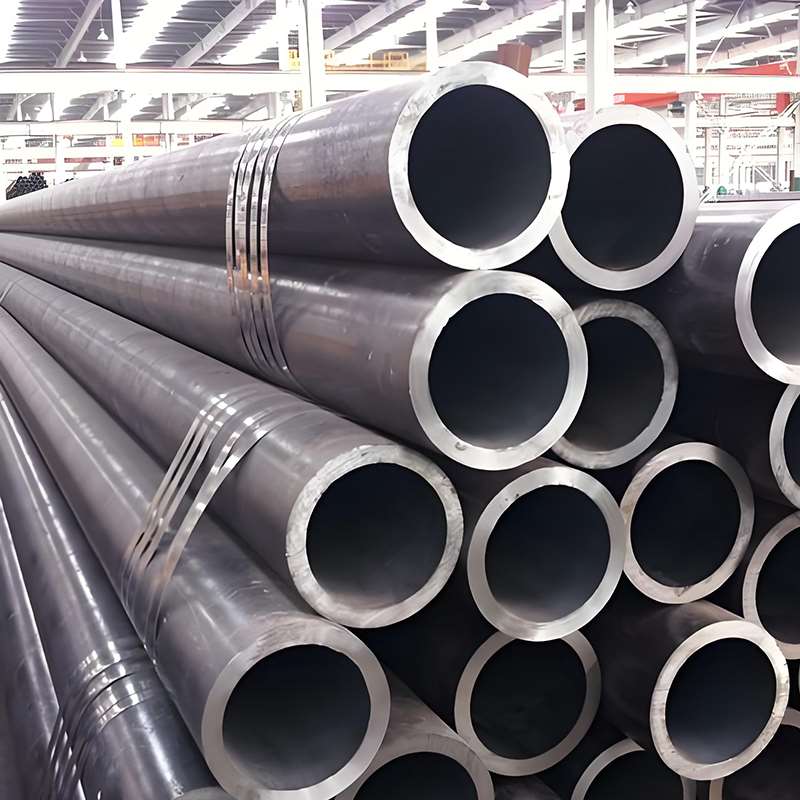
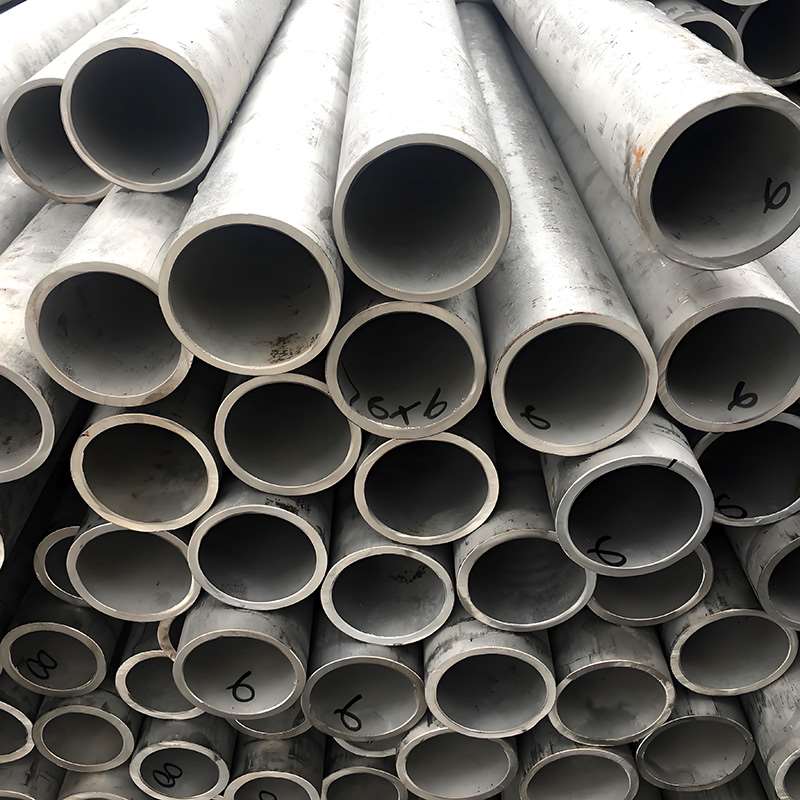
219×6mm Grade B seamless carbon steel pipe, with its classic specifications and reliable performance, has become the preferred choice for water conveyance systems. This article will provide actionable guidance based on its technical characteristics, advantages, application scenarios, and selection guidelines.
I. Introduction to 219×6mm Grade B Seamless Carbon Steel Pipe
i. Dimensions and Performance Parameters
| Parameter | Value | Description |
|---|---|---|
| Outer Diameter | 219 mm | Medium diameter, suitable for main pipelines and industrial water supply |
| Wall Thickness | 6 mm | Determines pressure capacity, can withstand 1.0–1.6 MPa working pressure |
| Inner Diameter | ~207 mm | Reference for flow calculation |
| Theoretical Weight | 28 kg/m | Used for cost estimation |
| Material | Carbon Steel Grade B | GB/T 8163 standard, yield strength ≥245 MPa, tensile strength ≥415 MPa |
ii. Advantages of Seamless Manufacturing
Structural Integrity: No weld seams, uniform pipe wall, reducing potential failure risks.
High Pressure Bearing Capacity: Suitable for high-pressure water transmission and industrial circulating water systems.
Excellent Corrosion Resistance: Smooth and uniform inner wall, reducing localized corrosion points.
iii. Grade B Quality Standards
Chemical Composition Control: C ≤0.25%, Mn ≤1.2%, P ≤0.035%, S ≤0.035%.
Mechanical Properties: Yield strength ≥245 MPa, tensile strength ≥415 MPa.
Weldability and Toughness: Ensures construction feasibility and long-term safety.
iv. Application Logic of Carbon Steel Materials
Economy: Lower cost than alloy steel, suitable for large-diameter water transmission pipes.
Corrosion Protection: Common methods include:
Inner wall cement mortar lining
Epoxy resin coating
Outer wall anti-corrosion paint or PE coating
v. Comparison of Seamless Carbon Steel Pipes and Welded Steel Pipes
| Comparison Dimension | Seamless Carbon Steel Pipe | Welded Steel Pipe (ERW / Longitudinal / Spiral) |
|---|---|---|
| Manufacturing Process | Hot-rolled or cold-drawn, no weld seam | Steel plate rolled and welded into pipe (longitudinal or spiral) |
| Structural Integrity | Uniform and continuous, minimal defects | Weld seam may have micro-defects or stress concentration points |
| Pressure Capacity | High, suitable for medium to high-pressure systems | Moderate; for medium/high pressure, wall thickness increase or special welding required |
| Toughness & Impact Resistance | Excellent, resistant to low temperature and impact loads | Lower, weld seam may have higher brittleness |
| Corrosion Resistance | Smooth inner wall, low corrosion risk at welds | Weld seam may be corrosion weak point, anti-corrosion measures needed |
| Size Range | Both small/medium and large diameters available | More common in medium to large diameters; small-diameter welded pipe is costly |
| Machining & Connection | Weldable, cuttable, flexible end machining | Requires welding or flanges; end machining must consider weld quality |
| Price | Higher, due to material and process costs | Lower, fast production, high cost-performance ratio |
| Typical Applications | High-pressure water transport, boiler pipes, petrochemical pipes | Low-pressure water supply, building pipelines, structural pipes |
II. Advantages of Seamless Carbon Steel Pipes
i. Comparison with similar pipe materials
| Pipe Type | Advantages |
|---|---|
| Welded Steel Pipe | Seamless pipes have higher pressure capacity and better safety |
| Ductile Iron Pipe | Good toughness, flexible for welded connections, excellent impact resistance |
| PVC/PE Pipe | High strength, suitable for large diameters, resistant to high temperature and aging |
Overall Value Analysis:
Reliability: Seamless structure reduces failure risk and maintenance frequency.
Economy: High cost-effectiveness from a total life-cycle cost perspective.
Applicability: Covers most municipal and industrial water supply needs, making it the “gold standard”.
III. Application Guidelines for Seamless Carbon Steel Pipes
| Scenario Type | Application Examples |
|---|---|
| Municipal Pipeline Network | Main pipelines, inlet/outlet of booster pump stations |
| Industrial Circulating Water | Factory cooling water, process water supply systems |
| High-Pressure Industrial Pipe | High-pressure water transport in thermal power plants and chemical plants |
| Building Water Supply | Main supply pipelines for large building complexes |
IV. 219×6mm Grade B Seamless Carbon Steel Pipe FAQ
Q1. What types of water supply pipelines are suitable for 219×6mm Grade B seamless carbon steel pipes?
A: Municipal water supply trunk lines: Suitable for urban area trunk lines and booster pump station inlets and outlets, meeting medium flow and pressure requirements.
Industrial circulating water systems: Suitable for factory cooling water and process water systems; sufficient pressure resistance and toughness ensure long-term stable operation.
High-pressure water pipelines in thermal power plants and chemical plants: Strong pressure resistance, suitable for high-temperature and high-pressure conditions.
Main water supply pipelines for large building complexes: Moderate diameter, ensuring uniform water supply to the complex.
Special projects: Corrosion protection treatment can be applied as needed for special water qualities or harsh environments.
The core advantages are medium diameter, strong pressure resistance, and reliable seamless structure, meeting various industrial and municipal water supply scenarios.
Q2. What water pressure can this type of pipe withstand in actual use?
A: According to GB/T 8163 standard, the yield strength of Grade B carbon steel pipes is ≥245MPa, and the tensile strength is ≥415MPa.
For the 219×6mm specification, the normal working pressure is generally 1.0–1.6 MPa (approximately 10–16 bar).
Water hammer and instantaneous pressure must also be considered during installation; wall thickness can be increased or buffer devices can be installed during design.
For high-pressure pipelines or special working conditions, it is recommended that professional designers calculate the pressure rating and confirm the selection.
Q3. How to choose anti-corrosion measures, and can they guarantee long-term use?
A: Internal wall anti-corrosion: Cement mortar lining and epoxy resin coating are both suitable, effectively preventing water corrosion and scaling.
External wall anti-corrosion: Anti-corrosion paint, PE coating, or epoxy coal tar coating can prevent external environmental corrosion.
Regular maintenance: Inspect the condition of the external wall anti-corrosion to avoid mechanical damage and delamination.
In summary, if constructed according to specifications, the service life can reach over 20 years, and some projects even longer.
Q4. What are the precautions during installation and construction?
A: Connection method: Primarily welding is used. Welding techniques and processes must be strictly controlled to ensure defect-free welds.
Lifting and handling: Avoid impacts from hard objects onto the pipe wall, especially the anti-corrosion layer.
Pressure testing and flushing: After installation, strictly perform pressure testing to ensure the pipeline is tight and clean internal impurities.
Support and fixing: Pipeline supports must be stable to prevent damage caused by vibration and displacement.
Q5. What are the most important issues for managers during daily use?
A: Corrosion monitoring: Long-term water supply pipelines are susceptible to water quality effects and require regular inspection of the inner and outer walls.
Pressure monitoring: Pressure fluctuations should be monitored during pipeline operation to prevent water hammer or overpressure.
Leakage and rupture risk: Focus on inspecting welds and joint locations.
Maintenance and replacement: Plan pipeline replacement cycles in advance to reduce the risk of sudden downtime.
System compatibility: Ensure compatibility with pumps, valves, and other pipeline connections to avoid stress concentration at interfaces.